

Bird flu only 36km away from our precious penguins
Despite arriving late to the H5 bird flu crisis, Victoria has now climbed to second on the list across Australian states with 47 cases including one at Clyde, little more than 36km from Phillip Island as the seagull flies.


DESPITE being the last of the southern and eastern mainland Australian states to record a confirmed case of H5 bird flu, Victoria has now climbed to second on the list with 47 cases.
It’s a serious escalation since the first case was detected near Portland on Thursday, July 30, little more than a week ago.
And, as revealed by the State Government late on Friday afternoon, August 7, one of the new cases has been detected a little too close to home, at Clyde on the south-eastern fringe of Melbourne, but little more than 36km, as the crow flies, from Phillip Island.
According to a statement released by the State Government on Friday afternoon, August 7, there are 47 positive cases in wild birds in Victoria, with new detections at Yambuk, Apollo Bay and Clyde, in addition to known areas around Portland and Nelson.
Poultry inside please
The alarming rise in the number of confirmed cases in Victoria promoted Victoria’s Chief Veterinary Officer to raise response levels.
From August 7, for an initial 14 days, poultry owners with 50 or more birds in metropolitan Melbourne, coastal areas and some neighbouring areas must house their birds to reduce contact with wild birds.
Minister for Agriculture Michaela Settle said the initiative not only protected the state’s poultry owners but also consumers.
“We’re acting early to protect Victoria’s poultry industry and help keep eggs and poultry affordable and available,” Minister Settle said.
“We’ll keep working closely with industry and responding as the situation evolves.”
Victorian Chief Veterinary Officer, Dr Graeme Cooke, said the change offered a new level of protection.
"Reducing contact between poultry and wild birds is one of the most effective ways to lower the risk of disease entering a flock, so we're asking poultry producers to ensure they maintain stringent biosecurity practices,” said Dr Cooke.
"This housing requirement provides an additional layer of protection in areas of increased risk."
Victorian Farmers Federation President Ryan Milgate, welcomed the initiative.
"This is a proactive and logical precaution as we work through Victoria's organised response to H5 bird flu,” said Mr Milgate.
"Farmers and the public should have confidence that this shows industry and government working in lockstep to safeguard production.
“Good biosecurity remains the best defence against the spread of H5. It’s critical that all farmers review their biosecurity plans, remain alert for signs of disease on or near their property and keep updated on the latest advice.”
South Australia, which today announced a ban on birds at the Adelaide Show, from September 5 to 13, has climbed to 119 cases, but Victoria is closing with 47 cases recorded on Friday, August 7.
By Friday afternoon, Australia had 179 confirmed detections of H5 bird flu in wild birds.
- 10 in Western Australia (WA)
- 119 in South Australia (SA)
- 2 in New South Wales (NSW)
- 1 in Queensland (QLD)
- 47 in Victoria (VIC).
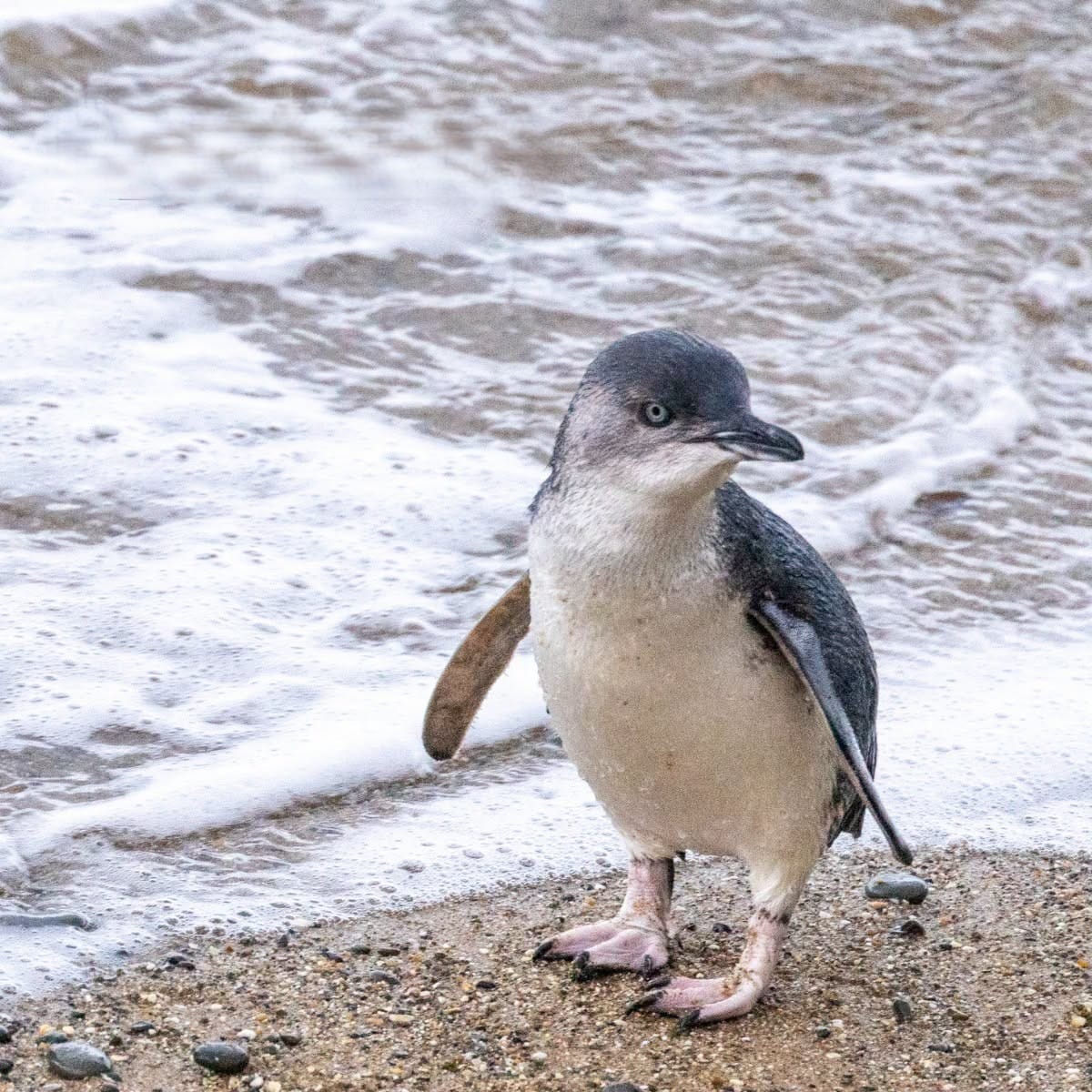
Fears for Phillip Island's penguins
Environmentalists have expressed concerns about possible "devastating effects" on Phillip Island's penguin colony and other wildlife as bird flu cases continue to spread throughout the state.
The important tourism destination is home to penguins, seals, and other animals highly susceptible to the bird flu strain taking hold across the country but any impact on the penguin colony would have a devastating impact on the local economy as well.
Environment Victoria nature campaigns manager Chris Schuringa said if the H5 bird flu reached the island, it could cause "mass deaths" of the little penguin population.
"It could be a catastrophic wildlife emergency," she said.
"It's very alarming how quickly things are moving.
"Unfortunately, we are likely to see really high mortality rates once this spreads."
Ms Schuringa said not a lot can be done once the birds have contracted the virus.
"The virus is transmitted very quickly and quite easily, so really any area is at risk," she said.
Speaking to the ABC, Ms Schuringa said the virus could spread to other wildlife on the island, such as the island's seal colony and other marine animals.
"It's really only a matter of time before it spreads to other species. Acting now is critical," she said.
Environment Victoria says it wants the state government to strengthen its front line response by restoring funding to key departments who can deal with the crisis, like Parks Victoria, Zoos Victoria and biosecurity staff in the Department of Energy, Environment and Climate Action (DEECA).
Vaccination uncertainty
Victoria's chief veterinary officer Graeme Cook said penguin colonies across the world have been very vulnerable to bird flu.
"What we know is that in other parts of the world mass deaths have happened," Dr Cook said.
He also addressed the potential for vaccination to save Phillip Island’s penguins.
He said trials have shown penguins can be vaccinated without adverse side effects, but could not confirm whether it would be administered before the H5N1 reaches Phillip Island.
"Decisions on whether to vaccinate what we term rare captive and threatened birds has been considered," Dr Cook said.
"But the decision whether to vaccinate is complex.
"There's a decision around risk, there's also the fact that the current vaccine requires that handling to happen twice.
"There's also the fact that in wild bird populations you just can't capture them in the same way that you could within zoological establishments in order to vaccinate them."
Dr Cook said the federal government ultimately dictated vaccine policy for native species.
Phillip Island Nature Parks, which overseas the penguin colony, said it was closely monitoring the situation and preparing for the potential arrival of the virus.
"While the disease has not been detected on Phillip Island yet, we have continued our increased monitoring of penguin and seal colonies, and migratory shorebird areas, and have an active Avian Influenza Response Plan in place," a spokesperson said in a statement.
The organisation said its response plan includes increased biosecurity measures for in-field team members such as cleaning and disinfecting footwear and vehicles when moving between sites.
"The Nature Parks has been planning for the arrival of this bird flu strain since 2023, and we continue to work closely with the Department of Energy, Environment and Climate Action (DEECA) on an effective response," the spokesperson said.
The organisation said it has invested significant resources into building the health and resilience of habitat for wildlife on the island in recent years.
Phillip Island Nature Parks attractions, reserves and beaches remain open.
Additional biosecurity measures are being taken to protect the colony of little penguins.
Another blow for Phillip Island
Bass Coast Shire Council Mayor Brett Tessari said this week he hoped wildlife agencies were properly prepared.
"We're relying on the emergency response that's been years in the making," Cr Tessari said.
"As far as the economic impact goes it will affect us, we're a tourist mecca for penguins."
While confirmed H5 bird flu numbers in Victoria reach 47 on Friday, there are likely to be many unconfirmed cases.
A contributor to Agriculture Victoria’s Facebook page raised the spectre that bird flu had already touched Victoria’s penguin colony.
“I reported a little penguin deceased on Safety Beach (south of Mount Martha) two weeks ago and then the mechanical beach cleaning rake came along and picked it up. How's an assessment going to be undertaken on that bird as it's now in the tip?”
It's 'serious' says DAFF
According to the Department of Agriculture, Fisheries and Forestry (DAFF), this is the serious H5 bird flu strain that has been circulating globally.
“There have been no detections in poultry or the wider agriculture industry.
“The risk to human health remains low.”
If you notice sick or dead birds or other animals showing signs of bird flu, you should not touch them or get too close. Record your location and report multiple sick or dead birds or other animals to the 24-hour Emergency Animal Disease Hotline on 1800 675 888.


