

Eight quakes and counting north of Korumburra and Leongatha
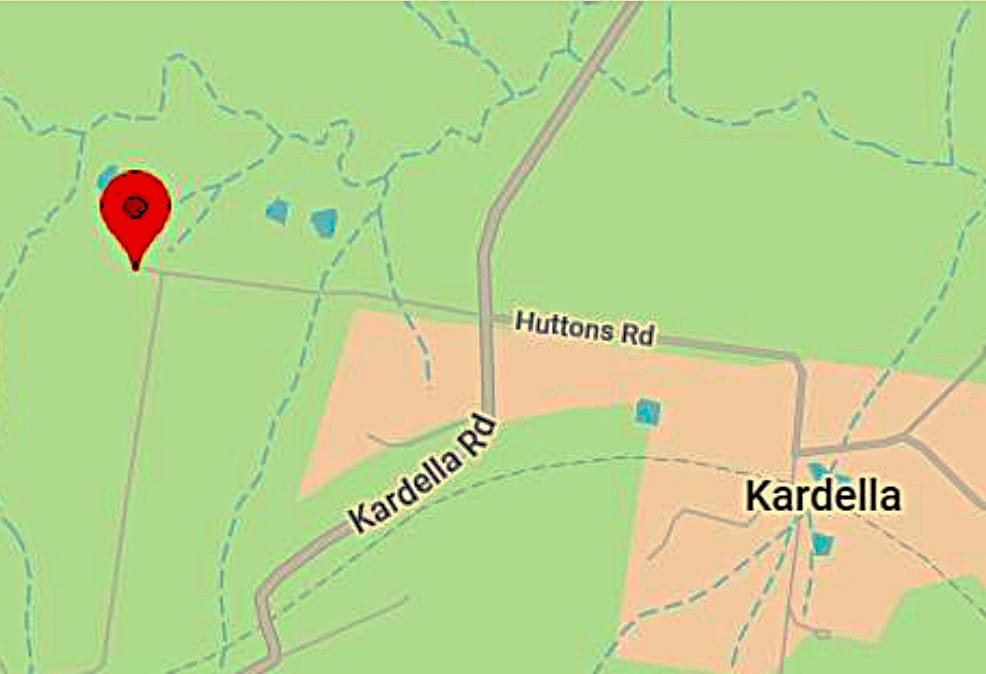
OK, so we’ve had yet another aftershock following last Saturday’s sizeable earthquake of 4.8MLa centred at Kardella.


OK, so we’ve had yet another aftershock following last Saturday’s sizeable earthquake of 4.8MLa centred at Kardella.
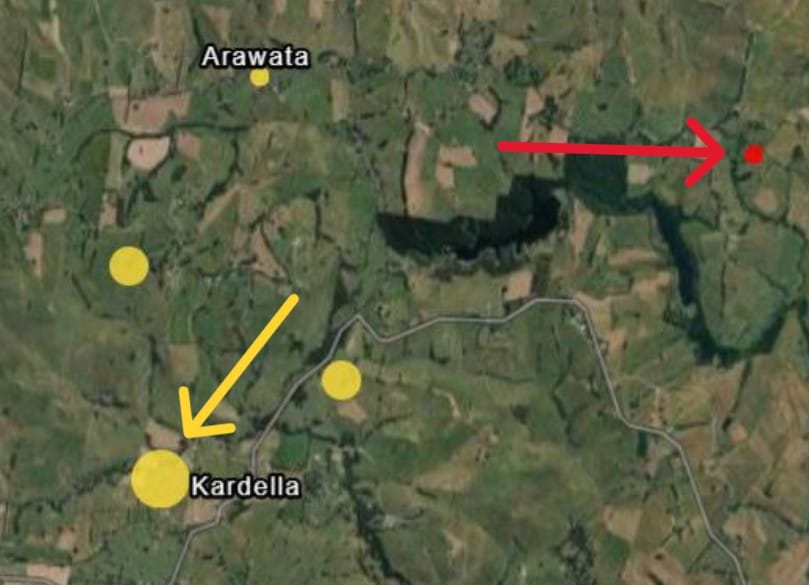
This time, there was a 2.5MLa tremor at 10:08pm on Thursday night centred east of Arawata, near Fairbank.
It was the eight measurable quake in the sequence but according to Dr Dee Ninis, an earthquake geologist in Monash University’s School of Earth sciences, it’s likely the aftershocks will continue to fade away from here after the biggest of the aftershocks of 3.2MLa, experienced at 22.17:47 on Wednesday, October 7.
“They're all part of the aftershock sequence for the magnitude 4.8 earthquake that was experienced early on Saturday morning,” said Dr Dee.
“So, last night's earthquake was actually spot on what we would expect for the largest aftershock from a magnitude 4.8 earthquake.
“Now that's just based on observations of aftershock sequences from around the world for literally, you know, hundreds to 1000s of years.
“So, we know that the largest aftershock will be about magnitude 1.2 smaller than the main shock, and that's exactly what we saw last night.”
Dr Dee said the good news, with one caveat, is the aftershocks are likely to fade away from here. But she doesn’t completely rule out another big one.
It’s just less likely.
“So, that is typically what we would see as the largest aftershock, but it's not a hard and fast rule. And these observations, as I said, based from around the world, we can't sort of apply everything in a hard and fast way.
“Observations that we see elsewhere, because each site is very different. The faults behave differently. The stress in the crust is different. So, that's just like an average of what we would typically see in an after-shock sequence.
“So, from now on, we would expect that all the earthquakes will be of smaller magnitude and slowly decreasing in frequency with time. But that doesn't mean we can't get a bigger earthquake or one of the same magnitude that we saw on Saturday morning.”
But what can we do to be ready for another big one?
“I think we should always be prepared. So, the largest earthquake on record in Australia was a magnitude 6.6, and that was part of the Tennant Creek earthquake sequence in 1988. But earthquakes don't even need to be that big to be damaging.
“The Newcastle earthquake, where sadly 13 lives were lost in 1989, was only a magnitude 5.4. That's actually a similar magnitude to the 2012 earthquake in Moe.
“So, we're lucky that didn't cause any injuries, serious injuries or casualties.
“But yeah, the advice is, if you feel strong ground shaking, to drop cover and hold on.
“Perhaps what you can do is make sure that your bookshelves are fixed to the walls, and any other kind of furniture that can topple over with strong ground shaking is fixed to the walls.
“Because that's often the type of thing that causes injuries in earthquakes, even earthquakes of just moderate magnitudes.”
Last week’s front page
At 2.01am last Saturday morning one of the strongest earthquakes to hit the region in the past 20 years rocked not only South Gippsland and Bass Coast but Melbourne and elsewhere in the state.
Geoscience Australia measured the October 3 quake at a magnitude of 4.8MLa and it prompted 21,595 reports from as far afield as Portland in the state’s south-west, Echuca in the north and Bairnsdale in the east.
The event also jammed social media, despite hitting in the dead of night.
Among those posting on the Sentinel Times’ Facebook page in the wee hours of the morning was South Gippsland Mayor Cr Nathan Hersey.
“Yes, that was a good one!” he said. However, while it was strongly felt in the nearby population centres of Korumburra and Leongatha, where it was all the talk around the shops on Saturday morning, spare a thought for the rural residents in the green rolling hills around Kardella and Arawata, who were sound asleep on top of the epicentre.
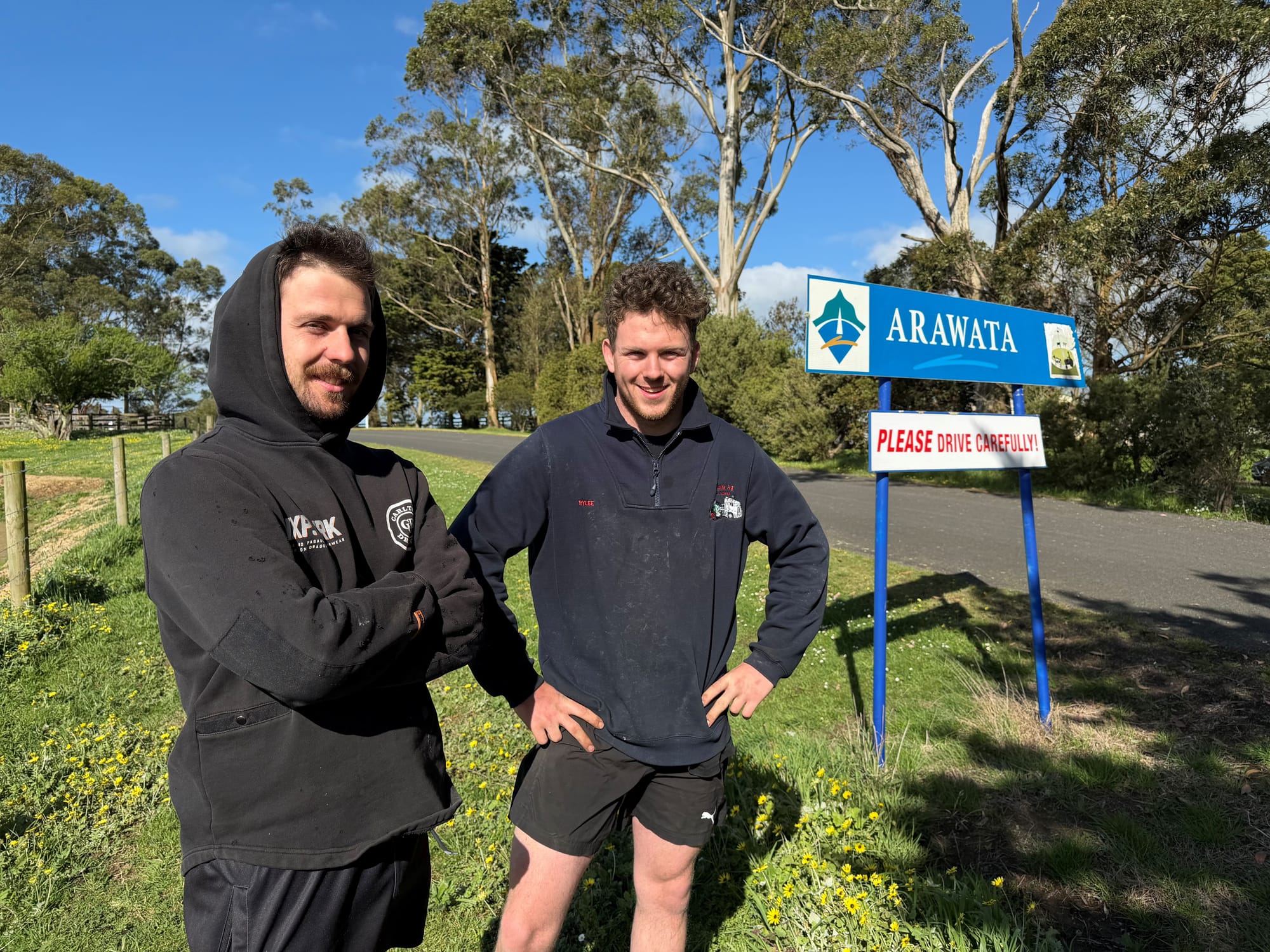
“I was dead to the world when we heard this big crack. It seemed to be coming from just across the paddock,” Bailey Martin said, pointing to the other side of Fairbank Road, south-west of the little hamlet. In fact, the epicentre was little more than a few kms away from his house, 10km below the surface.
“Then there was a rumble before the whole house started shaking. Really shaking. I thought it was a B-double or something headed straight for us. I was braced for the impact.
“The main thing I was worried about was the TV falling off the wall.
“It was really rocking but it stayed up there, thankfully. “Only bent the bracket,” he said. Housemate Rylee McCraw had a similar experience.
“Our beds all moved.
“Mine went skidding across the floor, pushing the bedside table with it.
“A spare bed we had up against the wall crashed down,” Mr McCraw said.
“Stuff fell off the shelves; the house was re ally rocking.
“It was a big one,” he said.
“We thought the back deck fell off but the dogs didn’t seem all that worried.”
However, just as everyone was settling down again for what was left of the night, the house was rocked by another tremor at 2.56am, this one measuring 3.1 (MLa), centred 1km north-east of Arawata.
“The second one was a pretty decent one as well,” Bailey said.
In fact, there was one main earthquake (4.8 at 2.01am), three other aftershocks (3.1 at 2.56am, 2.7 at 3.22am and 2.5 at 12.25pm) and hundreds of smaller tremors that went unrecorded by Geoscience Australia.
A Geoscience Australia spokesperson, Hadi Ghasemi, said the Korumburra-Leongatha quake was one of the biggest in recent years, but unlikely to cause much damage.
“Given the size of the event, I don’t expect any major damage to buildings of good de sign.
“But you know, the loose objects may have fallen down, that kind of stuff.” He recommended that people check out the Geoscience Australia website for more details and urged people to log their reports.
We have events like Saturday’s to thank for the green rolling hills which are so prized around Arawata and across the Strzelecki Ranges, a Monash University academic explained in a post at the weekend.
Dr Dee Ninis, an earthquake geologist in Monash University’s School of Earth, At mosphere and Environment, said the latest quake was part of an established pattern.
“Although earthquakes can and do happen anywhere in Australia, the Gippsland Basin is a region of heightened seismic activity rela tive to some other regions, and Korumburra is no exception.
“In 2009, a magnitude 4.7 was followed by a similar magnitude earthquake about two weeks later.
“The same area experienced a magnitude 4.4 quake in 2011.
“The area is known for several geological faults which first accommodated extension of the earth’s crust to form the Gippsland Basin more than 100 million years ago.
“In more recent times, in the last 5 million years, these faults were reactivated to accommodate compression of the crust, resulting in uplift and mountain building. “Aftershocks associated with this morning’s earthquake are expected to continue over the next few days to weeks.
“Generally, these earthquakes will become smaller and less frequent with time. “However, as with all aftershock sequences, there is a chance that an earthquake of similar magnitude or larger may occur.”
Eight measured tremors
Geoscience Australia has logged nine tremors in the hills above Korumburra and Leongatha.
- 2.5MLa Thursday, October 8 at 22.08:49
- 3.2MLa Wednesday, October 7 at 22.17:47
- 2.5MLa Tuesday, October 6 at 16.46:44
- 2.3MLa Tuesday, October 6 at 00.12
- 2.7MLa Sunday, October 4 at 03.22:31
- 2.6MLa Saturday, October 3 at 12.25
- 3.1MLa Saturday, October 3 at 02.52:32
- 4.9MLa Saturday, October 3 at 02.01:39
·


