

National recovery plan echoes Mirboo North warnings
A new national recovery plan for greater gliders has reinforced warnings earlier this year from Mirboo North conservationists about isolated populations, broken habitat links and the loss of hollow-bearing trees.


A new national recovery plan for greater gliders has reinforced warnings earlier this year from Mirboo North conservationists about isolated populations, broken habitat links and the loss of hollow-bearing trees.
The federal government announced the plan on Tuesday, September 8, setting a national goal of securing the species’ long-term survival by 2050.
It covers the endangered southern and central greater glider found in Victoria, including the population recorded in the Mirboo North Conservation Park, which was established earlier this year.
The plan identifies habitat loss, bushfires, climate change and many other disturbances as putting great pressure on the greater glider population, pushing their numbers down.
But connectivity is crucial.
Greater gliders rely on mature eucalypts for food and large hollows for shelter, and they need connected tree canopies to travel through their habitat without coming to ground.
Because when they do that, they’re much more exposed to predators and other dangers.
The plan found an animal launching from a 20-metre canopy could glide about 21 metres, while one leaping from a 30-metre canopy could travel about 33.
If there are gaps beyond those distances, then those gaps become barriers to everyday movement and prevent animals from dispersing between populations.
That problem has already been raised in Mirboo North, where the conservation park and nearby reserves form islands of native vegetation within a heavily cleared landscape.
Preserve Our Forests Mirboo North chair Marg Thomas previously told the Sentinel-Times that protecting 440 hectares through the new park was only the beginning.
“These are small islands of native forests. We need to ensure that there is connectivity,” Ms Thomas said.
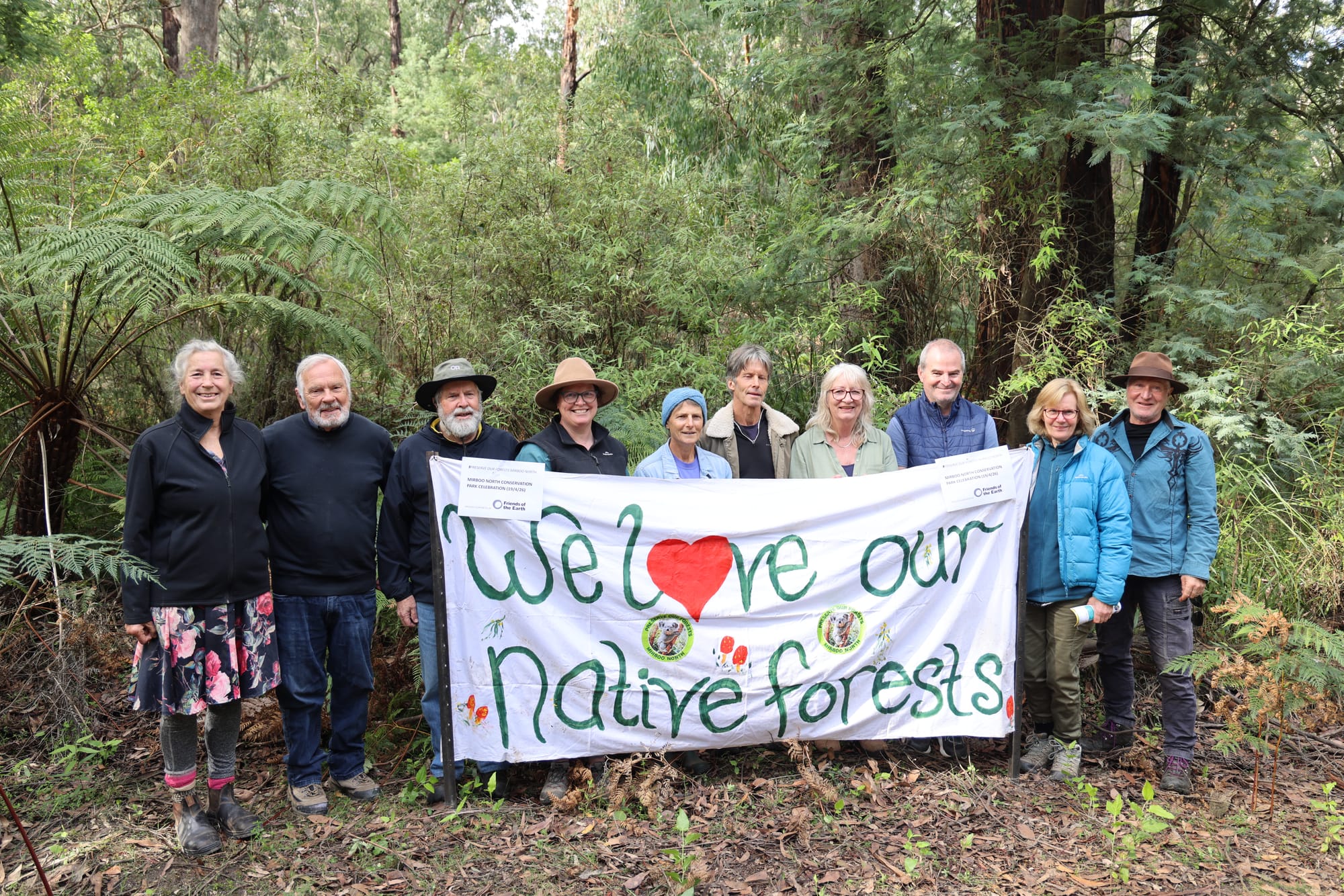
“Species like the Greater Glider, despite their name, can’t actually glide very far. They need an unbroken canopy to survive.”
The recovery plan calls for priority habitat corridors to be identified and mapped between 2027 and 2050.
Known glider records, movement information and genetic evidence would be used to decide where the links are needed the most.
Governments are also being urged to incorporate corridor protection into regional environment plans and planning overlays.
On the ground, the plan recommends restoring vegetation between isolated forest remnants and encouraging landholders to participate through incentive programs or conservation agreements.
The plan also proposes protection zones of at least 50 metres around known den trees. Hollow-bearing trees on roadsides, private properties and within small bushland remnants would be monitored and retained where possible.
Local ecologist Peter Gannon previously warned that isolation could leave Mirboo North’s greater gliders vulnerable to inbreeding and major events such as fire.
“Small populations are vulnerable to big impacts, such as fires or massive windstorms for example,” Mr Gannon said.
“Let’s say we had a fire through that area, and the glider population was wiped out or severely impacted, but the hollows remained. Where does the replacement population come from if there’s no connectivity?”
Mr Gannon also spoke on the possibility of the isolated glider population possessing distinct genetic characteristics or behaviours.
“We don’t know, because we haven’t done the surveys or the studies yet, but I suspect that if we had the funding and the budget and did an analysis of their genomics, we might find that it’s been isolated for so long that it’s sort of self-sustaining to a point,” he previously said.
And interestingly, that question now appears in the national plan.
It calls for existing genetic information to be compiled within two years and for ongoing genetic analysis to identify isolated or at-risk populations and examine any potential connections between them.
The plan came into effect on July 31, however, it doesn’t announce any dedicated funding for Mirboo North or identify the Strzelecki Ranges by name.


