

O'Brien, Halstead withstand the 'orange wave' to win local seats
The landscape of Victorian politics, likely Australian politics, has been changed forever by the result in the Victorian state election on Saturday night but among the likely winners on election day locally were Danny O'Brien and Rochelle Halstead. See details


THE landscape of Victorian politics, likely Australian politics, has been changed forever by the result in the Victorian state election on Saturday night.
The headline coming from Saturday is that the Nationals’ incumbent Danny O’Brien and the Liberals Rochelle Halstead, the former Mayor of the Bass Coast Shire Council, have both likely won their two local lower house seats of Gippsland South and Bass.
They’ll sit on the government benches in a dramatically changed parliament where the Liberal-National Coalition could hold as many as 70 of the 88 seats.
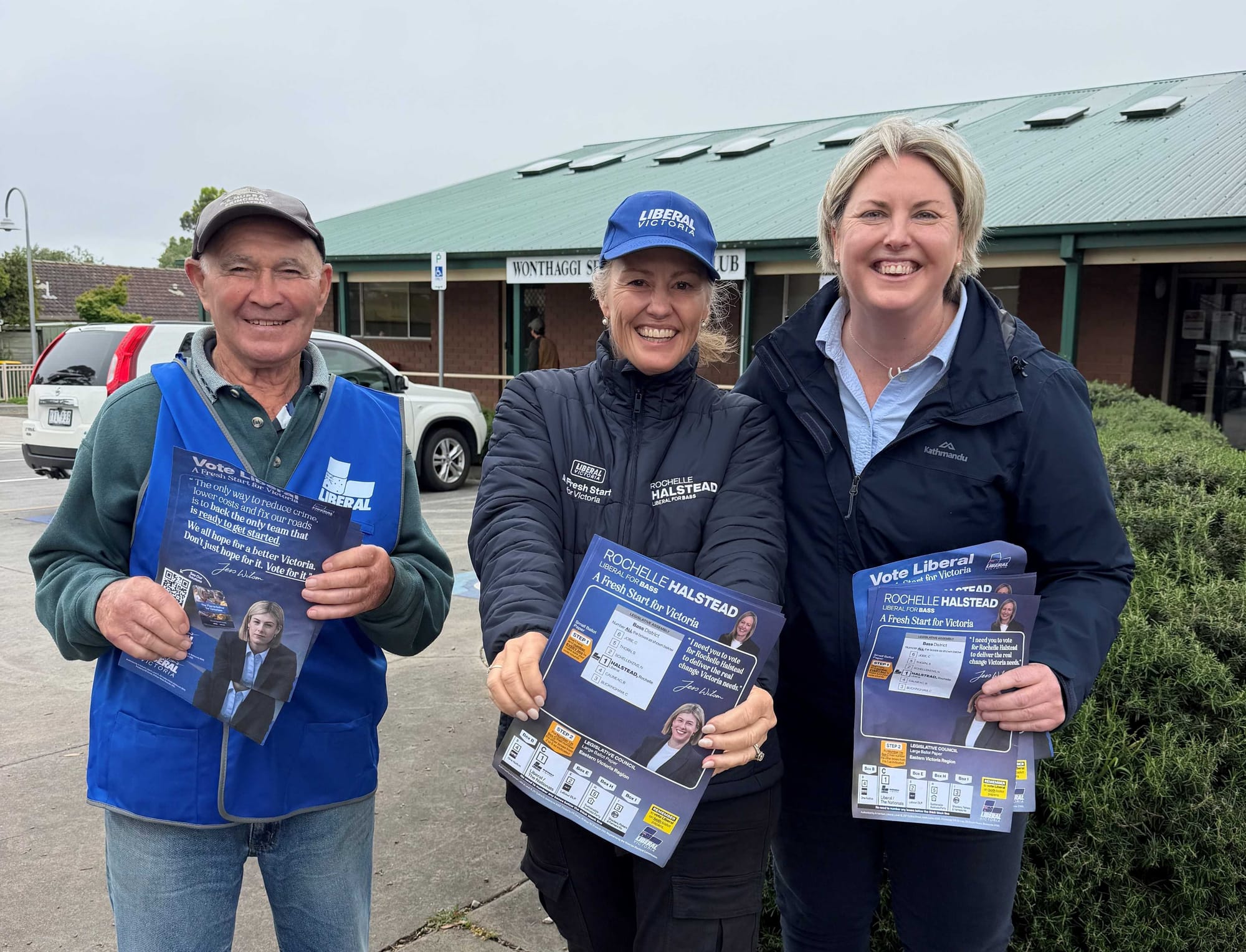
With 64.33% of the vote counted in Bass by Sunday lunchtime, Ms Halstead had 34.98% and the One Nation candidate Nikolle Schellekens 30.84%, a total of 12,686 first preference votes to 11,186.
So, it’s relatively close on first preferences, but the buffer established by Ms Halstead is all-important.
Statistically at least, with a tight flow of preferences, the Labor candidate Chris Buckingham with 14.68% of the vote or the Greens’ candidate Sophie Thorn with 14.07%, if you include the Victorian Socialists’ Chris Jobe 3.69%, could have overtaken Ms Schellekens in second place, partway through a distribution count, but not Ms Halstead.
It’s most likely that the former mayor will get elected on Labor and Greens’ preferences or on One Nation preferences making it crucial Ms Halstead finished in top spot after first preferences.
Speaking at a party function in San Remo on Saturday night, Ms Halstead was encouraged by the results but wanted to see more votes counted before acknowledging the outcome in Bass.
“It’s a good night for the Liberal Party and the Nationals but we’ll just want to see a few more votes in Bass first,” said Ms Halstead.
“It’s been a lot of work and there are a lot of people to thank,” she said.
Former state Liberal leader, retired MP Alan Brown, was a face in the crowd.
“This has been a long time coming,” he said of Labor’s dominance in Victoria over the past 25 years.
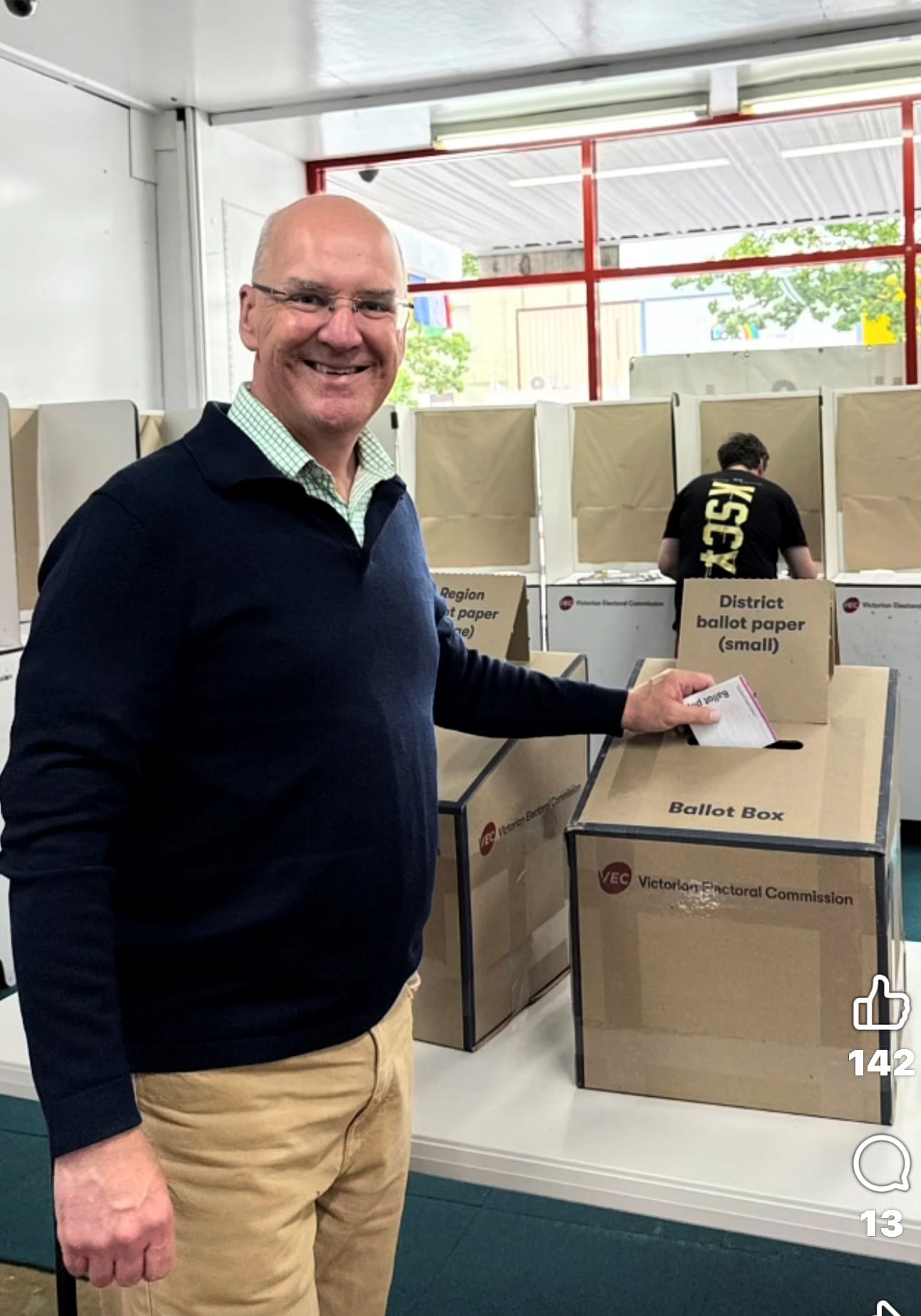
Mr O’Brien has a tighter grip on his result in Gippsland South, and for him, there’s a lot at stake.
A hard-working local member, first and foremost, by his own account, Mr O’Brien is set to become the Deputy Premier of Victoria in a Jess Wilson Liberal-National Coalition Government.
It’s an impressive rise to prominence for a former Gippsland Times journalist and WIN TV reporter.
With 31,153 of the 50,953 votes counted so far (61.14%) in Gippsland South, Mr O’Brien has attracted 39.94% of the first preference votes.
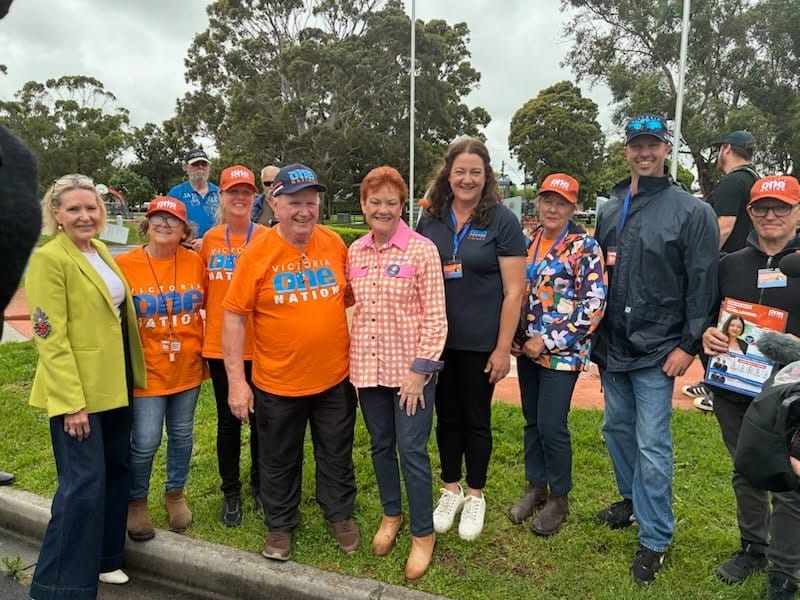
But, in an indication about how the arrival of One Nation has changed the political landscape, Mr O’Brien got 53.37% of the vote last time out, in 2022.
He effectively had no local opposition.
Now he has, and the same thing goes, to a lesser or greater extent, across the 88 seats on offer in the Victorian Legislative Assembly, the so-called lower house of state parliament, where the party in government is decided.
Mounting a strong and credible campaign for Gippsland South was local nurse-paramedic Bianca Wilkie.
In just a few short months of campaigning, and on the back of a level of dissatisfaction with the major parties, especially the Andrews-Allan-Carroll Labor Government, Ms Wilkie has attracted 35.33% of the vote, a very creditable performance.
A chunk of that vote came from the collapse of the Labor vote in Gippsland South, down from 23.4% in 2022 to just 10.35% in 2026, but there was also an impact on the Nationals’ vote, down from 53.37% to 39.94%.
It’s just the new reality of Australian politics, where there are three parties to vote for, not two, and the voters, with a grievance against either of the major parties, have had their say.
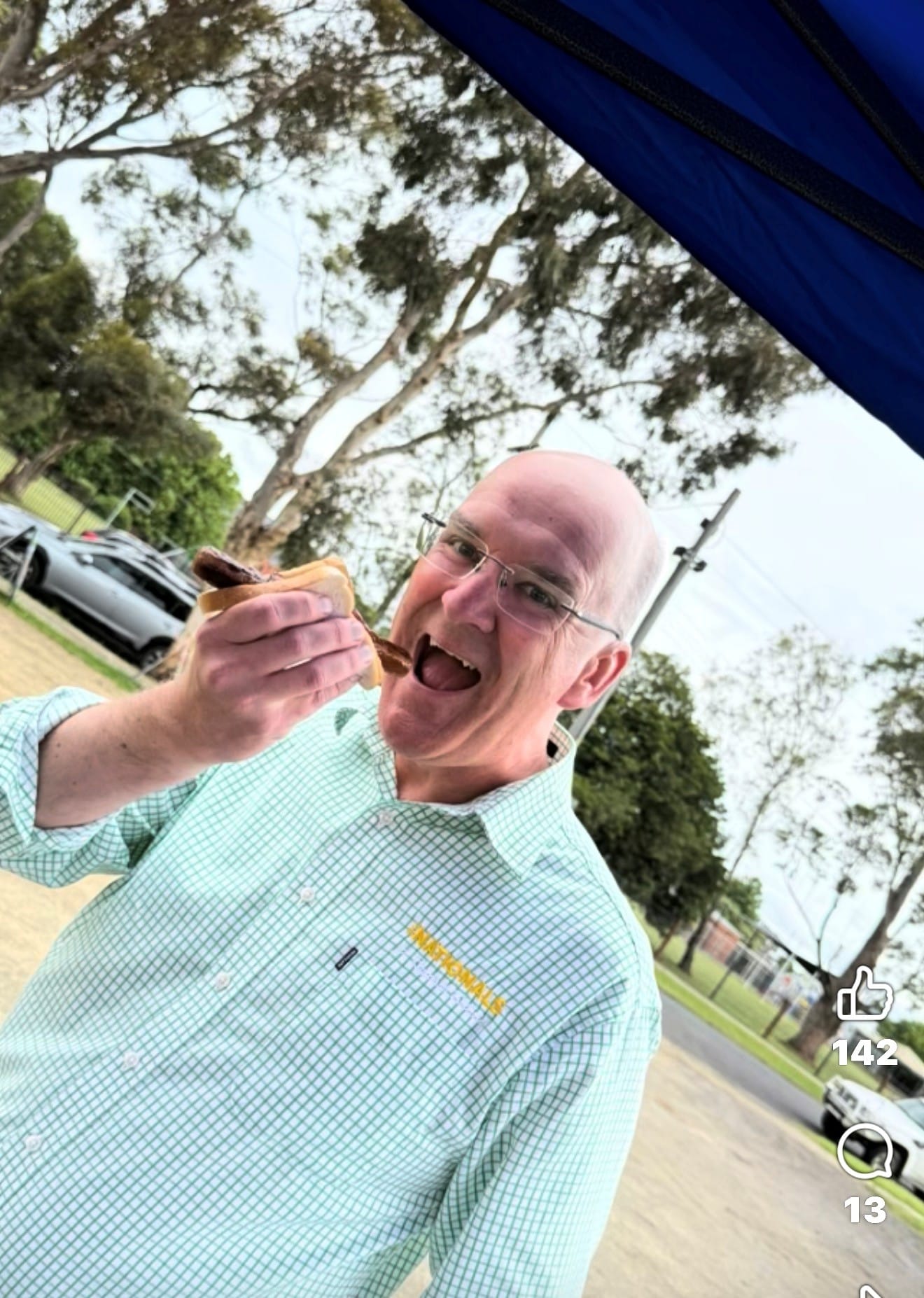
Mr O’Brien, who will be comfortably re-elected on Labor and Greens’ preferences, acknowledged on the booths last week that “there’s no such thing as a safe seat, there never was”, has seen that statement reinforced across Victoria in a result that has gone strongly one way, largely on Labor preferences after their historically low vote, but could just as easily go a different way if One Nation continues its climb.
Their performance in Victoria is going to change how the major parties approach the March election in NSW and the federal election in early 2028 where they’ll have to take the challenge of One Nation a lot more seriously.
Mr O’Brien simply posted the following message on his social network pages today: “Thank you Victoria - The hard work starts today”.
See the latest counting in Bass HERE
See the latest counting in Gippsland South HERE
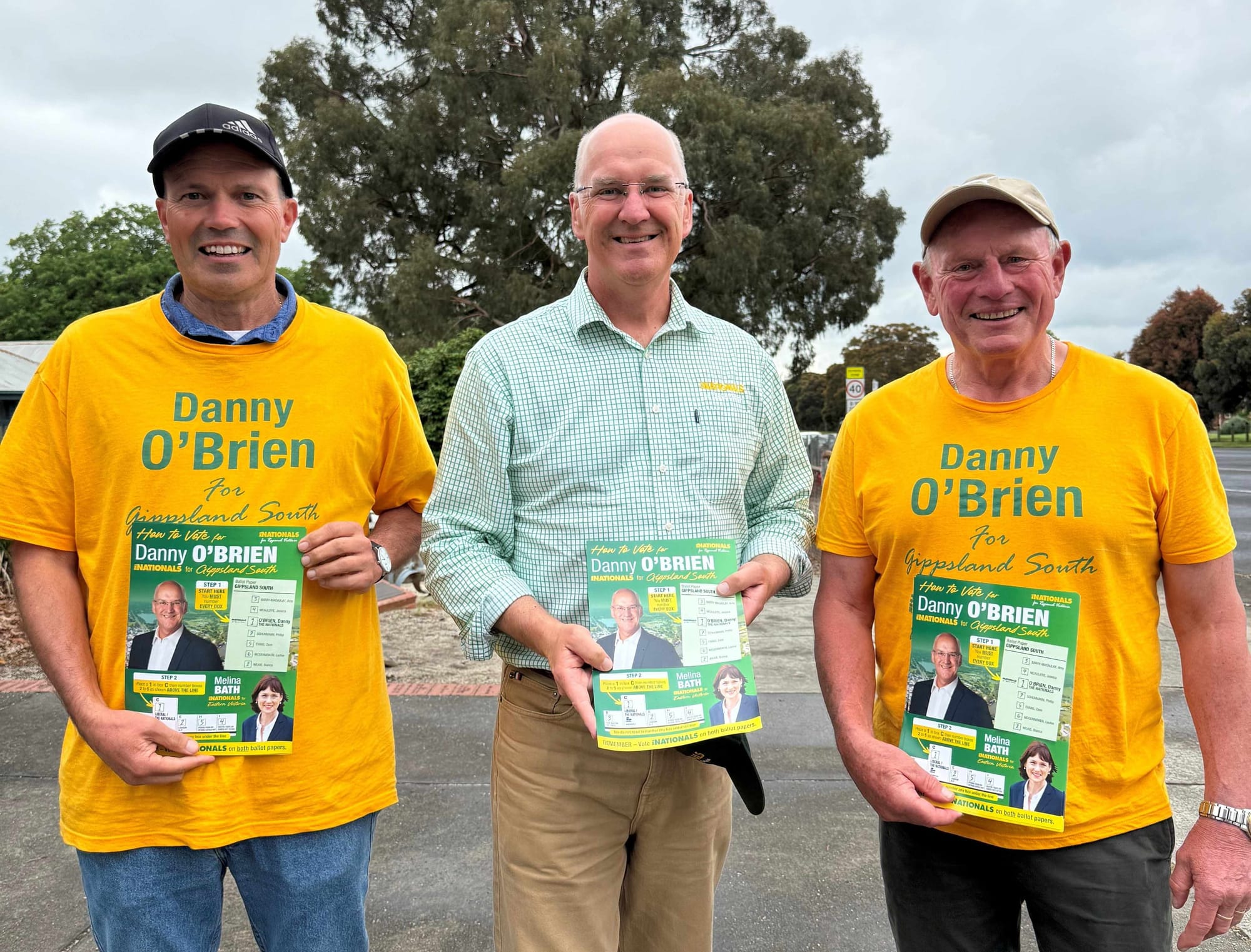
It is likely to be days before the final make-up of the lower house is known and still longer before the 'big voting papers' are tabulated for the 40 positions in the Victorian Legislative Council.
Two local candidates with strong chances of election in the all-important house of review, the upper house, are The National's Melina Bath and The Greens' Mat Morgan, a Bass Coast Shire Councillor.
Incidentally, One Nation candidate for one of the five upper house seats in Eastern Victoria, Esler Clay, a father of three with a Commerce degree and service in the RAAF, is likely to be one of those elected. He polled just 2,414 of the 44,717 votes cast in the Gippsland South election of 2022, when he stood as an independent, or 5.70%.


