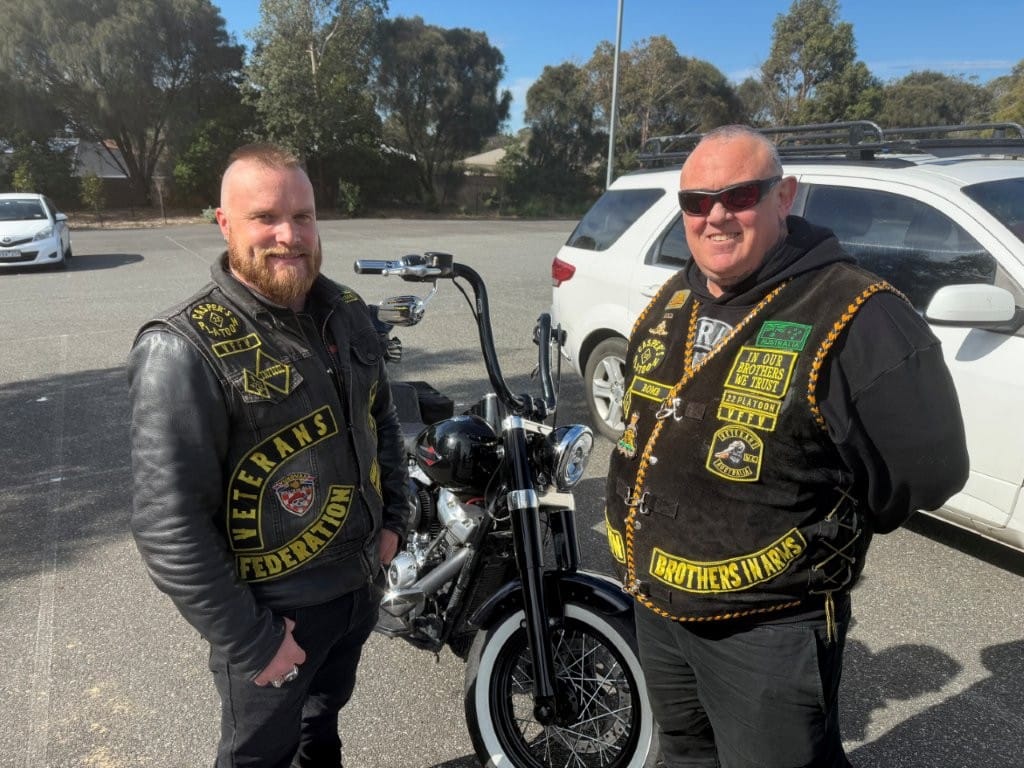
60 years on from the Battle of Long Tan… we remembered them!
It took 50 years before the RSL apologised to Vietnam Veterans who were criticised and shunned by the organisation on their return from the war, now they're running the show. See details:


IT TOOK 50 years before the President of the New South Wales Returned and Services League (RSL), Ray James, issued a formal apology to veterans who were criticised and shunned by the organisation on their return from the Vietnam War.
The year was 2023, 50 years on from when the last Australian personnel returned home. He was at the 50th anniversary event in Martin Place in Sydney, while many Vietnam Veterans made the pilgrimage to Canberra for the 50th anniversary National Vietnam Veterans Day, outside the Vietnam Veterans Memorial in Anzac Parade.
The Prime Minister, Anthony Albanese, wasn’t there, but he also issued an apology from a local event he attended in Queensland.
“We honour you, we thank you and we are so sorry it took us so long as a nation to do so,” he said.
The RSL sub-branches had initially been stand-offish towards those who had fought, due to the belief they didn't fight in "a real war" which caused many veterans to feel isolated.
There was also the stigma attached to fighting a war that ultimately no one supported.
“It’s taken a long time for some people to get over that,” said President of the Phillip Island RSL, Ray Young, himself a Navy man.
“One of our blokes, when he came back from Vietnam, found that no one wanted to know about it, so he just resumed his life as a tradesman on the island, surfing and just getting on with it.
“A few years ago, he came along to one of our marches, and a few people said to him they didn’t even know he was a veteran.
“He said he just put it behind him but felt that the time was right to come along,” said Mr Young.
“I don’t think the World War I blokes were all that welcoming of the WWII veterans either when they wanted to join.”
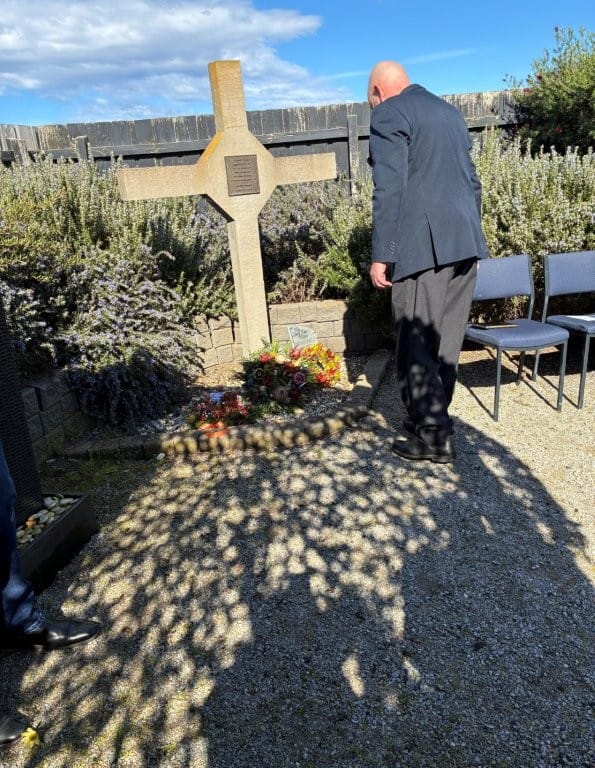
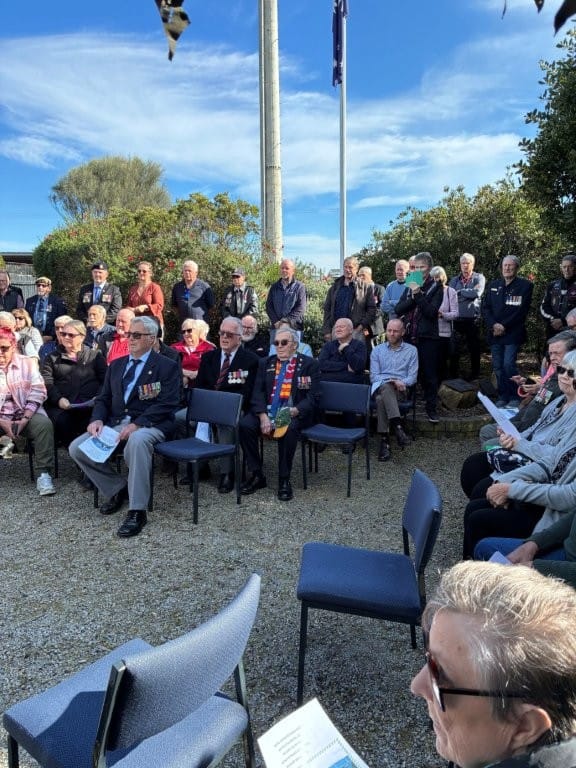
Nowadays of course, Vietnam Veterans form the backbone of the RSL, and they were out in force at the memorial behind the National Vietnam Veterans Museum in Newhaven, and later at the Phillip Island RSL, on Tuesday this week, August 18, to mark the 60th anniversary of the Battle of Long Tan, on August 18, 1966, and to support their own National Vietnam Veterans Day observance.
Among them was Bill Noble, who, when the Vietnam War broke out, had been a career soldier since 1961, in 1RAR, at the Holsworthy army base in Sydney’s south-west.
Unlike many of the conscripts that were to follow, he knew what was coming and had trained long and hard to be ready.
“As I recall it, the CO got up in front of the whole battalion and told us we were going,” said Mr Noble this week.
“We left in May 1965, and I got home in June 1966.”
As a regular soldier, did you have to go back?
“Yeah, I went back in 1971 until 1972 and came home with the last lot on March 2, 1975. First in, last out.”
Were you aware of the change in community sentiment towards the war and your role in it?
“Yeah, we knew. A bit cheesed off with general public at the time, but now you look back, I don’t blame them. We probably shouldn’t have been there, fighting another war for the Yanks.”
As a rifleman private, Mr Noble’s company was attached to the 173 US Airborne Brigade and as such, came under fire on numerous patrols. He now lives in San Remo.
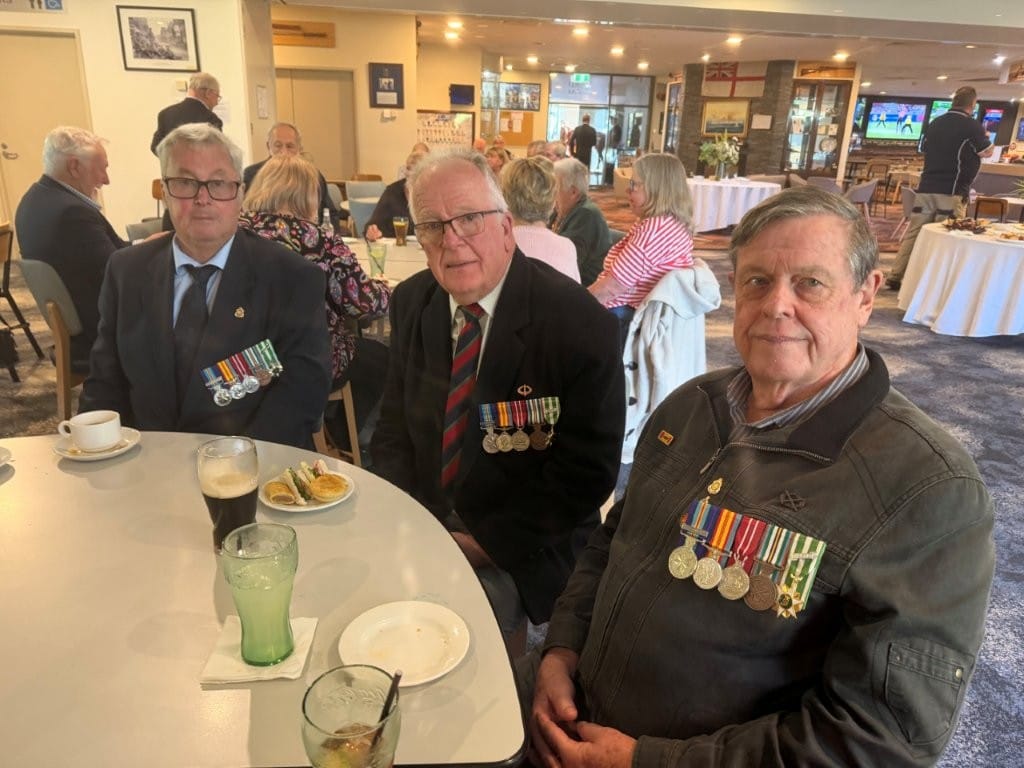
Geoff Wade (1970-71), Neville Watts (1968-69) and Robert Shaw (1967-68) also attended the Newhaven wreath laying and get-together back at the Phillip Island RSL afterwards.
They were all conscripts, that is, they were required to register with the Department of Labour and National Service (DLNS) when they turned 20 years of age and make themselves available for national service.
From August 1965, the Menzies Government decided that the annual intake of conscripts should be maintained at 8400 but because there were more eligible 20-year-olds in Australia than that number, people were balloted into service when their birth date was drawn out in a lottery.
We asked Geoff Wade how he found out he had been drafted?
“I got a letter in mail when I was working as draftsman at BP in St Kilda.
“I always knew it was on the cards. I had to register when turned 20, which I did shortly after my birthday on January 3rd, and if your birth date came up you went.
“I was 20 when I found out in about March-April.
“Mum rang me at work and told me a letter had arrived and I told her to open it. She chuckled when she saw I’d been drafted and said it would do me the world of good.
“My father was a World War Two veteran so the family sort of understood what was required. Dad talked to me a bit about it. Probably talked more after I got home.”
As an artillery gunner Mr Wade was tasked to provide fire support, based behind the infantry, but they often had the enemy around them, trying to take away their firepower.
“The idea was to try and drop rounds behind the enemy’s position so they could move.”
It ultimately became Geoff’s job to work in the command post, receiving the information from the forward observers, turning that into firing calculations and after having it checked by a commanding officer, to put that information on the guns.
It was an important job, requiring immediate action and attention to detail, taking not only distance and elevation into account but also changing weather conditions and battleground circumstances.