

Mayor calls for a national erosion fund as Inverloch keeps losing ground
Bass Coast wants a dedicated emergency resilience fund for coastal erosion as the Monash MP pushes for a parliamentary inquiry


BASS Coast Mayor Cr Brett Tessari wants the State and Federal governments to set up an emergency fund dedicated to coastal erosion so the shire is not left carrying the problem alone.
His call came on the same day Federal Monash MP Mary Aldred said she would keep pushing for a parliamentary inquiry into coastal inundation, naming Inverloch and Phillip Island as the reason.
Cr Tessari said the towns on the front line were past the point of waiting for the next crisis.
“For coastal towns like Inverloch, the crisis is already here,” he said.
“Coastal councils are facing erosion, storm impact, and damaged infrastructure. Some of this infrastructure was built decades ago and not built for today’s weather.”
He said the work already underway was welcome but nowhere near a fix.
“While we’re thankful for the works happening on the grounds now, the fact is we need all forms of government to come together and come up with a permanent solution,” Cr Tessari said.
“While we’re certainly thankful for the help so far, this is not a local government problem.
“If we wait for damaged infrastructure, it’ll be our communities that will pay the price.”
The mayor said the pattern of emergency, consultants, design and plan had to stop.
“What these communities need is certainty,” he said.
“Instead of waiting for the next emergency and then getting the consultants together and a new design and a new plan, we’re calling on the government to have an emergency resilience fund solely for coastal erosion.
“Coastal erosion is not just a local problem. It’s a regional, a state, and it is a national problem.”
Ms Aldred is making the same argument in Canberra.
“At the moment, we have an ad hoc, patchwork quilt approach to addressing coastal inundation, despite it affecting many regional areas including communities in Monash,” Ms Aldred said.
“I called for a national framework to address coastal inundation in my maiden speech last year.
“That’s because it’s a crucial issue for a number of areas in South Gippsland and Bass Coast shires, particularly Inverloch and Phillip Island.”
Both towns have spent years watching the sea take ground.
At Silverleaves the western shoreline has retreated about 77 metres since 1953, and the Coastal Processes Study released in 2024 found the setback had accelerated to as much as eight metres a year since 2022.
That study blamed a revetment built in 1977, the smooth rock walls installed at Cowes East in 2022 and a groyne field it called relatively inefficient, and found repeated sand renourishment had proven sacrificial rather than a long-term fix.
It also warned Silverleaves faces inundation from behind through the Rhyll Inlet.
A 165-metre rock bag wall went in before Easter last year as part of a $15 million State Government package, designed to hold for five to 10 years, and sea water has since been undercutting it.
The State Government handed the shire $1.4 million last November to design and deliver a rock sill planted with native vegetation, dune reconstruction and a realignment of the existing revetment.
By March the Save Silverleaves campaign had gathered more than 1200 signatures on a petition calling for two levee banks, arguing about 340 homes and more than $500 million in public and private assets remained exposed.
State Nationals MP Melina Bath said in April that more than $2.8 million in state and federal funding had been committed without a shovel hitting the ground, and that about 1.5 metres of foreshore had gone in a matter of weeks east of the rock bag wall.
In May the council voted 6:2 to write to the State Government seeking a comprehensive coastal hazard adaptation and resilience plan for Silverleaves.
That debate turned on the word retreat, with Island Ward Councillor Ronnie Bauer arguing the levee bank option should be fully explored before council told residents the long-term outcome was retreat.
Inverloch has its own version of the same fight, with the surf beach losing about 10 metres a year and about 500 residents rallying in January last year.
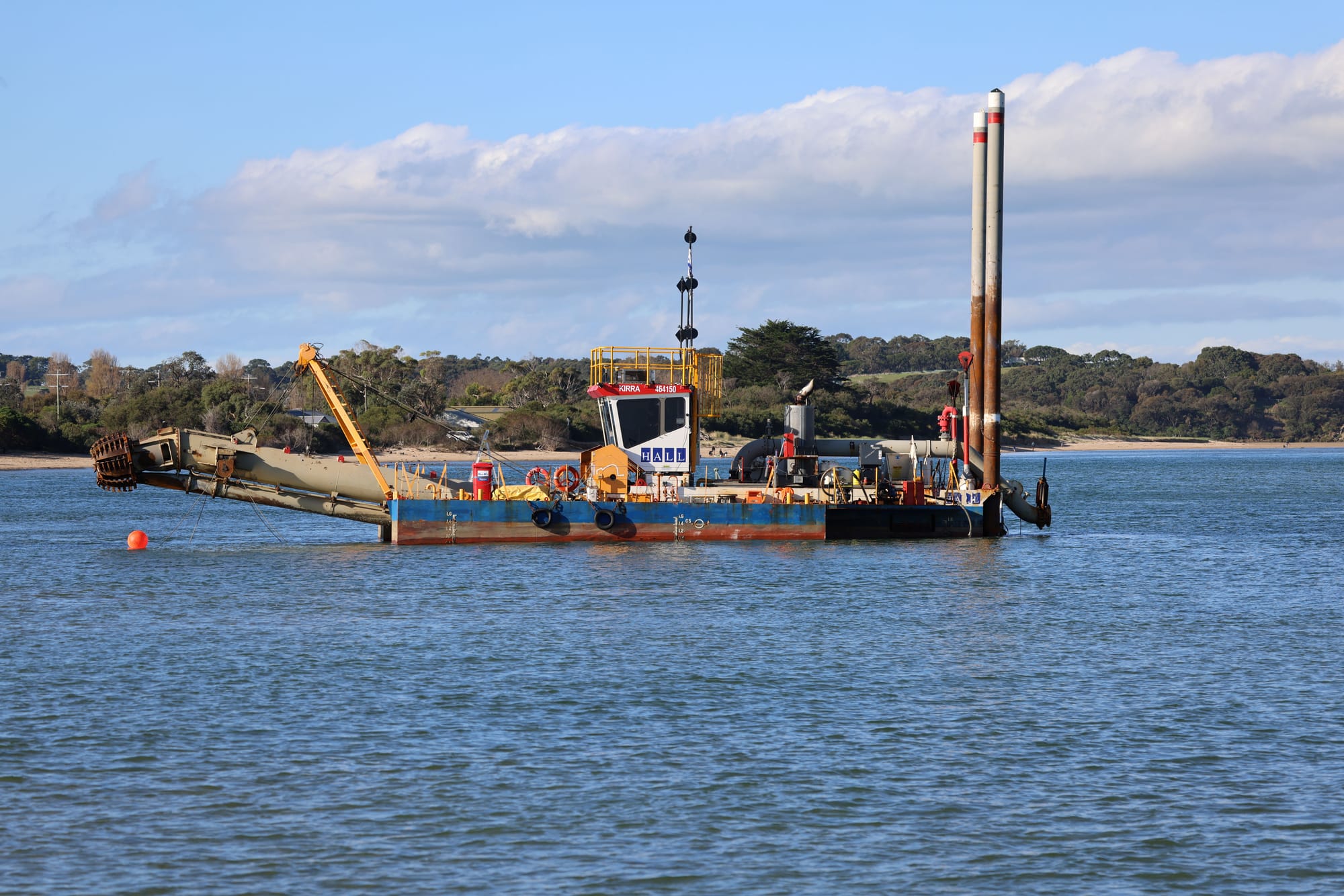
The State Government has since spent $5.3 million dredging 100,000 cubic metres of sand from Anderson Inlet and pumping it down the coast to rebuild the dunes at the surf beach.
The Department of Energy, Environment and Climate Action has said those rebuilt dunes may only last four to 10 years and that further renourishment could be needed.
“It’s something I want to ensure the Monash electorate is strongly represented on, and I will continue to call for a parliamentary inquiry as well as other more immediate steps,” Ms Aldred said.


