

It’s a lifesaver – How they’re responding to a horror drowning
The deaths of four members of the one Indian family at Forrest Caves on Phillip Island in January 2024 has had a profound impact on many but as tragic as the incident was, their deaths may not have been in vain. See details.


THE deaths of four members of the one Indian family at Forrest Caves on Phillip Island in January 2024 has had a profound impact on many of the first responders, including the beachgoers and Woolamai Beach Surf Lifesaving Club members, who rushed to the scene that day.
It’s also prompted the authorities to redouble their efforts to boost safety measures for the increasing number of people, especially from the south-eastern suburbs of Melbourne, who visit our shores.
And last Friday they continued to roll out measures they hope will help avoid such a tragedy from happening again.
They’ve previously erected a set of graphic new warning signs at our most dangerous beaches.
And now, having trialed an innovative public rescue system at Venus Bay over the past year, they’re extending what will almost certainly be a lifesaving initiative along the coast from Magiclands Beach, at the eastern end of Cape Woolamai, to Summerland Beach at the western end of Phillip Island.
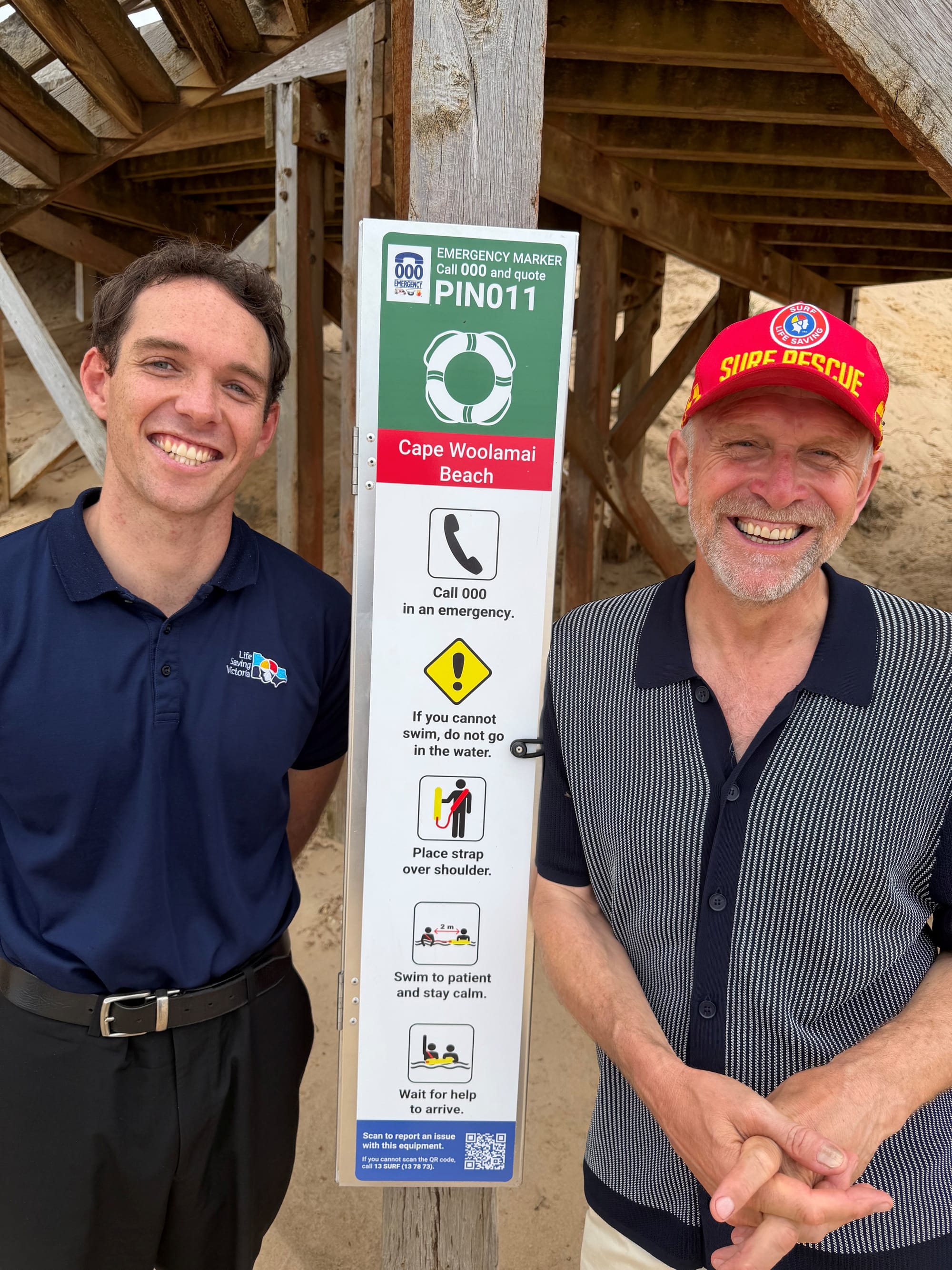
But as one of those on the beach that terrible day, lifesaver Nic Frances-Gilley, stressed at the launch of 16 new public rescue equipment stations last Friday, there’s still no substitute for simply “swimming between the flags”.
“The best message, when you go to the beach, is swim between the flags,” said Nic.
“Before I joined surf lifesaving, I wouldn’t have known a thing about rips or the dangers that exist, but I did know about swimming between the flags.
“But even now, I wouldn’t go in to help if I didn’t have something that floats.
“I was there that day. They were in knee-deep water when they got knocked over and we had a terrible tragedy.
“But even the professionals wouldn’t want to go in without a floatation device so how does anyone else think they can do it without something that floats.
“You’d go in there and the person in distress is going to try and use you as a floatation device and there’s a risk that you’ll both drown.
“I used to stash a board in the dunes or have something that floats at hand when I went to the beach, but that’s what these Public Rescue Equipment stations are for,” he said.
“They will help bystanders contact Triple Zero (000) in the first instance, provide instructions in case of an emergency including the exact location for emergency services and a QR code for language support.
“And there’s a rescue tube to be used by those capable of assisting in the event of a water safety incident to do something to help,” he said.
“They are being located along the coast, at places like the main beach here at Woolamai, at Anzacs, the Colonnades, Forrest Caves, Surfies Point, Pyramid Roch, Smiths Beach, and right through to Summerlands, wherever there’s a beach with a carpark behind it.
“But, once again, there’s no substitute for finding a patrolled beach and swimming between the flags.”
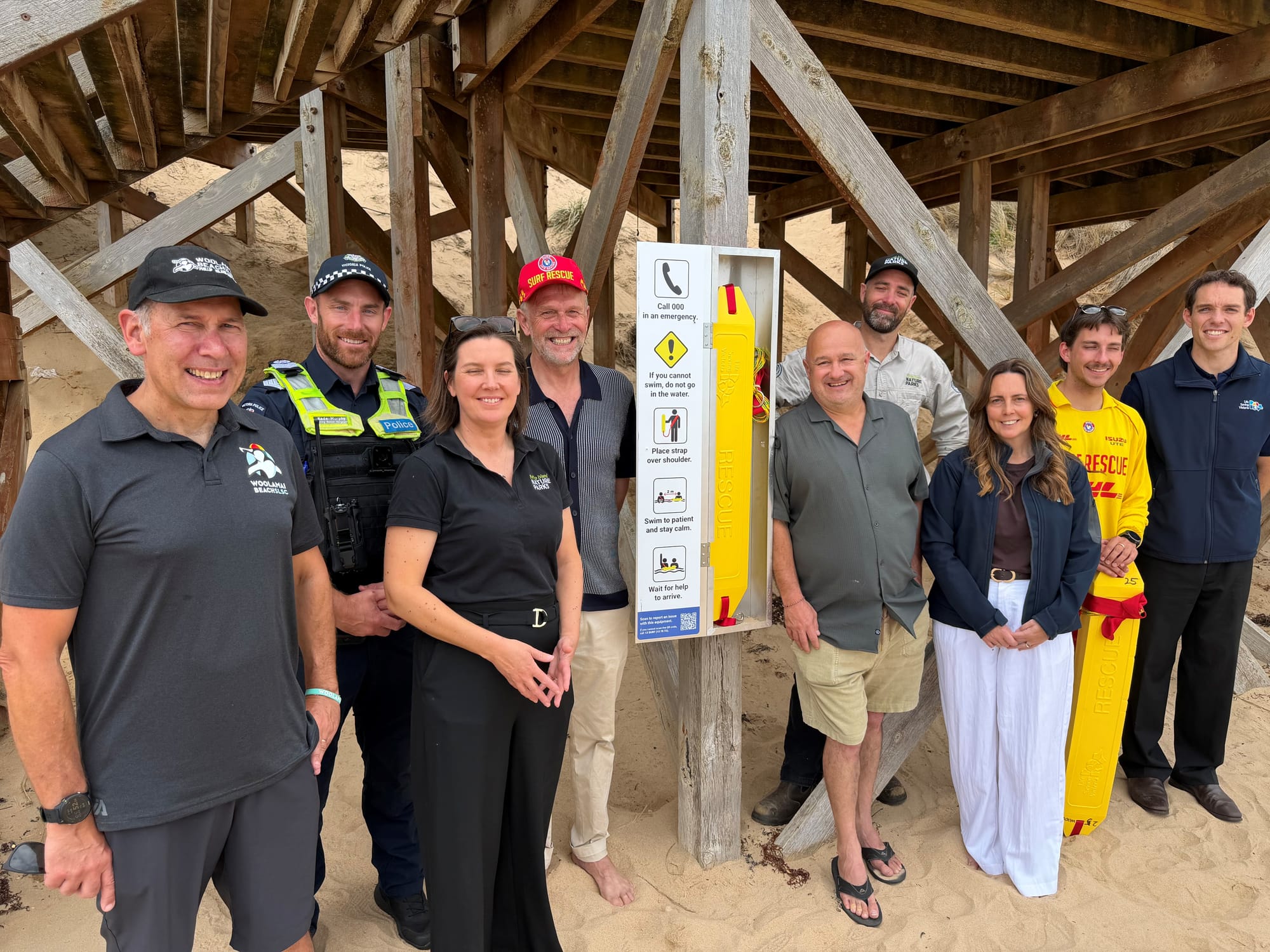
Pioneered by Life Saving Victoria and trialed by the Venus Bay Surf Lifesaving Club, with the support of the Australian Government and Surf Life Saving Australia, these public rescue equipment stations have been launched in an effort to keep our beaches safe and help prevent drownings.
Last Friday’s rescue equipment launch at Cape Woolamai was well attended by Bass Coast Shire Council Mayor, Cr Brett Tessari, and Bass Coast Beach Safety Working Group representative Dani Slaughter,
President of Woolamai Beach SLSC Jason Close welcomed everyone to the beach for the launch, after delivering a comprehensive acknowledgement to the traditional owners.
“Obviously, Nic Frances-Gilley from our club has led this project as our club representative, and this is a fantastic example of working in partnership with other organisations to really deliver something which is going to be of enormous benefit to, not just the local community but visitors, and it's also going to really help first responders,” said Jason.
“I'd like to welcome Oliver Woods from Life Saving Victoria, who's also been a very important part of the project. LSV is looking to do some further work in this area, which I'm sure Oliver will tell us about.
“We'd also like to acknowledge Phillip Island Nature Parks and their significant contribution to the project. We have Catherine Basserfield and Ewan MacLeod from Nature Parks here today. Welcome.
“Victoria Police have obviously been a big part of first responses on the the island, and we've had to deal with a few of those over the last few years.
“And of course, I would also like to acknowledge our representatives from the Shire of Bass Coast, Cr Brett Tassari, and our media representatives as well.
“So, I'd now like to hand up back to Nic, but I would just like to say, just having been involved in a few remote beach rescues, I'm very excited about what this means for the island, and this is just going to really, I think, change the way that public rescue equipment is viewed and how we operate across the island.”
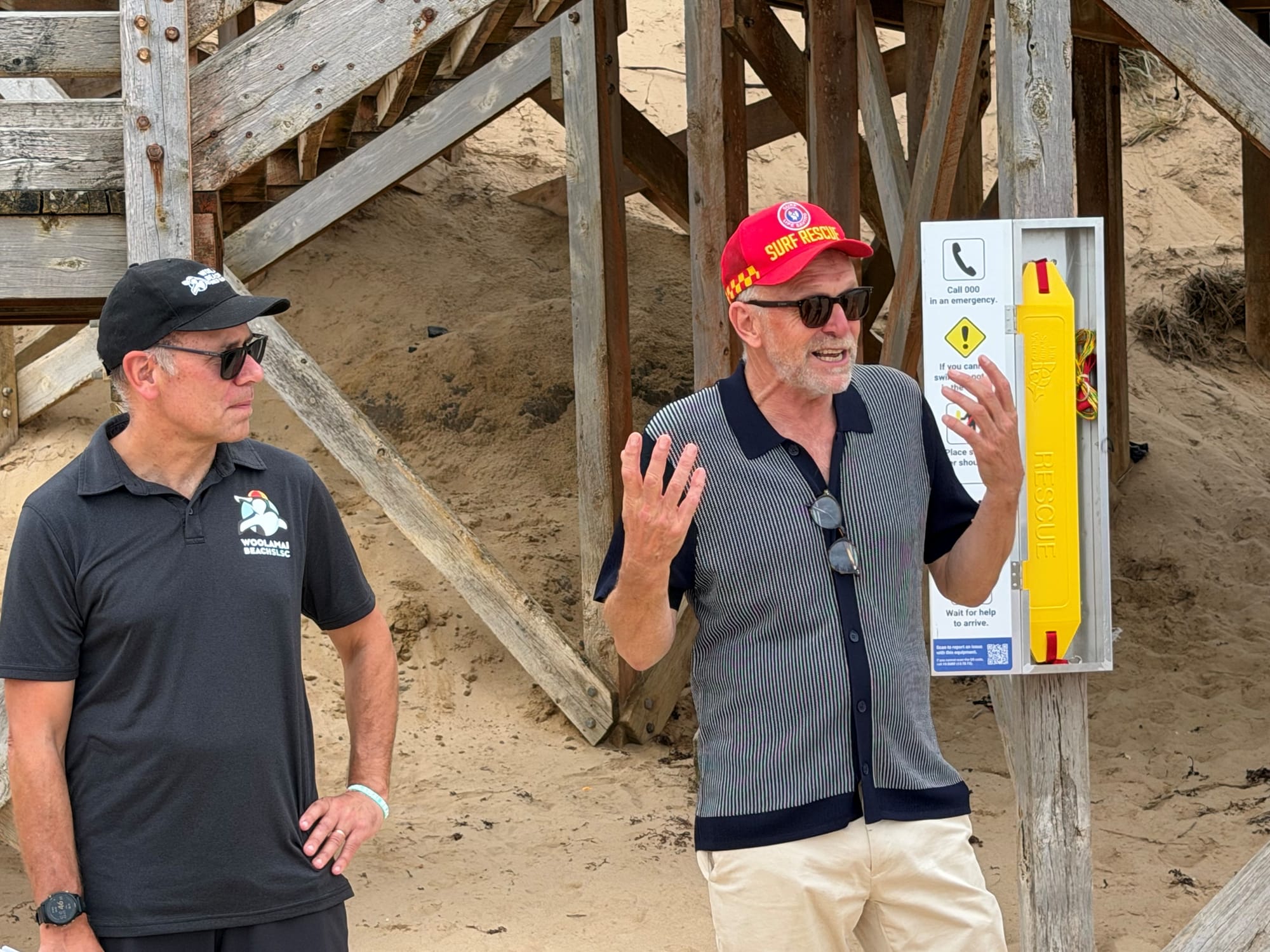
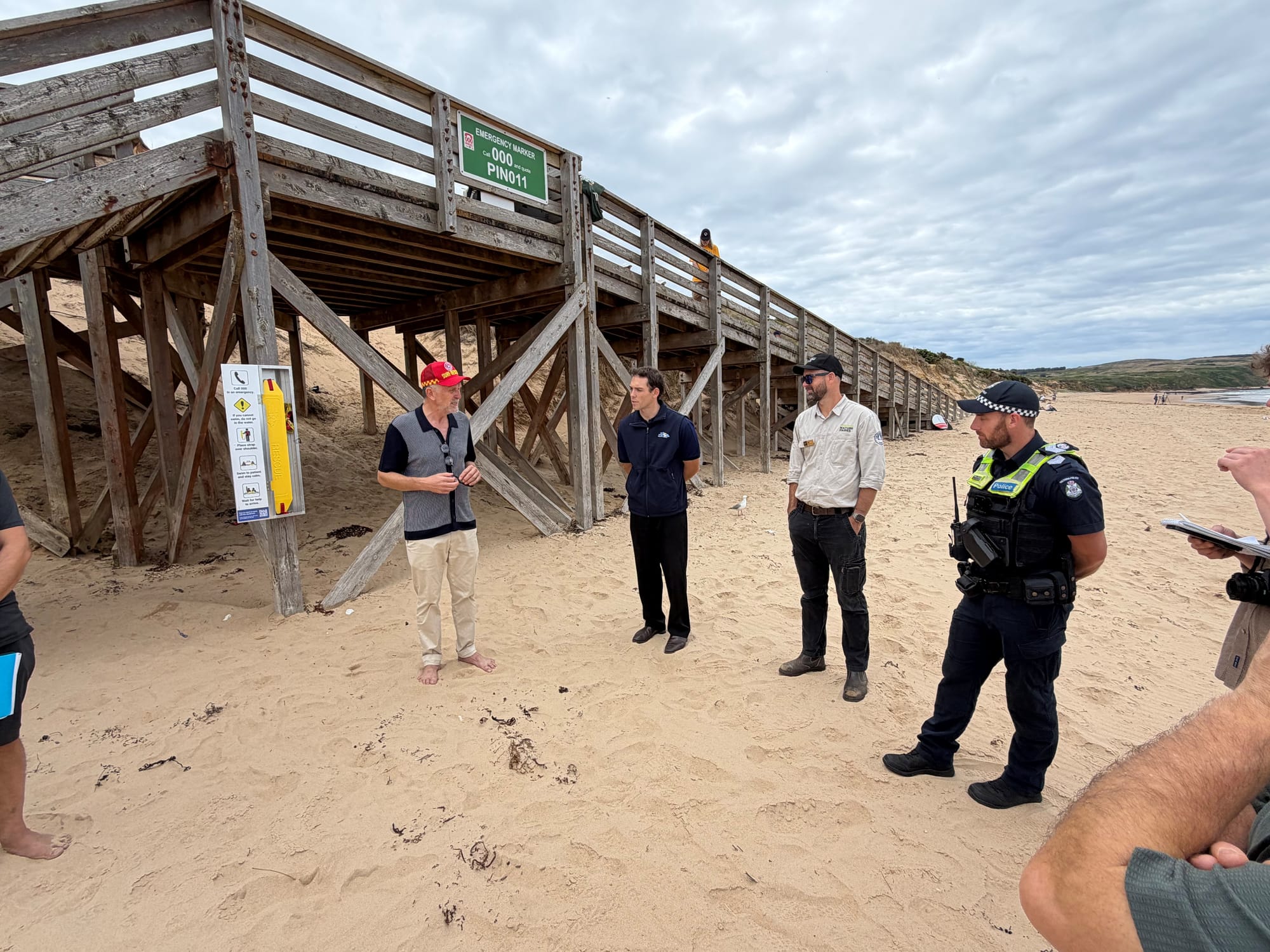
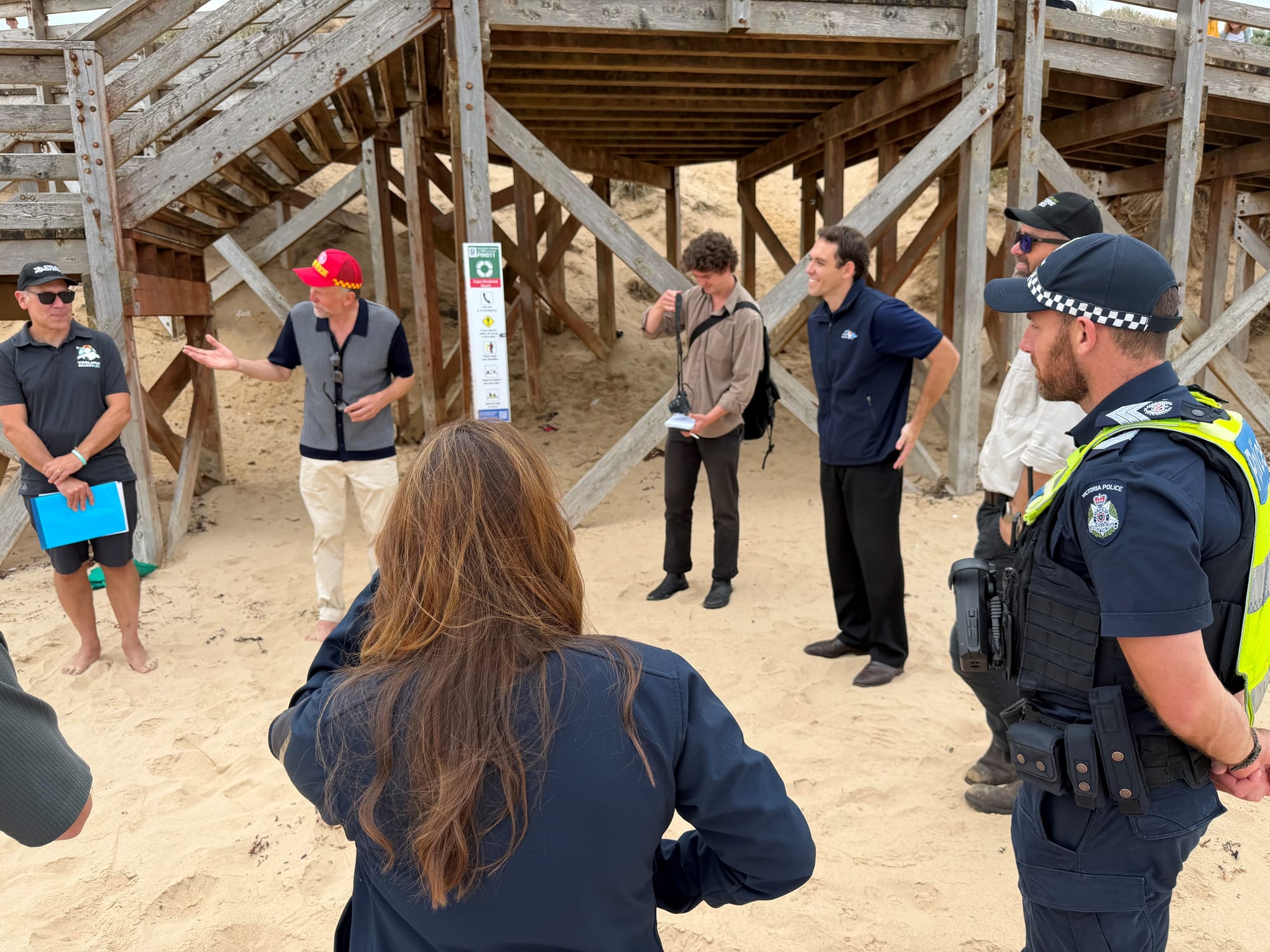
The launch of the surf beach rescue equipment last Friday.
Oliver Woods, the Public Rescue Equipment project officer for Lifesaving Victoria continued the theme.
“Thanks for all being here. This is a really special moment, I think, for us as an organisation, but also as a community. I grew up lifeguarding these beaches, and I know the value of accessing public rescue equipment when you do really need it,” said Oliver.
“I think it's a really special story, this one, of collaboration between agencies and community. This has really been a long piece of work, I want to say, particularly through the Bass Coast Beach Safety Working Group, who have been instrumental in talking about beach safety at the council level, and then the support of nature parks has been fantastic in driving this initiative.
“It's really special, and it's really the direction that we're going as an organisation.
“To provide a little bit of background to this project as well, from a Lifesaving Victoria's perspective, we had a trial at Venus Bay that ran from 2024, and it wraps up mid next year and that showed the immediate value of public rescue equipment to us.
“This project has worked in with our national study work and international research, so this is really exciting to see it come to life in a very practical form and is an excellent example of a drowning prevention initiative.”
Phillip Island Nature Parks Ranger-in-Charge Ben Thomas said Nature Parks was a proud supporter of the project.
“Phillip Island Nature Parks is very proud and excited to support this safety initiative being led by the Woolamai Beach Surf Lifesaving Club and Lifesaving Victoria.
“It's just one small part of a much larger beach safety campaign that we're all a part of, but it's great to see this initiative on the ground and having that tangible safety devices here for people to use,” said Ben.
As Nic and Oliver explained afterwards, the public equipment rescue stations are conveniently located below the main carpark, in 16 locations, across Phillip Island’s beaches.
Those needing the support of a rescue station must first alert Triple Zero in the event of an emergency, quoting the Emergency Marker code, which in this case is PIN011 for Cape Woolamai Beach, and if you are a capable surf swimmer, use the floatation device provided to go to the assistance of the patient.
Lifesaving Victoria said it’s likely that the initiative will be rolled out across all Victorian and potentially, all popular Australian surf beaches.
In this way, the deaths of Melbourne nurse Jagjeet Singh, 23, university students Kirti Bedi and Suhani Anand, both 20, and Reema Sondhi, 43, will not have been in vain.


