

Appeal court to decide if Erin Patterson dies in prison
Should Erin Patterson be locked up forever The Victorian Director of Public Prosecutions Brendan Kissane KC believes she should be. Here's why.


SHOULD Erin Patterson be locked up forever?
The Victorian Director of Public Prosecutions Brendan Kissane KC believes she should be.
He told the state’s Court of Appeal last Thursday, August 20, that the trial judge in the Erin Patterson’s murder case, Justice Christopher Beale, made a mistake in setting a non-parole period of 33 years for her heinous crimes.
He argued that it wasn’t open to His Honour, when he considered all the factors, to set a non-parole period at all, that the sentence on conviction of three counts of murder, and one of attempted murder should have been life without parole.
As well as highlighting the aggravating circumstances in the Patterson case, including that the triple murderer refused to come to the aid of her victims even after she knew her in-laws were dying an excruciating death, he provided examples where harsher penalties had been handed down in arguably lesser circumstances.
They included several high-profile Victorian killers including Jaymes Todd, found guilty of killing Melbourne actress Eurydice Dixon, Osman Shaptafaj, who killed his daughter and her husband, and Sunday school teacher, Robert Lowe, who raped and killed six-year-old Sheree Beasley in 1991.
- Jaymes Todd, a 19-year-old Broadmeadows hospitality student, who was convicted of the June 2018 attack, murder and rape of comedian/actress Eurydice Dixon at Princess Park in Melbourne, was sentenced to life in prison with a minimum of 35 years to serve despite handing himself in to police and pleading guilty of the offences. He appealed the severity of the sentence on the grounds of his early guilty plea and a diagnosis for Aspergers Syndrome, but his appeal was denied.
- Osman Shaptafaj, a 55-year-old Melbourne man who lay in wait for his recently married daughter Lindita, 25, and son-in-law Venton Musai, 29, and shot both of them in the head when they rang the doorbell at the Yarraville home of Venton’s parents, because he didn’t want them to get married received the same sentence. After turning the gun on himself, he survived the self-inflicted head wound before getting a life sentence with 35 to serve. Shaptafaj appealed the sentence on the basis of his guilty plea, mental health disabilities and the fact that he was likely to die in prison but was turned down.
- Sunday school teacher, Robert Lowe, who kidnapped, raped and murdered six-year-old Rosebud schoolgirl Sheree Joy Beasley in June 1991 was 56 years-of-age when he was sentenced to life with no minimum. He died in prison in 2021.
Mr Kissane took the lead in arguing the case against Erin Patterson’s penalty at the Court of Appeal on Thursday afternoon, that her sentence, especially the non-parole period of 33 years was manifestly inadequate, after Ms Patterson’s own appeal against her conviction was concluded.
He took issue with the non-parole period on two counts, saying that Justice Beale had erred in taking into account Ms Patterson’s conditions in prison, which he said were not supported by the evidence, and had also not taken sufficient account of the aggravating circumstances surrounding Ms Patterson’s offending.

Mr Kissane drew attention to the reasons given by Justice Beale, when setting a non-parole period in September last year, including the following:
“The harsh prison conditions that you have experienced already and the likely prospect of solitary confinement for the foreseeable future are important and weighty considerations which should count for something in the sentencing exercise. In my view, the only scope for making them count is by the fixing of a non-parole period.”
Mr Kissane said it wasn’t open to His Honour, on the evidence presented, including that by Jenny Hosking, Assistant Commissioner Sentence Management Division Corrections Victoria, to find that Ms Patterson would be continuously held in restrictive custody.
He said Ms Patterson had already shared her time between the Gordan Unit and the less restrictive Murray Unit, and had a range of opportunities open to her, on the evidence of Ms Hosking.
But Justice Stephen McLeish took issue with Mr Kissane’s line of argument saying that Justice Beale didn’t say that Ms Patterson would remain in restrictive custody, only that there was a substantial chance that she would be held in confinement for the foreseeable future.
Mr Kissane said Ms Patterson had access to services and opportunities while she was in prison including library, leisure centre and exercise equipment, chaplaincy, a longe area from time to time, visitor’s privileges, a small exercise yard beside her cell, television, personal computer, further education opportunities and craft, including crocheting blankets.
“We submit that none of that evidence supports His Honours conclusion that she would be kept in solitary confinement for many years,” he said, repeating that a finding was not open to Justice Beale of fixing a non-parole period.
Mr Kissane referred to another of Justice Beale’s statements last September when fixing the non-parole period of 33 years:
“As for your future conditions of imprisonment, whilst your placement in the Gordon Unit is reviewed monthly, Ms Hosking was unable to say whether you would ever be moved from the Gordon Unit. I infer that, given the unprecedented media coverage of your case, and the books, documentaries and TV series about you which are all in the pipeline, you are likely to remain a notorious prisoner for many years to come, and, as such, remain at significant risk from other prisoners.”
He said it wasn’t open to His Honour to say that Ms Patterson would necessarily be kept in protective custody for many years to come.
He said the prosecution at the time had objected to sentencing on the speculation that Ms Patterson would remain in the Gordan Unit.
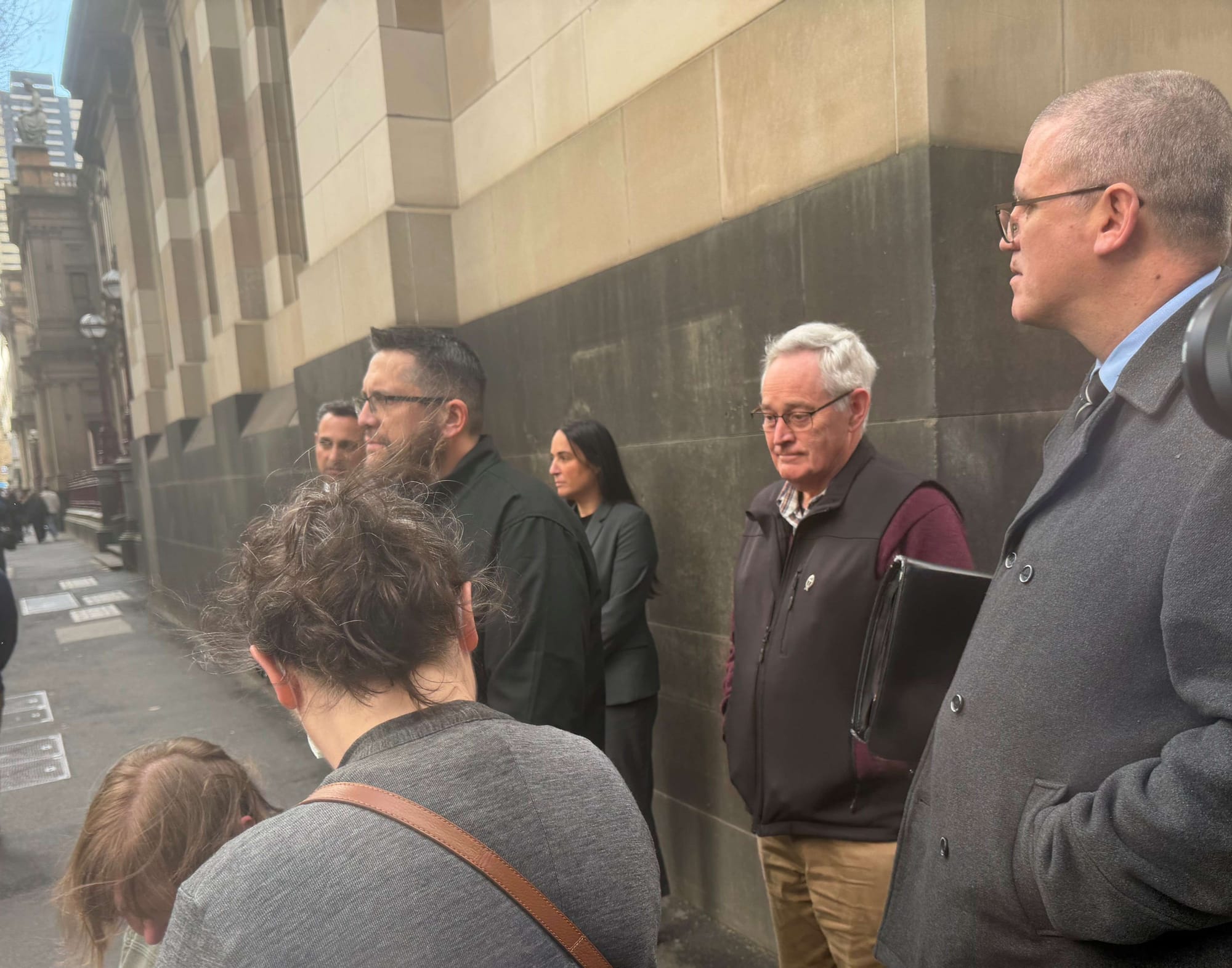
Mr Kissane then moved to a discussion of the aggravating factors in the Erin Patterson case, saying that even if the court was against him on the argument about prison conditions, the aggravating circumstances should be enough to win the day on the issue of setting a non-parole period.
He said the court needed to take into account the cruelty inflicted on the victims, the betrayal of trust, that from July 16, 2023 until the lunch on July 29, her intent to kill was maintained, the planning, the purchase of the dehydrator, concocting the elaborate lie to get them to attend the lunch, arranging for the children to be away and “the murderous intent after the lunch”, principally her “unwillingness to intervene after she became aware of the shocking state of the victims”… the complete lack of remorse.
He said however that Justice Beale had correctly characterised Erin Patterson’s actions after the lunch as “pitiless”.
Here’s what Justice Beale said at the time of Erin Patterson’s sentencing:
“After learning from Simon on Sunday, July 30, 2023 that some or all of your lunch guests had been hospitalised, you showed no pity for your victims. Instead of informing those treating the Pattersons and Wilkinsons that you had used foraged mushrooms (which you could have done without having to admit that you had deliberately poisoned their meals) you repeatedly denied foraging, insisting that the mushrooms for the Beef Wellingtons were sourced solely from Woolworths and an Asian grocery. We will never know whether revealing the use of foraged mushrooms would have made a difference. But the administration of the drug Silibinin — which is a specific antidote for death cap mushroom poisoning — was not commenced on 30 July 2023 because, at that stage, the evidence regarding the type of toxin was inconclusive,” Justice Beale said.
“Similarly, the administration of NAC, to preserve the victims’ livers from toxins, was not commenced until almost midnight on July 30, 2023 for Don Patterson and on July 31, 2023 for the others.”
This was a full day after the four victims had become seriously ill. While they were dying in hospital, with doctors unsure what had caused the serious complaint, Erin Patterson was driving her son to a flying lesson at Tyabb.
Mr Kissane said Justice Beale found that Ms Patterson’s actions amounted to the worst category of offending and it wasn’t open to him to fix a non-parole period.
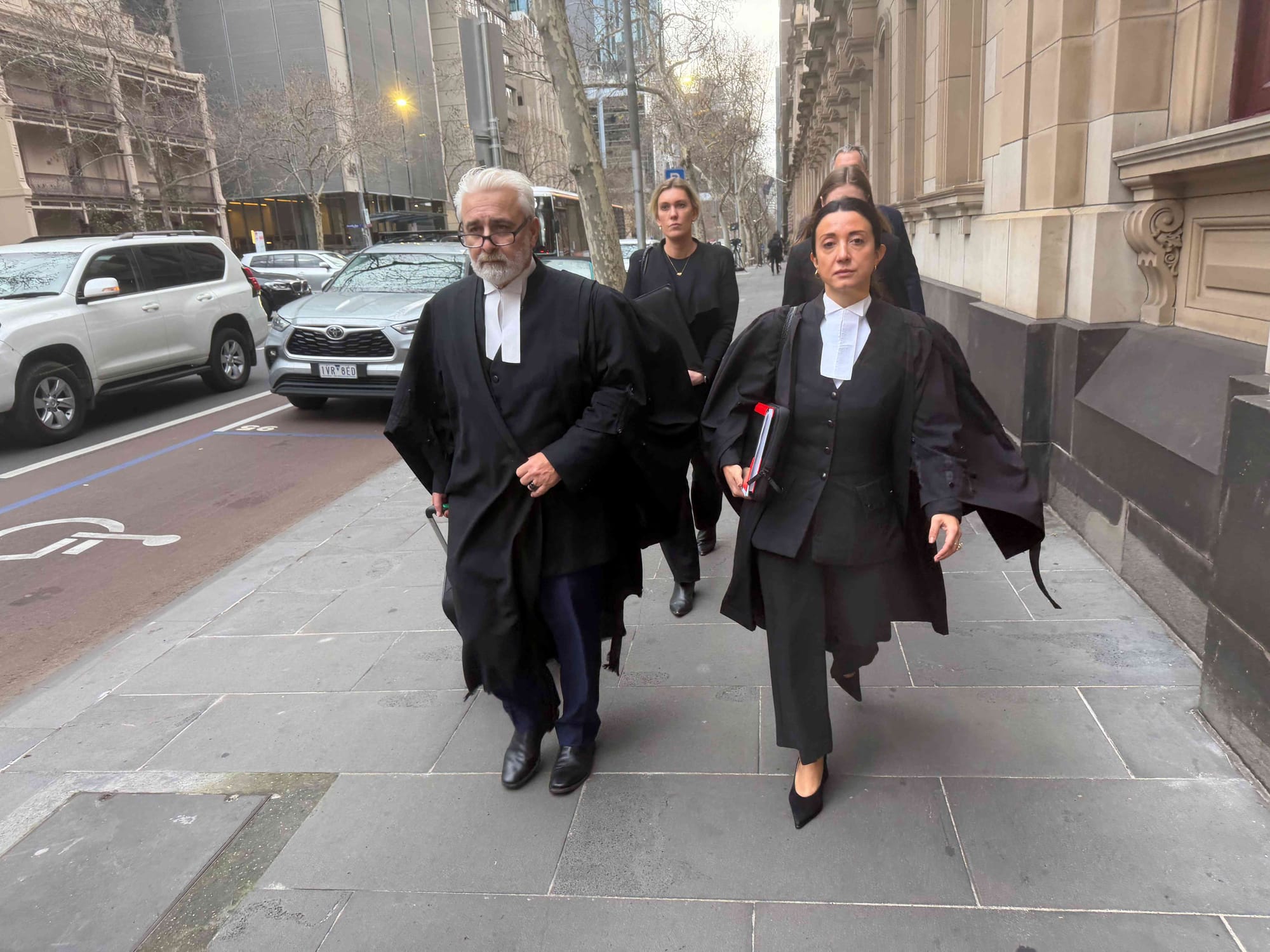
Lead counsel for Erin Patterson, Richard Edney, took up the defence case, noting that under the Nelson Mandela Rules, the United Nations’ Standard Minimum Rules for the Treatment of Prisoners, if the respondent was kept in confinement for more than 22 hours-a-day without meaningful human contact or for 15 consecutive days it amounted solitary confinement.
He also said there was a practical deficit in the opportunity to use the facilities that might otherwise have been available.
He said there were no plans to remove Ms Patterson to a less restrictive unit, and given she would stay notorious for a long length of time, this was indeed likely to continue “for the foreseeable future”.
Mr Edney opposed the removal of the non-parole period of 33 years.
Ms Patterson, who turns 52 in September, will be in custody until she is 82 years-of-age under the present arrangements.
Other murder cases and penalties
In other recent murder convictions include:
- On June 16 2023, Albert Thorn, 57, was found guilty of common law assault, intentionally causing injury, kidnapping, false imprisonment and ultimately the murder of 30-year-old Lakes Entrance supermarket worker Bradley Lyons in December 2018. He was sentenced to life imprisonment with a non-parole period of 32 years.
- Roland James Griffiths, 41, was given a life sentence with a non-parole period of 32 years for what the judge described as "despicable behaviour" carried out against his wife Kylie Sheahan, 35, whom he set alight while she cooked for seven children at their home in Melbourne’s north-west on March 14, 2022, the fire spreading to his teenage daughter who survived with burns to 52% of her body.
- On June 26, 2025, Stuart Leslie Lee was sentenced to 35 years with a non-parole period of 27 for the murder of Colin Bainbridge after throwing a bucket of petrol on him and setting him alight while he was lawfully working on a neighbour’s property.
- On July 15, 2024, Brendan Pallant was sentenced to 32 years’ imprisonment with a non-parole period of 25 years for the murder of two-year-old Jaidyn Gomes-Sebastiao in his Langwarrin home.
- On May 22, 2024, Sven Lindemann was sentenced to 31 years’ imprisonment, with a non-parole period of 25 years, after pleading guilty to the murder of his partner, Monique Lezsak, and recklessly causing injury to her young daughter.


