

Court confirms Erin’s ‘shocking criminality’ in the worst category
Erin Patterson's murderous intent dated back to the invitations to lunch. It persisted through the lunch when the poison was administered and for nearly a week after that, while her victims suffered terribly in hospital. Such shocking criminality demanded the harshest penalty.


POLICE informant in the Erin Patterson ‘mushroom murders’ case, Detective Leading Senior Constable Stephen Eppingstall, has been a permanent fixture of support around the Patterson and Wilkinson families throughout the grueling three years of investigation and trial.
It has been his responsibility to collect the evidence and assemble the witnesses for one of Victoria’s most high-profile crimes before getting it to trial under the glare of worldwide publicity, and exhaustive legal and public scrutiny.
But as he strode from Court One in the imposing Supreme Court Complex in Melbourne last Friday October 30, after the Court of Appeal’s decision to resentence Erin Patterson, shepherding the members of the family through the media pack, court staff and mushroom case junkies one last time, he allowed himself a moment of modest personal triumph.
“How about that?” he said to the Sentinel-Times’ reporter as he passed by, knowing the newspaper circulates in the area where this most heinous of crimes has been inflicted on a tight-knit local community.
It was a clear nod to those back home, hundreds of whom have been directly impacted by this unimaginable incident - those who lost a loved family member or treasured friend, whose faith has been shaken, who were taught by Don, Gail or Heather, who know how Ian has suffered.
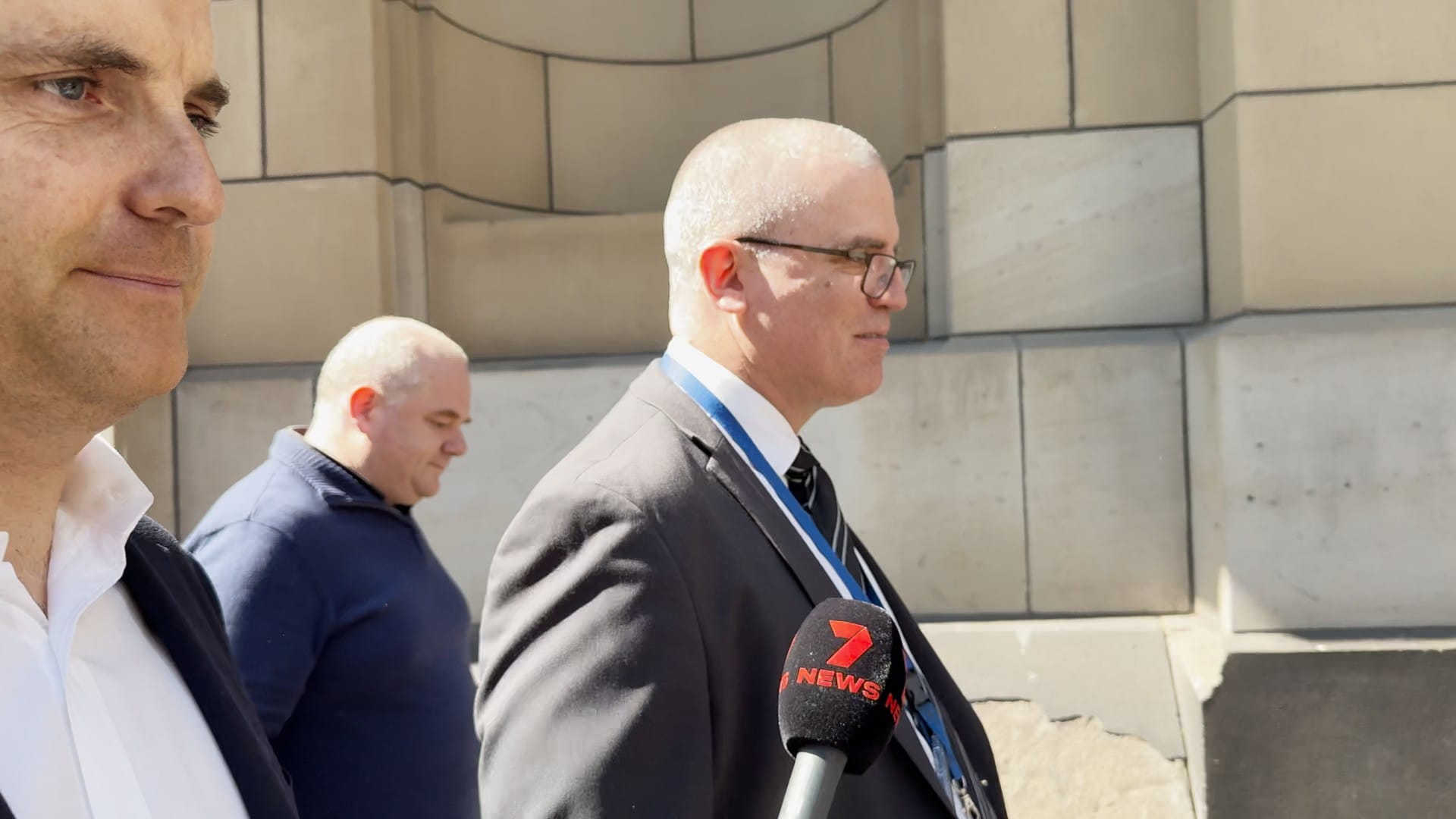
Together with the small knot of family members that remained at this bittersweet end of the process, he had just heard Justice Stephen McLeish deliver the most devastating takedown possible of Erin Patterson’s heartless crimes on behalf of his colleagues, Justice Peter Kidd and Justice Lesley Taylor.
In a judgment stretching to 156 pages, where every aspect of mushroom murderer Erin Patterson’s appeal against her conviction is addressed and ultimately dismissed, and the Director of Public Prosecutions’ appeal against the inadequacy of the sentence upheld, Justice McLeish included the DPP’s reference to the double murder case of Osman Shaptafaj.
He was the Melbourne man who lay in wait for two hours before murdering his own daughter and new husband, on their first anniversary, because he didn’t approve of the marriage.
“Specifically, it was necessary that the sentence be sufficient to vindicate, unequivocally, the primary value that our society places on each individual human life. The … murders committed by the applicant in this case each constituted an abhorrent violation of that most fundamental value.”
Handing down life sentences to Erin Patterson for each of the three murders, of Don and Gail Patterson and Gail’s sister Heather Wilkinson, and 25 years for the attempted murder of Heather’s husband of 44 years, Ian, was to be expected, but in fixing a non-parole period of 33 years, just three years above the minimum, the trial judge did not place the required value on each life taken, according to the DPP and the Court of Appeal.
Having noted that Justice Beale found the offending involved “an enormous betrayal of trust” where the victims were all relatives of the applicant by marriage, who had been good to the applicant and her children over many years with no evidence of remorse, he also acknowledged there was little in the way of mitigation beyond question able concerns about the conditions of her imprisonment, lack of priors and the fact that she posed no ongoing threat to the community before presenting the following conclusion:
“As already noted, the applicant’s murderous intent dated back to the invitations to lunch. It persisted through the lunch when the poison was administered and for nearly a week after that, during which time the applicant repeatedly tried to hide the truth about the source of the mushrooms, even as the victims continued to suffer.
“This offending was extraordinarily cold and calculated and stands to be denounced in the strongest terms.
“Necessarily, we have given the question whether it is inappropriate to fix a non-parole period anxious consideration, in light of the gravity of such a conclusion and the different view to which the experienced sentencing judge came.
“But the features of the offending identified above lead each of us to conclude that this is a case of such shocking criminality that it is inappropriate to fix a non-parole period.
“This is not a case for the exercise of the residual discretion. It would be perverse to decline to resentence the applicant, having identified the need for proper denunciation of her crimes.
“The Director’s appeal will be allowed on ground 2 (that the sentences imposed on the applicant are manifestly inadequate). The non-parole period fixed by the judge will be set aside, and in its place, it will be ordered that the Court considers that the nature of the offences makes it in appropriate to fix a non-parole period.”

He had earlier noted the Director’s submission about the extent to which Patterson tried to hide the source of the mushrooms, even after she knew her victims were gravely ill in hospital when such information might have aided their recovery.
“We are driven to conclude that a non-parole period of 33 years fails to reflect the calculated criminality of the applicant in committing three murders and attempting a fourth. It also fails to reflect the grave seriousness of the judge’s findings that the applicant’s murderous intent was sustained for nearly three weeks, from the time of the invitations, through to the preparation and serving of the poisonous meal, and then further throughout the protracted suffering and ultimate deaths of the three murder victims.
“The applicant’s conduct was characterised by an elaborate series of deceptions, including the false cancer claims deployed to explain the absence of the children, the false denials of having foraged for mushrooms, the repeated false assertions as to the source of the mushrooms and the destruction of evidence.
“The offending was carefully planned and deliberate. It represented a cruel breach of trust to members of the applicant’s extended family.
“The taking of three lives (and the attempt on another) in these circumstances called in our view for much stronger denunciation. A non-parole period represents the minimum time that the court considers that justice requires to be served, having regard to all the circumstances of the case.
“In deciding the length of the non-parole period, due weight needed to be placed on the sentencing objectives of condemnation and denunciation.”

He said Patterson had ample opportunity to intervene to try to save the lives of the guests and could have done so without admitting that she had deliberately poisoned their meals.
“Instead, she took no action as the guests fell sick, and repeatedly denied that she had used foraged mushrooms, even when she knew that some of the guests were on life support.”
It was submitted that her callous disregard for the fate of her victims significantly aggravated her offending, as did the cruelty of the applicant’s chosen method of murder.
It was noted that Ian Wilkinson continues to suffer the ill effects of the poisoning years after the event.
“The applicant showed no re morse and her extraordinarily high moral culpability was not ameliorated,” according to the sub mission by the DPP.
It is only the second time in Australian judicial history that a woman has been sentenced to life without parole, the other being Katherine Knight who was sentenced in New South Wales in 2001 for the murder and mutilation of her de facto partner, John Price.
Finally stripped of any lingering pretence she may have harboured about her intentions on that fateful day at Leongatha on Saturday July 29, 2023, as well as before and afterwards, Erin Patterson looked on impassively by video link from the Dame Phyllis Frost women’s prison on Melbourne’s western outskirts.
Her long, dark hair tied back in that familiar style, large thick-rimmed glasses on her nose, and wearing a prison-blue windcheater, she did not flinch as the three Court of Appeal judges, Justice McLeish, Justice Kidd and Justice Taylor, handed down their dismissive response to her appeal against conviction, while upholding the DPP’s appeal, damning Patterson to life in jail, this time without parole.
But it’s still not over.
The Leongatha mass murderer still has one avenue of appeal, to the High Court, where according to esteemed former NSW judge, Justice Anthony Whealy KC, she has some prospects of at least being granted leave to appeal, if only to contest the withdrawal of the 33-year non-parole period.
Erin Patterson has until November 27 to decide if she wishes to go that route.
You can read the judgment in the matters of Erin Patterson v The King and DPP v Erin Patterson, handed down by the Court of Appeal (Justice Stephen McLeish, Justice Lesley Taylor and Justice Peter Kidd) on Friday, October 30, 2026 HERE.


