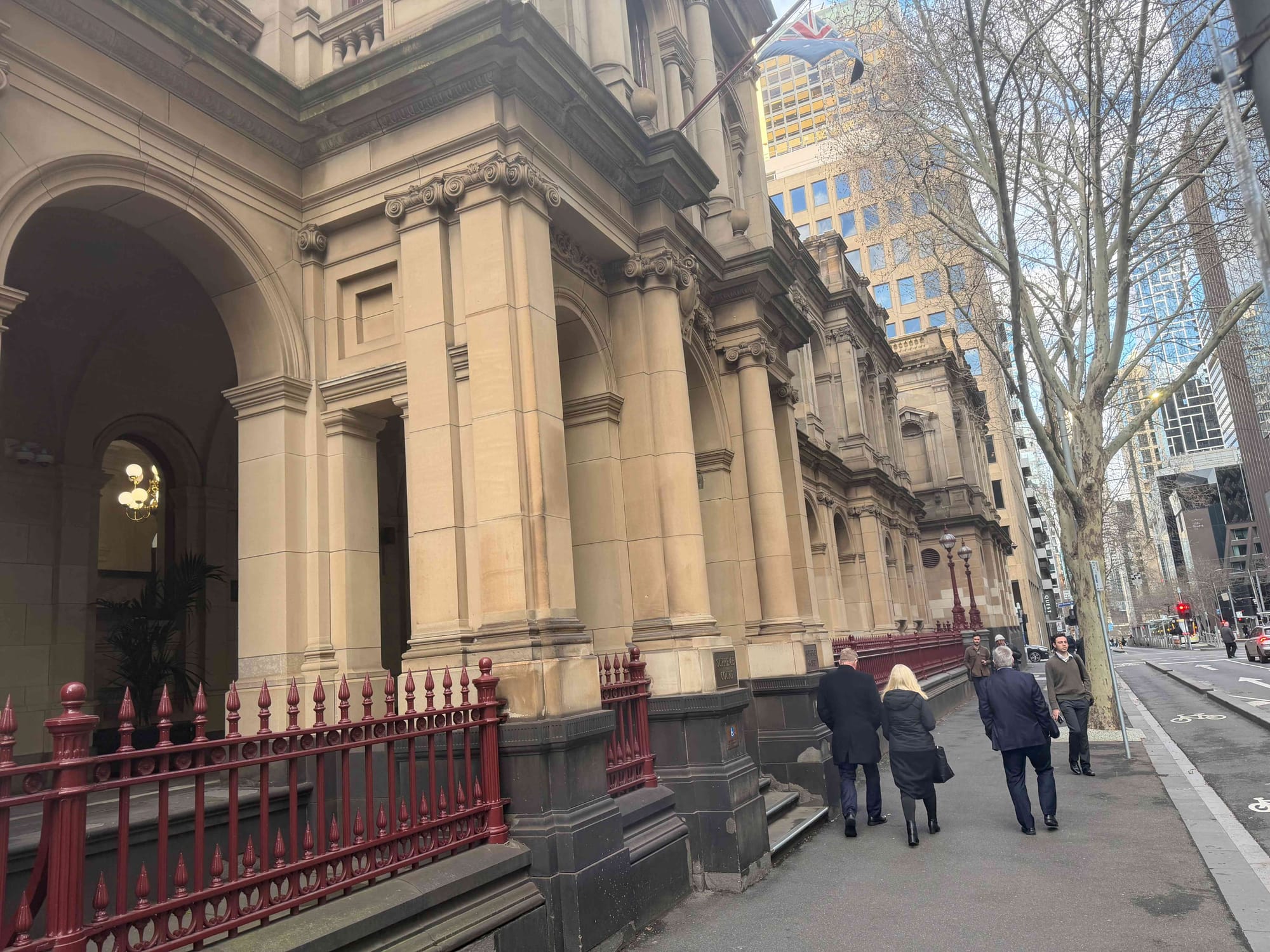
Full house at the Supreme Court for triple murderer’s appeal
The Leongatha ‘Mushroom Murder’ case was back in court again this week for the first time since Monday, September 8 last year when Justice Christopher Beale sentenced Erin Patterson to life in prison with a minimum of 33 years to serve.


THE Leongatha ‘Mushroom Murder’ case was back in court again this week for the first time since Monday, September 8 last year when Justice Christopher Beale sentenced Erin Patterson to life in prison with a minimum of 33 years to serve.
It followed a high-profile jury trial, which ran from April to July 2025, where Ms Patterson was found guilty of murdering her parents-in-law, Don and Gail Patterson and her aunt-in-law Heather Wilkinson, all of Korumburra.
She was also found guilty of the attempted murder of Ian Wilkinson.
At issue, in the Court of Appeal, on Wednesday and Thursday, August 19 and 20, are two matters; one, an application by Ms Patterson for the court to review and overturn the findings of guilt from the trial, and two, an application by the Department of Public Prosecutions against the sentence imposed.
As the family members, legal representatives, media and interested members of the public filed into Court 1 of the Supreme Court in Melbourne on Wednesday morning, ahead of the start to proceedings at 10.15am, the first image they saw was that of the convicted murderer, Erin Patterson, on a large video screen at the side of the court room.
Her trademark, long black hair was out across her shoulders, she wore a pair of oversized, black-rim glasses and a royal blue jumper.
Ms Patterson looked well and certainly in better shape than she did when she hobbled out of court, clutching the sides of the court furniture, after her sentencing last September.
All is in readiness for an expected two-day hearing, accessing Ms Patterson’s application for an appeal, the substance of the appeal against her conviction and the application by the DPP for resentencing.
It is expected that there will be seven grounds for Ms Patterson’s appeal, as follows:
- A fundamental irregularity occurred while the jury was sequestered that has fatally undermined the integrity of the verdicts
- The mobile phone tower data applied to the death cap mushroom sightings at Loch and Outtrim should not have been allowed as its probative value was outweighed by its unfair prejudice
- The judge made a mistake when ruling out photos and videos of mushrooms found on an SD card at the applicant’s home
- The “Facebook evidence” should not have been allowed, again because its probative value was outweighed by its unfair prejudice
- The “unfair and oppressive” cross-examination of Ms Patterson resulted in a substantial miscarriage of justice
- Problems with the prosecutor’s closing address
- Claims the prosecution shifted its position from no motive, to implying there was a motive.
Three main decisions are open to the three judges; (1.) dismiss the appeal (the original convictions and sentence remain in place), (2.) set aside the conviction and order a new trial or (3.) set aside the conviction and enter an acquittal.
Although fresh evidence can be introduced if the relevant legal requirements are met, typically an appeal will examine the trial record, transcript, exhibits, judge's directions, submissions and the legal arguments to determine whether the conviction should stand.
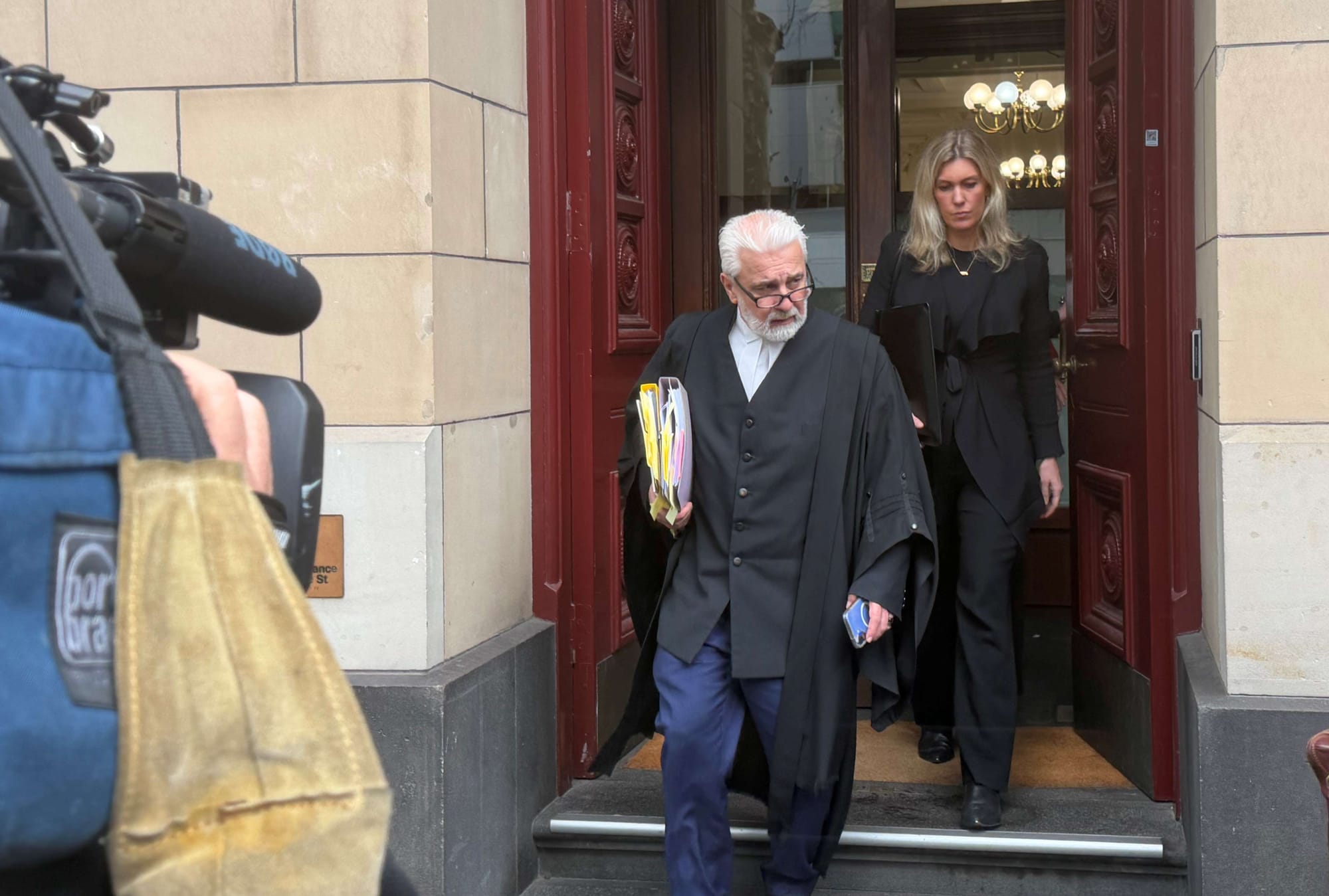
What happened on day one
Defence barrister Richard Edney opened proceedings for the applicant, Ms Patterson, turning his attention to the first grounds of appeal:
(1.) That a fundamental irregularity occurred while the jury were sequestered that has fatally undermined the integrity of the verdicts and requires the quashing of the convictions and an order for a re-trial so that justice cannot only be done but be seen to be done.
While Mr Edney claimed there was the opportunity for interaction between the jurors, when they were conducting their final deliberations, and parties involved in the case, including the principal informant (Detective Leading Senior Constable Stephen Eppingstall), while they were all staying at the same hotel in Traralgon (Bridges on Argyle), he acknowledged there was no evidence that there had been any contact or communication between the parties.
Mr Edney claimed that the law required that not only must justice be done, it also must be seen to be done, and having the jury sequestered in the same location as members of the prosecution simply did not pass any reasonable test.
“There is no evidence of direct communication that we know of, but the prosecution has not put anything about what happened in those six days. They have relied on the email from Justice Beale that no contact occurred,” he said.
Mr Edney said that while the court had stated that no interaction occurred, there were media reports that indicated there may have been some contact between jurors and interested parties.
One of the three judges hearing the appeal, Justice Lesley Taylor, appeared to dismiss the suggestion.
“Why should we be relying on a media report when we have a statement from the court that no interaction occurred?”
Mr Edney responded by returning to the theme that justice also needs to be seen to be done.
He later stated that having the jury and interested parties in the case staying in the same accommodation, even in a regional area, especially in such a high-profile case, can’t have been the only option available and he claimed the courts would not have allowed it had they known ahead of time.
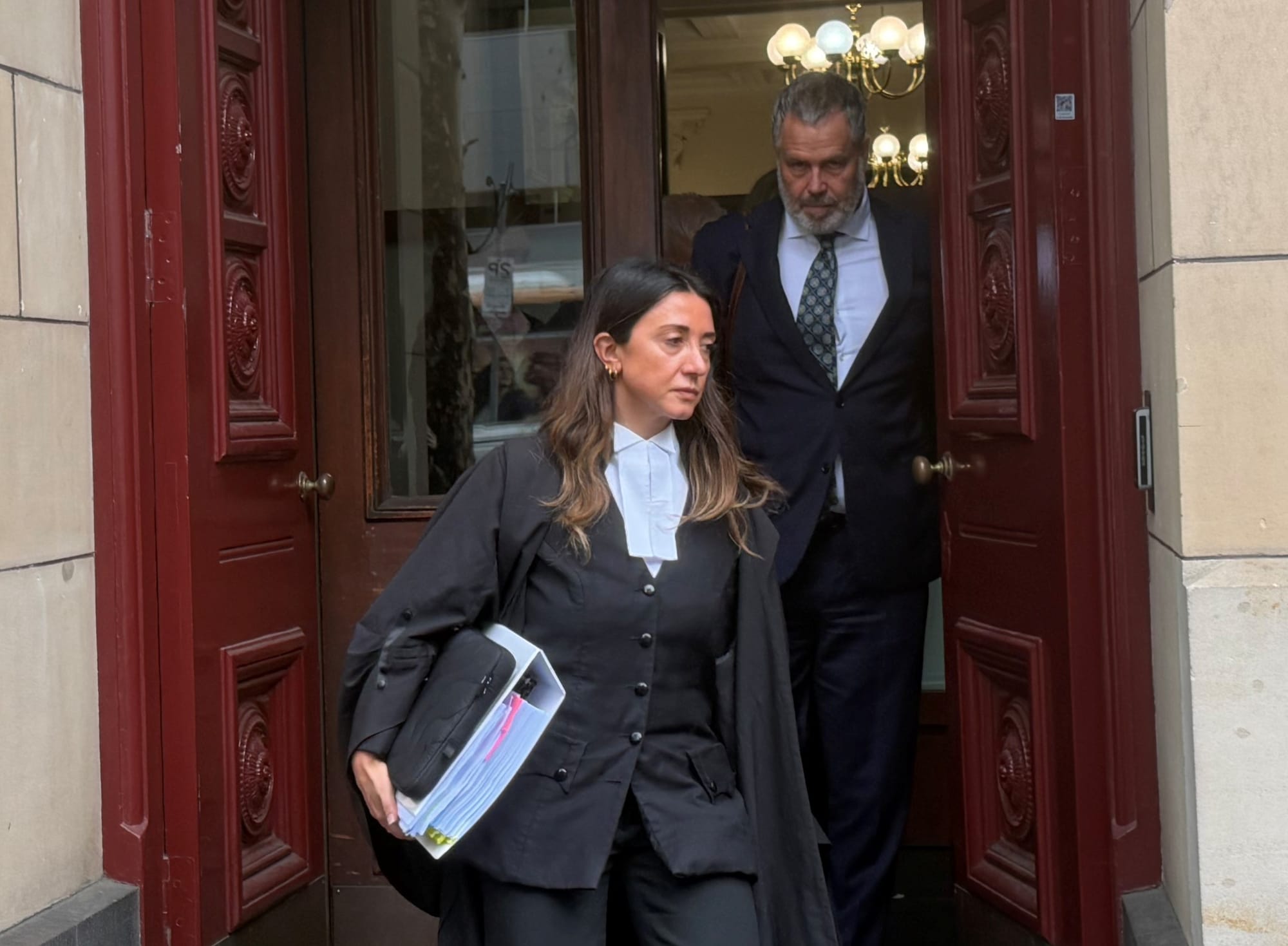
Defence counsel Veronika Drago then took over the lectern arguing the case for grounds two of Ms Patterson’s appeal: (2.) That the cell tower evidence and evidence of death cap mushroom sightings in Loch and Outtrim posted to iNaturalist should not have been adduced in the applicant’s trial as the evidence was not (i) relevant or (ii) the probative value of that evidence was outweighed by its unfair prejudice and the admission of that evidence occasioned a substantial miscarriage of justice.
Starting off her submission, Ms Drago claimed there was absolutely no evidence whatsoever that the accused accessed the iNaturalist website to find the location of death cap mushrooms at either Loch or Outtrim.
She also submitted that calling digital forensic expert Dr Matthew Sorrell to give evidence about cell tower data and the likely movements of the accused's mobile phone was tantamount to calling a fingerprint expert to give an opinion on the likelihood that an obscured fingerprint might have belonged to accused.
“That would not be allowed but this is what happened here,” claimed Ms Drago.