

It’s thanks, goodbye and something personal from Harriet Shing MP
Victoria's first openly lesbian MP and first Minister of Chinese heritage, Harriet Shing, officially bid farewell to a 12-year parliamentary career last Tuesday, September 22 and during her speech revealed details about a specific personal challenge she faced.


VICTORIA’S first openly lesbian MP and first Minister of Chinese heritage, Harriet Shing, officially bid farewell to a 12-year parliamentary career last Tuesday, September 22.
And, in so doing, she revealed something intensely personal about the challenges she faced and conquered as the Member for Eastern Victoria and a Minister of no fewer than nine portfolios, including Health, Housing and Regional Development.
In her valedictory speech Ms Shing reflected on the importance of history, public service and the lasting impact of government decisions.
She presented that good government should be judged by both its words and its deeds, particularly the infrastructure, services and reforms that improve people’s lives and create opportunities for future generations.
Ms Shing highlighted achievements of the Victorian Labor governments she served in, including major investments in hospitals, schools, TAFE, public transport, renewable energy, social housing and regional communities. She pointed to level crossing removals, the Metro Tunnel, Suburban Rail Loop and renewable energy projects, while also highlighting reforms including voluntary assisted dying, safe access zones for abortion services, workplace protections and measures addressing family violence and mental health.
A strong focus was regional Victoria, as a Member for Eastern Victoria, particularly Gippsland and the Latrobe Valley. Shing reflected on the transition from coal-fired power and native timber harvesting, natural disasters including the Black Summer and Bunyip fires, floods and drought, and the challenges faced by farming communities. She stressed that communities affected by economic and environmental change require sustained government support over decades.
She also reflected on reforms affecting LGBTIQA+ Victorians, including marriage equality, IVF and adoption laws, conversion-practice bans and changes to equal opportunity legislation.
In one of the speech’s most personal and revealing moments, Ms Shing publicly discussed being diagnosed with autism early in her parliamentary career. She described the difficulties of navigating public life while neurodivergent and thanked those who made practical accommodations that enabled her to perform her work. She expressed hope that speaking openly would encourage greater understanding, inclusion and access to diagnosis and support.
“When I was diagnosed with autism early in my parliamentary career, a lot of things started to make sense to me about why so many things did not easily make sense to me and why I found myself overwhelmed at various points by a range of different things that many people do not think twice about,” she said.
But she managed to channel it into her work and also asking questions about how policies and decisions could be better if neurological differences were accommodated, “not as a fleeting gesture but in a genuine, inclusive and meaningful way”.
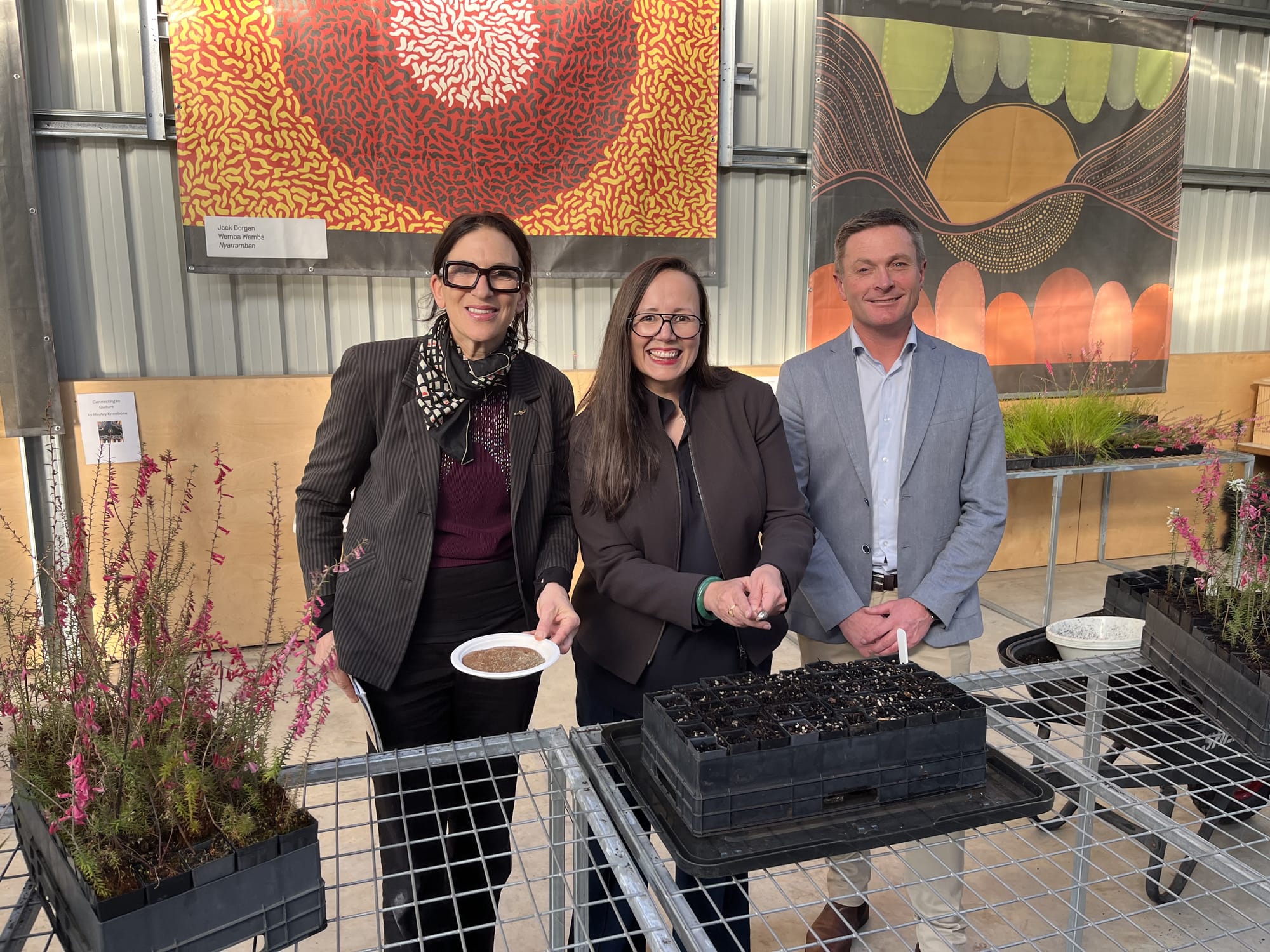
Ms Shing concluded by thanking political colleagues, including Bass MP Jordan Crugnale for her “care, creativity, friendship and sense of principle”, her staff, community organisations, volunteers, parliamentary workers, friends and family.
She also singled out members of the Opposition whom she respected including Gippsland South MP Danny O’Brien, adding the caveat that her comments were not to be used as a pre-election endorsement.
Reflecting on her career, she said she had given everything she could to public service and hoped she had helped build something lasting. Her final message emphasised kindness, authenticity and vulnerability as qualities of good leadership, before welcoming the opportunity for someone else to take her place and continue the work.
Her speech, which ran for 33 minutes, was greeted with warm applause at the end.
[Please note: Harriet Shing’s 5000-word speech has been summarised with assistance of AI. Her speech is available in full below.]
What Harriet Shing had to say
Harriet Shing, Member for Eastern Victoria Region: Valedictory statement, Tuesday, September 22, 2026.
I rise at the outset to acknowledge the traditional custodians of the land upon which we meet today. We are on Wurundjeri Woi-wurrung country, and I pay my respects to elders past and present, and I would also like to acknowledge any and all Aboriginal or Torres Strait Islander leaders or emerging leaders who have joined us here today. It always was and it always will be Aboriginal land.
You may know me from such classics as ‘Why say it in 15 words when 600 will do?’; ‘Please, for the love of God, could somebody work out how to turn her off at the mains’, and ‘Is there any chance you could bring the plane into land, because we would all quite like to go home.’
But over 12 years, that is yet to happen in any way that would show that I have listened to instructions. In this building there are many, many bookcases, shelves and cupboards, and they are filled with leather-bound books, in corridors where not many people go. These books are the public record of our debates, our votes, our issues and the priorities of communities across the state and around Australia.
I will put to one side the fact that the vast majority of these books contain contributions by straight, white, middle-aged men of landed gentry for a moment and note the diversity of our Parliament and just how far it has come.
When we have sat late or overnight over the years, I have had the opportunity to find a volume and a chair and to read about history, and history matters. Our history as a government matters, and it is not something that we should ignore or turn away from.
No government is perfect, but no government gets better for being defined exclusively by what has not worked or what should not be discussed. I am not good at nuance at the best of times, but on this I am clear: who we are now is built on the foundations of who we have been and where we have been.
And good government, in my view, can be defined by deeds and by words, by what we have built, in every sense of the term.
Take, for instance, infrastructure. It is a really big word, and it can mean just about anything depending on who you ask. To my mind infrastructure is best described as an enabler, as connective tissue for our cities and our communities, for our families and for their opportunities.
It is not a unique investment; it is the scaffolding by which we improve our own daily lives, movements and opportunities and those of our children and grandchildren, the work to recognise and respond to climate change, to deliver more and better public transport, new road networks, wastewater and sewerage connections, hospitals, schools and utilities such as the desalination plant – and everybody knows how much I love to talk about the desalination plant, which is now responsible for more than a quarter of every single glass of water that comes out of our taps across the grid. Infrastructure, when it all boils down to it, is enduring and necessary to meet the changing needs of our hotter, drier, more densely populated state with an ageing demographic.
Growth is inevitable, but good growth is a choice. And the last 12 years have shown us that it is possible to deliver both infrastructure and services, to build hospitals and then to staff them, to build a Metro Tunnel and then add over a thousand services to enable people to get around and to connect in ways that save time and improve convenience and that, in turn, reduce disadvantage and the long-term costs of living.
History matters, and I am so proud of our history in delivering infrastructure across the entire city, across the entire state. Level crossings removed, hospitals built, new and upgraded schools to meet demand, new TAFE campuses, new and upgraded rail and additional services – this is what we have built.
And it deserves recognition, because it is valued and valuable and will continue to be, long after our time in this place is set out in a volume that sits on a shelf in a corridor of this building, where not many people go. To everyone who has worked on the infrastructure, who continues to work on it even today and will continue to deliver it: you should be proud of what you are building, of your own contribution and of what we are building together. And to everyone in government over these past 12 years: be proud of what you have delivered, of your hard work. It matters, and it will continue to matter.
We have so much to be proud of. To ensure we can reflect on it with clear eyes and fair words, our history is important, and I am so proud to have been a part of it: renewable energy and battery storage; a ban on unconventional gas extraction in Victoria, now enshrined in the constitution; the SEC and thousands of jobs for workers in renewable energy; medicinal cannabis for young families and patients just like Cooper; hundreds of new and upgraded schools; in Gippsland, new specialist schools, primary and secondary schools, kinders and early learning centres across growing communities; safe access zones for people seeking abortion care; voluntary assisted dying.
In this regard, I want to acknowledge Dying With Dignity Victoria, Go Gentle and others, Jane Morris, the late Nia Sims and so many people who have contributed to a better debate on free will and on dying well. The Royal Commission into Family Violence and the Royal Commission into Victoria’s Mental Health System – extensive law reform and billions of dollars in funding, not done cynically for headlines or media opportunities but for meaningful and practical improvement of the services and supports to vulnerable people every day: victim-survivors of intimate partner violence, coercive control and horrors that kill more women in Australia than anything else, and people living with diagnosed or undiagnosed mental illness.
The apologies for historical convictions for homosexuality; to members of the stolen generation; to victims and survivors of institutional child sexual abuse; to the people, parents, children and families who suffered such tragedy as a result of forced adoption. As actions matter, words matter too. And as our future matters, history does too. In the blink of an eye that I have been in this place I have been honoured, humbled, challenged and kept under the pressure – appropriately so – of responsibility in a range of different ways, and at all times I have done my best.
In this regard I have lent my voice to more than $2 billion in funding for the Latrobe Valley’s transition from coal-fired power to renewable energy and the end of native timber harvesting in Victoria.
The painful inevitability of this change and government response was shaped and informed by conversations in kitchens and lounge rooms, on factory floors and in shops and town halls, informed by grief, anger, frustration and uncertainty and the desire for communities to find control over the future.
This is long-term change, and it demands decades of commitment. Affected communities across rural and regional Victoria deserve no less. The programs to address challenges and disadvantage, often arising intergenerationally, faced by young people, including across eastern Victoria – food insecurity, violence, addiction and abuse.
The challenge of helping people to stay in school, to find a home and a job and the differences that can be made and sustained with positive intervention. I note the heartbreak that continues as recovery efforts go on from natural disaster. In that regard, I note the heartbreak of the Bunyip fires and the Black Summer fires that burned a million hectares across eastern Victoria, razed homes and buildings, took lives, destroyed fence lines and roads and stock and wildlife.
The grief of recovery is known so well by so many, including the extraordinary leadership of Andrew Crisp, who stewarded thousands of people through times of their greatest need. The floods which inundated large parts of the state in October 2022, cutting towns off, turning roads into twisted ribbons, waterways into raging torrents that buckled bridges. Too much water and then not enough.
Droughts and feed shortages, while farmers destocked and hoped for the best. The welcome sound of trucks arriving on hay runs from around Victoria and across Australia, while we still waited and hoped and crossed our fingers for rain.
The pandemic, for which there was no playbook. With hindsight being 20/20, it is all too easy to talk about what we should have done and what we could have done. In this regard, we did the best that we could, and it took the whole state and everyone coming together to ensure that we could keep people, families, businesses and communities with the best measure of support that could be made available.
The milk price crash overnight left dairy farmers with enormous crippling debts and no way forward. Their intestinal fortitude and sustenance was delivered in large part because of the communities to which they belong.
The Yoorrook Justice Commission and treaty have been a profound experience for me to witness and to participate in. Over the hours of my appearance both on country and in talking about housing, it was as much as anything about a conversation, about history, about actions, but also, fundamentally, about words.
I want to acknowledge the work that happens across housing – that fundamental, important need that people deserve access to – and the teams that help people every single day in the ways that provide help and care and dignity, people like Deb Di Natale, who works across the Council to Homeless Persons, making sure, again, that people are met where they are at in all things and in all ways.
The delivery of thousands of new social housing homes from the middle of Melbourne right out to our borders has given homes within communities and homes for their occupants to be proud of a real opportunity to continue gathering momentum and pace. In the field of water, catchment management authorities and water corporations are at the heart of their communities.
Around kitchen tables, in scout halls and on riverbanks we have met with, talked with and listened to communities about incident control, about relief centres and about some of the most complex policy areas that exist anywhere in Australia. Work continues to celebrate and support our precious waterways and their flora and fauna and to resurface and revegetate our creeks to support our Ramsar wetlands.
Regional development, including the $2 billion regional fund that pivoted us from the cost of the Commonwealth Games events into homes and community and sporting facilities that will continue to stand the test of time – again, it is as much about what we do with change as the change itself.
I also acknowledge the work that has gone on to make sure that the Building and Plumbing Commission can deliver the safety, security and certainty that people want and deserve when making the biggest purchase of their lives. Home builders and buyers being left out of pocket with empty hearts and empty wallets is something that has been an all too frequent occurrence. Anna and her team are ensuring that this changes and this stops.
The Suburban Rail Loop: you have seen me brandish a business case in this place on many an occasion. I have tabled it on multiple occasions, and I am proud of it. I am proud of this project that will be used by our children and their children and their children. Tunnel-boring machines are in the ground building Australia’s largest infrastructure project, and this progress will continue, as it should, because future generations deserve the benefit of connections and investments that sustain opportunities. And this is something we should be proud of.
Workplace safety and occupational health and safety, protecting workers from exposure from everything from asbestos to engineered stone dust; nurse-to-patient ratios; industrial manslaughter; protection from wage theft and consequences for employers who do the wrong thing; the Labour Hire Authority; protection for workers in retail and hospitality from violence; the rights of workers to be represented by a union; family violence leave in public sector agreements; support for gender pay equity; and portable long service leave are some of the examples of the very things that have defined the government that I have been so proud to be part of.
Back in 2017 we had a plebiscite – it was not actually; it was a postal ballot. It asked one simple question: whether people like me should have the right to marry in the same way that people who straight had the right to marry. When the result of that postal ballot was declared, and Premier Daniel Andrews, alongside Australia’s first equality minister, Martin Foley, went to the front steps of Parliament to meet with rainbow families and to celebrate an outcome that needed to happen, that did happen and that has led inexorably to words mattering and meaning something in the creation of history, they asked me to join them.
That was a moment of fundamental importance to me, because for so long I stood in this place and I bared myself to the world and I begged and I asked to be accepted for who I am. And with that resolved, we were finally given the opportunity to be as happy or, pending divorce proceedings, as miserable as everybody else. We also have long-awaited inclusion in the census, IVF and adoption law reforms for LGBTIQA+ people, amendments to the Equal Opportunity Act 2010, intersex reforms, banning of those devastating conversion and suppression practices, the Safe Schools program and Pride in Ageing.
I also organised and paid for what I think is the only drag story time ever to have occurred in this Parliament, and I did that after libraries around the state received so many threats against staff and the public that they cancelled events. I did it because signals and symbols of safety are important, because words matter and visibility matters.
All of these things are examples of the work we have done together, history that deserves recognition and respect and work that matters for those who are no longer here and for those who, because of the changes brought about by so many extraordinary people, will grow up and live without the stigma, violence or discrimination that has come before them.
With the time that I have on my feet today, I also want to talk about something that I have not spoken about publicly before and that I hope will help a conversation to perhaps continue with kindness and with interest. I have always been a bit unusual – cue ripple of laughter here – in more than a handful of ways, and it is not just a case of being, as described in the Age in what I consider to be the greatest compliment I have ever received in my working life, ‘a serious policy wonk’.
When I was diagnosed with autism early in my parliamentary career, a lot of things started to make sense to me about why so many things did not easily make sense to me and why I found myself overwhelmed at various points by a range of different things that many people do not think twice about. I really did not know what to do with it, so I channelled it into asking as many questions as I could – and that is, as we all know, a lot of questions – about how policies and decisions could be better if neurological differences were accommodated, not as a fleeting gesture but in a genuine, inclusive and meaningful way.
It has been really hard at times to navigate this publicly whilst doing my level best to give the impression that I have had no specific need for my needs to be understood or accommodated. Telling people has been difficult, so right now is quite a confronting moment for me, and it has been really exhausting – so exhausting that in many instances it has actually just been easier, at least in the short term, not to say anything at all. To those people who have been there for me, including when from time to time I have found myself overwhelmed and at or beyond my limits: thank you.
To those people who have made small, but to me incredibly important, adjustments without fuss or fanfare, from changing lighting to managing last minute changes to plans and understanding my reputation for taking just about everything literally and my endless questions based in curiosity and a desire to understand evidence, merits and difficulties: thank you. I do not make it easy.
Your accommodations made a huge difference in many instances and also enabled me to complete my days in one piece. You have made me feel less of an oddity, more certain, less of an outlier and valued for the things I can do, and that has meant the world. To those people and organisations, including Different Journeys with Mel Spencer and organisations like Yellow Ladybugs, who by their very existence have made it easier because they – you – have gotten it: thank you. I hope that my advocacy behind the scenes for inclusion has had an effect and that what I am saying more loudly here, now, in this place about my neurodivergence and my experiences will continue to have an impact for others.
On my way out I hope that in the space I will leave for another person to make their own mark this conversation might continue to build on the easier access to ADHD diagnostic pathways that we are making available through our GP networks to make it easier and more affordable for neurodivergent people and their families to access diagnostic and support services, programs, opportunities and care; to be afforded the dignity that everybody, without exception, deserves; and to be met where they are, for who they are and as they are. It is time for thankyous to colleagues and friends; it is a bit of a shout-out.
At the outset, I want to thank and extend my respect and friendship to Daniel Andrews and Jacinta Allan. I understand that they are watching today. I want to say thank you for the opportunity to serve in your governments.
Thank you for the opportunity to make a contribution. Thank you for allowing me to take up space, to be listened to and, in turn, to listen to the views of others. Premier Carroll, I note that you are also here in the gallery today. Thank you so much for the opportunity to be part of a team that will take us through to November.
To Jaclyn Symes, who I am not looking at now, it has been a real joy to serve with you from the very beginning. There is an incredibly naive photo of the two of us standing on the floor of this place looking up toward the gallery on our very first day of school. We have aged about 600 years since then. We have tested each other’s thinking, we have laughed ourselves silly, we have ugly cried and we have come up with a sort of shorthand language that usually only evolves between twins or prisoners serving very long sentences in adjacent cells.
To Shaun – President Leane – you are one of the best people I know. Shaun is full of humour and asides, but Shaun is also the reason why this Parliament’s kitchens were deployed to make 1.8 million meals to serve to people in need, beginning during the pandemic and continuing after that time. What you might also not know is that Shaun and I wrote Skyrail: The Musical in our shared parliamentary office. It is a work of braggadocios genius in the style of South Park, which in its off-off-off-Broadway debut will almost certainly feature Hugh Jackman in the role of David Davis. He is clearly at rehearsal now.
To my dear friend Gayle Tierney, I worked hard to make you love me; I am not sure if I succeeded. But Gayle, you have seen around a quarter of a million Victorians access free TAFE. This shows not only steel in your spine but a heart that is bigger than your electorate. Thank you for putting up with me for so long.
Ryan Batchelor, you are the only person I know who pretends to be interested in how I have learned to identify commonly occurring venomous snakes and who does not think it is unusual that every joke has to be explained at least six times and that even then I will not find it funny.
Thank you for your friendship and for your smarts. Jordan Crugnale, thank you for your care, creativity, friendship and absolute unwavering sense of principle.
To others, I would be here for so long that you would also be begging me to turn off the mains, so I am not going to go into extensive detail.
Thank you to Steve Dimopoulos, Sonya Kilkenny, Lisa Neville, Lily D’Ambrosio, James Merlino, Martin Foley, Martin Pakula, the class of 2014 and the government, which under Premier Ben Carroll’s leadership in November will take us into a hugely important and bright future.
Thank you to Jessie McCrone who demonstrated unassailable patience in allowing me to talk ad nauseam about the finer points of water regulation and policy whilst never actually ever drinking any water herself.
Thank you to Brendan Donohue for teaching me the importance of the full stop – advice which I am afraid I almost never followed. To the staff I have worked with over the years, I am fiercely proud of you. I am proud to have worked alongside you. Thank you for challenging my thinking, helping me to be better and indulging my love for random trivia and lowbrow reality television.
Thank you to my electorate office staff: Tonnie, Anita, Val, Rhonda, Jim, Tom, Kiz, Oscar, Stephanie, Michael, Cai and of course the wonderful Bec and Lisa. Thank you to the ministerial staff headed up by Matt Dawson and my dear friend and colleague Lindsay Rayner.
Thank you to Matt Broderick, Grace, Elle, Dan, Emma, Laura, Phoebe, Penny, Chelsea, Claire, Mike, Liam, Aidan, Dani, Eliza, Kai, Maddie, Clare, Keagan, Luke, Karen, Cat, Vincent, Jennie, Jocelyn, Georgia – this is sounding like Romper Room when you look to see when your name is coming up at the end – Antoinette, Walter, Nicole, Sam, Nevada, Srishti, Sinead, Ana, Flynn, Alex, Michaela, Lloyd, Kate, Nathan and Lucy.
Thank you to those organisations and community groups who have been at the heart of security, of pride, of safety and of opportunity: Joe Ball; Brenda Appleton; Caitlin Grigsby; Janet Jukes; Kate Graham; Anthony Rodaughan, one of the most positive and influential principals I have ever met, from Kurnai College in Morwell; John and Sue Anderson; Marg and Bert Williamson; Angus and Stephanie Hume; the Australian Services Union and Trades Hall; Alison and the late, great John Parker; Vicki Hamilton from GARDS; the Ladder Step Up program and staff; catchment management authorities and water teams; and the unions who have worked so hard on transition in timber and coal.
Thank you to volunteers, from those wildlife rescue organisations who taught me better practices in pouch-checking techniques to the many food banks and neighbourhood houses that sustain and support communities across eastern Victoria quietly and with determination and great respect.
Thank you to the departmental secretaries and teams and to the parliamentary teams. To the clerks, Anne and Richard and Sally in particular: I am really sorry for being so insufferable about rulings from the chair and who said what in the House of Lords back in 1894.
To the attendants, the incredible library staff, security, catering, tables office staff and committee support staff: thank you. To the Hansard team in particular: thank you for making me sound more coherent in writing than I have ever sounded when I have been on my feet, and for your grin-and-bear-it approach to sentences that have failed to feature a full stop for well over a page. I have seen a couple of you wince on occasion when it is late and I have lost all respect for grammar, and I do not blame you – full stop. For that I am really sorry – full stop, full stop, full stop.
To those members of Parliament from the opposition and the crossbench, Nationals and Liberals from across the parliaments I have served in since 2014, who I quite like and, dare I say it, even respect: thank you.
Oh, Renee, that was a bit of a laugh there. It is almost like you do not believe me. I will not name you because it will not do my reputation any good, and it certainly will not help yours, but you know who you are. I appreciate your friendship and your support and often robust conversation and debate over many years. Except for you, Danny O’Brien and Wayne Farnham, two men who you could not tell apart if you walked in the other direction from them at dusk.
I do not care if your good names tank; let it be known that I reckon you are all right, with the caveat that in no way does this opinion about either of you amount to any sort of character reference – because I am not about to start now – or pre-election endorsement.
I am not sure if I will miss David Davis, but I have no doubt that in the remaining 630 years of his time in this place, he might almost certainly come to miss me.
Lastly, thank you to my family and friends. To my family of origin, specifically my brothers Tim and Chris, who are watching this online, our late brother Patrick and, as of a fortnight ago, our late sister Genevieve.
The next chapter begins, my brothers, and I am determined to spend more of it with both of you. And my late parents, for being the soil I grew in for so many years, specifically my beautiful, humble dad, who is known to many of you. Over the years he would sometimes wonder out loud how it was that I ended up with a microphone and the public record when I seemed to have had an inbuilt megaphone, air horn and full buffet of opinions bestowed upon me from the day that I could talk.
For clarity, I just want to be very, very unequivocal: not everything in a buffet is ever going to be fit for consumption. But Dad is not here for the end of this chapter as he was at the beginning. For the many hours he sat bemused and frequently unimpressed with this place and what we get up to here when we have been at less than our best, it hurts my heart. His was an approach of honour and kindness, curiosity, hard work and rigour. And perhaps on a good day I may yet be an apple who fell not too far from the tree.
To my friends, and you know who you are: thank you. How lucky I am to share so many wonderful things with you. A specific shout-out to Jennie McKenzie, my fierce, hilarious, kind, outspoken, principled and ever-present friend. Thank you for being far and away the most Scottish person I know, and long may our 15-year text message conversation continue. To Emma: it is such good history we have.
There is such a long list of things that we have to tick off, and our epic road trip is waiting. I cannot wait.
To my family of choice, Ros and Bruce, kind and supportive, who have wrapped me quietly in acceptance, care and laughter and helped me to understand where and how gentle is best: thank you. To Lissie, my person: you are brilliant, principled, patient and incomparable. You are funnier, smarter and taller than I will ever be. Thank you for being the keel to our family, the one whose company I love above all others. I am sorry that our animals love me more than they love you. I am finishing this chapter having given everything I have. I have so much gratitude: for the experience, the opportunity to contribute with every bit of my will and energy; for the people who have shown me by example the qualities I admire most, in holding themselves fearless and steadfast, and for all the right reasons; for the character they have shown when nobody has been watching, those people who do not seek out the limelight or the middle of every photograph; and for the lessons that kindness, authenticity and vulnerability are at the very heart of the best of leaders, the best of people. Just as meaningfully, there is opportunity everywhere, so I am also grateful for those experiences and people who have helped me to work out the qualities and things in politics that are not for me.
I have given everything I have to this work. I came here to apply myself, to know what I was building. I think, not always but hopefully, I have done what I set out to do. I have built something. I have laid my hand on it, identified it hopefully as part of an arc that bends toward justice. And now someone else will take this spot, this opportunity. That is as it should be, and I wish them strength, honour and kindness in all that they do too. Thank you.


