Penguin cover-up: Why the vaccination program is already too late
It's already too late to vaccinate Phillip Island’s world-famous penguin colony. Here's why:


IT’S already too late to vaccinate Phillip Island’s world-famous penguin colony.
The authorities know it. They have an unimpeachable scientific report that tells them so. But still they are going ahead on Monday this week, attempting to vaccinate as many as 5000 little penguins, here on Phillip Island, and at St Kilda.
Likely with no good reason.
Because they’ve delayed the vaccination program until the arrival, within the colony, of H5N1, a highly contagious strain of bird flu, it’s most likely too late.
These concerns have been underscored by Professor Euan Ritchie of the Biodiversity Council, an independent expert group founded by 11 Australian universities to promote evidence-based solutions to Australia’s biodiversity crisis.
Here, in brief, is what the Arthur Rylah Institute for Environmental Research (ARI), the Victorian Government’s premier biodiversity research institute, had to say in May 2025, in a report funded by Agriculture Victoria under the State Government’s Emergency Animal Disease Response Plan preparedness program: “Assessing the risks of endemic and exotic diseases to Victorian terrestrial wildlife”:
“To ensure that adequate coverage is achieved, any vaccination program would need to be administered prior to the arrival of H5N1. Modelling revealed that waiting until the arrival and discovery of H5N1 to start administering vaccinations would most likely be too late, because significant mortality is likely to occur before adequate vaccine coverage is achieved.”
“Based on preliminary results from the New Zealand vaccine trial, peak antibody titres are not reached until around 10 weeks from the initial dose and therefore, beginning the vaccination program upon discovery of the first signs of disease would be too late to avoid significant mortality.”
Asked this week if they would go ahead with the vaccination program after confirmation on Saturday of the death of a penguin on Phillip Island from the H5N1 disease, Phillip Island Nature Parks said this:
"Phillip Island Nature Parks is responding to the first confirmed detection of H5 avian influenza in a little penguin on Phillip Island, following earlier detections of the virus in crested terns at Seal Rocks. The Nature Parks is working closely with DEECA, Agriculture Victoria, wildlife health experts and research partners as part of a coordinated response.
"While this detection is concerning, it is not unexpected. Phillip Island Nature Parks has been preparing for the potential arrival of H5 avian influenza since 2023 through wildlife disease planning, enhanced surveillance, biosecurity measures and wildlife health research. Increased monitoring and biosecurity measures remain in place across priority wildlife populations and key sites.
"The targeted little penguin vaccination program announced by the Victorian Government remains on track to commence from Monday. Vaccination is one important tool alongside surveillance, monitoring and biosecurity measures that may help reduce the impacts of H5 avian influenza on vulnerable wildlife populations.
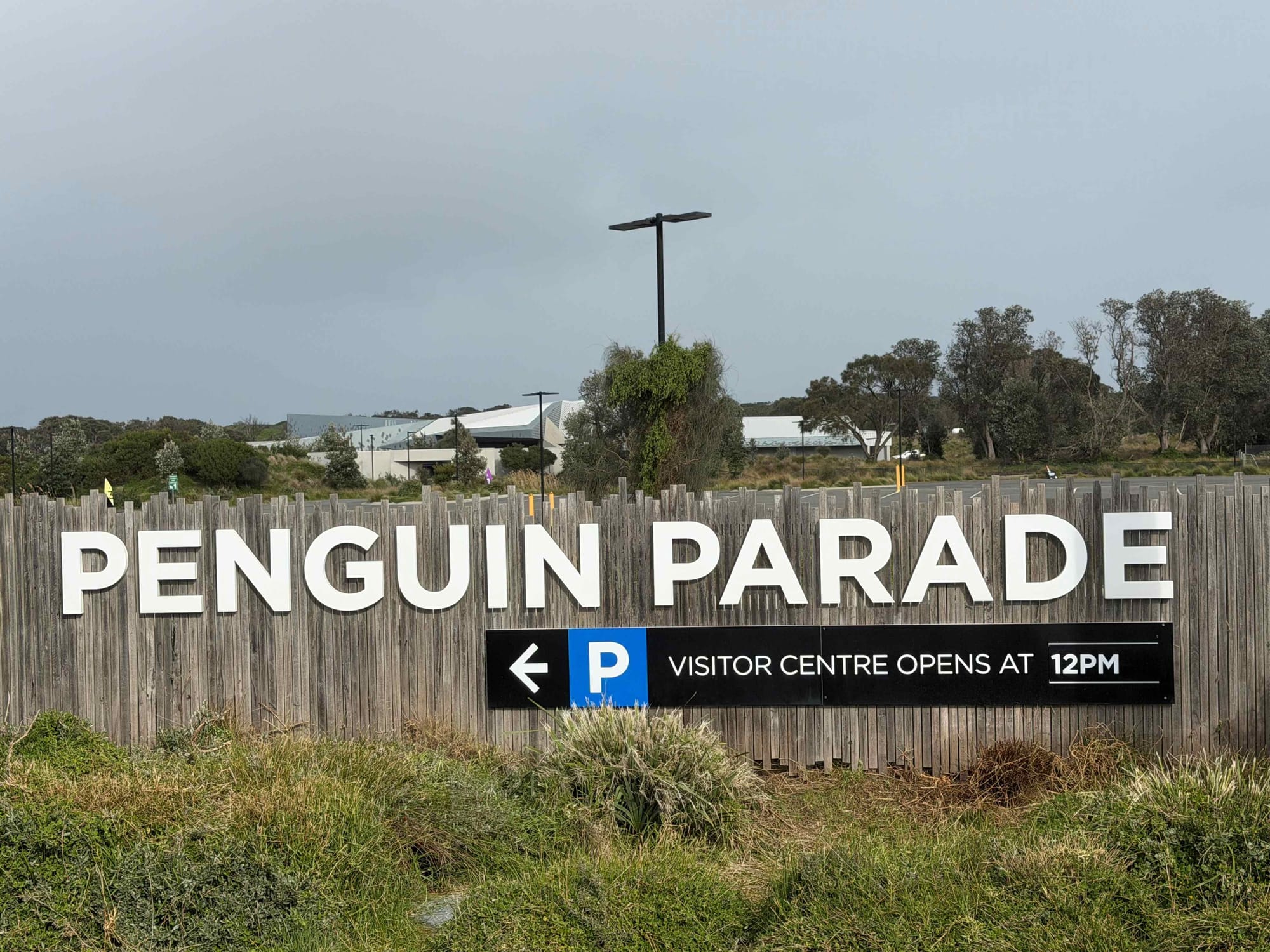
"Phillip Island Nature Parks attractions, including the Penguin Parade, remain open and the risk to the general public remains low. The Nature Parks will continue to provide updates as further information becomes available."
Here is the conclusion from the ARI report in full, describing why a discrete vaccination program around the Penguin Parade colony could have been the most effective:
“The susceptibility of Little Penguins to (Highly Pathogenic Avian Influenza) HPAI is obviously highly uncertain. In other penguin species, such as African Penguins (Spheniscus demersus), outbreaks of HPAI resulted in epidemics with high mortality rates.
“However, in species such as Adélie Penguins (Pygoscelis adeliae), exposure to HPAI appeared to result in little clinical disease (Vaughan-Higgins et al. 2024).
“If Little Penguins prove to be highly susceptible to HPAI, then the worst-case scenario suggests that mortality rates of at least 20% and as high as 40% could be expected following an outbreak lasting approximately 6 weeks."
“A 20–40% mortality rate would represent the deaths of around 8,000–16,000 penguins in the Summerland Peninsula.
“Implementing a program of vaccination in any wildlife species has many practical and logistical challenges. While a suitable vaccine against H5N1 infection exists, its availability for use would need to overcome regulatory hurdles before it could be permitted for emergency use in Australian wildlife.
“Two types of vaccine have been previously tested in African Penguins, a vaccine based on an inactivated H5N8 viral strain and a second based on virus-like particles (VLP) (Roberts et al. 2024). Although no challenge trials were undertaken, both these vaccines appeared to result in antibody titres that were adequate for protection against H5N1 and therefore, it could be assumed that either of these vaccines would be suitable for use in Little Penguins.
“However, the inactivated vaccine required two doses to give similar levels of antibody titres compared with a single dose of VLP vaccine (Roberts et al. 2024). Trials of an inactivated H5N3 vaccine on five native birds in New Zealand are also currently underway. This vaccine requires a second booster dose to be administered at week 4, following initial vaccination.
“The logistical challenges of vaccinating the entire mega colony of Little Penguins inhabiting Summerland Peninsula (approximately 40,000 birds) are obviously very daunting. However, it may be feasible to target one or several sub-colonies, such as the Penguin Parade and adjoining colonies, since sub-colonies only contain around 100 breeding pairs (~200 individuals) (Pulvirenti et al. 2023).
“Targeting the Penguin Parade for vaccination would make an obvious choice given the economic importance and high visibility of this sub colony. Since most of the nesting sites in this sub-colony are known, this would presumably also make catching and administering the vaccine to penguins much easier than in other areas of the peninsula.
“Targeting the Penguin Parade and the adjoining sub-colonies would mean that around 800 – 1000 penguins would need to be vaccinated to give adequate protection against an incursion of H5N1.
“To ensure that adequate coverage is achieved, any vaccination program would need to be administered prior to the arrival of H5N1. Modelling revealed that waiting until the arrival and discovery of H5N1 to start administering vaccinations would most likely be too late, because significant mortality is likely to occur before adequate vaccine coverage is achieved."
“Based on preliminary results from the New Zealand vaccine trial, peak antibody titres are not reached until around 10 weeks from the initial dose and therefore, beginning the vaccination program upon discovery of the first signs of disease would be too late to avoid significant mortality.
“Unfortunately, the arrival of H5N1 into Australia (should it occur) cannot be predicted with any certainty, although the greatest risk is likely to occur when migratory shorebirds start arriving during the Austral spring.
“As a result, the logistical challenges and economic costs associated with rolling out a vaccination program before or during the Austral spring would need to be balanced against the risks of arrival of H5N1 and the likely susceptibility and impacts of the virus on Little Penguins. Since the duration of protective antibody titres following vaccine administration is approximately 175 days, any vaccination program should provide protection for the population for approximately 6 months.”
You can access the full report here (turn to page 33).
More to follow.