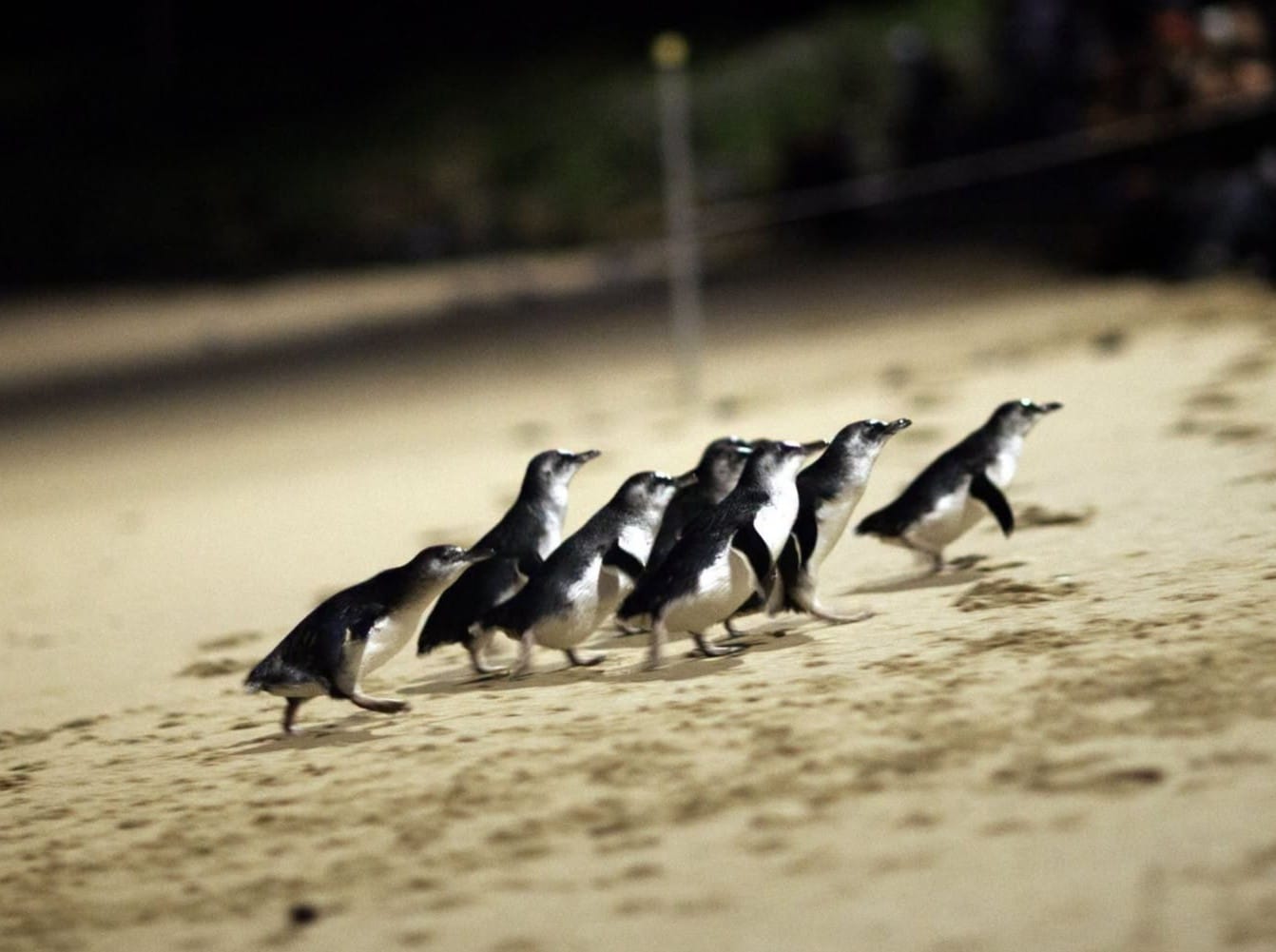
Penguin vaccination program underway but is it too late?
Bird flu vaccinations of the local penguin population are underway on Phillip Island following confirmation last weekend of the first little penguin death on the island from the highly contagious H5N1 disease.


BIRD flu vaccinations of the local penguin population are underway on Phillip Island following confirmation last weekend of the first little penguin death on the island from the highly contagious H5N1 disease.
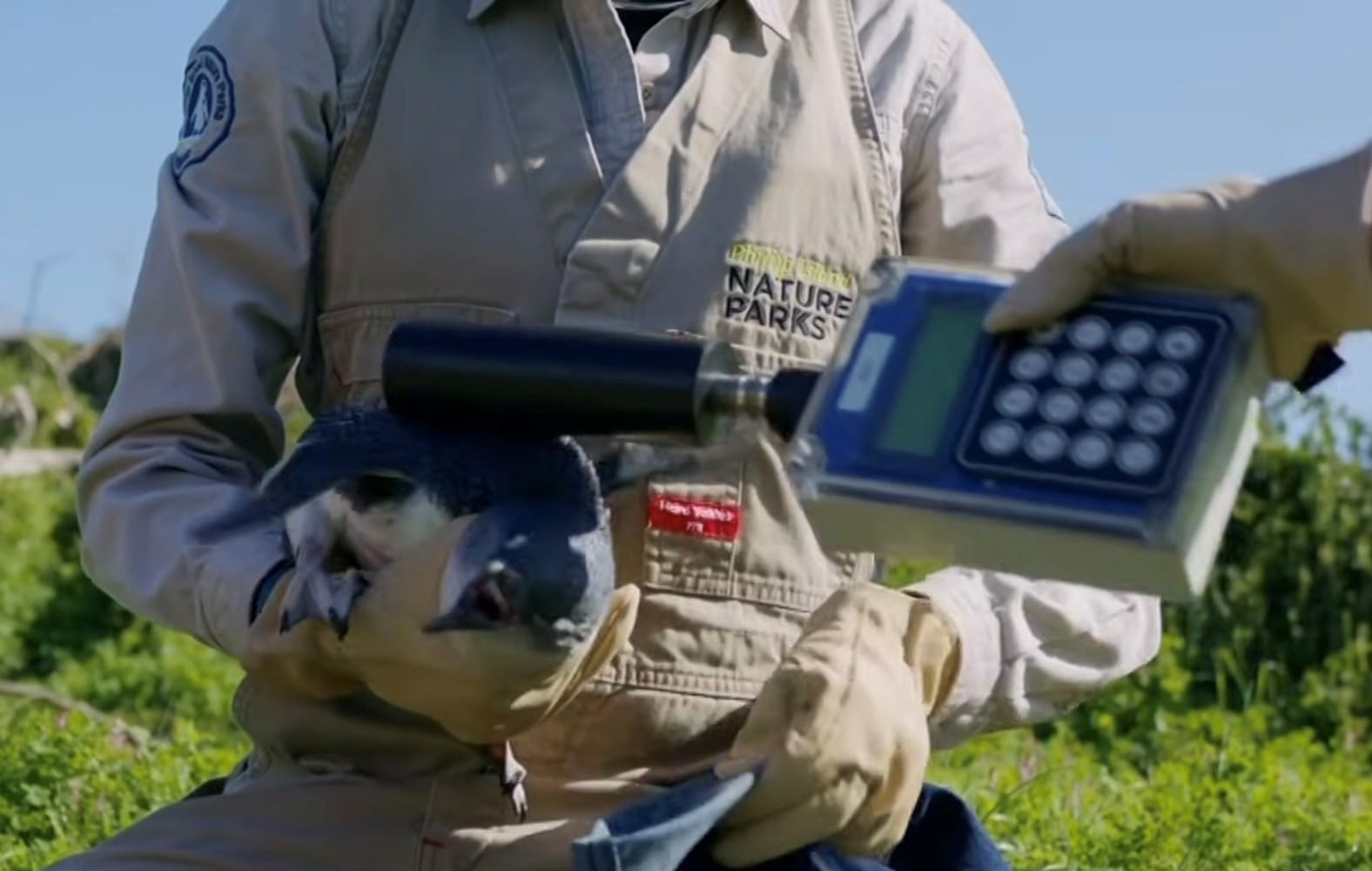
Channel 7 News featured footage of little penguins from the Penguin Parade sub-colony, on their Wednesday night news service, being taken out of their burrows, vaccinated and microchipped as part of a program announced by the State Government the previous Wednesday, August 12.
Victoria's chief biodiversity officer Dr James Todd said the vaccinated penguins would continue to be monitored but so far there have been no adverse reactions.
“They're wild animals, so they certainly, you know, squawk and want to bite and those sorts of things, but they've maintained observations over those animals that have been vaccinated, and there haven't been any adverse impacts,” Dr Todd told Channel 7.
Speaking about the penguin death and the vaccination program, Chief Executive Officer of Phillip Island Nature Parks, Catherine Basterfield said that while confirmation of H5 avian influenza in a little penguin was a significant development it was one that PINP had been preparing for over several years.
"While this detection is concerning, Phillip Island Nature Parks has well-established monitoring, response and biosecurity measures in place and is working closely with government agencies and wildlife health experts to support the response,” Ms Basterfield said.
"Phillip Island Nature Parks has spent decades building one of the world's leading little penguin research and conservation programs. Our long-term monitoring, wildlife health expertise and internationally recognised research give us a unique opportunity to contribute valuable knowledge that can help protect little penguins and strengthen wildlife disease preparedness in Australia and beyond,” she said.
"Vaccination is not a standalone solution. It is one important tool alongside surveillance, monitoring and strong biosecurity measures that will help us better understand how we can protect vulnerable wildlife populations from the impacts of H5 avian influenza.
“Phillip Island has become internationally recognised for both wildlife conservation and nature-based tourism. The opportunity to lead one of the world's largest vaccination programs involving wild species reflects the expertise, research capability and partnerships that have been built over many years.
“The knowledge gained through this work has the potential to benefit wildlife conservation not only on Phillip Island, but around Australia and internationally.”
No response over delay
There has, however, still been no official response from government, state or federal, about why authorities delayed starting their penguin vaccination program until after confirmation that H5N1 bird flu was impacting penguins on the island, despite a report from the Victorian Government’s premier biodiversity research organisation, the Arthur Rylah Institute (ARI), advising the exact opposite.
According to Chief Veterinary Officer Dr Graeme Cooke, Agriculture Victoria and Phillip Island Nature Parks activated plans to vaccinate more than 5000 little penguins at Phillip Island and St Kilda “as soon as the Federal Government authorised the use of H5N1 vaccines for priority native bird species”.
Does that mean the Minister for Agriculture, Fisheries, and Forestry, including biosecurity, export regulation, and industry support, Julie Collins, was dragging the chain?
Despite knowing in May 2025, following receipt of the ARI report “Assessing the risks of endemic and exotic diseases to Victorian terrestrial wildlife” which explicitly said any vaccination program would need to start prior to the arrival of bird flu in the colony, they didn’t get the vaccination program underway until Monday.
Among other things, including that the deaths of between 8000 and 16,000 little penguins can be expected, the ARI report says this:
“To ensure that adequate coverage is achieved, any vaccination program would need to be administered prior to the arrival of H5N1. Modelling revealed that waiting until the arrival and discovery of H5N1 to start administering vaccinations would most likely be too late, because significant mortality is likely to occur before adequate vaccine coverage is achieved.”
Time will tell whether Dr Cooke is proved right about vaccination being a “meaningful way” to protect the penguins, even after the arrival of H5N1.
In the absence of a response from government, the Sentinel-Times put the query to the Victorian Coalition’s new Shadow Environment Minister, Nick McGowan, about why the government hadn’t followed the game plan, laid out by the Arthur Rylah Institute 15 months ago, for vaccinating penguins before the bird flu arrived.
“Because the government are in disarray,” said Mr McGowan.
“We’ve had five Environment Ministers in four years – and not one of them has genuinely cared about the Environment portfolio,” he said.
“Environment groups and environmentalists are in despair at the state of Victoria’s natural environment and the mismanagement and neglect under the Carroll/Allan Labor Governments.
“The trial should have happened last year, making this government’s delayed response negligent, and the belated roll out, sloth-like!
“It’s all symptomatic of a government run by pubic servants with little or no leadership and direction from the Minister or Premier.
“Our environment has suffered greatly under Carroll and Allan, with record native animals paying the highest price for Labor’s neglect and mismanagement.”
Visitor information
Phillip Island Nature Parks attractions, including the Penguin Parade, remain open and visitors can continue to enjoy the Nature Parks' world-renowned wildlife experiences.
The risk of H5 avian influenza to the general public remains low and there is currently no evidence that visiting Nature Parks attractions poses a risk to visitors.
Visitors may notice additional wildlife monitoring, biosecurity measures and conservation activities as part of the ongoing response. These activities have been designed to minimise impacts on visitor experiences while supporting wildlife protection and conservation outcomes.
How the community can help
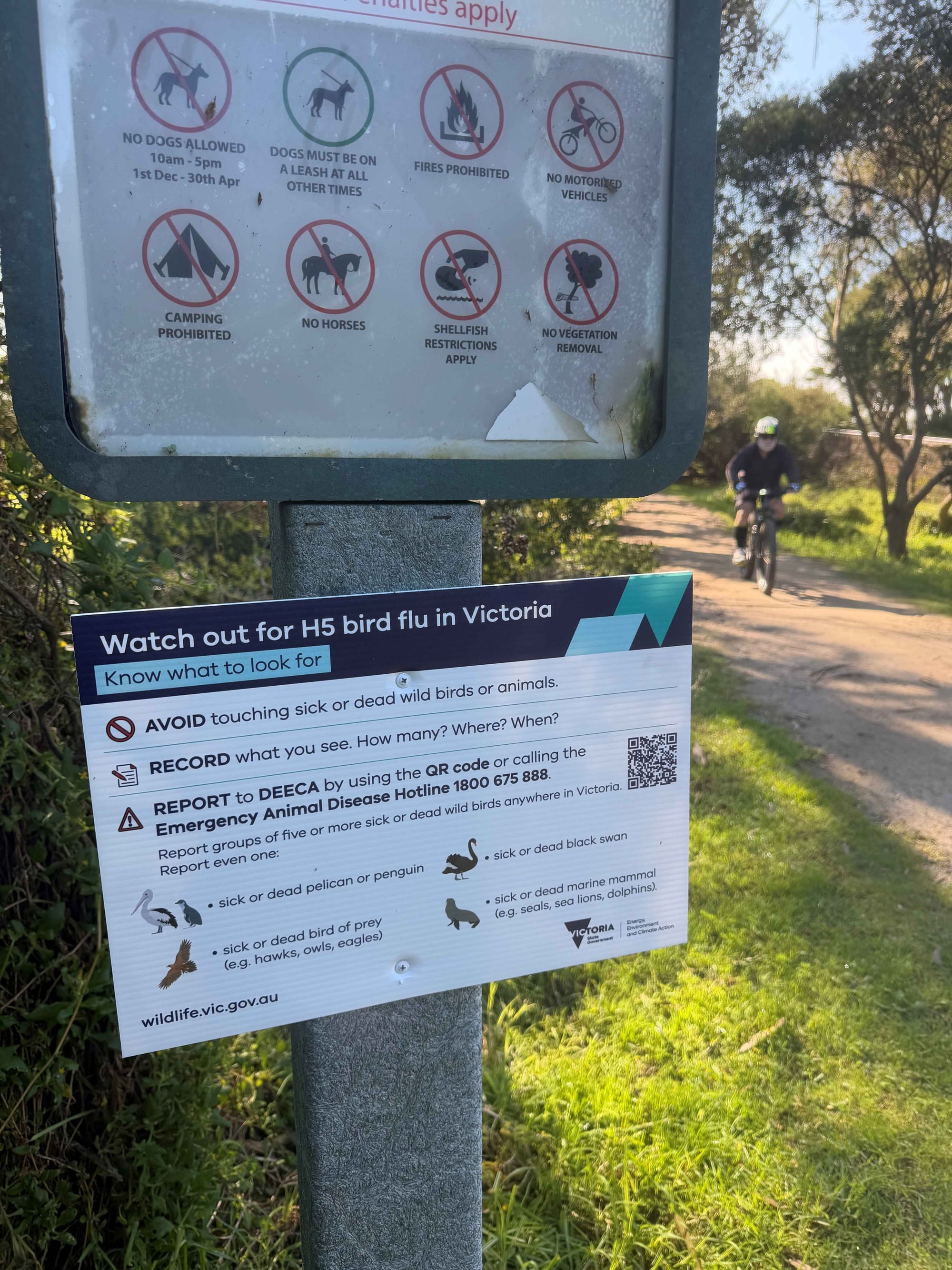
Members of the public who observe sick or dead wildlife should:
- Avoid contact with the animal and keep pets away.
- Record the location.
- Take photographs where safe to do so.
Report it to DEECA through the online reporting system or via the Emergency Animal Disease Hotline on 1800 675 888.