

Phillip Island's penguin talkfest paints a fearful picture
The health of the Phillip Island little penguin colony and the success of the world-famous penguin parade is something we can all be proud of but as delegates to an international conference in Cowes this week highlighted, it's not typical of penguin populations around the world.


- But it’s not all about climate change
ONE of the best things about the success of the world-famous Phillip Island Penguin Parade is that the revenue generated by more than a million visitors-a-year pays for protection of the colony and vital research leading to a 2.5-fold increase in the penguin population here over the past 30 years.
It’s a commercially driven conservation success story that’s unique in the world.
Actions including the eradication of foxes from the island, the removal of the Summerland Peninsula housing estate from the breeding area, a traffic management plan to eliminate road deaths, the installation of 4000 artificial penguin boxes and on-going, ground-breaking research are initiatives of which we can all feel proud.
Trials on a possible vaccine ahead of the arrival of H5N1 bird flu, leading to a world-first, large-scale vaccination program was an extension of that.
But typically, the various species of penguins, among them King, Emperor, Adélie, Gentoo, Galapagos, Magellanic, African, Royal, Rockhopper and the Yellow-eyed penguins of New Zealand are situated in remote locations, mostly far from population centres.
While this allows the penguins to do their own thing, with few exceptions it isn’t helping their survival, as the 250 delegates from all over the world heard repeated time and time again at the 12th International Penguin Conference (IPC12) in Cowes over the past week, with climate change, people, predation and a range of other factors impacting their breeding, feeding and longevity.
In fact, the health of the world’s penguin populations, and the research being mounted by scientists, PhD students and citizen scientists on their adaption to a changing environment is acting as something of a litmus test for the impact of people and climate change on the environment.
And while successive Victorian state governments have been generous in their support of Phillip Island’s penguins, the largest little penguin colony in the world, it’s a case of out of sight, out of mind where some of their other responsibilities are concerned.
Take Gabo Island’s little penguin colony for example.
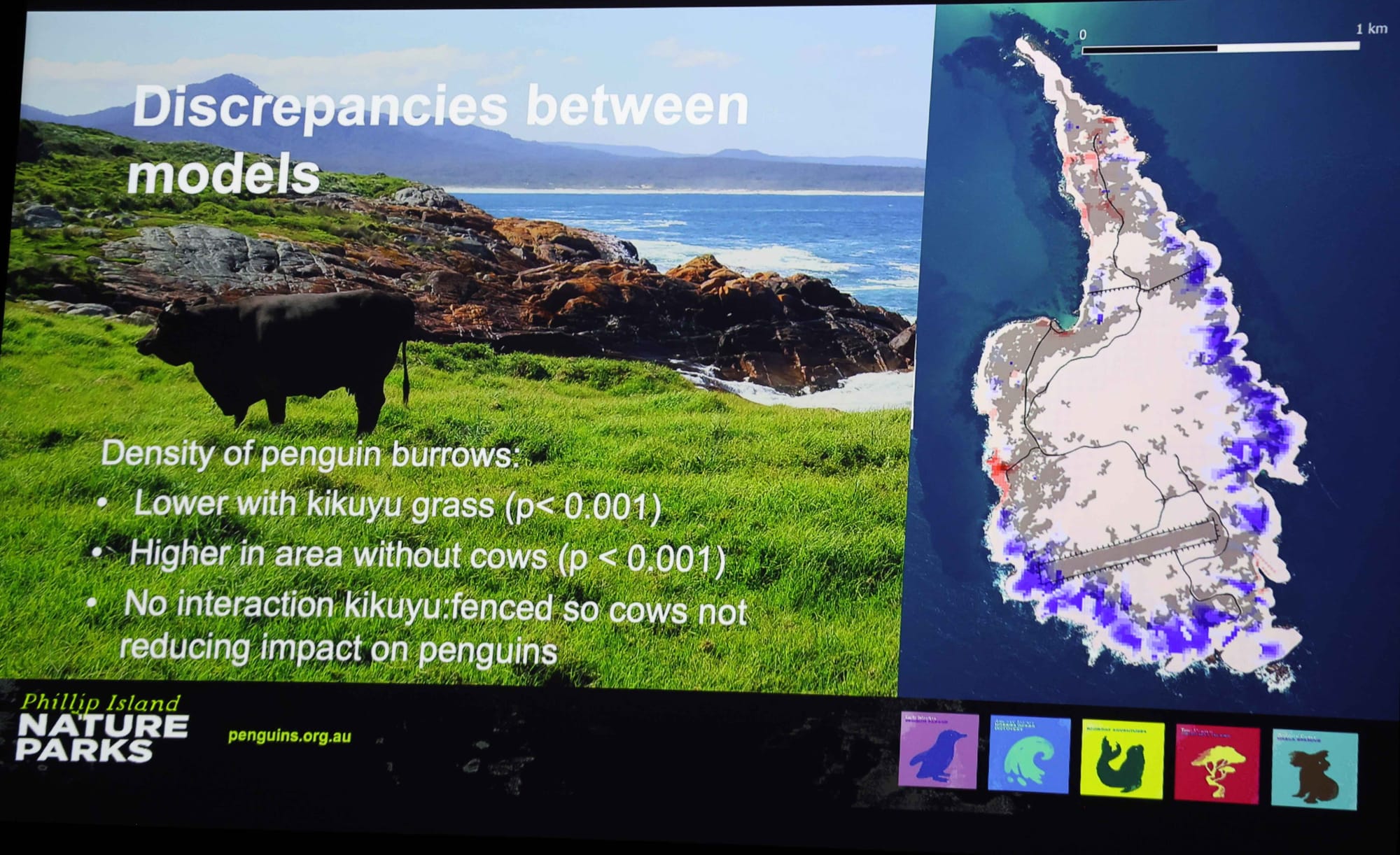
Originally home to Victoria’s largest little penguin colony, with up to 21,000 breeding pairs, as senior scientist at Phillip Island Nature Parks, Dr Duncan Sutherland pointed out at the conference last Thursday, the former “super colony” is experiencing “a catastrophic decline” on the verge now of complete collapse – not principally from climate change – but mainly from a lack of land management funding and effort.
As much as we can be proud of what has been achieved at Phillip Island, the situation on Gabo Island is the exact opposite, a national disgrace.
Two years ago, the Phillip Island-based, national organisation, the Threatened Species Conservancy, launched an appeal for project funding to implement “a rapid first response to halt the decline, while building the long-term knowledge and partnerships required to secure the colony’s future”.
All they needed was $452,980 over two years for a range of initiatives including installing nesting boxes, known to boost breeding success, trialing rodent controls and making a start on bringing a shocking infestation of the invasive grass kikuyu under control.
“When you consider what the dual-lane roundabout at Cape Woolamai (intersection of Woolamai Beach Road and Phillip Island Road) cost, more than $10 million, it’s not much to ask,” said Abi Smith, the Founder and Chief Executive Officer of the Threatened Species Conservancy.
“We’re still looking for funding for the project but so far without success,” she said.
You can find the proposed project and funding link HERE.
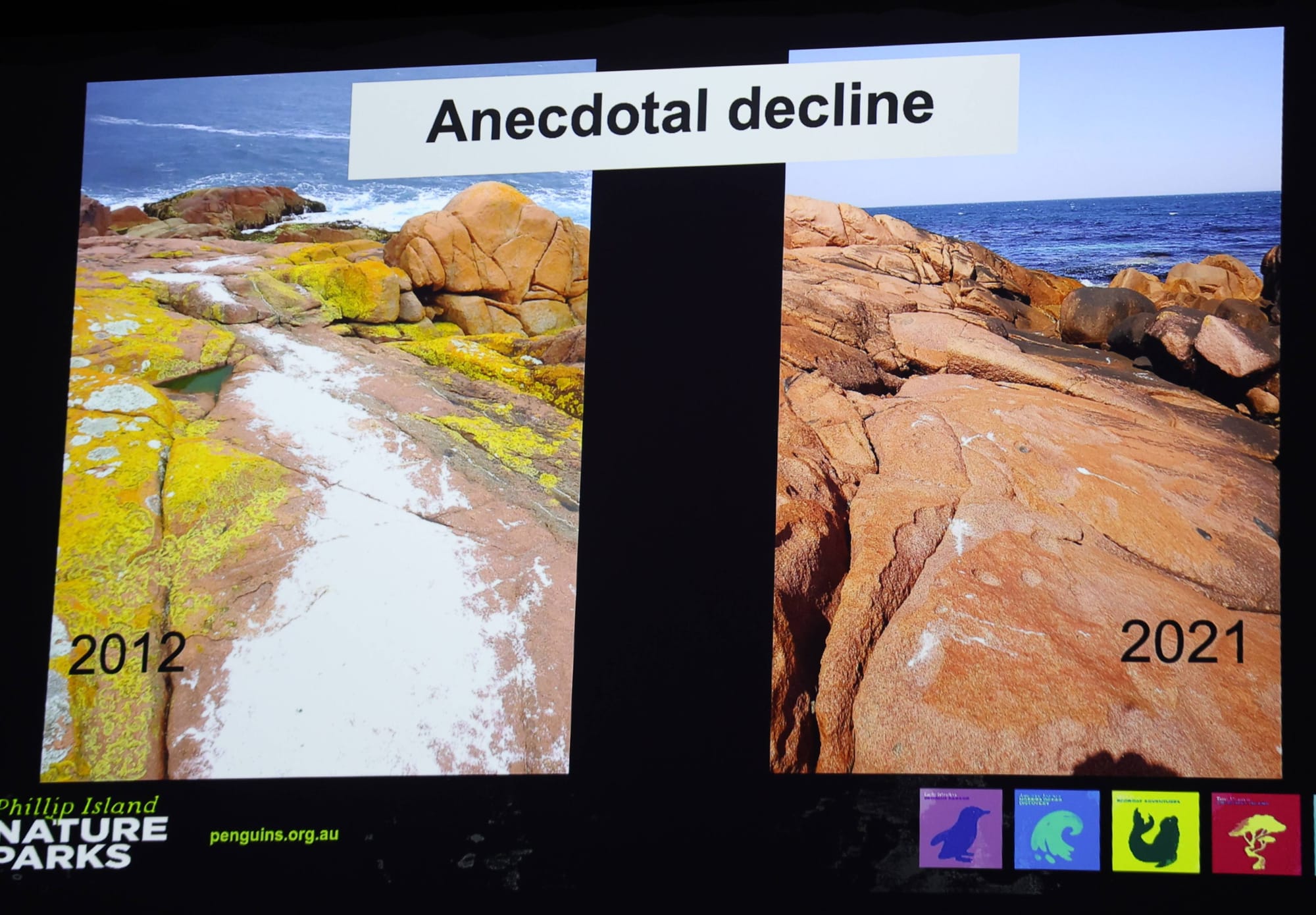
As revealed by Dr Sutherland, the kikuyu infestation has covered large swarths of the penguin breeding habitat on Gabo Island, in places up to 2 metres high, making access impossible for the penguin families which want to return to the same burrows year after year.
“The kikuyu grass that I was talking about; these mats that it forms are extensive and incredibly difficult for penguins to navigate through. This is waist-high grass, and some of it is as tall as I am in areas, and so, a massive impediment to the penguins, and obviously eroding their breeding habitat,” said Dr Sutherland.
One of the measures that has been used to try to control the kikuyu has been the introduction of cows to eat the grass but according to Dr Sutherland “there are actually more penguin burrows where cows were excluded”.
He flashed up pictures on an overhead screen for a packed auditorium which illustrated the dramatic reduction in penguin numbers on Gabo Island including the failure to use previously well-pooed pathways to former burrows due to the infestation of kikuyu.
Now there’s no bird poo and next-to-no penguins. It’s tragic.
Asked during question time why, if it is a known problem, why the authorities don’t move on the problem, Dr Sutherland said it was a question for Parks Victoria to answer, although he was aware of various programs including attempts to eradicate rodents, to control weeds and protect the breeding habitat.
In a six-day conference incredibly rich on content from recognised penguin experts from all round the world and new and emerging research from PhD students, there were plenty of takeaways, even from the session between lunch and afternoon tea on Thursday.
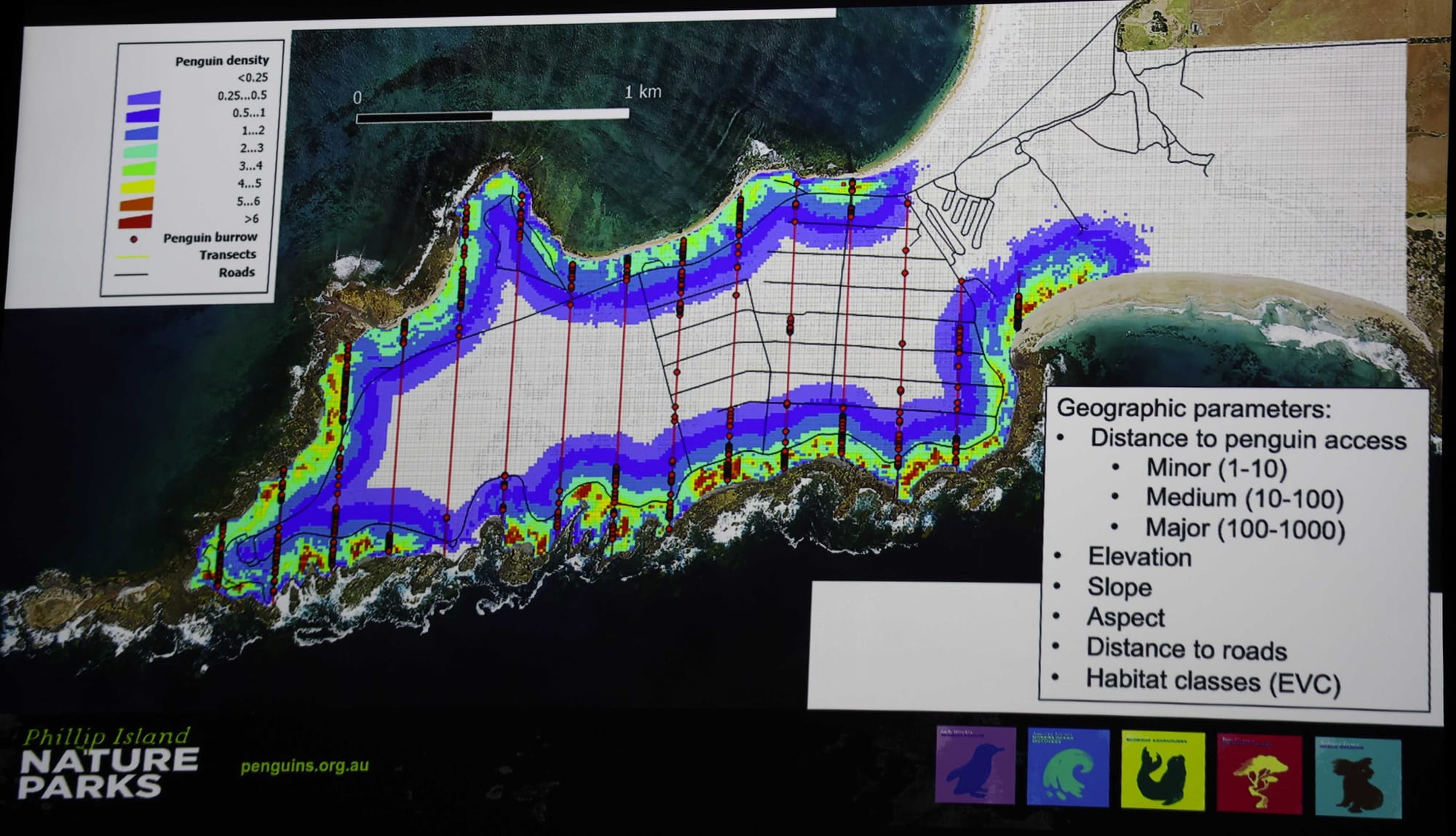
- Dr Duncan Sutherland led off with a 15-minute address about the ‘Catastrophic decline in a super colony of little penguins’ on Gabo Island contrasting with the successful efforts made to protect another of Australia’s super colonies at Phillip Island where he works as a senior scientist.
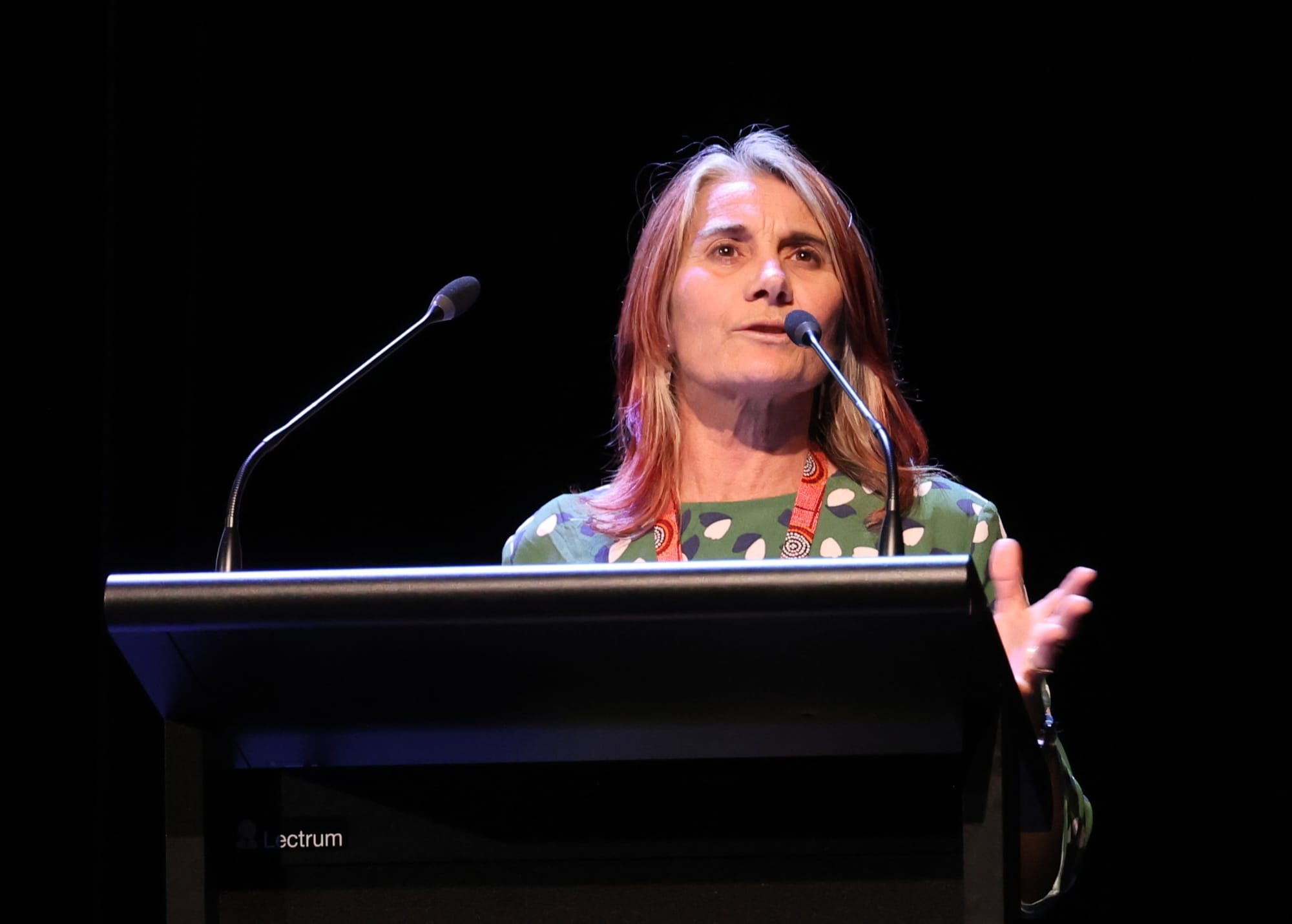
- Dr Belinda Cannell, a conservation ecologist at the University of Western Australia and Murdoch University, presented next on ‘How the survival of little penguin adults and chicks is influenced by marine temperatures and rainfall', referencing another tragic loss of little penguins on Penguin Island south of Perth. Here the population has collapsed by 95% since 2008, down from 1800 to as few as 100. Reportedly 25% to 35% of the penguin deaths are caused by watercraft, with recommendations around lower speeds, the use of prop-guards and education that might be helpful locally.
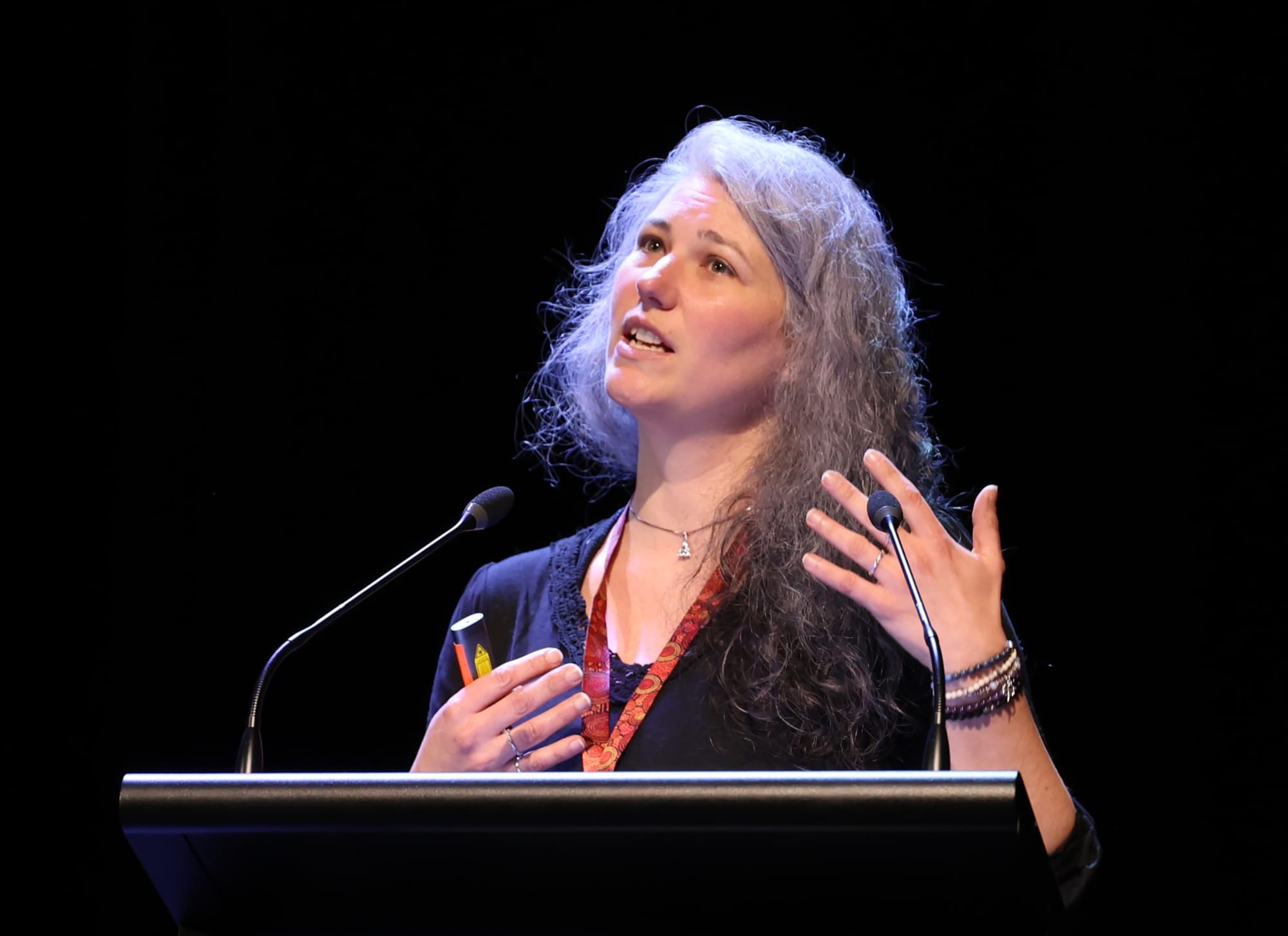
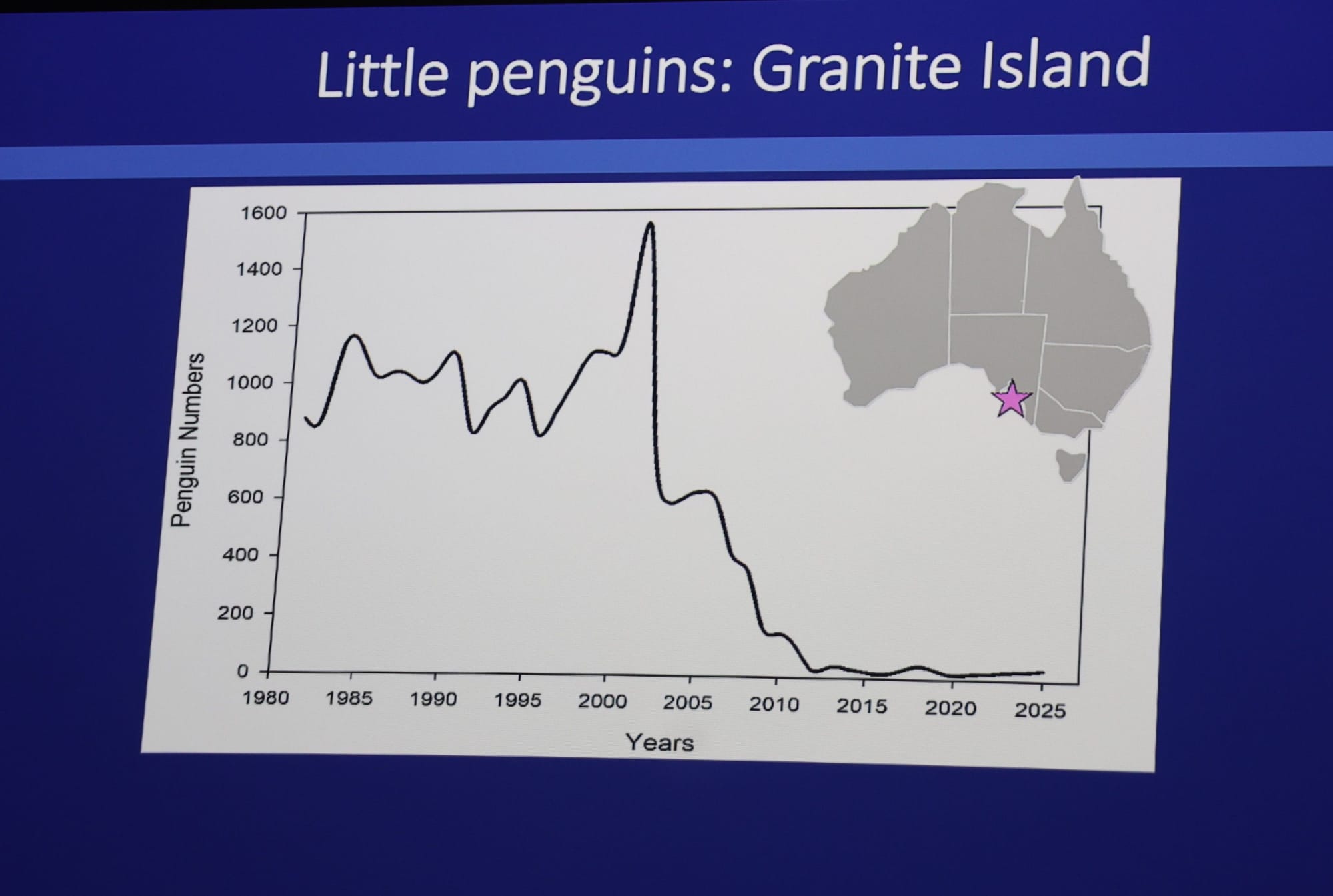
- Associated Professor Diane Colombelli-Négrel spoke about the personality traits of penguins, testing such things as ‘boldness’, ‘exploration’ tendencies and ‘aggressiveness’ and how it might impact survival and breeding success. But as bold and inquisitive as some penguins might be, it doesn’t extend to migrating away from threatened habitats to better locations. She spoke about the experience on Granite Island in South Australia where the penguin population had collapsed from 1600 penguins in 2000 to 18 breeding pairs, with birds not only impacted by the Millennium Drought but also interference from visitors to the island poking into burrows, chasing penguins to photograph them and even the use of electric bikes putting penguins under high stress.
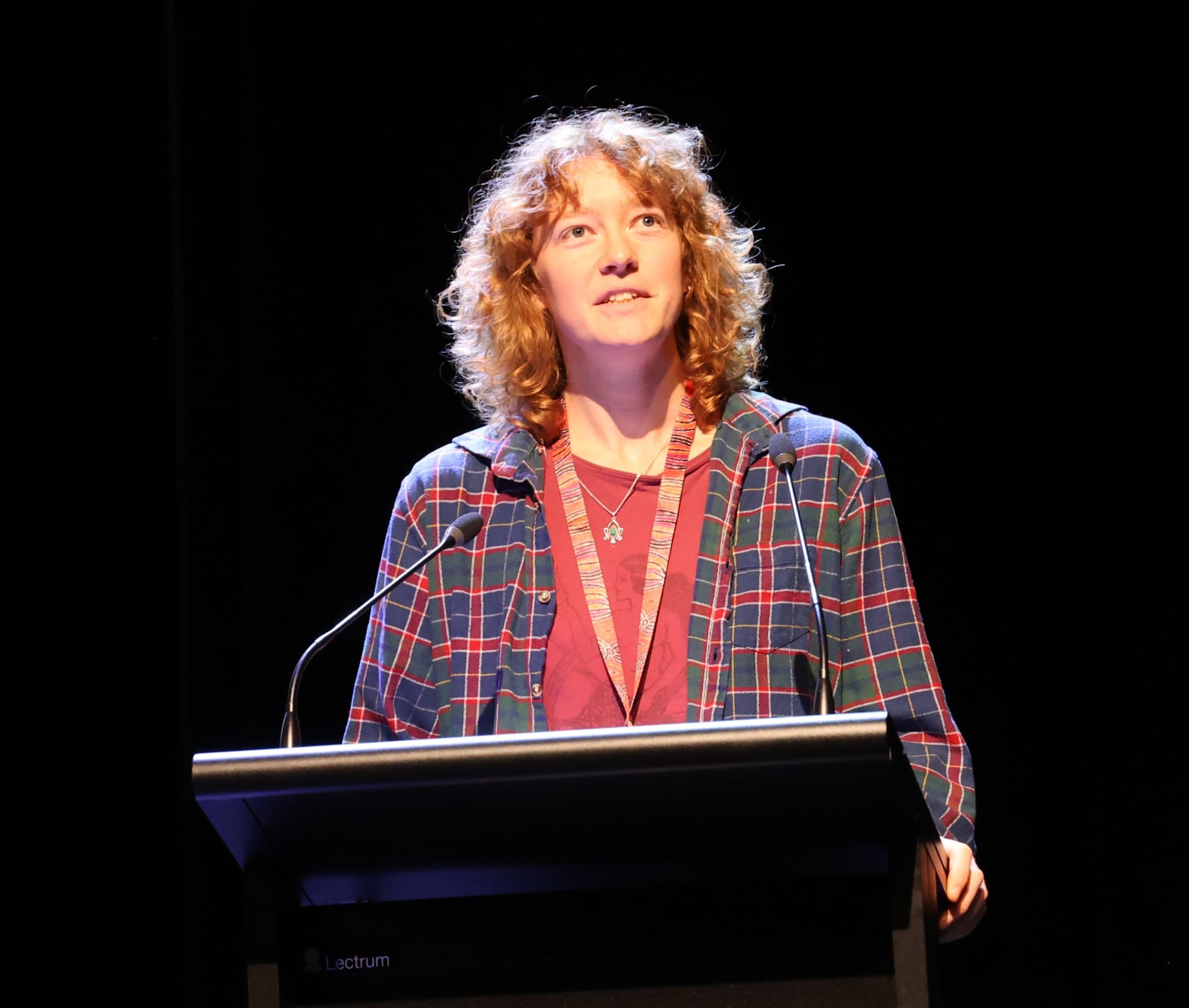
- Justine Wintz, a PhD candidate in marine ecology and animal behaviour, presented a paper on behalf of a colleague, Alice Eparvier, ‘When earlier phenology becomes beneficial: Increasing double brooding in a long-lived seabird’, covering the benefits of being a singleton or two-chick family, and the characteristics displayed by male-male, male-female and female-female broods, smaller/larger chicks or male first versus female first.
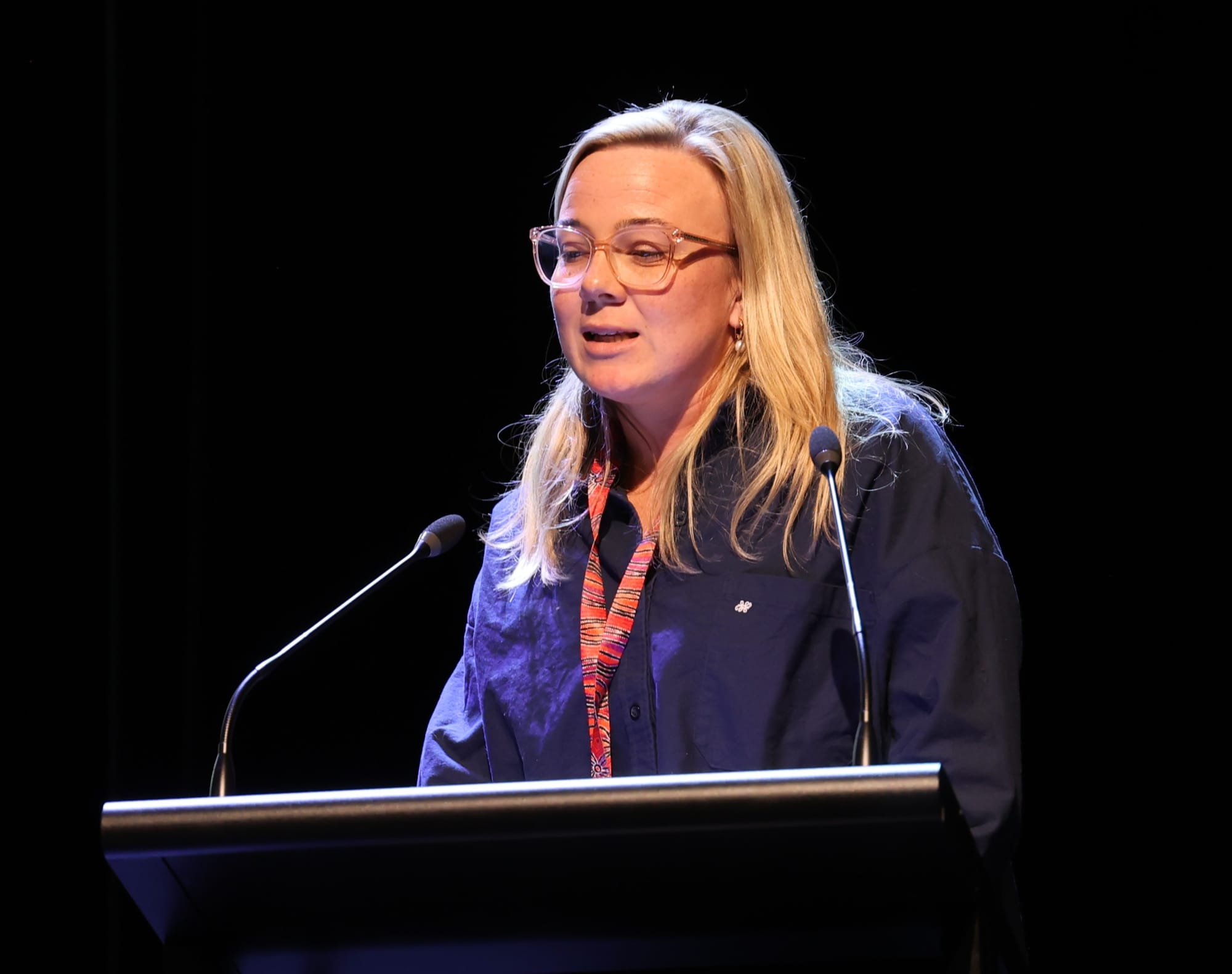
- PhD candidate, Georgia Mergard-Byrne spoke about ‘constructing gentoo penguin food webs for ecosystem monitoring: seasonal shifts in diet and network structure at Macquarie Island’, describing a 50% decline in breeding pairs between 1996-2017, and describing Macquarie Island as the “best place on earth” even if you’re only there collecting scats.
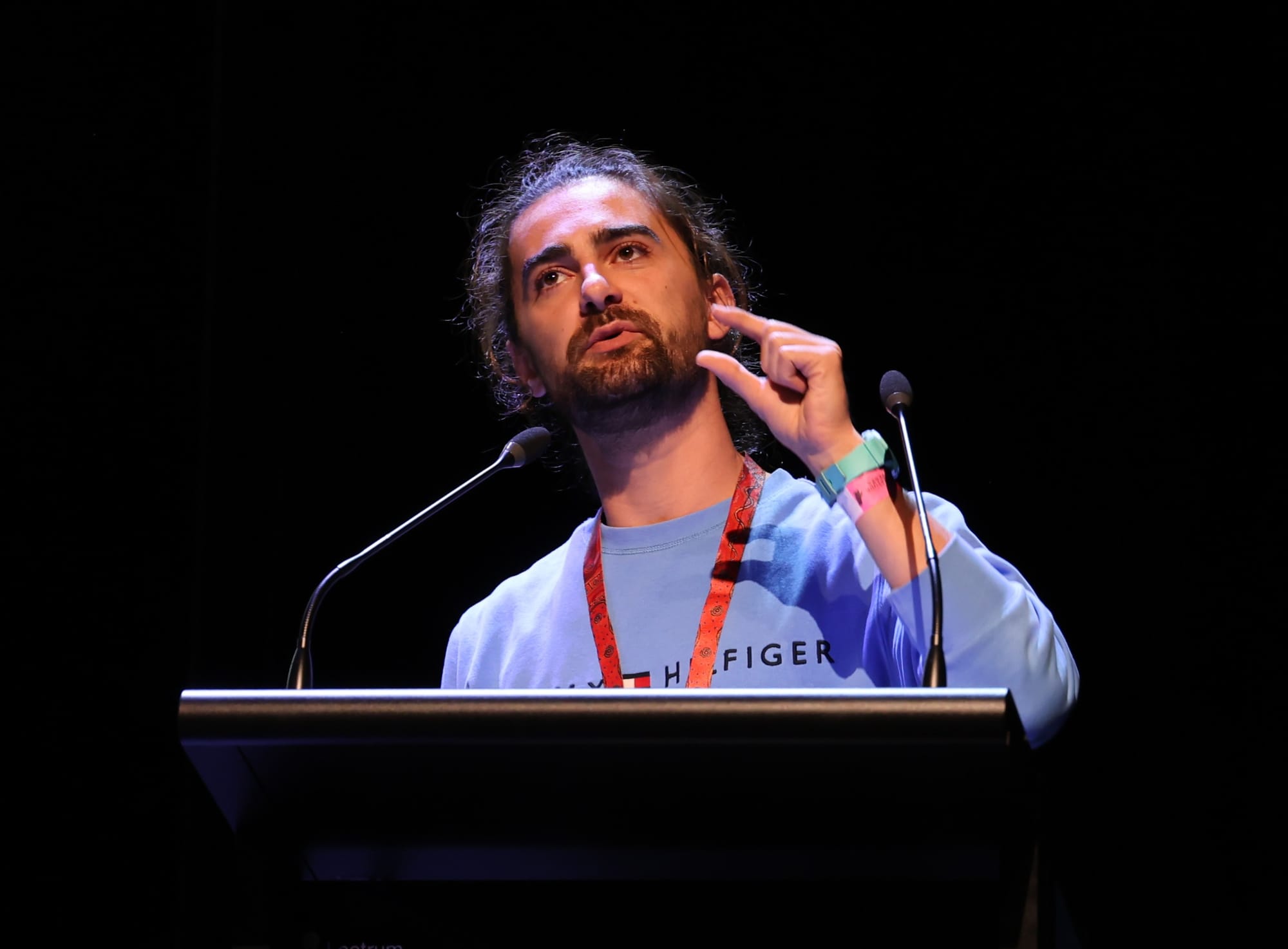
- PhD candidate at Strasbourg University, Léo Marcouillier, spoke about the impact of short-term natural heat exposure on breeding in king and Magellanic penguins, noting that the penguins became uncomfortable after 24ºC. He'll soon be travelling to the Crozet Islands, a sub-Antarctic archipelago of small islands in the southern Indian Ocean, equidistant from Cape Town and Antarctica, which is potentially one of the success stories of climate change with resident King penguins bringing forward their breeding activity, the timing proving better for the survival of their chicks.


