

WATCH: Koala trio's heartwarming return home
Watch the heartwarming moment young koalas Chloe, Cher and Sunny returned to the wild after spending about nine months in care.


Three young Strzelecki koalas have returned to the wild after spending roughly nine months being rehabilitated by a wildlife shelter in South Gippsland.
Chloe, Cher and Sunny were released back into the wild in July after arriving at Bass Coast/South Gippsland Wildlife Rescue and Shelter Inc in October 2025.
Two of the koalas first entered care after their parents were killed in separate road collisions, and the third was hand-reared as its mother also received treatment for an eye problem.
Shelter operator Susan Moore said caring for young koalas was quite often a lengthy process, with each animal needing to be fully weaned and weigh at least 4.5 kilograms before being judged as ready for release.
Human contact is also pulled back during the process, gradually reduced to prevent the animals from becoming too comfortable around humans.
“You don’t handle them at all, so that they can get a bit skittish,” Ms Moore said.
Where possible, young koalas are raised alongside others of a similar age and placed with an adult before their release.
Ms Moore said this process helped them learn to interact and bond as koalas, rather than becoming too dependent on human carers.
The three koalas eventually returned to a suitable habitat close to the area where they originated.
It’s common practice to release koalas close to where they were found, as adults are capable of trying to return to their original territory if they’re relocated too far away.
For young koalas that were raised without their mothers, carers must also ensure that food trees are plentiful where they will be released.
Ms Moore said carers often select a “home tree” and bring its leaves back to the shelter before release. That way, the koalas become familiar with that particular food source.
“When you release them, you can put them into that tree and they go, ‘I know that leaf’,” she said.
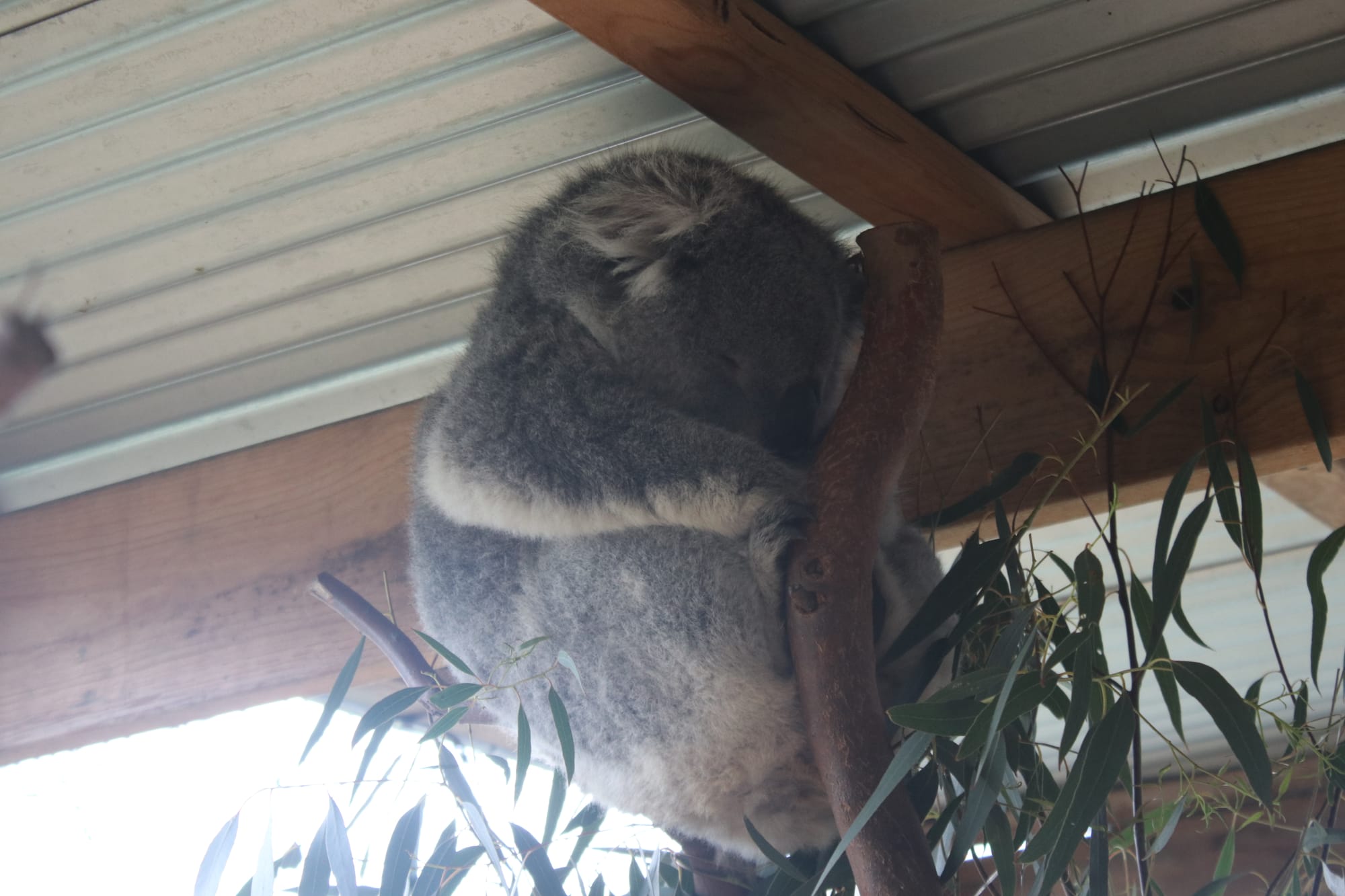
“They use it as a home tree, and then they go in and out because babies don’t know where to go. They haven’t been with their mother to teach them where the trees are.”
The shelter is also working on a process involving photographing the distinctive patterns on koalas’ noses, which will help to identify animals after they’re released.
Ms Moore said a koala’s nose markings act much like a human’s fingerprint, with differences in colour, spots and patterns staying recognisable even as the animal grows to full maturity.
The proposed community tracking project would encourage residents to photograph koala’s noses and provide their location, which would allow carers to monitor released animals and develop a clearer picture of the local population.
For Ms Moore, seeing a koala climb into the trees again makes all of the rehabilitation months worthwhile.
“Releasing is the best thing,” she said.
“You’ve got a koala that’s been hit by a car and has graze marks, and you fix it all up and they run up the tree. It’s just great.”


