

Airborne solution to $5 million Phillip Island boardwalk expansion
A heavy lift helicopter has been used to lift prefabricated steel sections into place for the new $5 million Penguin Parade boardwalk project on Phillip Island.


THE $5 million Penguin Parade boardwalk redevelopment on the Summerland Peninsula reached a critical milestone this week with a heavy-lift helicopter arriving on-site.
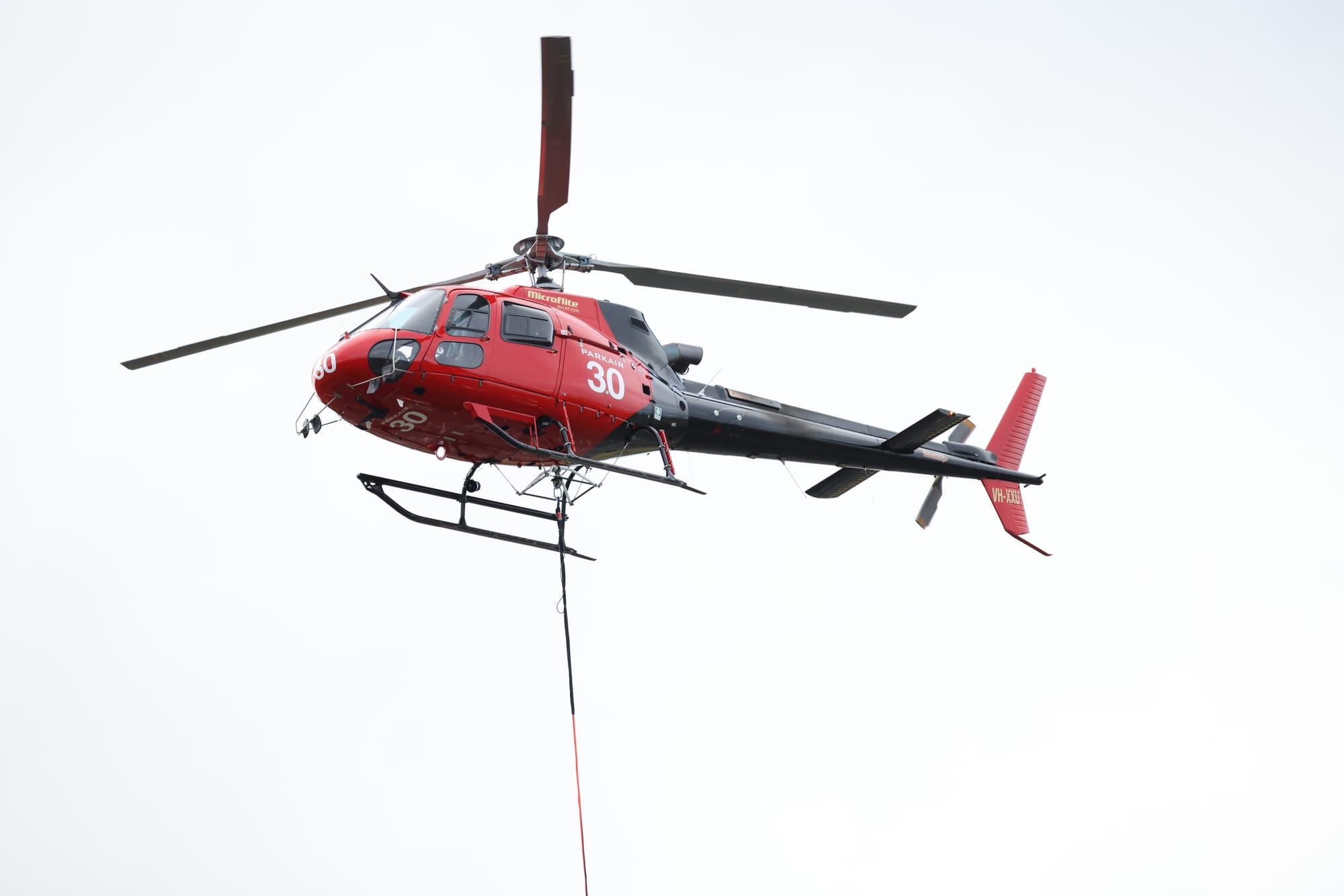
The major construction project will significantly upgrade visitor access while delivering enhanced protection for the local wildlife habitat. To facilitate the next phase of the development, an aerial approach was required for a complex lift operation.
Visitor access was temporarily restricted during the helicopter lift across the Phillip Island Penguin Parade car park to the existing boardwalk network. These daytime disruptions were necessary to maintain strict public safety zones while the aircraft was active in the area.
Visitors on-site during these hours were requested to follow all directions provided by staff, who were stationed throughout the precinct to guide traffic and pedestrians safely around the construction zone.
Due to the extreme ecological sensitivity of the Summerland Peninsula, the construction process for the new boardwalk has relied on highly specialised engineering methods.
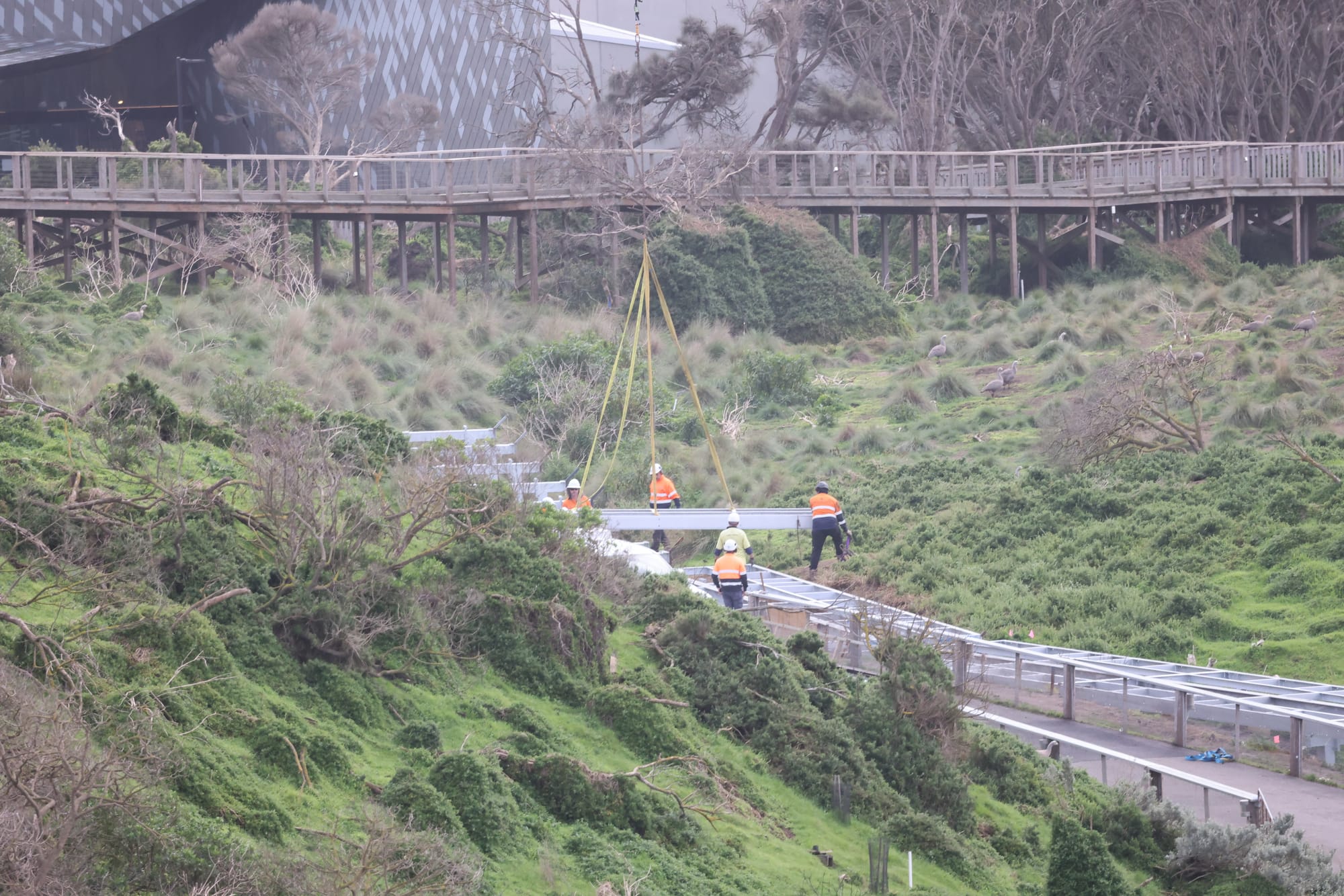
By lifting the heavy steel frameworks directly into place from above, the project completely eliminated the need for heavy construction vehicles on the ground. This prevented heavy machinery from crushing delicate nesting burrows or damaging irreplaceable cultural heritage sites.
By lifting the heavy steel frameworks directly into place from above, the project completely eliminated the need for heavy construction vehicles on the ground. This prevented heavy machinery from crushing delicate nesting burrows or damaging irreplaceable cultural heritage sites.
Flight operations remained strictly weather-dependent to ensure maximum precision.
To guarantee the safety of the local fauna, all aerial manoeuvres and ground works were overseen by qualified environmental officers and wildlife experts. These teams monitored the colony constantly, ensuring that the noise and presence of the aircraft caused zero distress to the native population.
The Little Penguins, known globally for their nightly march from the sea to their sand-dune burrows, are highly protected. Minimising the human and mechanical footprint during infrastructure updates is a top priority for wildlife conservation authorities.
The new boardwalk infrastructure is designed to sustainably accommodate the hundreds of thousands of international and domestic eco-tourists who visit the site annually. By widening the viewing platforms and raising the walkways higher above the natural terrain, the project provides a double benefit.
Visitors will enjoy a far more immersive, unobstructed view of the penguins, while the birds gain uninhibited paths to move freely underneath the structures without human interference.
This $5 million injection represents a major step forward for regional ecotourism.
The seamless coordination between aviation teams, structural engineers, and environmental scientists created a new standard for building in delicate ecosystems.
As the heavy-lift helicopter wrapped up its final flight rotation for the week, the structural backbone of the new platform stood firmly in place, perfectly integrated into the landscape without a single burrow disturbed.
With the aerial phase now successfully completed, crews are shifting their focus back to ground-level carpentry and finishing works. The project remains on track for its scheduled completion, promising a world-class, low-impact viewing experience that will safeguard the future of Phillip Island's most famous residents for decades to come.


