

Mary Aldred MP says organised crime the biggest budget winner
While the Federal Government added $14 million across the states for illicit tobacco law enforcement, organised crime stands to rake in $6.9 billion-a-year with the government expected to lose in excess of $8 billion in excise over the next five years - something doesn't add up!


IN AUGUST 2024, Wonthaggi had its first brush with the illicit tobacco wars that have ravaged most parts of the state by now.
Days before it was to open, brazen criminals ram-raided a shop in McBride Avenue which was reportedly set to start selling illicit tobacco in the town.
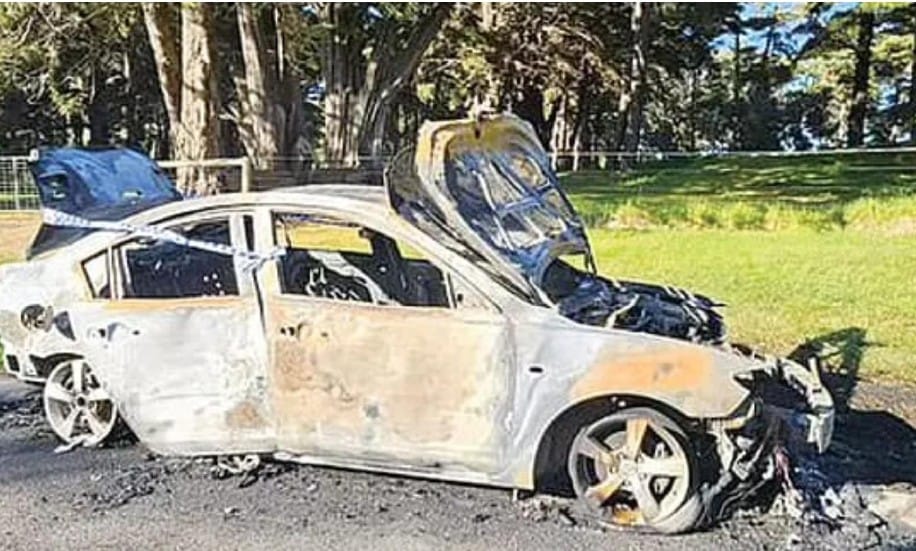
A mid-2000s black Mazda 3, used in the commission of the crime, was spectacularly torched in South Dudley shortly after and the shop in question remains vacant to this day.
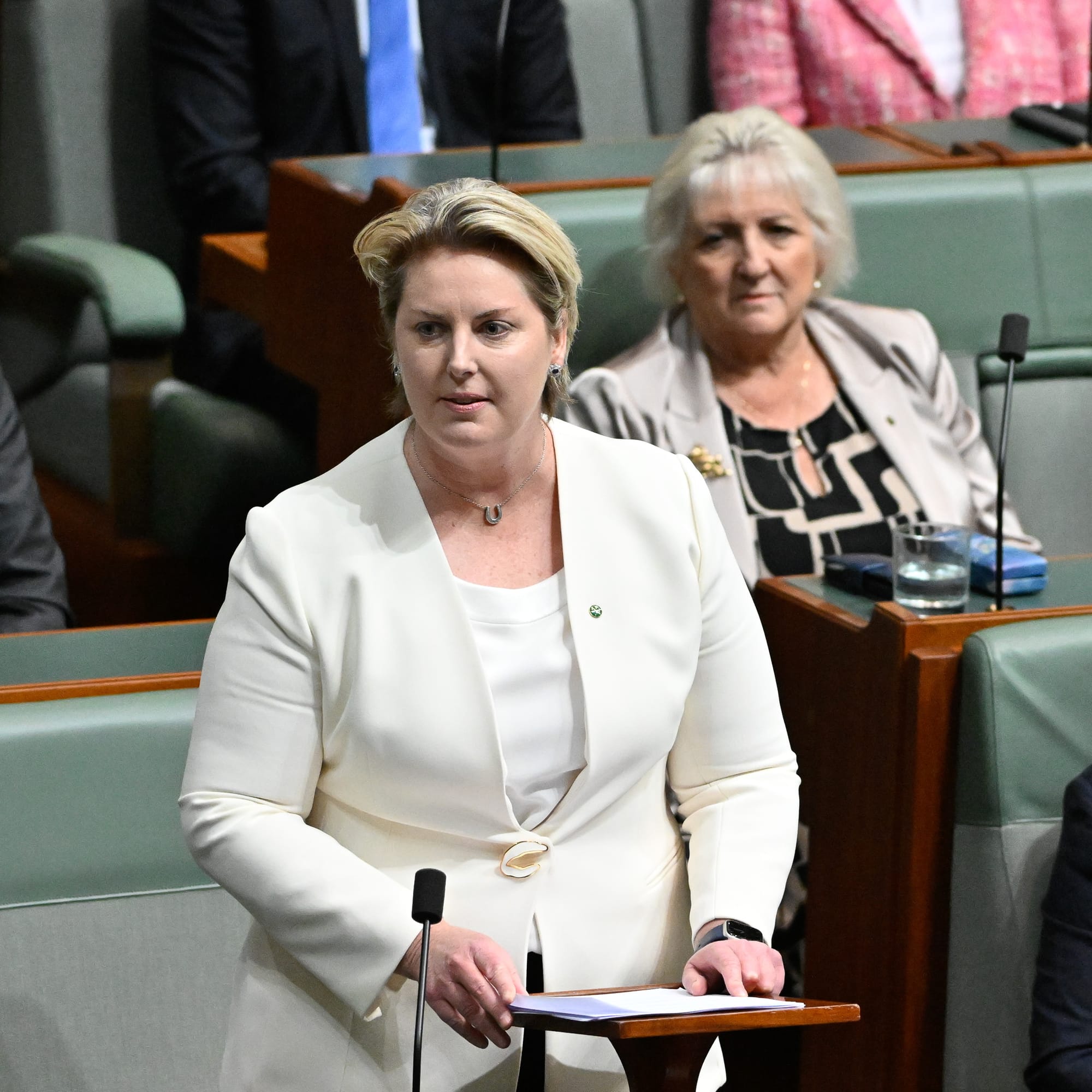
Wonthaggi’s illicit cigarette woes didn’t crack a mention last week in Federal Parliament when Monash MP, Mary Aldred, rose to make her contribution to the ‘Combatting Illicit Tobacco Bill 2026 Second Reading’ debate. But she used a similar example involving a small family-owned grocery store in Longwarry which was ram-raided six months ago for not playing the game.
Ms Aldred was right to point to the impact on law and order, and the hundreds of shopping centres across the state which have been fire-bombed, the billions raised by organised crime and the lack of action to rein it in.
She was right to focus on the health risks and costs from a new surge in smoking and the pittance being committed by the government to combat the problem.
And she didn’t miss the chance to fire a shot across the government’s bow during budget week, contrasting the $14 million in new money for law enforcement, across all states and territories, against the $6.9 billion organised crime stands to rake in.
“Every time this government refuses to rethink its failed excise strategy, organised crime gets richer,” said Ms Aldred.
“They were the biggest winners on budget night. The $14 million in state and territory funding announced on budget night is a drop in the ocean compared with the $6.9 billion in profits the illicit market is making.”
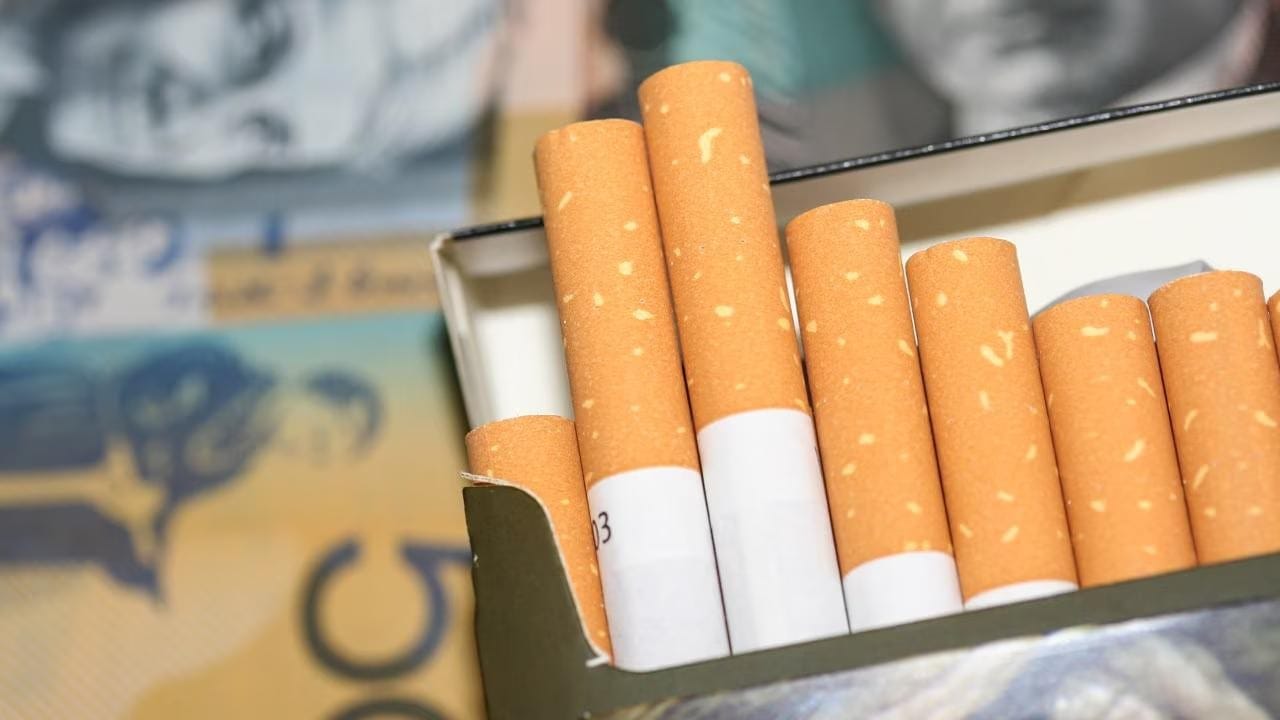
It’s a scandal that has also been highlighted by none other than British American Tobacco.
“Last week’s Federal Budget laid bare the scale of the Albanese Government’s failure on illicit tobacco, with collapsing excise revenue and an enforcement response completely out of step with the crisis unfolding across the country,” said BAT Australia.
“Budget papers revealed Treasury now expects tobacco excise revenue to collapse to just $2.1 billion by 2029-30 - the lowest collection this century - despite originally forecasting $16.8 billion over the same period. Public reporting also revealed a projected $77 billion excise shortfall across the forward estimates.
“At the same time, the Government continues insisting enforcement is the answer while allocating just $14 million across all states and territories for illicit tobacco enforcement - approximately $1.75 million each.
“That is not a serious response to a black market now estimated to be worth around $10 billion annually and linked to more than 285 fire-bombings nationwide.”
You get that, right!
The government is losing (we’re losing) a projected $77 billion and allocating an only additional $14 million for enforcement initiatives.
In fact, there’s actually $20.3 million in additional money over four years, as follows:
“The Government will provide $20.3 million over four years from 2026–27 to combat the illicit tobacco market. Funding includes:
- $14.0 million of additional funding in 2026–27 to boost state and territory compliance and enforcement capabilities to disrupt the illicit tobacco market, including transport, storage and disposal of seized illicit tobacco and e‑cigarettes
- $5.2 million over four years from 2026–27 to undertake regular data collection, analysis and monitoring to understand nicotine and tobacco product use and markets
- $1.1 million in 2026–27 to meet Australia’s international tobacco control obligations, including support for Pacific partners.
“The Government will strengthen and enhance law enforcement powers to investigate illicit tobacco‑related offending through amendments to Treasury and Home Affairs portfolio legislation. These include increased monetary and imprisonment penalties for illicit tobacco offences, nationally consistent protective order power for restraining order applications, and expanded law enforcement powers to target proceeds of crime, unexplained wealth and tainted property,” it claims in the budget documents.
“This measure is estimated to result in a small but unquantifiable increase in receipts over five years from 2025–26. The Department of Health, Disability and Ageing will partially meet the cost of this measure from within existing resources.”
Elsewhere, there are line items in the budget, under ‘Other health National Partnership payments’ for Illicit Tobacco Compliance and Enforcement Packages in 2025-26 of $24.5 million and in 2026-27 of $36.3 million.
But, against lost billions it’s peanuts.
The government acknowledges the hit as follows:
“Tax receipts upgrades are partly offset by lower tobacco excise receipts. Tobacco excise has been revised down by $1.2 billion in 2026–27 and $8.0 billion over the five years from 2025–26 to 2029–30. The downgrade reflects continued weakness in tobacco excise collections and a weaker outlook for excisable tobacco volumes.”
So, even on their own figures, they’re losing $8 billion in excise over five years, not to mention the added costs to health and community safety, and putting in between $30 million and $40 million annually into cracking down on a pervasive problem that’s impacting every community in Australia while financing the worst excesses of organised crime.
You could reasonably ask: “What the hell is going on?”
At least our local MP, Mary Aldred, has tried to keep up the pressure on the government over the scourge of illicit tobacco.
Mary Aldred's speech
Here’s what Mary Aldred had to say about combating the illicit tobacco trade in Federal Parliament last Thursday, May 14:
“We are debating the Combatting Illicit Tobacco Bill today because Australia is no longer dealing with a simple tobacco policy. We are dealing with a national crime crisis— a crisis that is making Australians feel unsafe in their own homes, unsafe in their communities and unsafe in their workplaces.
“The tragedy is this: these are not the consequences of some unforeseeable external shocks. This crisis has grown rapidly under the Albanese government because of a tobacco control policy that has created one of the most lucrative black markets in this country, a black market controlled by organised crime, a black market that is no longer hidden in the shadows.
“It is exploding in suburban shopping strips; it is spilling into family neighbourhoods, and innocent Australians are paying the price. Today, the victims are mums; young workers; small-business owners; immigrants, who moved here for a better and safer life; and children and ordinary families, who had absolutely nothing to do with organised crime.
“A 27-year-old woman, Katie Tangey, lost her life after a house linked to the tobacco wars exploded into flames. Think about that for one moment. A young woman is dead. Her family is shattered. Their lives have been destroyed. All because the offenders targeted the wrong house. Yet this government is still pretending this is just a regulatory issue.
“Two hundred and eighty-five fire bombings linked to the illicit tobacco trade have now occurred across Australia. Let that sink in. That's 285 fire bombings in Australian suburbs and in local shopping strips, near homes, schools, cafes and small businesses. And every single one of those attacks has victims.
“The proceeds of these crimes are funding bikie gangs, criminals and terrorists. They've never had it better under this illicit tobacco crisis and this high excise regime.
“My own interest in this issue began around six months ago after the ramraiding of a small family owned grocery store in Longwarry, a great little town in my electorate of Monash. The owners had done nothing wrong. They refused to be threatened by a criminal gang. They paid a price for that. This is wrong.
“The Albanese government continues to speak about public health while communities are being terrorised by the criminal empire their policy settings have helped create. The reality is this: when you create a market worth billions of dollars, criminals will fight for control of it. Under this government, illicit tobacco has exploded from an already serious issue into a full-scale criminal economy.
“The government's own figures show that the illicit tobacco market has surged to 55 per cent of total consumption, worth $6.9 billion. The only thing that is worse is the approximately 97 per cent illicit vape market in this country in terms of the black market economy.
“Smoking rates are not going down. For the first time in around 30 years, there's been an uptick in smoking rates in Western Australia. The recent criminal intelligence wastewater report shows an annual uptick of four per cent in nicotine in wastewater nationally. That's an increase in metro areas. It's an increase across regional Australia. This is not good for better health outcomes.
“Between 2022 and 2025, the proportion of tobacco sold outside of Australia's legal system has increased by 285 per cent, and that's money not going to schools, not going to hospitals and not going into communities like mine. More importantly, it's not going to the increased insurance bill that so many shop owners and, in some cases, residential owners have faced as a result of being deemed a risk due to fire bombings and ram raids that are associated with local illicit tobacconists.
“It is flowing directly into the hands of organised crime. For the past few years this government has ignored repeated warnings. Treasury warned that excessive increases in tobacco excise would strengthen incentives for the illicit trade. Law enforcement warned organised crime was moving aggressively into the market. Retailers warned violence was escalating. But the government doubled down anyway, because they prefer to put policy pride ahead of the safety of ordinary Australians and the people who elected them to lead.
“When legal cigarettes cost more than $40 a packet and illegal products are available for a fraction of the price, criminal networks have moved and will move in. This is not ideology; this is economic reality. It is a crisis affecting migrant families who work 16-hour days to build a small business, only to watch organised crime take over their stores and bully them into selling illicit products.
“It is a crisis affecting young women and young people working in retail, at petrol stations or in convenience stores. It is a crisis affecting children who now see boarded up shops, burnt out buildings and police tape near their homes—and they're being sold illegal products too.
“Australia is becoming less safe because this government has refused to confront the consequences of its own failed policy settings. What is the government's response? More of the same—more denial, more spin.
“The Australian Border Force has said we can't seize this problem away, because enforcement is chasing a black market that government policy keeps recreating. I draw attention to the ABF's submission to the current Senate inquiry. It's quite illuminating. It quietly notes that the tobacco excise is responsible for the explosion in black market warfare.
“The submission notes: The ABF assesses that the most effective responses to illicit tobacco are those that integrate criminal, regulatory and administrative levers across jurisdictions. The ABF submission continues, quite remarkably: While enforcement action remains essential, the scale, resilience and adaptability of the market demonstrate that enforcement alone will not deliver sustained reductions in illicit tobacco activity.
“Even the New South Wales Labor health minister, Ryan Park, warned over the last couple of days that enforcement alone is futile, arguing that states are stuck playing a game of whack-a-mole as long as the federal government's high tobacco excise continues to fuel the illicit market. The New South Wales Labor premier, Chris Minns, has shown moral and economic leadership that his federal counterpart lacks. While Chris Minns has spoken unequivocally, the federal government has been all over the shop. One senior federal minister told a Senate estimates hearing late last year that there was no link between the high excise tax and the illicit tobacco market. Another minister in this place said you'd have to be 'deluded or lying' not to acknowledge it. I agree with him.
“Now do something about it.
“Every time this government refuses to rethink its failed excise strategy, organised crime gets richer. They were the biggest winners on budget night. The $14 million in state and territory funding announced on budget night is a drop in the ocean compared with the $6.9 billion in profits the illicit market is making.
“Every time they ignore the explosion of the illicit trade, another suburban community is placed at risk. This government—this health minister, this home affairs minister, this Treasurer and this Prime Minister—cannot keep pretending; this is not working.
“The consequences are real. The consequences are unsafe communities, unsafe workplaces and an unsafe Australia. This is the real legacy of the government's failed tobacco tax experiment. Unless Australia fundamentally changes course, we risk entrenching a permanent criminal economy that undermines public safety, prioritises the coffers of organised crime and leaves everyone across our community—everyday Australians—paying the price.
“The government's failure is revealed by this budget's figures as well. The extraordinary revenue downgrades have laid bare how Tuesday's budget is exposed and the government's failed approach to tobacco control policy is not working. No-one believes the revenue has disappeared because people have stopped smoking. It's because consumers have opted out of paying tax on the government's sky-high tobacco excise, switching to cheap smokes supplied by organised crime.
“It's a decision they've made not because they want to but because they are compelled to in an extreme cost-of-living environment. The revenue forecasts over the forward estimates also show that Treasury itself does not believe the government's enforcement-only approach will be successful in regaining control over the tobacco market, with continued downgrades as far as the eye can see.
“That is the reality confronting this parliament today. I want to commend the intervention by people who are prepared to show leadership on this. Yesterday the New South Wales Premier, Chris Minns, again called on his national counterpart to cut the tobacco excise tax. I want to mention some medical professionals as well. Dr Nick Coatsworth, the former Commonwealth deputy chief medical officer, has said: Australian smokers are being forced by tax policy into funding organised crime. And all the while cheap cigarettes are available to a now growing group of smokers. Coatsworth calls this 'disastrous public health policy'. I should also note that Dr Coatsworth is a respiratory specialist. Dr Ed Jegasothy, who is a senior researcher in the School of Public Health at the University of Sydney, says: The Commonwealth can maintain its position only by denying basic market economics. Tax reduction might not work perfectly. But neither will the status quo. So, too, says Dr Colin Mendelsohn, a general practitioner who has worked for 40 years helping smokers quit. Another GP, Dr Joe Kosterich, says the higher excise is counterproductive to reducing smoking rates and is simply fuelling the black market.
“I have spoken to many GPs over the last six months. Their interest in the issue of illegal tobacco has been motivated by their patients—patients who want to quit smoking, patients who are wearing the consequences, through asthma, emphysema and cancers. They believe harm reduction is a far better option than, effectively, prohibition—taxing people who, often, are in a low socioeconomic category and who are already staring at an electricity bill stuck to their fridge, wondering how they're going to pay it at the same time as buying groceries. Why are we punishing them and their children?
“To the government: get on with your job and show some real leadership. The coalition will support this bill, but it is too little too late and does not deal with the real issues at hand.”


