

Bass Coast joins aggressive MAV push for policy and funding reform
In a major push for state-level funding and structural reform Bass Coast Shire Council has submitted seven crucial motions to the Municipal Association of Victoria (MAV) State Council policy meeting in October.


A MAJOR push for state-level funding and structural reform is underway as local councils take a multi-pronged advocacy strategy direct to the state's peak local government body the Municipal Association of Victoria (MAV).
A comprehensive package of seven crucial motions was submitted to the MAV State Council by Bass Coast Shire Council ahead of a pivotal policy meeting in October.
The sweeping proposals aim to secure critical state intervention, dedicated funding pipelines, and policy overhauls to relieve severe financial pressures on the region.
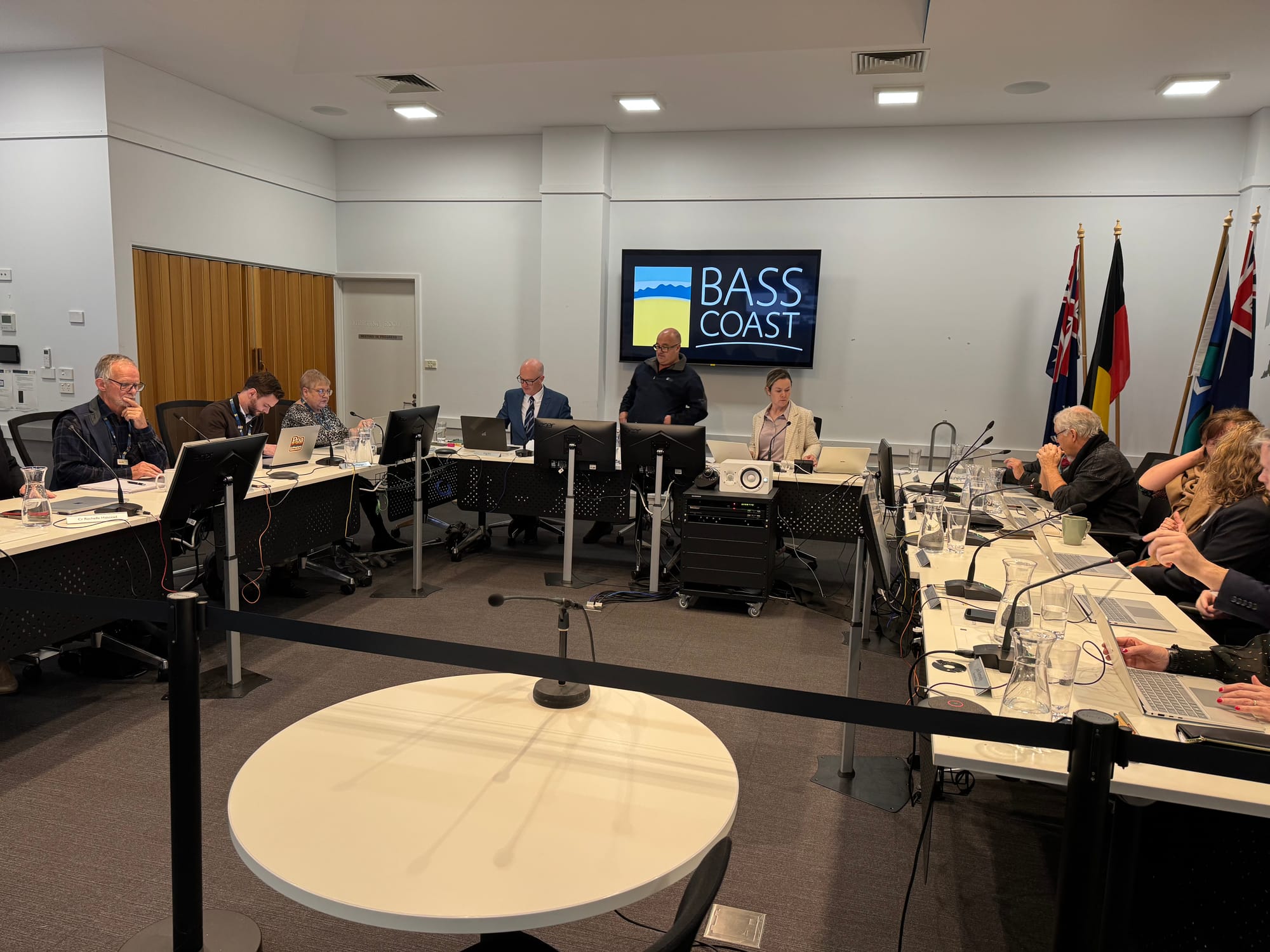
A primary focus of this aggressive advocacy campaign is the unsustainable financial strain of maintaining large-scale community assets. Debate at Bass Coast’s most recent council meeting highlighted the extreme difficulties facing regional local governments when managing ageing infrastructure.
Councillor Bauer noted that while securing initial building capital presented a significant hurdle, the long-term operational costs remain completely crippling. Cr Bauer emphasised that securing construction funds for the Bass Coast Aquatic Centre was only half the battle.
"If we're successful in our advocacy then it is one thing to build the pool, and another thing to maintain it,” Cr Bauer said. Beyond leisure infrastructure, the motions supported by Bass Coast Shire also target the devastating economic void left by the loss of major hallmark events like the MotoGP and World Superbikes from Phillip Island.
Cr Bauer urged the State Government to inject direct funding into locally developed initiatives. This strategy intends to build regional economic resilience and reduce reliance on external event organisers to sustain the local economy.
Turning to environmental and structural reforms, council has asked for a complete overhaul of disaster relief funding. A specific motion targets the inefficient, repetitive grant application process currently required after every severe weather event. Instead, the region wants a streamlined, proactive funding model that allows councils to build resilient infrastructure rather than continually repairing vulnerable sites.
Additionally, council is asking for action on critical gaps in regional housing shortages, coastal erosion management, and fair rating systems for rural properties.
Roads safety concerns were highlighted by reports of severe potholes on the Bass Highway destroying a number of car tyres in a single day. Councillors are demanding sustained regional road funding.
Officials have warned that delayed investments will inevitably lead to higher future repair bills and heightened safety risks for motorists. Compounding these infrastructure challenges are sweeping state-led policy changes.
Cr Bauer strongly endorsed a moratorium on purple bin non-compliance penalties, arguing the state-mandated glass container system was unnecessary and that funds should be redirected to local sports facilities.
Council has also called for action on mitigating the severe economic fallout caused by the exit of high-profile events, including the MotoGP and World Superbike Championship from Phillip Island.
Bass Coast Shire wants a state sponsored Regional Transition Fund to protect local businesses, accommodation providers, and hospitality venues from losing vital visitor crowds utilising a collaborative approach to design long-term economic diversification strategies and fast-track investments into replacement tourism infrastructure and marketing.
Alongside economic recovery, council expanded its advocacy to environmental defence, calling for a dedicated Victorian coastal resilience funding program to finance local climate adaptation and erosion projects.
The MAV is calling for a substantial overhaul of Victoria’s planning system with the introduction of a new Local Government Fair Jobs Code. This code would mandate strict new employment practices for councils, with specific operational rules.
Because the planning and labour reforms rely heavily on pending ministerial guidelines and regulatory frameworks, local councils are demanding a seat at the table.
Furthermore, council is seeking amendments to the Circular Economy (Waste Reduction and Recycling) framework to grant regional municipalities the flexibility to adopt tailored local solutions, provided they meet equivalent recycling targets.
Local leaders have asked that the current policy be re-evaluated alongside Victoria’s expanding Container Deposit Scheme (CDS). The CDS already successfully diverts beverage containers from standard kerbside waste.
Councils have suggested that expanding this scheme to include wine and spirit bottles would be far more efficient than forcing regional areas to manage high logistics and transport costs for separate bin collections.
By presenting these cohesive motions to the MAV State Council, local leaders hope to force a broader legislative shift at state level, ensuring regional communities receive the sustainable financial backing required to survive and thrive into the next decade.


