

Cycling “too dangerous” as Cape riders push for safer route
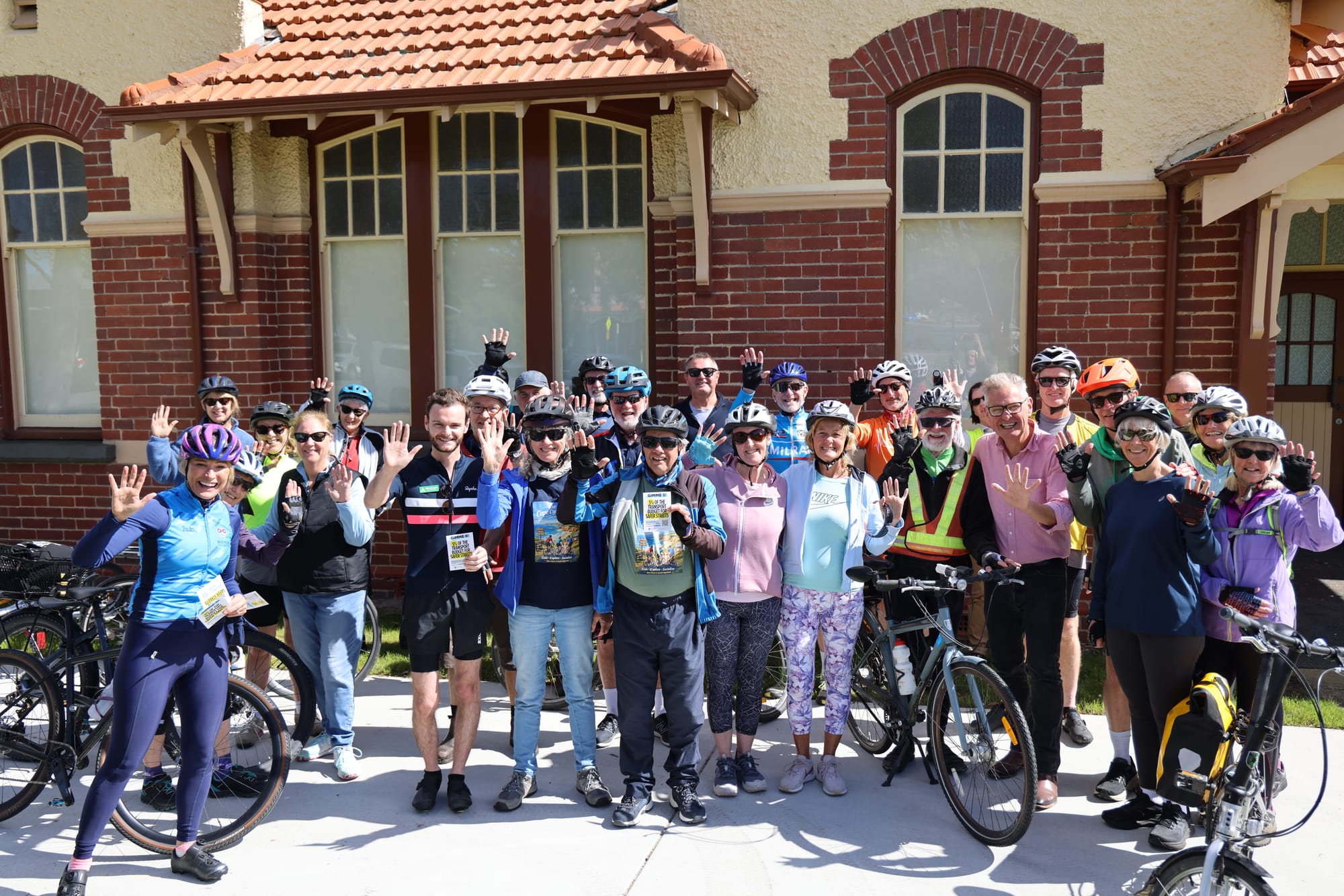
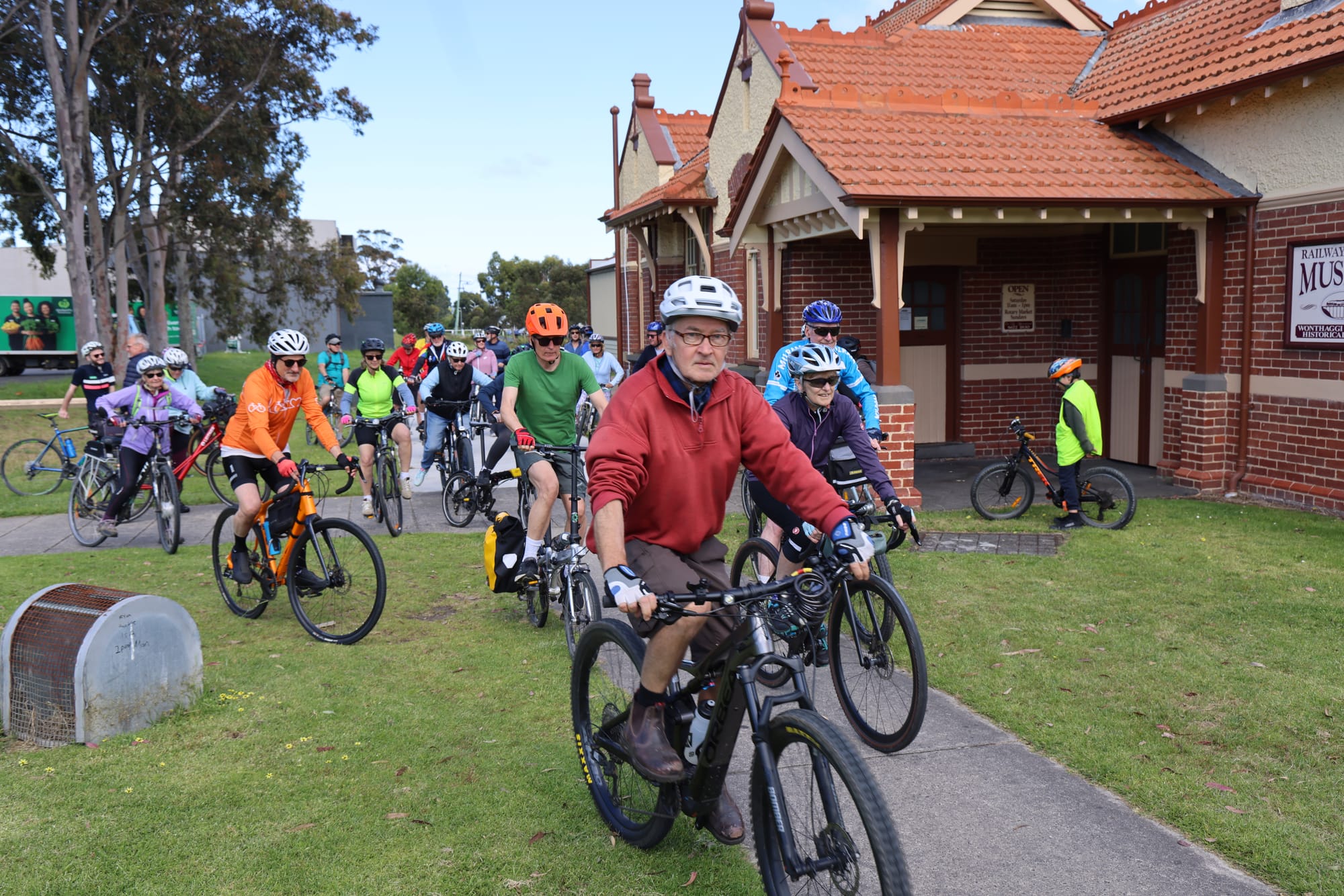
Should five per cent of Victoria’s transport budget go towards cycling routes? About 30 riders set off from the Wonthaggi Railway Museum on Sunday to highlight what’s at stake locally, including a missing link that could give Cape Paterson residents a safer ride to Wonthaggi and Inverloch.


Local cycling advocates told the Sentinel-Times that a two-kilometre missing link is stopping Cape Paterson residents from safely reaching the new Wonthaggi-Inverloch trail, as they continue to push for funding to connect local destinations.
Cape Cycling Club members Dave and Anne Meyers raised the issue of the gap during Bicycle Network’s Gimme 5! roadshow visit to Wonthaggi on Sunday, November 8, a campaign that has riders pushing for five per cent of Victoria’s transport budget to be spent on developing strategic cycling corridors.
This proposed connection would link Fulton Road and Boundary Road, giving Cape Paterson riders access to the trail towards either Wonthaggi or Inverloch.
Mr Meyers said the missing section followed an existing road reserve.
“All we need is some funding to connect the two kilometres,” he said.
“Then Cape Paterson people can cycle from home to either Inverloch or to Wonthaggi.”
The club, which Mr Meyers said had grown to 62 members since beginning in just March, has also registered with Bicycle Network as the Cape Paterson Bicycle User Group.
But getting riders safely out of Cape Paterson remains a problem for the group.
“We host bike rides, and we have to host them from Wonthaggi because many of our riders won’t ride the link between Cape Paterson and Wonthaggi because the road’s too dangerous,” Mr Meyers said.
Ms Meyers said vegetation had encroached on the roadside bike lane between Cape Paterson and Wonthaggi, forcing cyclists into traffic.
She also described the coastal road towards Inverloch as narrow and winding, with limited room for vehicles to overtake bikes.
Bicycle Network chief executive Alison McCormack joined Sunday’s ride as part of the statewide campaign calling for five per cent of Victoria’s transport budget to be spent on developing strategic cycling corridors.
She said that missing connections could potentially undermine some otherwise useful infrastructure by leaving people unwilling to ride due to danger.
“So much of infrastructure is built… I know we’ve had some recent developments here… but then there might just be two kilometres into the town that isn’t there,” Ms McCormack said.
“And what happens? People don’t use it, because of that unsafe connection.”
Ms McCormack said councils had developed transport and trails plans but didn’t have reliable funding to deliver them.
“So, we’re asking the state government to chip in and to put a recurring budget for active travel so that councils have the ability to be able to fund their plans as well,” she said.
Labor candidate for Bass Chris Buckingham and Greens lead candidate for Eastern Victoria Mat Morgan addressed riders before they set off.
Mr Morgan, who is a Bass Coast councillor, but currently on leave for the election, said the Greens supported the campaign’s five per cent target.
“But that gap between Cape and the trail is critical,” he said.
Mr Buckingham also backed completing the connection, describing the two-kilometre link as “a no-brainer”, but stopped short of announcing funding.
“I don’t have an election commitment, I’m sorry,” he told the gathering.
“But what I can do is commit to advocating for active transport in this municipality for as long as I’m the member. In fact, even if I’m not the member, I’ll advocate for active transport.”
Sunday’s event saw a group of about 30 riders gather at the Wonthaggi Railway Museum for speeches before riding along the Nyora-Wonthaggi Rail Trail and the new Wonthaggi-Inverloch trail towards Boundary Road, highlighting the missing connection to Cape Paterson.
The local push forms part of a campaign supported by more than 50 bicycle user groups and other grassroots organisations.
For Cape Paterson riders, Mr Meyers said connecting to the new trail remained their “highest advocacy priority”.


