

Inverloch beach restoration forges ahead with more sleepless nights
Rebuilding of the eroded sand dunes on the Inverloch surf beach has fallen slightly behind schedule with beach-front residents warned of more round-the-clock dredging.


WITH an impressive amount of sand already moved from Anderson Inlet to the Inverloch surf beach the critical rebuilding of the eroded sand dunes has fallen slightly behind schedule with beach-front residents warned of more round-the-clock dredging.
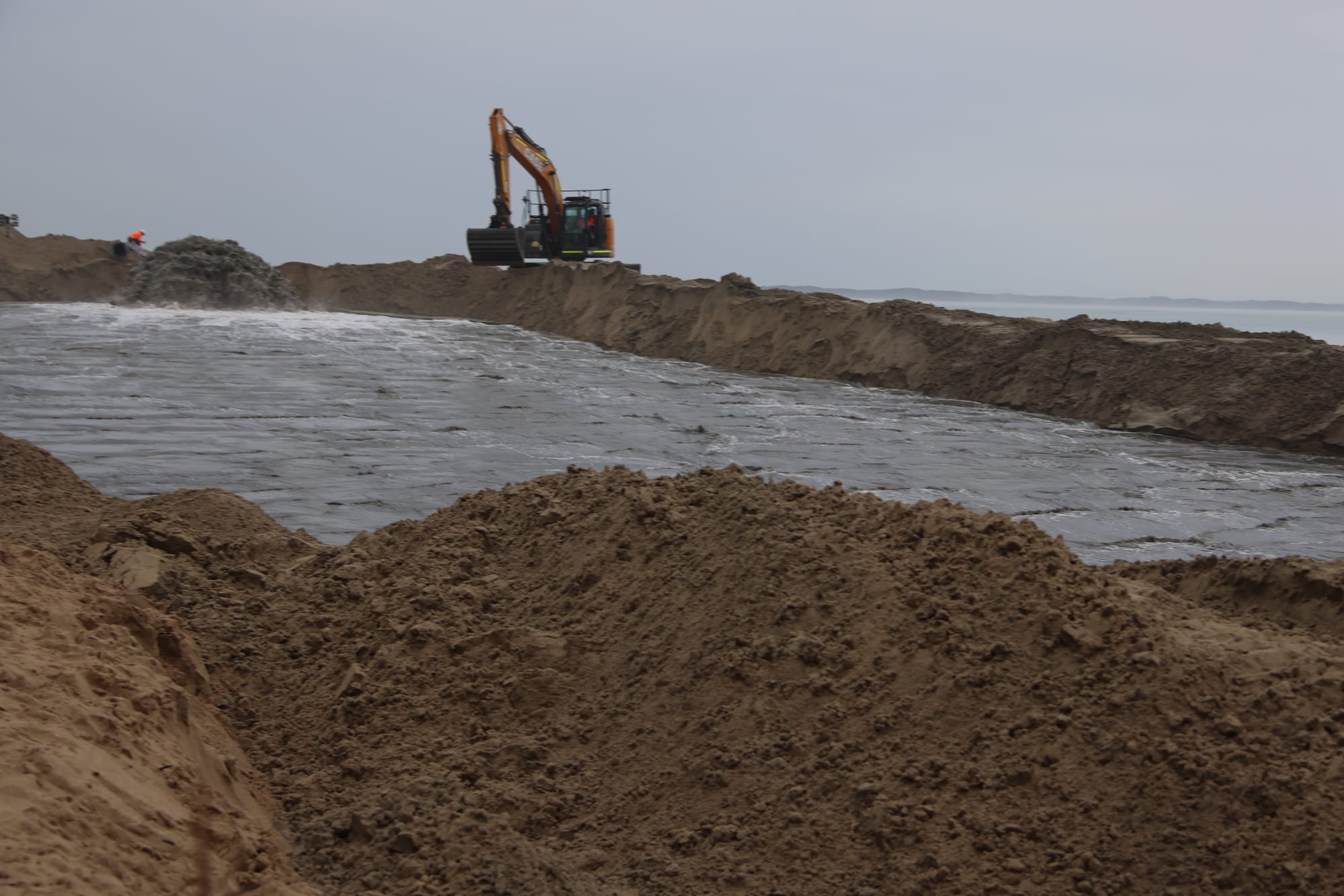
The critical coastal protection works appeared to be progressing steadily with contractors successfully shifting sand westward toward the Inverloch Surf Life Saving Club, however initial start-up delays have pushed the project past its original June 30 deadline.
A comprehensive on-site survey confirmed last week that approximately 20,000 cubic metres of sand had been successfully dredged and stockpiled along the Inverloch shoreline but much more sand was still needed to reach the 100,000 cubic metre target.
The multi-agency initiative has been designed to combat severe erosion and safeguard vital community infrastructure against rising sea levels and intense storm surges.
Heavy machinery operators are now actively shaping this massive sand dump to match the precise engineering specifications required for long-term dune stabilisation.
Beachfront residents have been warned to expect a few more sleepless nights with project managers confirming that crews will continue to work 24 hours a day, seven days a week to move the remaining sand as efficiently as possible while weather conditions permit.
Aside from minor scheduling adjustments the marine dredging has progressed smoothly with no major mechanical or environmental interruptions reported since the project kicked off.
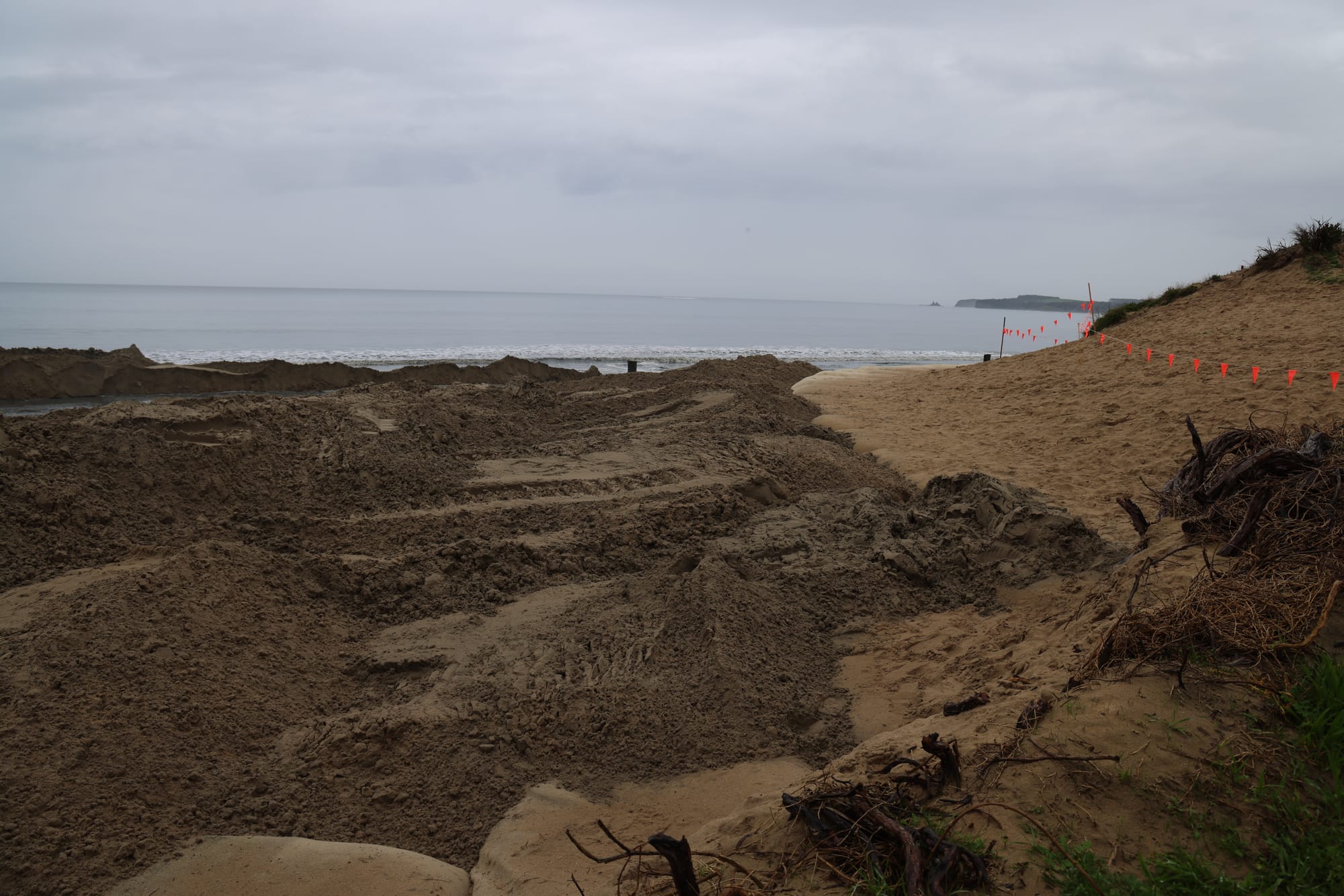
The Department of Energy, Environment and Climate Action (DEECA) confirmed that lead contractor Hall Contracting will remain on-site until the entire scope of work is completed. Authorities reiterated that no changes have been made to the original project design, which is being delivered exactly as specified by coastal engineering specialists at Water Technology.
Local conservation activists and residents have welcomed the steady progress on the beach. Ed Thexton, an active environmental advocate and Inverloch resident expressed satisfaction that the long-awaited project was moving forward as planned.
"It's great to see the work progressing," Mr Thexton said. "This is a vital step in protecting our coastline, but the mechanical movement of sand is only the first phase of a much larger ecological effort."
To secure the newly shaped dunes against wind and wave action, an extensive revegetation program is already underway behind the scenes. A specialised nursery is currently cultivating 20,000 Seaberry Saltbush (Rhagodia candolleana) plants, which are scheduled for mass planting this coming spring.
"We will be looking for community volunteers to help plant these out, but we need to wait until we've had enough winter rain to wash the harsh salt out of the newly deposited sand," Mr Thexton explained.
The choice of Seaberry Saltbush is a deliberate strategy by environmental scientists. As a fast-growing native shrub, it is highly prized across Victoria for coastal reinstatement due to its exceptional drought tolerance and ability to thrive under constant, harsh salt spray. Its dense, scrambling growth habit forms a thick green carpet that effectively binds loose sand particles together, preventing wind erosion.
Project officials from the Gippsland Coastal Projects team cautioned that the public must view these works as part of a dynamic, shifting coastal environment. While the massive sand renourishment provides immediate relief, some natural sand movement and localised loss of sand is fully expected over time.
The planned spring revegetation is designed to act as the permanent anchor for the project, stabilising key vulnerable zones and maximizing the lifespan of the reconstructed dune system.
The Gippsland Coastal Projects team and the Land and Built Environment division within DEECA extended its gratitude to the Inverloch community for their ongoing patience and cooperation during the night-time works and altered beach access. Regular community updates will continue to be issued as Hall Contracting enters the final phases of the nourishment pipeline.


