

Kirra dredge arrives to start work on the Inverloch surf beach
The Kirra heavy duty sand suction dredge has finally arrived at Inverloch to start dune reconstruction work on the heavily eroded Inverloch surf beach.


THE WAIT is finally over for Inverloch residents anxious to see a start to sand renourishment works and reinstatement of sand dunes at the Inverloch surf beach.
The Kirra heavy duty sand suction dredge operated by Hall Contracting arrived in sections on the back of semi-trailers this week near Maher’s Landing.
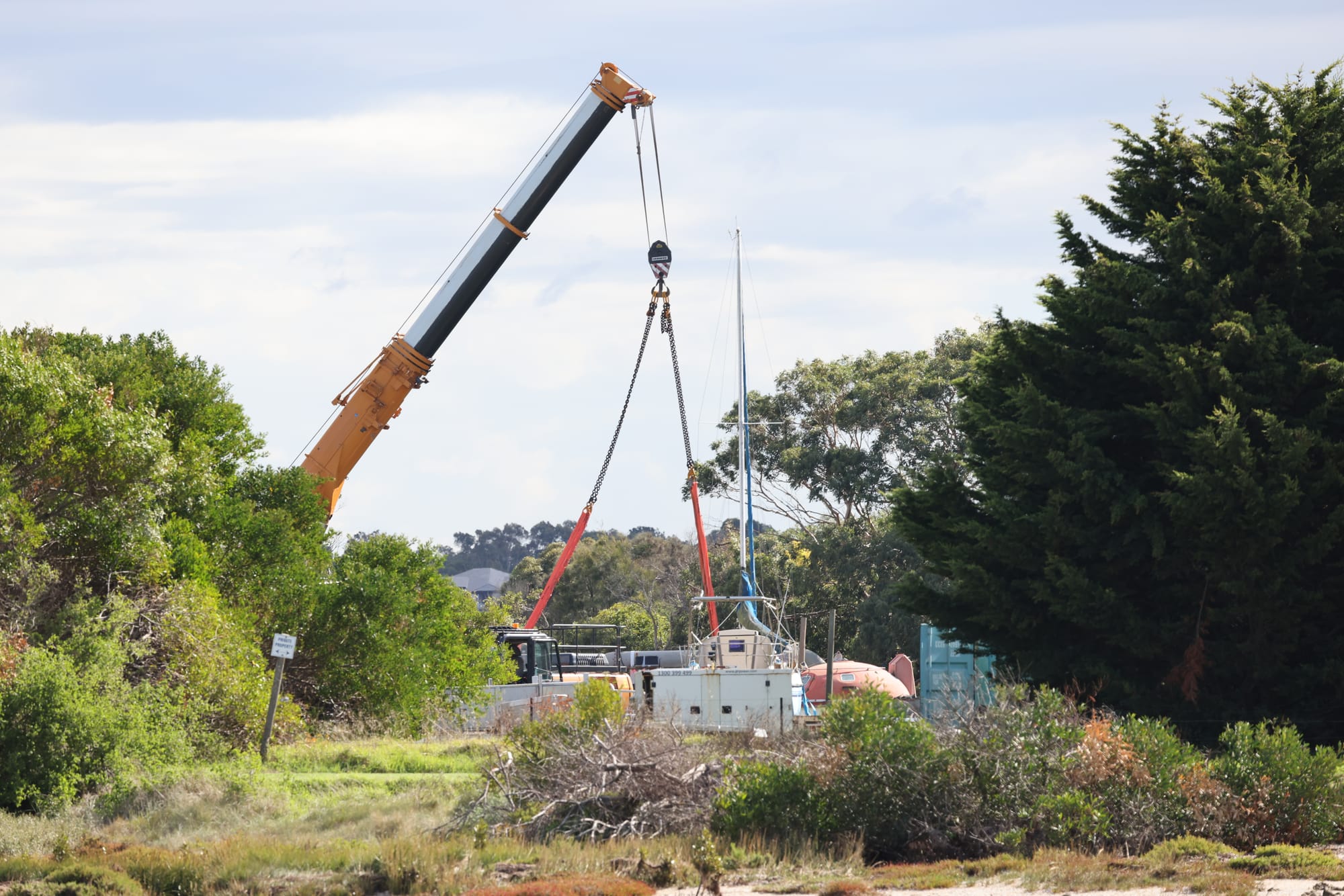
Unfavourable weather pushed back the relocation of the dredge from Queensland to Inverloch, but dune reconstruction and beach nourishment works are now expected to get underway by the end of the month.
The arrival of long lengths high-density polyethylene pipe and site offices to a site adjacent to the Inverloch jetty marked the start of work on the $5.3 million project.
The Kirra dredge will now be assembled and floated into Anderson Inlet.
Heavy duty equipment is already being delivered to the Inverloch Surf Life Saving Club in preparation for the beach works. Hall Contracting is confident the sand dredging project at Inverloch will be finalised by the end of June subject to weather conditions.
DEECA has warned of the possibility of the Kirra suction dredge working 24 hours a day 7 days a week should unfavourably bad weather cause delays. Noise levels are anticipated to be low and disruption expected to be minimal due to the sand dredging vessels and equipment being fitted with residential-grade mufflers.
The High-Density Polyethylene (HDPE) pipe which will be used to pump sand onto the surf beach has now been welded intro long lengths to be floated to the Kirra dredge once it is positioned near the entrance to Anderson Inlet.
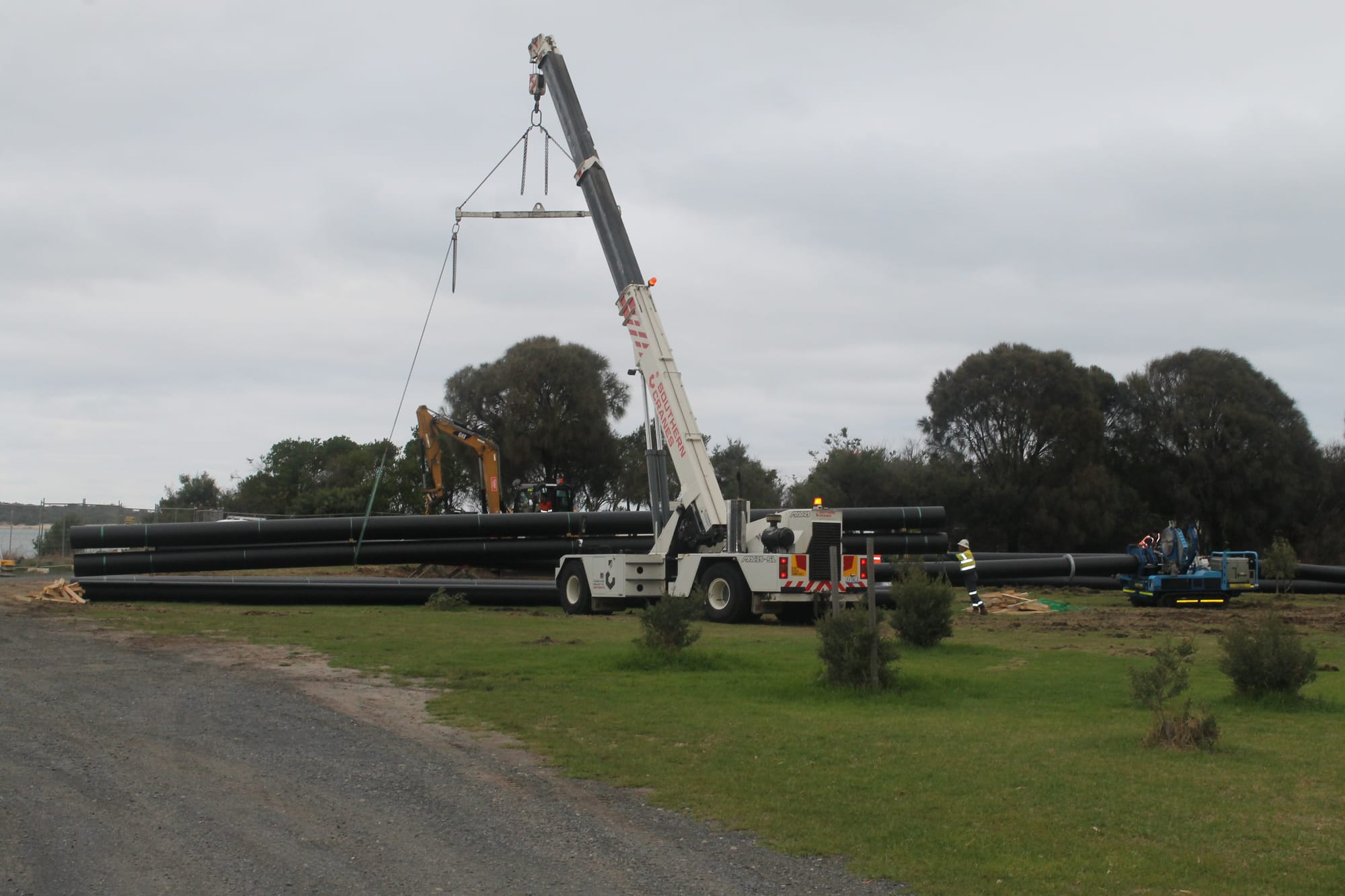
All equipment including the pipeline carrying the sand will be removed once the project is complete. The pipeline is needed for use in other locations according to DEECA.
The dune reconstruction and sand nourishment works are designed to provide an effective short to medium term buffer against erosion and storm impacts and adjust naturally to ongoing wave and tidal conditions gradually reducing over time.
DEECA said it has been collaborating with Bass Coast Shire Council to plan the dune revegetation which will occur once the dune renourishment has had time to settle.
Once the works have been completed the site will continue to be monitored as part of the Victorian Coastal Monitoring Program (VCMP) using drone shoreline survey monitoring. Flights will take place every 6 to 8 weeks depending on weather conditions.
Some natural movement of sand may occur over time according to DEECA.


