Local community outraged over U.S. timber imports for delayed Kernot Bridge
Bass Coast commuters, farmers and emergency services could face months of prolonged detours with the $2.2 million replacement bridge on Stewart Road relying on imported timber still waiting to be shipped from the United States.


KERNOT motorists, farmers and emergency services could face months of prolonged detours after the $2.2 million replacement bridge on Stewart Road becomes the latest casualty of disruptions in the global supply-chain.
Local tensions escalated when Bass Coast Shire Council confirmed that restoration of the critical Kernot Bridge had fallen well behind schedule after revealing that critical structural materials have been sourced from the United States rather than Australia.
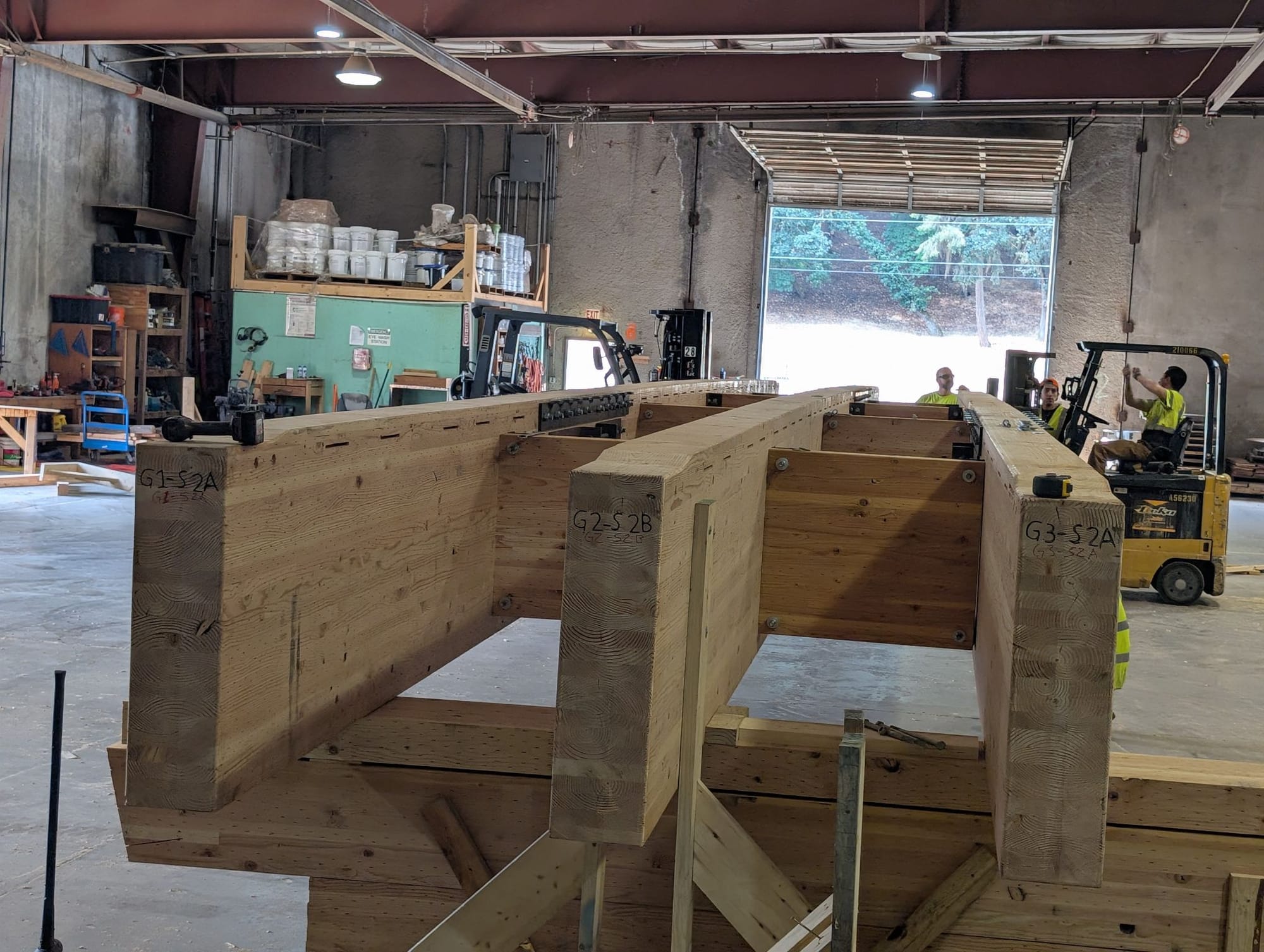
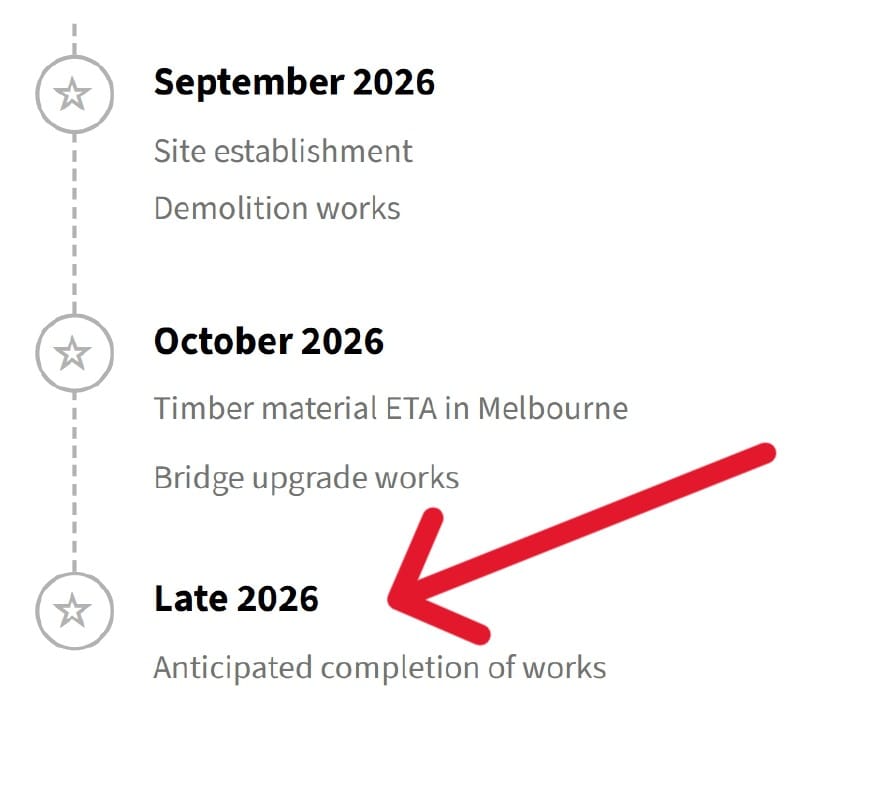
Bass Coast Shire Council initially estimated that specialised American Glulam (glued laminated timber) would leave the United States in August 2026, with an Estimated Time of Arrival (ETA) in Melbourne of early October 2026.
On-site construction works were scheduled to commence in September 2026, targeting a final completion date of early November 2026. Council authorities blamed the setbacks on geopolitical conflicts which have severely disrupted international shipping.
The critical American-supplied laminated timber beams are reportedly either still sitting on docks across the Pacific or have only just been recently loaded onto cargo vessels.
The reliance on overseas shipping has sparked an immediate backlash from Gippsland residents, business owners, and trade professionals, with many questioning why public funds are being spent on international imports when domestic alternatives are readily available.
"What, we have no timber in Australia?" asked one frustrated resident.
"Why use an overseas company to make structural components for a local bridge? We have heaps of better material options right here that would be cheaper."
Local tradespeople have joined the criticism, pointing out that Australia possesses a robust timber milling and manufacturing sector capable of producing heavy-duty engineered wood products.
The decision to pass over local mills in favour of US suppliers has left many questioning the procurement process, with some demanding transparent financial accounting from Bass Coast Shire Council.
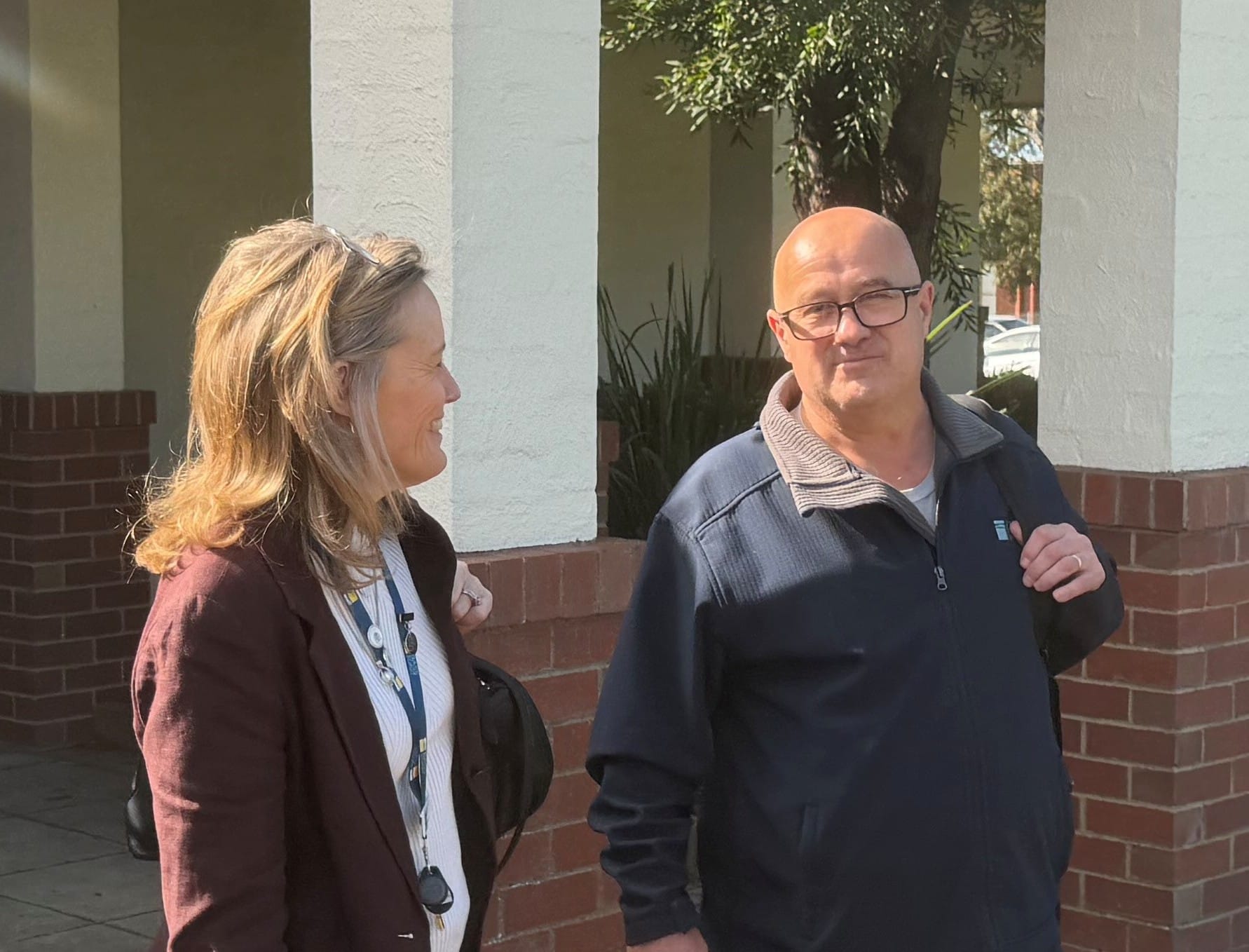
State Liberal candidate and Bass Coast Shire Councillor Rochelle Halstead admitted to copping some criticism over the delays with the project and has weighed into the dispute.
Halstead says council has been left in the dark about the lack of progress on the timber, and why the timber needed to be sourced from America in the first place.
“I’m going to council today and I’ll be looking for answers,” said Cr Halstead.
“This isn’t just a matter of people wanting to go shopping by the quickest route or pick up kids from school. This is a safety issue of the utmost importance for the community.
“We have a fire season that’s fast approaching, and we have emergency services that will be delayed by this. We were told it would be ready by Christmas. I’m just as frustrated as the community about this.
Cr Halstead said she had worked hard with Mary Aldred (Monash MP) to get the funding for the bridge.
“We got the community to come out to the bridge to put some pressure on and it worked. We got access to the funding, but the continual delays are frustrating.”
“Why they’ve tried to source the timber from America in the first place I don’t know. Once the tender is let on these projects, we don’t have any oversight on these things. We only learn about what is going on when the community does.”
Council’s level of involvement in the $2 million-plus bridge restoration works was also not clear nor any role they may have had in sourcing the timber from the USA, and not Australia, given that they previously appointed Timber Restoration Systems Pty Ltd to deliver the construction phase of the bridge at an additional council meeting on March 4, 2026. So, we asked the Mayor Cr Brett Tessari. His response is here.
Bass Coast Mayor Cr Brett Tessari said procurement of bridge materials was the responsibility of the contractor.
Federal Member for Monash Mary Aldred said she had fought hard with Liberal candidate for Bass Cr Rochelle Halstead to secure federal funding for the Kernot bridge because the community urgently needed safe and efficient access to local properties.
“Now that project is stuck on a wharf in America because the Victorian Labor Government refuses to make full use of local timber jobs and resources,” said Ms Aldred.
Bass MP Jordan Crugnale has since taken issue with those comments saying no aspect of the Stewart Road Bridge works was determined by the State Government (see Ms Crugnale's comments below).
But Ms Aldred chose to focus attention on Victorian timber jobs.
“That's not good enough, especially with summer around the corner and emergency access on the line. Residents have every right to ask why a bridge in Gippsland is depending on timber shipped from the other side of the Pacific, subject to overseas manufacturing schedules and international shipping lanes we have little control over.
“Victorian timber is high quality and harvested to some of the best environmental standards in the world. We should be building using local jobs and local fibre, not importing alternatives from overseas,” Ms Aldred said.
"Every week this bridge stays closed is a week Kernot goes without proper emergency access heading into fire season. This isn't a project that can afford more delays. I’ll be raising this again in Federal Parliament next week.”
Jordan Crugnale MP, herself a former Mayor of Bass Coast, said turning the delays with the Stewart Road Bridge into a point-scoring exercise wasn't helping anyone.
"The Kernot Bridge project is a Bass Coast Shire Council project and the contract for the bridge replacement was awarded by Council through its own procurement process to Timber Restoration Systems Pty Ltd," said Ms Crugnale.
"Claims that the Victorian Government directed or decided the use of specialised laminated timber imported from the United States are simply incorrect.
"Decisions regarding construction methods, materials and contractor sourcing are matters for the contracted delivery of the project and were not determined by the State Government.
"While I understand the community's frustration with delays, it is disappointing to see Mary Aldred MP and Cr Candidate Rochelle Halstead seeking to politicise an issue that is ultimately the responsibility of the Council project and the contractor engaged by Council.
"Rather than looking for someone else to blame, the focus should be on supporting the timely completion of the bridge and keeping the community informed.
"Local residents deserve facts, not political point-scoring," said Ms Crugnale.
"The priority remains delivering a safe and reliable bridge for the Kernot community as soon as possible."
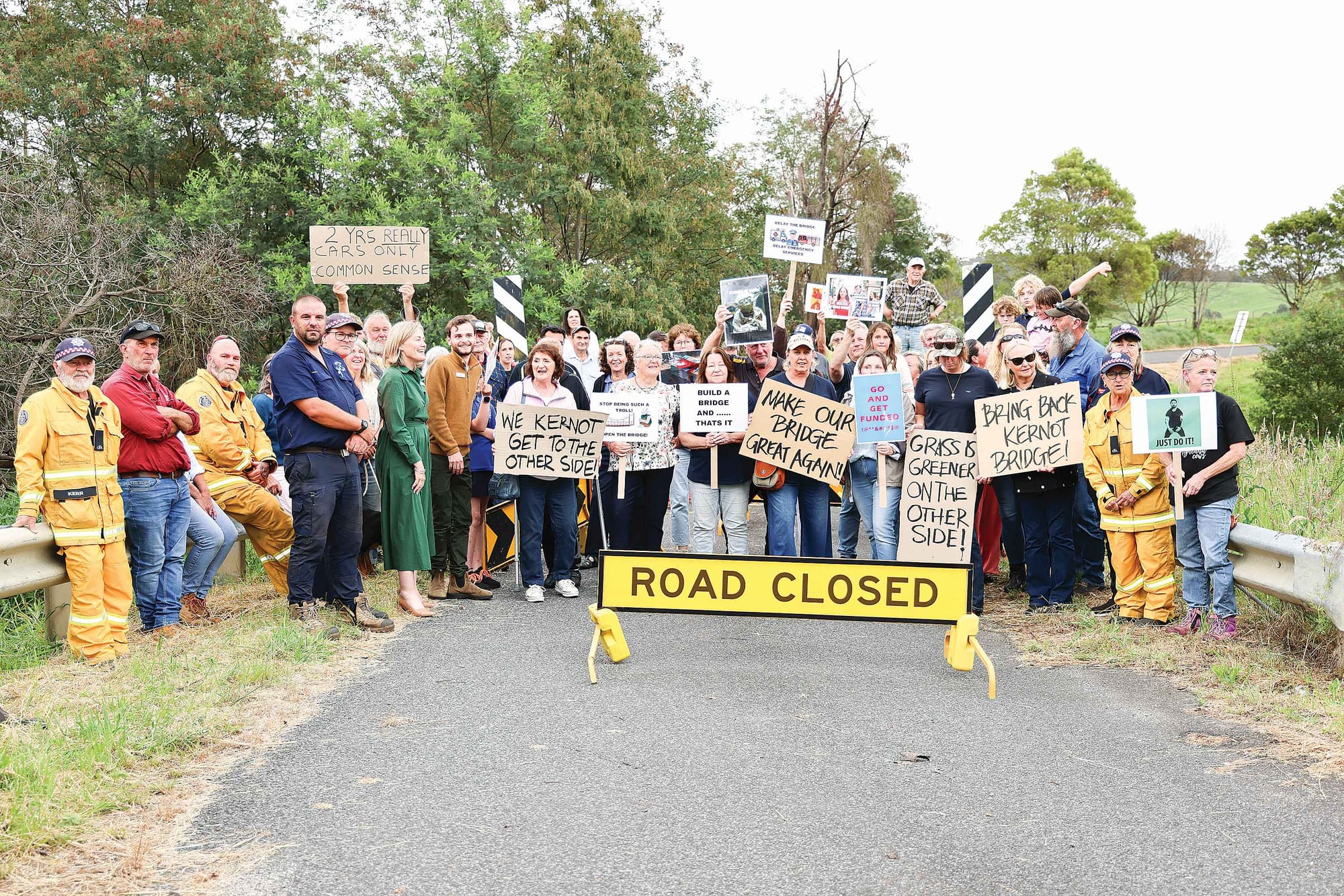
Got it wrong, they say
Social media has weighed in heavily on the delays to providing a replacement for the key local bridge, closed back in March 2025.
While some residents admit the engineered timber design is aesthetically pleasing, most argue that pragmatic engineering should have taken priority.
Critics suggest that utilising locally manufactured steel or concrete beams would have mitigated shipping risks, cut costs, and provided a more durable structure capable of handling heavy rural traffic.
"I'm a builder and done my time as a joiner and carpenter. Why would you use an overseas company to make it. And it's a bridge! We have heaps of better material options that would be cheaper," said one.
Environmental concerns have also been raised, with residents pointing out the irony of importing heavy timber across the Pacific Ocean for a project in a region historically known for its own forestry and timber industries.
"Ah yes, importing timber products from overseas is much better for the environment," said another.
With the project's timeline now compromised, the initial target of a December resolution looks increasingly unlikely. For the isolated community of Kernot, the shipping gridlock means local families, agricultural transport, and emergency vehicles must navigate long, costly detours into the foreseeable future, leaving a community stranded by a bridge built on global reliance.
The bridge was closed after structural safety audits deemed it entirely unsafe for heavy vehicular traffic. With the project timeline pushed back by several months local residents who rely on the bridge are becoming increasingly frustrated.
For many, the daily commute has been extended by up to forty minutes, adding massive fuel expenses and logistical headaches during a time of high inflation.
“We’re up in arms about it,” residents complained during a recent gathering at the Kernot Store. “If the bridge gets finished as promised sometime this year, we’ll be really lucky. It feels like every time we get a firm date, something else goes wrong on the other side of the world.”
Physical site works which include site establishment and the demolition of the existing framework cannot begin until confirmation of the timber's arrival in Melbourne.
While fabrication of the laminated timber is technically complete, and factory test-fitting is currently progressing in the U.S., the structure remains on the docks until a cargo vessel can secure transit across international shipping lanes.
The specialised Glulam material is vital for the structural integrity and historical accuracy of the bridge upgrade. Contractors had initially hoped to complete the bulk of the heavy engineering before the volatile late-year weather sets in over spring.
Local authorities have noted other minor internal setbacks, including delays in domestic steel fabrication. Council representatives are now working closely with freight forwarders to expedite delivery of the timber as soon as possible.
The latest from council
Council posted a retrospective update on its Engage Bass Coast website on Wednesday, September 2 which they titled “Project Update 31 August 2026”, as follows
“The new bridge deck structure has been assembled and test fitted in the USA before being shipped to Australia, ensuring a smoother and faster installation on site later this year when construction gets underway.”
The following dot points are also listed:
- Test fitting of the structure complete.
- Glulam timber treatment complete.
- Glulam timber ETD from USA is mid-September 2026.
- Glulam timber ETA in Melbourne is early to mid-October. This is subject to shipping schedules.
- Site works are anticipated to commence in late September subjected to confirmation of Glulam timber arrival in Melbourne and the receipt of Melbourne Water Permit.
- Anticipated completion in early December subjected to favorable weather.
Speaking after a Bass Coast Shire Council briefing today, at which the Stewart Road Bridge was discussed, the Mayor Cr Brett Tessari said, to his knowledge, the laminated timber had not yet left the wharf in America.
The Stewart Road Bridge at Kernot was closed in March 2025.