

No 'dogs on beaches' ban for bird flu, says Agriculture Vic
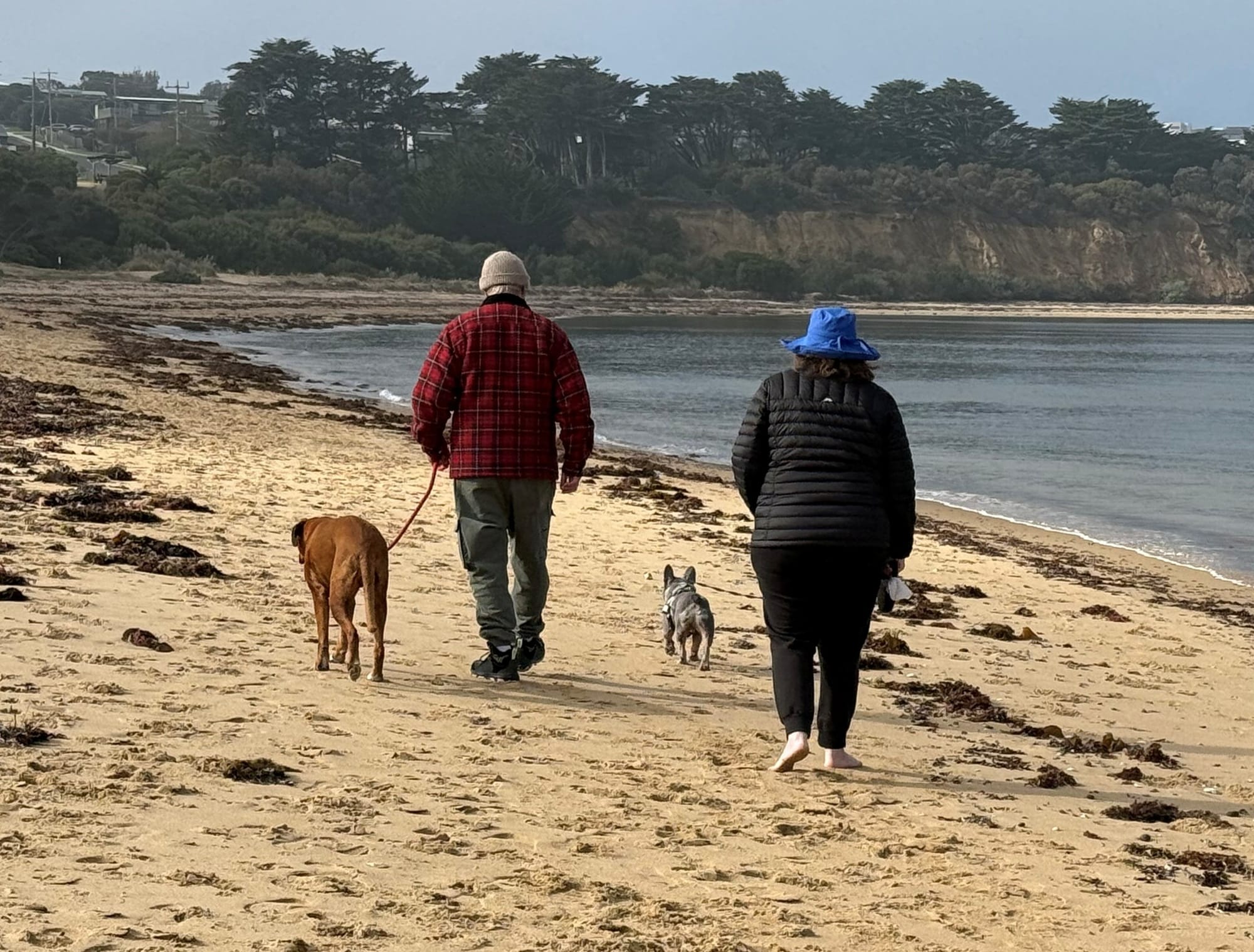
It's official. Authorities have no issue with dog owners walking their pooches on the beach following the arrival in Victoria of H5N1 bird flu. But keep them on a leash and definitely don’t let them roll in anything nasty.


'It's here to stay, we've just got to learn to live with it', they say
IT’S OFFICIAL. Authorities have no issue with dog owners walking their pooches on the beach following the arrival in Victoria of H5N1 bird flu.
But keep them on a leash and definitely don’t let them roll in anything nasty.
Speaking at a well-attended information session at Berninneit in Cowes last Friday night, August 21, Dr Julie Simons, Agriculture Victoria’s Director Biosecurity Strategy, Preparedness and Coordination, said bird flu was with us now and we had to learn to live with it.
“Yes, dogs can be on the beach but if they’re anything like my dogs, they’d love to search out a dead bird and roll in it so keep your dog on a lead,” said Dr Simons.
“Dogs can be at risk and you don’t want your dog coming home with a dead bird in its mouth,” she said.
“The virus is established in our coastal lands and also in areas that we can’t see.
“It is with us now and we are in a space where we are finding out how to live with it.”
Dr Simons, together with a panel of other speakers, was delivering not only an update on the spread of bird flu in Victoria and elsewhere, but also some practical information about how to prepare your home and property.
They included:
- Eve Graham, DEECA Director Wildlife and Landscape Protection
- Dr Julie Simons, Agriculture Victoria’s Director Biosecurity Strategy, Preparedness and Coordination
- Catherine Basterfield, CEO Phillip Island Nature Parks
- Greg Box, CEO Bass Coast Shire Council
- Annelies Titulaer, Director Gippsland Region Public Health Unit
Dr Simons went on to say the best way to protect your home chicken flock and pets was with your own biosecurity plan, whether it means keeping their feed under cover, away from wild birds, not wearing your beach shoes in the chicken house, thinking about visitors to the chicken coop, disinfection and washing your hands, and not letting your other pets have access to the chicken house.
“It’s also time to patch up those holes in chicken house where the mice or rats might have been getting in, and keep them out of your shed.”
Dr Simons said it wasn’t acceptable for farmers to be interfering with wild birds.
“That’s not a strategy we would support.”
But, walking dogs on beach, no problem.
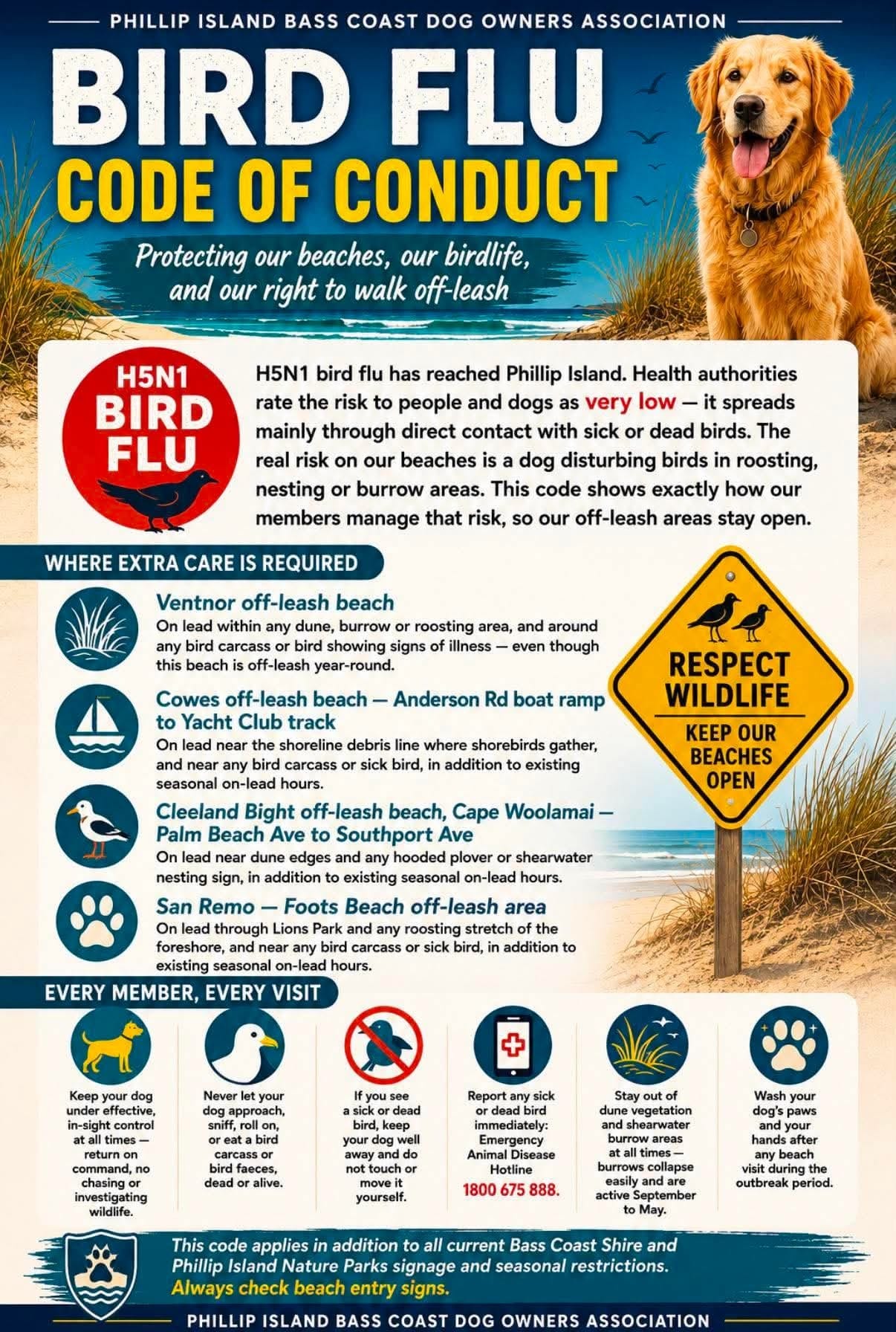
The Phillip Island Bass Coast Dog Owners Association, with more than 3000 members across the shire and among visitors to Phillip Island, has been proactive with the key ‘Avoid, Record, Report’ message, providing updates and information for members, and highlighting the hotline reporting number 18 675 888.
President of the association, Cheryl Owens, attended the information night and praised organisers for the quality of the speakers and the content.
“First up, from Agriculture Victoria, there has been zero detection of any bird flu in pets in Australia,” said Mrs Owens.
“They say we have to live with it now, we can’t eradicate it.
“It will move through various species with deaths but eventually they will develop immunity.
“Overseas populations have recovered but there has been no countries where it’s been eradicated.
“Dogs are not banned from beaches but if your dog rolls in dead things or eats them, you would need to be very careful also they suggest you wash your shoes and your dog’s paws on returning home particularly if you have chickens.
“Transmission is through droppings, feathers and dead birds . Apply sensible practices to hygiene. They are not trying to stop the disease moving through. They can’t.
“Sea water will be fine. There’s lots of it and moving tides. But of course, if you throw a ball for your dog, and it brings back a dead bird, well that’s not good.
“Westernport Water say it’s not in the drinking water.”
Mrs Owens said hooded plovers had also been discussed, and while authorities had dismissed the potential for any practical protection measures, beyond those already adopted by local authorities and a supportive community, she did encourage dog owners to continuing respecting the rules by staying away from any potential hooded plover nests on the beach.
But she warned, that authorities were expecting numbers of dead birds to start showing up on beaches and in coastal areas in general.
“But bird life is going to take a big hit.
“For us one of the biggest concerns will be the advice is to leave the dead bird or animal there. Land managers will pick them up in high use areas but, obviously, it will be impossible to pick everything up.
“At this stage council haven’t received additional state government funding for more resources to do this clean up. They are going to be stretched. This isn’t going to be fun for anyone we must stick together as a community,” she said.
“If you have any questions, please ask, but most importantly, don’t touch dead things. Report the incident immediately by calling the Emergency Animal Disease Hotline on 1800 675 888, or completing the online reporting form HERE
What the RSPCA says about pets and bird flu
The RSPCA says this about dogs and cats and the possible impact of H5N1 bird flu:
“When headlines about bird flu start appearing, it’s only natural to wonder whether your furry family member could be at risk. In June 2026, H5 bird flu (avian influenza) was detected in Australia for the first time in wild seabirds, ending Australia’s status as the only continent free of the H5N1 strain.
“The good news is that, for most Australian pets, the risk remains low. That said, there are a few simple precautions worth taking, such as transitioning cats to an indoor lifestyle, preventing pets from coming into contact with wildlife, keeping dogs on a lead during walks (especially in areas where birds gather) and not feeding your pet raw animal products.”
Can cats and dogs get bird flu?
“Yes, but thankfully, it’s uncommon. Dogs and cats aren’t natural hosts for the avian influenza virus, and infections in either species remain rare around the world. To date, there have been no confirmed cases in Australian pets. Dogs appear to be at very low risk.
“Overseas, documented cases have been extremely uncommon, and there’s no evidence that dogs play a role in spreading the virus to people or other animals.
“Cats appear to be more susceptible than dogs, although the overall risk remains low in Australia. Overseas, a small number of domestic cats have contracted H5N1, and sadly, some of these infections have been severe or fatal. At this stage, there’s no vaccine available for cats against H5N1.”


