

The team of Bernie and Don
DON Gillies, a South Gippsland local, started his career as a policeman in 1977 before transitioning to paramedics in 1982, where he stayed for 37 years before he was hit with debilitating post-traumatic stress. “Even from the police days the...


DON Gillies, a South Gippsland local, started his career as a policeman in 1977 before transitioning to paramedics in 1982, where he stayed for 37 years before he was hit with debilitating post-traumatic stress.
“Even from the police days the seeds had been sown to develop into PTSD,” Don told the Sentinel-Times.
“In the 70s and 80s, even into the 90s, it was still very much suck it up, soldier on and that worked for some people. Kind of worked for me in the sense that okay, I’ll just keep muscling on.
“It affected me to the point where in 2001 I was burned out; I was in not a good way, and we made the decision to come rural; that was an absolute breath of fresh air. Best thing we ever did in in many ways.”
Working in Melbourne predominately the inner city, Don finished up city life in an ambulance around Frankston.
“I was diagnosed with PTSD prior to leaving Melbourne and coming (rural) extended my use by date for one of a better phrase.
“We came down here and it was absolutely fantastic, but the regional areas have their own issues and I think a significant one, as you can imagine, is an increased number and intensity of road traumas.”
In 2016 years of post-traumatic stress caught up and Don never returned to work.
Don is incredibly open about his struggle with PTSD, and the care he has received over the years by psychiatrists and psychologists amongst inpatient and outpatient care.
Involved with the Code 9 Foundation since 2015, Don was introduced to the idea of an Assistance Dog.
“The Code 9 Foundation was initially a police support group that very quickly expanded to cover all professional first responders, police, fire, ambulance,
and ESTA.
“I was encouraged by one of the guys to apply for a dog. Like so many other people I was like no, everybody else needs more than me…
“Including Bernie, there are now eight members that have assistance docs.”
Four furry legs (and a not particularly fussed by food Bernese) was the turning point Don needed.
“I was very fortunate that the breeder that donated Bernie (to Assistance Dogs Australia (ADA)) had criteria that the person had to be either a military or first response veteran, needed to be fully retired so that they could give him the time, and had to have space.
“We’re on a little hobby farm, so I was very fortunate that I received him in a fairly short timeframe.
“It’s a little bit like eHarmony in the sense that each dog, even though they’re all given the same training and breeding program, every single one of them has their own personality.
“Especially the ones that are bred by ADA. They get to know that personality quite early, and they start to look at where the dog may go.”
Once matched the teams paired up in Cronulla to meet and commence 10 days of intensive training together.
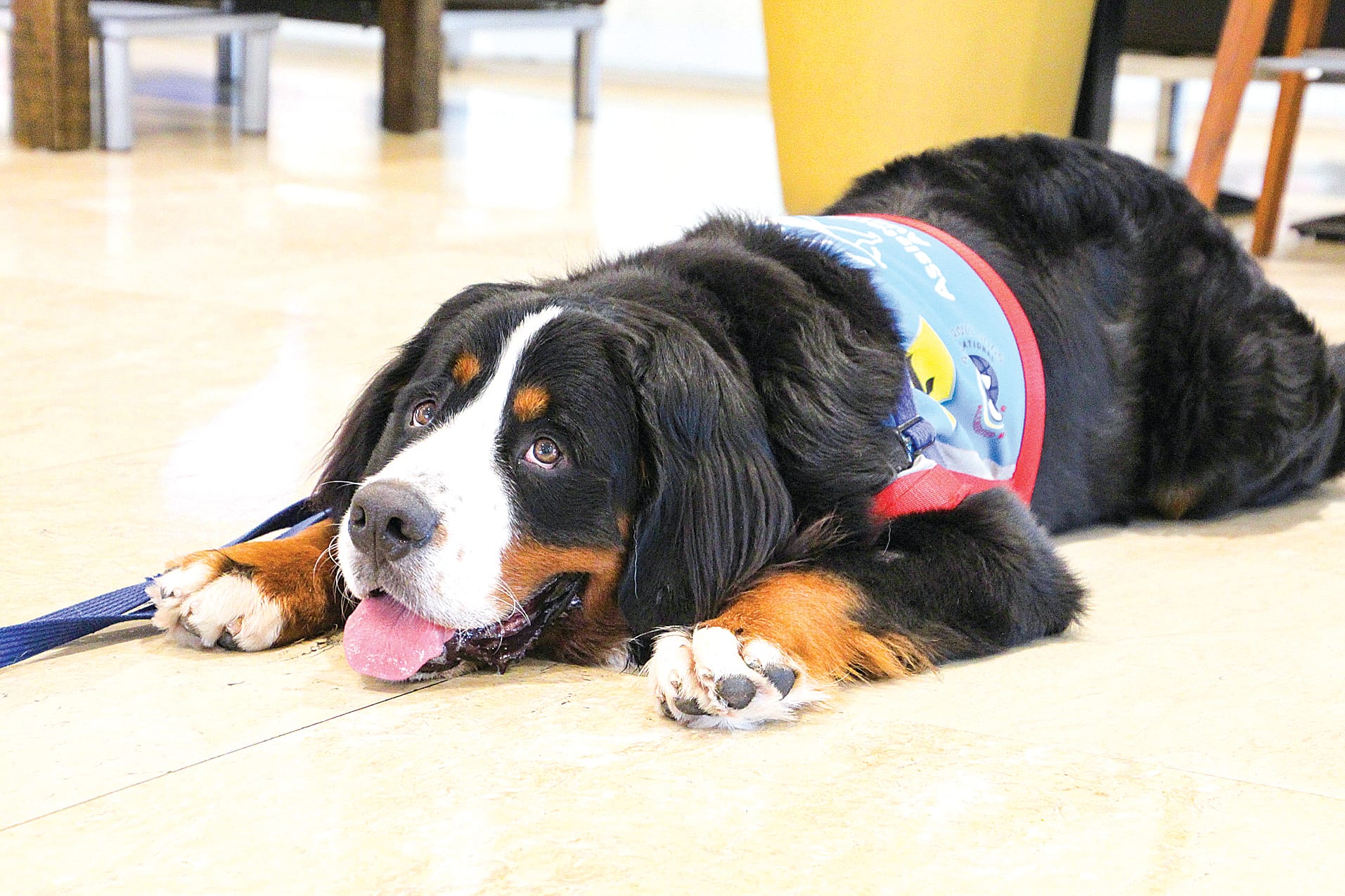
The team in this case was Bernie, a Bernese and Don.
“The dogs were already highly trained. It’s 10 pretty intensive days and then it’s off home.
“Every year we have a Public Access Test (PAT), an ADA Trainer comes out and we go into Leongatha to Aldi and a few other places, and Bernie is given instructions… The idea is to check they’re still able to operate within the public system.”
And here lies the difference, support dogs versus assistance dogs.
Assistance Dogs are medical aids specifically trained to help their human who is living with a disability and are recognised by law, whereas Emotional Support Dogs are ultimately considered pets.
Assistance Dogs help with a range of conditions from physical limitations to psychological conditions like PTSD and Autism Spectrum Disorders; Guide Dogs for the blind and deaf are Assistance Dogs.
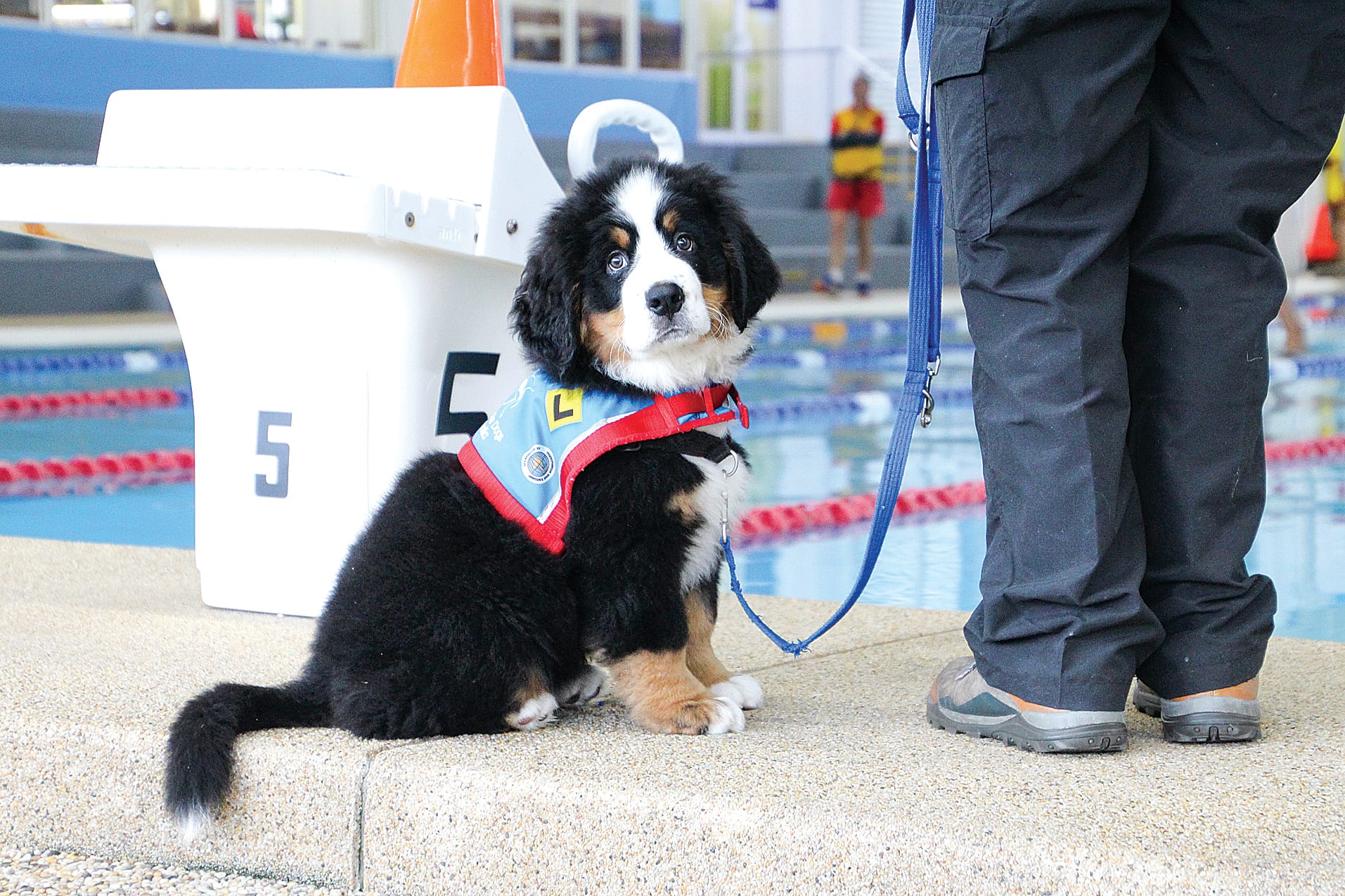
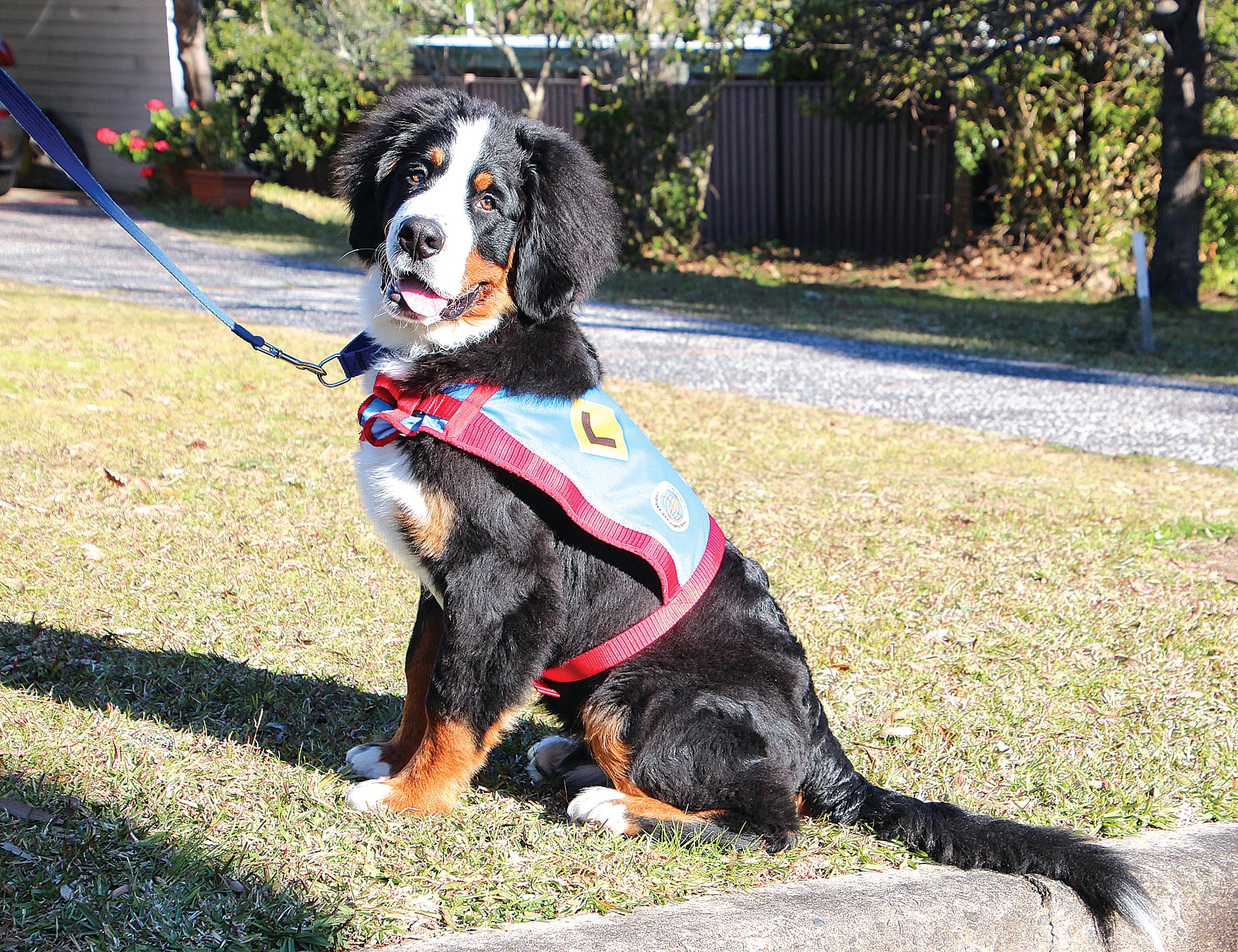
They are granted full Public Access Rights by law and are protected under the Disability Discrimination Act 1992.
“It took a while for me to get used to having him and be confident enough to go anywhere. I used to think everyone was staring. They do look, but simply because he’s such a beautiful dog. I get that now. It’s not me. It’s nothing to do with me.”
Don also has a Deed of Assignment for Bernie. The contract ensures Don takes care of Bernie, that’s he’s not mistreated or mishandled, and that all Bernie’s rights and welfare needs are maintained and fulfilled.
“He knows straightaway (when he’s got the gear on) that he’s at work. There’s a whole different personality (when it’s off) – he’s just a dog.
“Bernie loves other dogs. He’s got no idea how big he is. He has met one dog bigger than him; the look on his face – he had to lift his head up to look at this dog. It was hilarious.”
For Don, Bernie is the distraction he greatly needs.
“My PTSD used to present as very, very acute anxiety, quite crushing and I’d struggle to deal with people, so I’d stick myself in a little hole and get right out of the way.
“There was a lot of pressure on my family to keep an eye on me and keep track of what’s happening and basically talk me down if I was getting a bit twitchy.
“With him now, we’re rarely separated by more than a couple of meters, whether he’s technically working or not.
“If I’m getting anxious he’ll come up, bump me with his head or he’ll put his head on me, he’ll bark... If I’m at home in bed and have a bad start to the day and don’t want to get out of bed, he climbs up and I get 60 kilos on me looking me in the face.
“He’s given me a lot more confidence to get out and about without my family; and in conjunction with my doctor and psychiatrist we’ve wound my medication down to an absolute minimum.”
And whilst Don advocates for Assistance Dogs and Code 9, his biggest accomplishment to date is being open and honest, and helping pave the way for other first responders to acknowledge it is okay not to be okay.
Don’s advice for those struggling with their mental health:
Acknowledge that you’re struggling.
“Talk to somebody – and establish a good working relationship with your GP, because that’s your first step in the health management element.
“The motto of the Code 9 Foundation is you are not alone.
“I know from my own experience I felt like I was the only person on earth that felt like this.
“When you realise that you’re more than a tribe of one, that alone is helpful.”
Career first responders can reach out to the Code 9 Foundation for support, whilst volunteer first responders have services available through their various organisations.
With each dog costing on average $40,000 to train people can donate online at assistancedogs.org.au.
If you need support, talk to a GP or health professional or contact:
• SANE Australia on 1800 18 SANE (7263) or sane.org.
• Beyond Blue on 1300 22 46 36 or beyondblue.org.au.
• Lifeline on 13 11 14 or lifeline.org.au.


