Why Passivhaus accreditation for Berninneit could be a crock
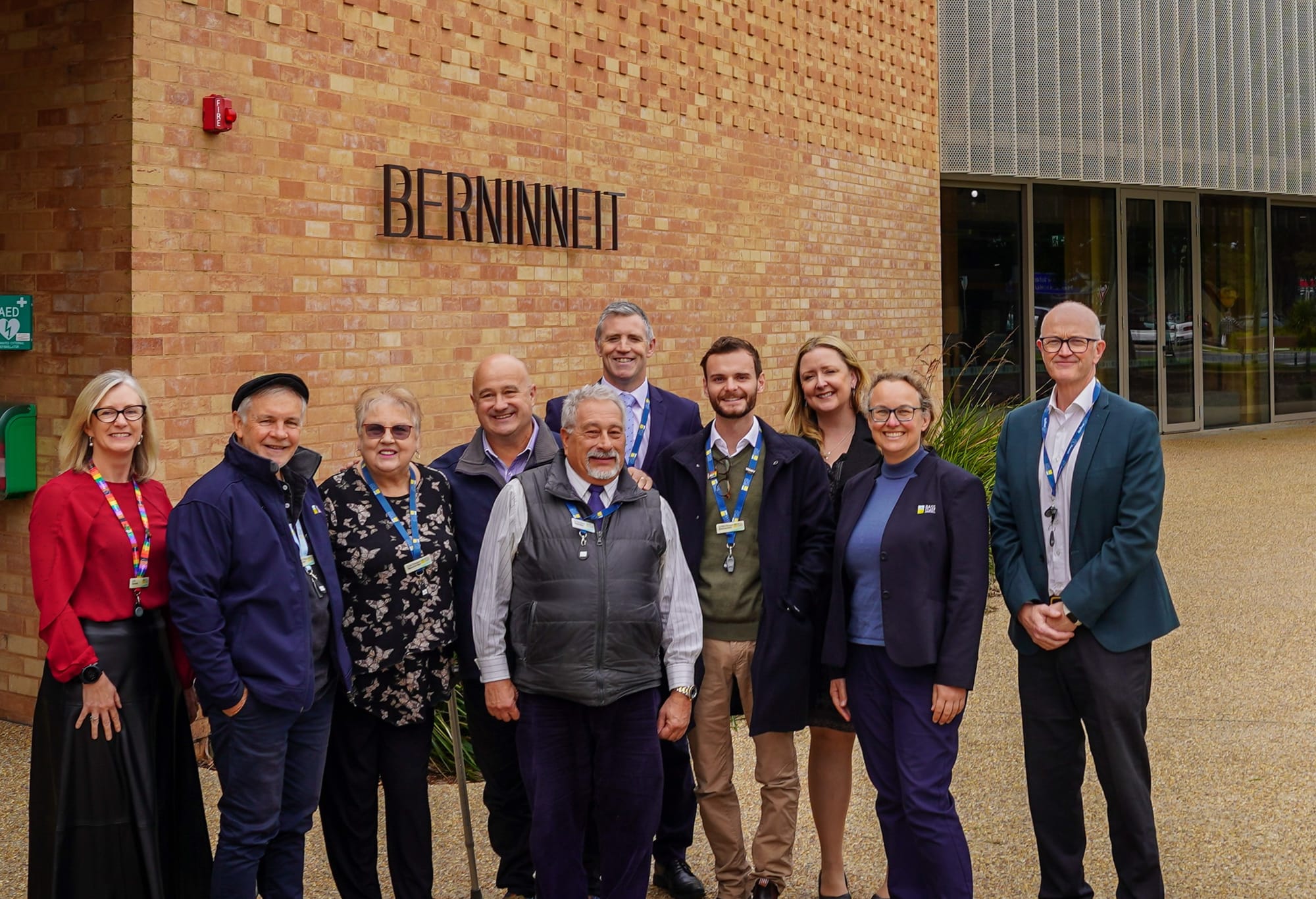
Councillors and staff of the Bass Coast Shire Council were jumping for joy at last Wednesday’s council meeting, metaphorically at least, when the Berninneit cultural centre in Cowes achieved Passivhaus status. But doubts have emerged about the integrity of the process.


COUNCILLORS and staff of the Bass Coast Shire Council were jumping around excitedly at last Wednesday’s council meeting, metaphorically at least, claiming the building that was hosting their monthly council meeting, the Berninneit cultural centre in Cowes, had finally achieved Passivhaus status.
“Whoop-de-doo,” some might say.
But whether or not the building could achieve the lofty efficiency standards required for Passivhaus accreditation has been a big issue ever since the $32 million structure was opened on November 1, 2023.
According to sources inside the council, the decision to design into Berninneit the goal of achieving Passivhaus certification, as some-sort of climate change trophy for Bass Coast, a cause championed by former mayor Michael Whelan, cost the council at least an additional $2 million.
And it could have cost the builders and designers considerably more in penalties and fix-up costs if the Passivhaus box could not be ticked.
Across several failed attempts over the course of the past three years, including in May 2024, when contractors infamously applied sticky tape to doors, windows and other openings ahead of a new round of airtightness testing, Passivhaus accreditation had seemed a bridge too far.
Imagine the surprise then, when Bass Coast Deputy Mayor, the Island’s own Cr Ron Bauer, was given the task of announcing that Berninneit had finally attained that exacting standard.
“Thank you, Mr. Mayor. Fellow councillors and people watching from the gallery. Today, we can announce that the Cowes cultural centre, Berninneit, has officially achieved Passivhaus certification, an internationally recognised sustainable standard focused on energy efficiency, occupant comfort, and building performance,” said Cr Bauer.
“I would like to, and I think it's really fitting that we hold this meeting in this building today. I would also like to acknowledge and thank former mayor and councillor Michael Whelan, who staunchly and doggedly advocated in support of building this building and was instrumental in pursuing the ambitious goal of designing and constructing Berninneit to Passivhaus standards.
“Michael, please stand up. Congratulations,” he said as councillors offered a warm round of applause.
Cr Bauer went on to say that Berninneit is Australia's first Passivhaus certified public centre to incorporate a professional theatre, public library, gallery and museum”.
It’s a statement that provides a clue about why it’s impractical (if not impossible) to be trying to design and construct a public building, where people are coming and going at all hours of the day and night, to fit into an efficiency framework more suited to the function of residential buildings.
That age-old idiom about “self-praise being no praise at all” may well apply to the Bass Coast Shire Council and its claim about Berninneit finally achieving Passivhaus status.
Together with a flowery public statement on its website about the achievement, Bass Coast also squirreled away a copy of the ‘Certified Passive House Classic’ certificate, the entry level for Passivhaus accreditation, issued by the Passive House Institute in Darmstadt Germany under the signature of Dr Wolfgang Feist, detailing Berninneit’s scores.
In fact, Berninneit barely scrapes in on paper and is unlikely to achieve the standards in everyday use.
On the sticky issue of ‘airtightness’, Berninneit scored 0.6 (air change per hour), exactly the minimum number required. It failed the ‘heating demand’ requirement scoring 18 against a criteria of 15, but gets in under the ‘heating load’ test, scoring 10 against an alternative criteria of 10, again exactly on the minimum standard.
But the condition which applies to ‘heating load’ is that it must be achieved on the absolute coldest day of the year. Was it?
Berninneit breezed past the “cooling” demand standard but would have failed the ‘cooling load’ test if that alternate was required.
It also missed the basic ‘Renewable Primary Energy (PER)’ measure of 60 by a fair margin, scoring 74, again the bare minimum score for accreditation when using the alternative criteria, but only if renewable energy generation levels compensate for that failing.
It’s not clear from the Passive House Institute’s own ‘Criteria for Buildings’ that it does tick the renewable energy box with no specific criteria on the level of renewable energy generation required at 'Classic' level - quoted at 50kWh per metre squared at Berninneit.
So, how likely is it that during the testing for Berninneit, it got exactly the bare minimum score needed on three out of the four requirements; airtightness, heating and renewables, while failing part of the only other criteria, the ‘cooling load’?
Cr Bauer also said that he hoped that by achieving its unique Passivhaus status in Australia that Berninneit in Cowes would become the object of “engineering tourism” over the years ahead.
Whether it works the other way around, and a representative of the council is funded to attend the 29th International Passive House Conference in Innsbruck Austria on April 2 and 3, next year to highlight Phillip Island’s history-making achievement is yet to be revealed.
We’ve asked the Bass Coast Shire Council to comment.
"The conference is not currently being considered," was the official response.