

It’s back to the future for Phillip Island Chicory
A FEATURE of the Phillip Island landscape for almost 150 years, the island’s historic chicory kilns have recently been given a modern-day reference, quite literally rooted in the industry’s long tradition. Taking up the challenge to extend...


A FEATURE of the Phillip Island landscape for almost 150 years, the island’s historic chicory kilns have recently been given a modern-day reference, quite literally rooted in the industry’s long tradition.
Taking up the challenge to extend Phillip Island’s connection with chicory growth, roasting and drinking are Luke Soussa and Cassie Stoppa, the latter coming from a family which grew chicory in its heyday of the 40s and 50s.
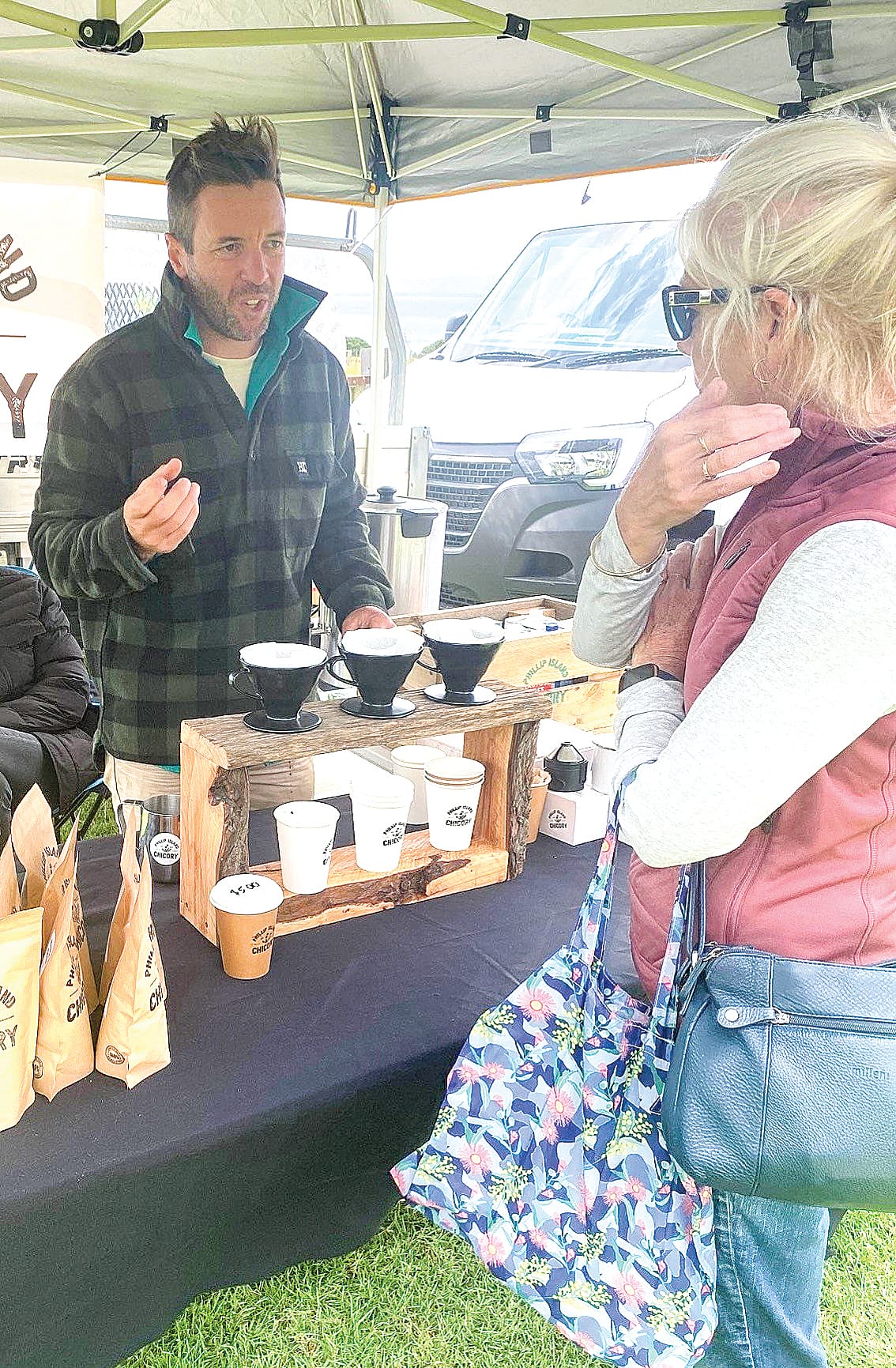
Last Saturday the pair were out at the Churchill Market talking to visitors about the product and its heritage.
“I’ve got a background in agriculture and through Cassie’s connection with chicory growing on the island, we decided to give it a try,” said Luke Soussa last weekend.
“I’m pretty passionate about the agriculture sector in Bass Coast getting the recognition it deserves, especially when you consider farming occupies 70 per cent of the land area.
“We’re a big tourism shire but agriculture still has a very important role to play and should be supported.”
Luke and Cassie spent much of the day at the market talking about the tradition around chicory growing, and the story about how it came to prominence during the First World War when coffee was hard to come by.
Chicory was first grown on Phillip Island in 1870.
The first chicory kiln was built on Phillip Island in 1878 with the drying process responsible for consuming large quantities of firewood, and being responsible for large swathes of tree clearing.
By the late twentieth century, Phillip Island was producing more than half of Australia’s national Chicory crop.
Chicory farming on Phillip Island declined rapidly in the mid 1970’s and there was only one operating kiln left on the island.
The last crop of chicory was grown at Rhyll in 1987.
There were also tastings provided by Cassie and Luke from Phillip Island Chicory, which brought back the crop on a small scale in 2022.
“We’re just about to harvest our own seed crop which will enable us to expand to half-an-acre next season.”
The roasting process transforms the bitter taste of the chicory root, producing an aroma not unlike coffee, but a taste that is unique to chicory, kind of a toasty, nutty flavour with suggestions of burned sugar.
The roasted chicory can be drunk black or with milk and honey to taste or combined with coffee.
On Saturday, Luke served the hot chicory, strained through filter paper, for interested customers.
The historic connection with the product locally looks certain to add something to agritourism on the island where diversification is encouraged by both sectors in a rapidly growing visitor economy.
If you want to know more, or would like to buy some roasted chicory, go to the Phillip Island Chicory website at phillipislandchicory.com.au


