Lance Corporal Walter Peeler - Leongatha’s unknown Victoria Cross winner
Just 96 Australians all-time have been awarded the Victoria Cross but it's a little known fact that one of them listed his place of residence as 'Leongatha' when he enlisted in February 1916.


JUST 96 Australians all-time have been awarded the Victoria Cross.
They are all featured with their photos and a brief description of the circumstances of their bravery, as well as where they come from, in a prominent place at the Australia War Memorial in Canberra.
You can also look them up by Federal Electorate.
The electorate of Gippsland has one VC winner, Lieutenant Rupert Vance Moon, born at Bacchus Marsh but growing up in the Maffra area where he had been in the militia before enlisting in the light horse in 1914.
But who knew, there’s also a Victoria Cross winner from Leongatha. His name: Lance Corporal Walter Peeler.
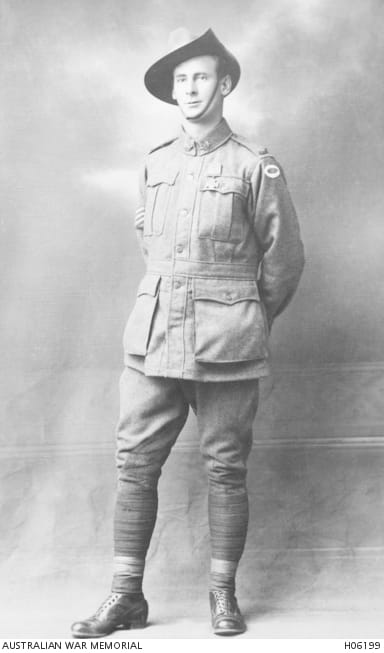
But little is known locally of his association with the Leongatha area which he listed as his place of residence at the time he enlisted on February 17, 1916.
Local historian Lyn Skillern confirmed that the only available information is that he was living locally when he enlisted.
Time may have covered over the details, but if you know anything about Lance Corporal Wally Peeler – please share via email to news@sgst.com.au
“Eighth surviving child of William Peeler, a farmer and miner from Tasmania, and his English-born wife Mary Ellen, née Scott. His education is not recorded but he worked on his parents’ orchard at Barker’s Creek, then at Thompson’s Foundry, Castlemaine, and in the Leongatha district. He married Emma Hewitt on 10 July 1907 at the Congregational parsonage, Castlemaine.
Place of residence at time of enlistment: Leongatha, Victoria [electorate of Monash]. Enlistment date: 17 February 1916.
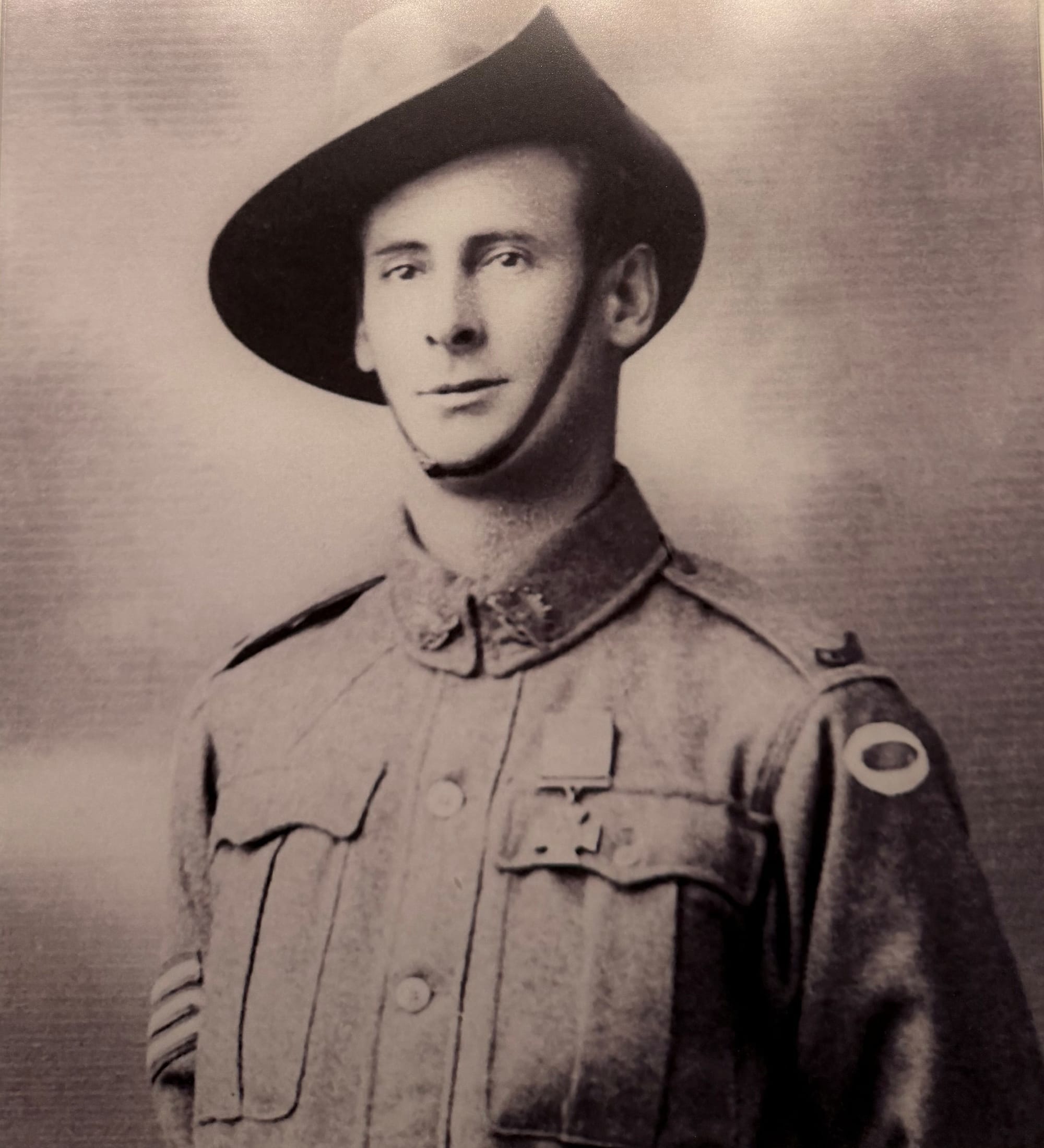
A 28-year-old labourer prior to enlisting on February 17, 1916, he embarked for overseas as a private with the Machine Gun Section from Melbourne aboard HMAT Wandilla (A62) on 6 June 1916.
After arriving in England, he was promoted to lance corporal (L Cpl) and then proceeded to France in November to join the 3rd Pioneer Battalion.
After being wounded in action during the battle of Messines on June 7, 1917, he spent three days receiving treatment before returning to his battalion.
On October 4, 1917 L Cpl Peeler was one of several Lewis gunners attached to the 37th Battalion for the attack on Broodseinde Ridge. In the forefront, he led attacks against a series of enemy posts, eventually killing over 30 of the enemy.
Eight days later he was wounded in action and while recuperating in England, received the Victoria Cross from the King. After being promoted to temporary corporal on 31 May 1918, he was promoted to sergeant on 30 July 1918. Sgt Peeler arrived back in Australia for leave on 11 October 1918.
Description of action for which the VC was awarded on September 20, 1917 at Broondseinde, Belgium:
“For most conspicuous bravery when, with a Lewis gun, accompanying the first wave of the assault, he encountered an enemy party sniping the advancing troops from a shell-hole.
"L/Cpl. Peeler immediately rushed the position, and accounted for nine of the enemy, and cleared the way for the advance. On two subsequent occasions, he performed similar acts of valour, and each time accounted for a number of the enemy. During operations, he was directed to a position from which an enemy machine gun was being fired on our troops.
"He located and killed the gunner, and the remainder of the enemy party ran into a dugout close by. From this shelter they were dislodged by a bomb, and 10 of the enemy ran out. These he disposed of. This non-commissioned officer actually accounted for over 30 of the enemy.
"He displayed an absolute fearlessness in making his way ahead of the first wave of the assault, and the fine example which he set insured the success of the attack against most determined opposition. Unit at time of action: 3rd Pioneer Battalion, 3rd Division, AIF.
Peeler arrived back in Australia on October 11, 1918 and was discharged on December 10, 1918. He worked with the Victorian Department of Lands for six years and then took up an orchard, but returned to Melbourne to work on the staff of the Sunshine Harvester Works. He was appointed custodian of Victoria's Shrine of Remembrance in 1934.
During World War II Peeler, understating his age by 14 years, enlisted in the 2nd A.I.F. in 1940 and saw service in the Syrian campaign as company quartermaster sergeant of 'D' Company, 2/2nd Pioneer Battalion. In June 1941 he led a patrol to recover four Australian wounded. His battalion was part of a small Australian force hastily landed in Java in February 1942 to assist the Dutch against the rapid Japanese advance; after the island's surrender to the Japanese he survived a long period on the Burma Railway. He was one of only three World War I V.C. winners then serving overseas, the others being Walter Brown and Arthur Blackburn. He returned to Australia in October 1945 to learn that his son Donald had been killed on Bougainville in December 1944 while serving with the 15th Battalion.
Wally Peeler resumed duty as custodian of the Shrine of Remembrance and was an early member of the Victorian Corps of Commissionaires. He was awarded the British Empire Medal in 1961 and retired in 1964. From the early 1920s he lived with Kathleen Emma Peeler and they had four children. Survived by two of his children from his first marriage and by Kathleen (d.1969) and three of their children, he died at South Caulfield on 23 May 1968 and was buried in Brighton cemetery. His medals are on display in the Hall of Valour at the Australian War Memorial.
Died: 23 May 1968, Caulfield South, Victoria.
Place of burial or cremation: Brighton Cemetery, Caulfield South, Victoria.
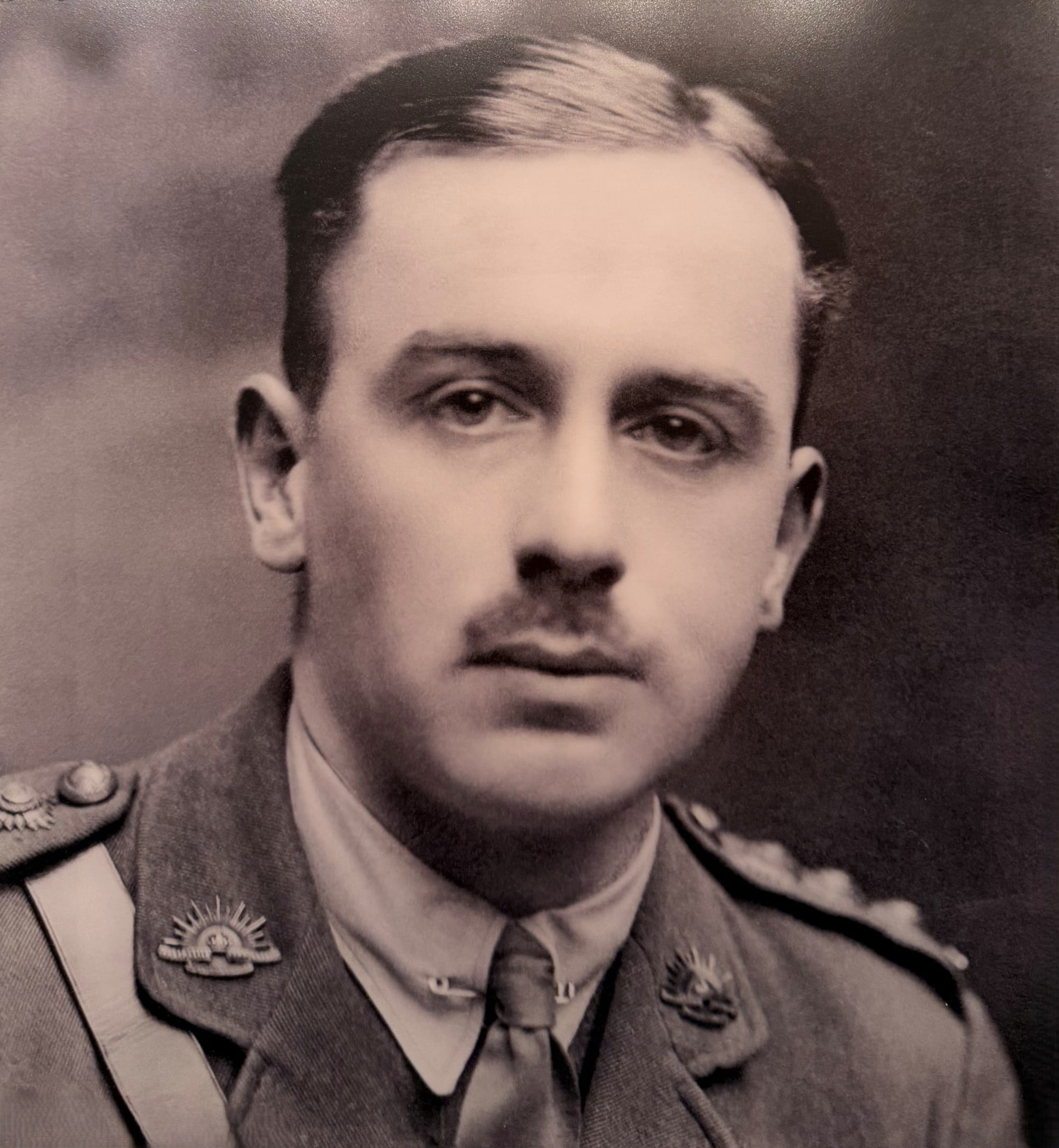
Gippsland's other VC winner
Gippsland’s only other Victoria Cross recipient was Lieutenant Rupert Vance Moon VC, 58th Australian Infantry Battalion, AIF.
Rupert ‘Mick’ Moon (1892-1986) was born at Bacchus Marsh, Victoria, and grew up in Gippsland. He had been in the militia, and in 1914 enlisted in the light horse. He was sent to Gallipoli, then in September 1916 was commissioned and transferred to the infantry to replace recent losses.
At Bullecourt, on May 12, 1917, Moon led an attack on an enemy strongpoint but was soon wounded. Not giving up, and continually calling, "come on boys", he was badly wounded twice more but still stayed to lead, inspire, and encourage his men.
"We would have followed him anywhere, he was that game", said one.
Only when he was wounded for a fourth time, severely now, did he finally agree to retire and seek medical help.
Moon returned to Australia but went back to Europe and ended the war as a temporary captain. Afterwards he worked in a bank and as an accountant. He was eventually one of the last surviving Australian Victoria Cross-holders of the war.