National newspaper award for Phillip Island, state award for Sentinel-Times
THE Phillip Island and San Remo Advertiser has won one of the top national awards for country and regional newspapers in Australia and the Sentinel-Times a state award at a joint awards night for the Victorian and NSW Country Press Associations at...


THE Phillip Island and San Remo Advertiser and the South Gippsland Sentinel-Times have both won major awards at a joint presentation night for the Victorian and NSW Country Press Associations at Yarrawonga.
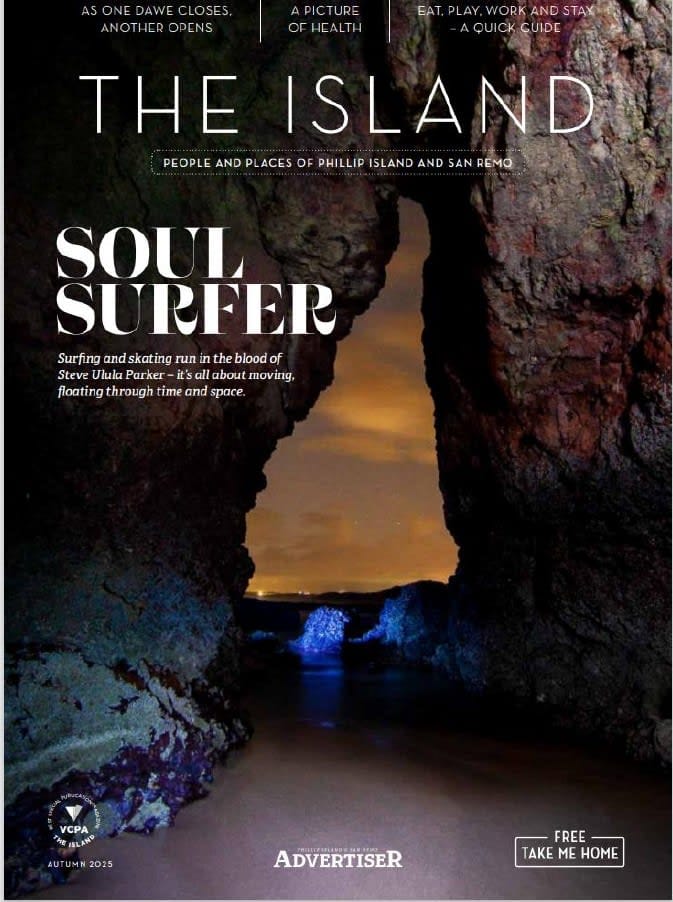
As the winner of the Victorian Country Press Association award for the ‘Best Special Publication’ for its ‘Island’ magazine, the Phillip Island and San Remo Advertiser went forward for the national award against entries from South Australia, NSW and Queensland and came out on top.
Phillip Island’s newspaper editor Eleanor McKay said the Advertiser launched the magazine after COVID to highlight the many positive stories about the Island, its surrounds and its people in a format that had been embraced by locals and visitors alike.
The Sentinel-Times also won the Best Opinion/Editorial section for the Victorian Country Press Association, an open entry competition available to all eligible newspapers in country and regional Victoria, for an article written by the newspaper’s publisher Michael Giles.
Here’s what judge of the opinion section, Patrick Elligett, Editor of The Age, said about the entries:
“Only a few points separated the top dozen entrants in this year's opinion/editorial category, which attracted a notably high calibre of submissions.
“The ferocious advocacy peppered throughout these entries should give comfort to the communities these publications serve that their watchdogs are on duty.
“This year's standout submissions avoided dry, bureaucratic exploration of worthy issues and instead used clever editorial devices to connect with readers on a deeper level.
“Winner Michael Giles South Gippsland Sentinel Times, ‘Another Bass Coast fiasco looms’.
“Comments: The best thing about this thundering editorial is its implicit message for decision-makers: take the people of the district for a ride at your peril. Written with a classic editorial structure, this article builds the foundations of the story for an uninitiated reader before clearly explaining why ratepayers should care about their money being spent on a local environment fund.
“This issue could easily be considered esoteric in less skilful hands, but the Sentinel-Times' editor easily establishes the issue as a matter of public interest and fires a warning shot audible from the local council chambers.”
Published in July 2024, after a series of community questions on the subject, not long after tests revealed no contamination had been found in Wonthaggi’s new housing estates, the editorial casts doubt on “a loopy thought bubble of an idea” to spend $50,000 of scarce ratepayers’ money setting up an external Environment Fund, that wouldn’t directly benefit Bass Coast.
Those questions, including one from the late Jon Trigt, prompted a response from CEO Greg Box that all costs associated with establishing the Environment Fund had been met within the allocated budget of $50,000 and that “Council has not made any commitment to provide working capital to the fund, once established”.
The fund was to have been a joint venture with independent not-for-profit Biodiversity Legacy (BDL) however, while there is no reference to ‘The Environment Fund’ on the BDL website, there is reference to a joint venture between Bass Coast Shire and BDL called the ‘Nature Recovery Foundation (NRF)’.
Despite assuring the community that no commitment had been made to contribute further funding, the shire’s Annual Report 2024-25, reveals paying $15,000 to the Nature Recovery Foundation.
According to the BDL website: “The Nature Recovery Foundation (NRF) is a bold initiative committed to reversing biodiversity decline on Victoria’s Bass Coast and protecting the natural environment for future generations”.
It notes that the work of the NRF may extend to neighbouring LGA, South Gippsland in years to come.
The Sentinel-Times has asked the Bass Coast Shire Council to clarify what’s happened to the $50,000 paid to establish the Environment Fund and the genesis for a $15,000 contribution to the NRF, especially given concerns about the lack of funding for local government.
The winning editorial: Another Bass Coast fiasco looms
JUST when you thought (hoped) the Bass Coast Shire Council might pull its head in, after the debacle of Wonthaggi’s housing fiasco, and stay in its lane until the October elections, they’ve embarked on yet another train wreck.
We knew when the council voted to set up an independent, not-for-profit company called the ‘Environment Fund’ at its June council meeting that council’s involvement in the initiative stunk to high heaven.
But now we are starting to hear what, frankly we suspected all along, that this ratbag fringe ‘Climate Emergency’ proposal is going to cost ratepayers an absolute bomb with no guarantee that it will deliver any benefits inside the boundaries of the Bass Coast Shire.
Is that even legal?
It took a series of questions from the community at the July meeting of council to start to unravel the deliberately secretive process that has led to the establishment of the Environment Fund and the allocation of $50,000 of ratepayers’ money from the shire’s 2023-24 budget.
That’s not from the new 2024-25 budget, which was only adopted at the same meeting, on June 19, 2024.
In fact, it took the council a full 12 months to even see a motion approving the establishment of the Environment Fund after oblique reference to the ‘design and implementation’ of an environment fund was included in the 2023-24 budget papers.
So, while many worthy community projects have to jump through exhaustive hoops before being even considered for funding, here was a loopy thought bubble of an idea hidden away in the 2023-24 budget, well before the council received a glossy, audio-visual presentation recently about the fund and voted to approve it, 12 months later.
That money was effectively allocated even before the council knew what it was really for, and before they’d voted to agree to the fund’s establishment.
How does that even happen?
There still hasn’t been a council motion that specifically makes an allocation of $50,000 of ratepayers’ money to the environment fund.
Here’s what the 2023-24 budget says about the establishment of the fund: “Strategic Objective 1: Protecting our natural environment 1. Design and implement a dedicated perpetual environment fund for accelerating habitat restoration on public and private land.”
Nowhere does it say, and nowhere is it explained that this is not a council-controlled fund, that it is in fact to be controlled by a private company, completely separate from council, and that council may not have a seat on the board or even be able to influence where future funds are to be used.
In fact, it’s implied in the 2023-24 budget reference that it is to be a council-controlled fund.
As well as the $50,000 to design and implement the fund, the way has also been left open for council to contribute untold thousands of dollars more to its work.
The environment fund is the brainchild of former Bass Coast Mayor Cr Michael Whelan who, it has been mooted, will seek a seat on the board of this new entity, if not emerge as its inaugural chairman after he retires as a councillor at the next election.
What Cr Whelan does after he leaves council is his business, but having steered this initiative through council, including the allocation of ratepayers’ money, what he needs to do before he leaves council is rule out any ambition to be directly involved in an organisation he played a key role in establishing for a reasonable amount of time, at least 18 months, or for a time acceptable to the community.
There is nothing wrong with the Bass Coast Shire Council encouraging the establishment of an independent environment fund that will “reverse biodiversity decline by preserving and enhancing existing habitat and accelerating the restoration of connected habitat across the landscape” but council’s sole responsibility is to the people of the Bass Coast Shire.
Ratepayers’ funds are to be spent here, doing what the council’s vision says we should be doing, concentrating on initiatives that “would improve living, visiting and investing in the municipality”.
Judge’s other comments
Judge of the ‘opinion’ section, Patrick Elligett, said this about the finalists:
- Highly Commended Darren Chaitman The Euroa Gazette: ‘Everything comes to an end’. Comments: This editorial cleverly uses a long-term letter-writer's final missive as a device to tell a story about a new era in Euroa. Beautifully structured in a way that foments a sense of nostalgia, this piece presents readers with a juxtaposition of new and old, allowing their own opinions to guide them to a conclusion. Cleverly crafted, it puts forward a clear opinion without hectoring the audience.
- Highly Commended Donna Kelly The Local: ‘Just sayin…’. Comments: Donna Kelly's Just Sayin' columns leave the reader with the impression they have just been chatting to a witty friend over a drink at the local pub. Her articles don't shirk from discussing important hyperlocal and public interest issues, but use humour to build empathy and engagement. Her unique style and conversational tone makes these columns highly entertaining, but also informative and relevant.