

SealSpotter challenge more important than ever
THE all-important fur seal count was back, bigger and better, as citizen scientists joined marine researchers from Phillip Island Nature Parks in the great SealSpotter Challenge. In its fifth year, 15 countries around the world participated with...


THE all-important fur seal count was back, bigger and better, as citizen scientists joined marine researchers from Phillip Island Nature Parks in the great SealSpotter Challenge.
In its fifth year, 15 countries around the world participated with Australia, the US, Spain and the UK taking out top honours.
“We have 124 hardcore seal counters,” research scientist, Dr Rebecca McIntosh explained.
“There are the same individuals every year that are high performers and we value their contribution; a couple of them finished the whole set this year, which is wonderful statistically.
“Of 13,789 images, 165,514 seals were counted.”
Up to 2000 images are in the portal and every image is counted 9-10 times, an average is taken of those counts, for each image, that is then totalled together.
Unlike sea lions or whales, Australian Fur Seals have fewer distinguishing markers, and as anyone who has had the privilege to watch seals in action, they don’t sit still very long; and distinguishing between categories can be difficult even for the experts.
“We have four categories – juvenile and adult; pups alive; pups dead; and entangled seals.
“We didn’t originally have the dead pup count separate, but a lot of the participants wrote to us and said they didn’t like counting the dead pups with the live pups.
“Very much a collaboration with our citizen scientists, a lot of how SealSpotter has developed is because people have written to us and suggested improvements.”
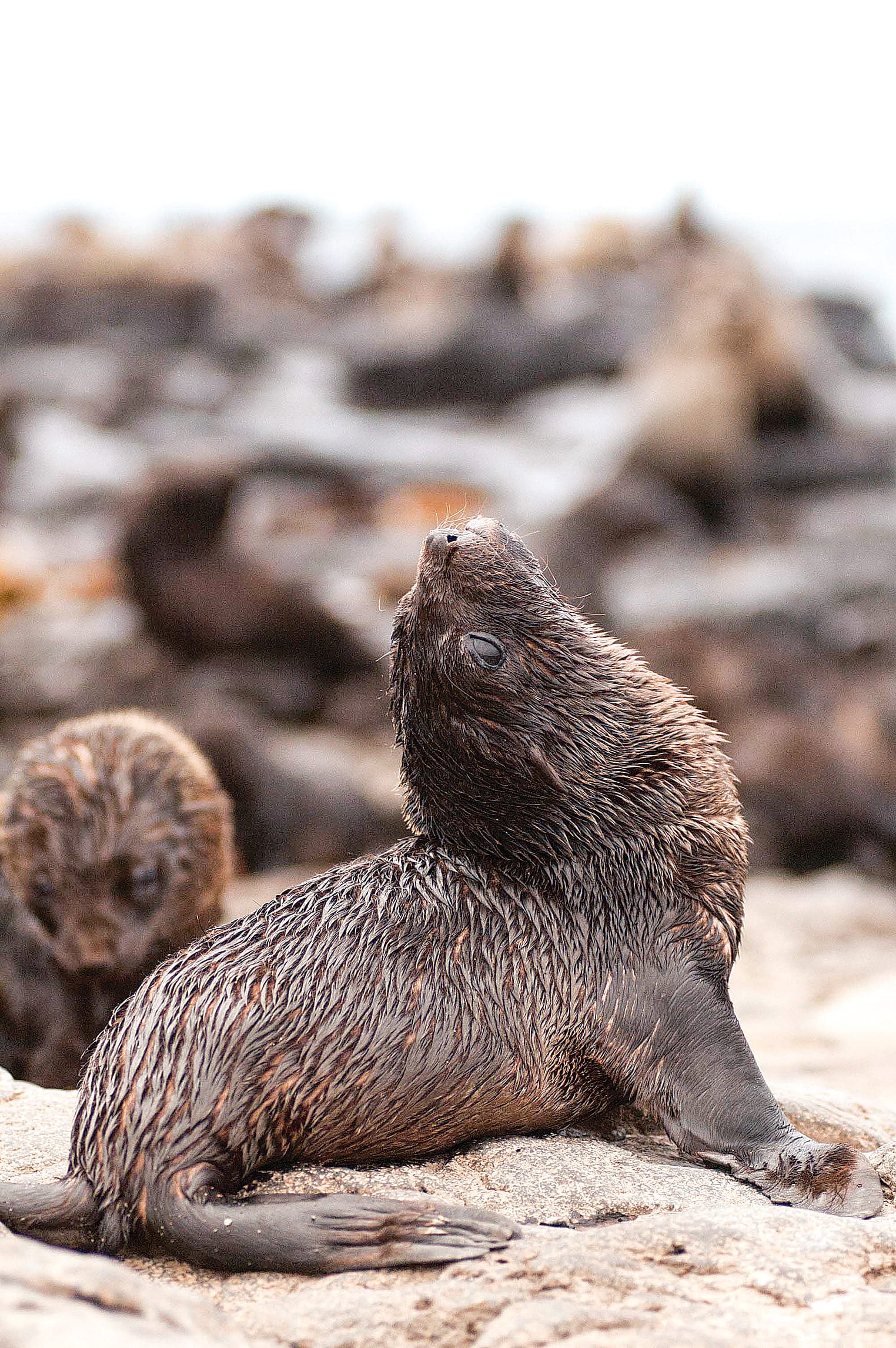
Dead pups can be from natural causes including misadventure, it can also be because the juvenile has out competed the new pup and continued to suckle from mum.
As stated in a recent research paper published in Frontiers co-authored by Rebecca, ‘the Australian fur seal has experienced a slower than expected population recovery since the end of the commercial sealing era, with a high third trimester abortion rate. There is currently no known proximate cause.’
“We have done a lot of research with the University of Sydney and detected high levels of PFAS legacy chemicals, which we are investigating whether it can cause higher pup mortality.
“A female doesn’t have her first pup until she’s three or four years, so the toxicants can build up and the first pup can get that dump through the milk.
“We’ve also recently detected, probably always been there, the Coxiella burnetii bacteria which is known to be an abortive agent in livestock; we think maybe that is causing higher mortality in some of the early premature births.”
Some pups experience entanglement in marine plastics once they start swimming and others simply get squashed by fighting bull males during the breeding season.
“Last trip we had nine entangled seals and we released four, which is considered a success, they are hard to catch and release.
“There are good and bad places to be born and SealSpotter helps us work that out.”
Rocky cave areas allow pups to hide away from the protective bulls and likely contribute to a higher survival rate than pups born in flatter areas where they cannot hide.
Recent advances in technology and legislation have allowed remote piloted aircraft to survey seal colonies in Victoria with our very own Seal Rocks and The Skerries, near Mallacoota.
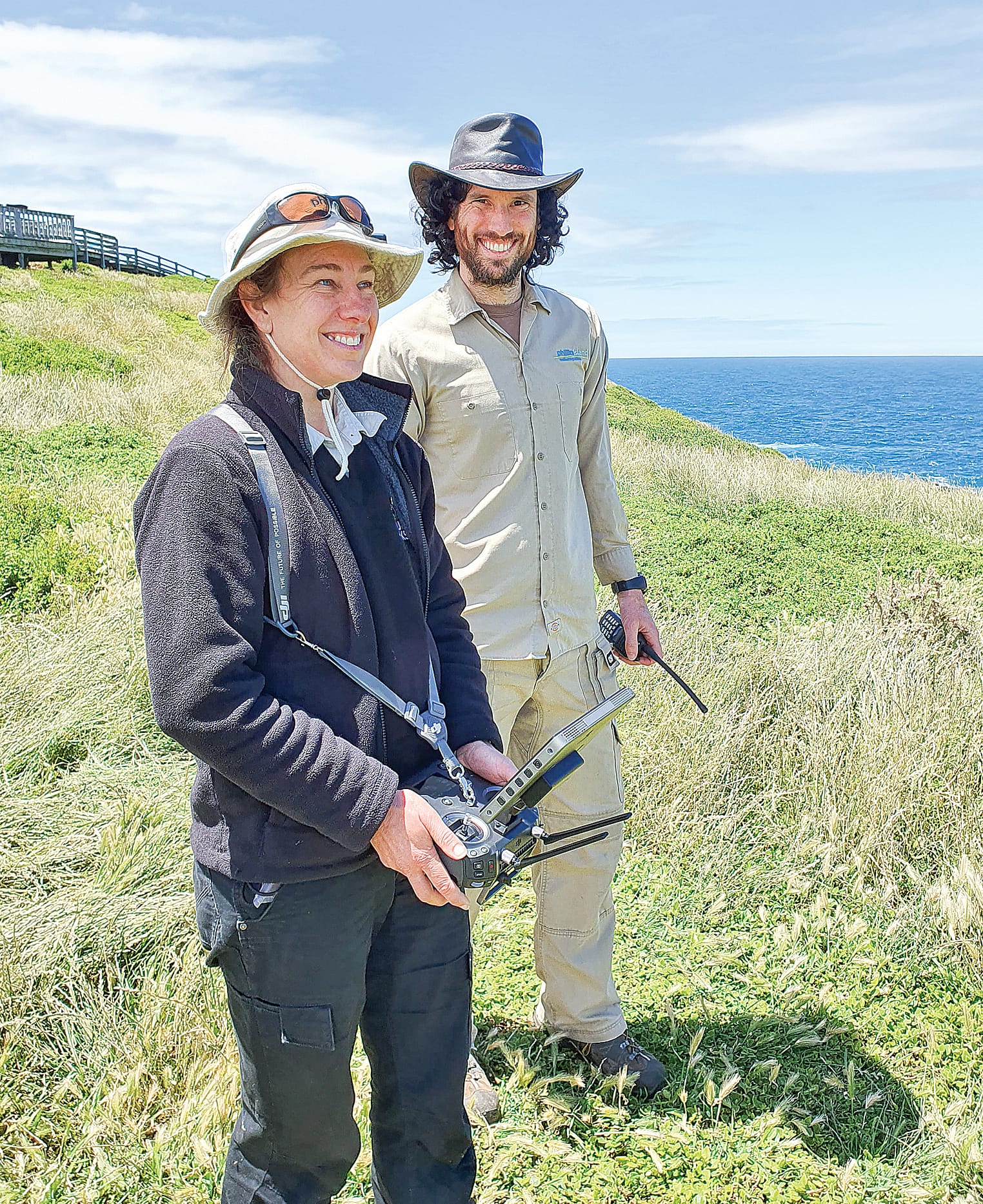

“The drone is fantastic because we can fly more often and can fly multiple times over a breeding season without causing disturbance.
“We can get high quality data and it gives us a lot more ability to test ideas and understand what might be happening.
“The end of December we go out and count the dead pups on the ground and sample 100 live pups to look at the toxicants and health effects.”
Published in Frontiers magazine in June 2018, ‘Looking without landing’ authored by Rebecca highlights the significant advantages to using RPA’s including providing data at high spatial and temporal resolution; providing systematic, permanent data with statistical integrity due to simple replication; having low operational costs and simple logistical requirements particularly in marine environments; and being low-risk for the operators.
All research is performed under wildlife ethics and research permits by the team, and Rebecca and Ross are also qualified licenced drone pilots.
Where to next – thermal imaging cameras will be tested to see if they assist in detecting neck wounds and entanglement, and action on climate change are at the top of Rebecca’s list.
“The last couple of years I’m seeing areas getting scoured out by wave action. It’s not like a beach where the sand comes back, this is rock and compacted earth.
“We’re going to investigate how this looks over time, but the water is encroaching on breeding habitat, which might be removing more pups every year.
“We’re seeing changes in their diet too; they’ve changed what they’ve eaten since 1997. A full shift; they can’t preference something that’s not there.”
Central place foragers, the mothers are always feeding their pup and always pregnant.
“After 6 months pups start supplementing their milk diet with food found around the colony but are still reliant on their mum’s milk up until they’re around 11 months.”
Bulls on the other hand arrive at the end of October and stay until the end of the breeding season, with experienced, hardcore bulls fasting for at least two weeks.
“With seals we have this amazing opportunity to use them as a sentinel species. To understand the health of the whole ecosystem; if they’ve got high PFAS levels that they’re giving to their pups, they’re not drinking the seawater, they’re getting it through their diet.
“In the future, I want to look at the food web more broadly and how toxins are bio accumulating through the food chain and where it’s coming from.”
A marine specialist research scientist with over 20 years’ experience, nine with Phillip Island Nature Parks, Rebecca admires the mums and pups.
“I admire the effort the mums put into their pups – they work so hard and when people think that they’re being lazy on the beach I’m like ‘no, they’ve earnt that rest!’
And the team effort from citizen scientists would not have been if not for Rebecca’s idea and Data Analyst, Ross Holmberg’s skills in building the platform.
“I said, ‘Ross, I want to use drones, and I want to count them – there’s this place called Zooniverse. I want to do it like that, but I’d rather do it ourselves to keep it simple and change whenever we need to’, ‘leave it with me, I’ll have a think about it.’
“Over six months he built it!”
For more details on SealSpotter Citizen Science visit penguins.org.au/conservation/research/seal-research/sealspotter-citizen-science-portal/


