

Victorian nurses demand fair pay
By Charley Fitzgerald VICTORIAN public healthcare nurses are currently spurring change in the healthcare system to push for a raise in nursing and midwifery wages. Healthcare workers across Victoria feel that they are undervalued and underpaid, and...


By Charley Fitzgerald
VICTORIAN public healthcare nurses are currently spurring change in the healthcare system to push for a raise in nursing and midwifery wages.
Healthcare workers across Victoria feel that they are undervalued and underpaid, and due to the rising Living Cost Index (LCI) and working conditions it appears they could be right.
The Australian Nursing and Midwifery Federation (ANMF) alongside nursing unions, are working toward increasing pay through industrial action and Enterprise Bargaining Agreements (EBA). As of yet results have not been promising but ANMF has a series of steps that are underway.
In our community, healthcare workers are some of the most important individuals, providing comprehensive patient care and safety, yet their efforts are still overlooked. Local nurses continue to care for the Gippsland community and do so with poor working conditions.
As Bass Coast Health Nurse, Meg Fitzgerald said, “We always strive to provide the best patient care, ensuring safety and promoting patient health for the better.”
This is difficult to do when so many nurses are exhausted from the long hours.
In 2022, the Australian Bureau of Statistics year-over-years inflation rate was 7.1 per cent, however the nursing wage didn’t change to accommodate the inflation surge. Overall, their wages have only increased three per cent since then. In comparison other occupations have an average wage growth of 4.1 per cent each year.
Studies show that 18.5 per cent of nurses and midwives suffer from the symptoms of post-traumatic stress due to overworking, exhaustion, burnout, and working conditions.
“I think as a nurse you’re always putting your mental health at risk, with the rising nursing demands across the board, increasing our pressures to work harder, smarter, and continuously think critically,” Meg said reflecting on the situation.
Particular situations progress to patients getting violent with healthcare workers.
“Nurses are also verbally and physically abused by patients, and that’s something people forget. They think that we are just doing tasks, but we’re doing so much more than that.”
In May Victorian nurses initiated the first stage of action by closing 800 beds after members of ANMF rejected an offer from the government for a three per cent annual pay rise. Whilst the closing of hospital beds is not a concern locally, the industrial action is still happening regionally. These actions are driven by widespread concerns about the rising cost of living and inflation surges.
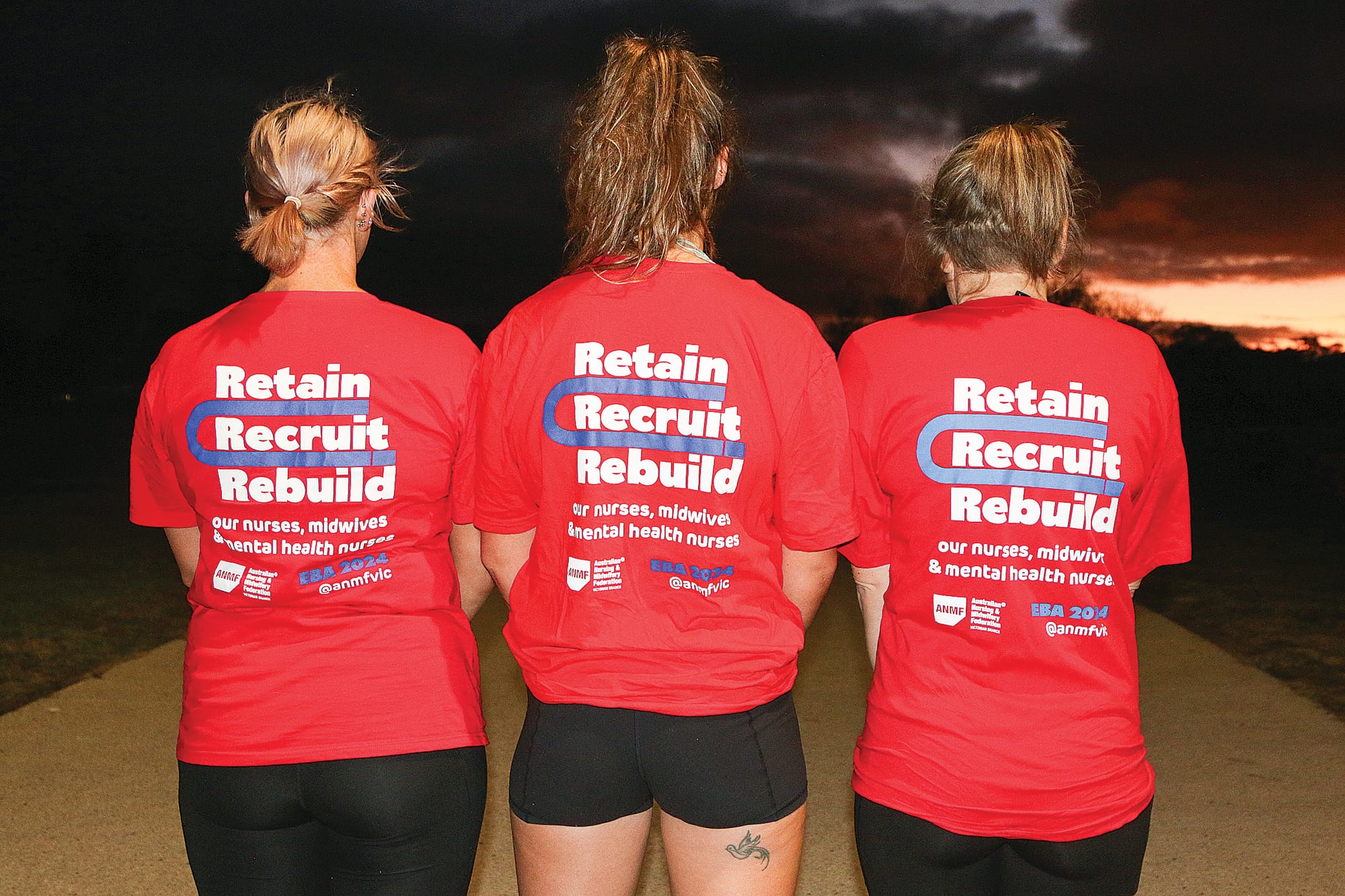
While the movement is still negotiating conditions for improvement, nurses are taking various individual actions to support the cause. These include wearing shirts to show solidarity, denying overtime, refusing redeployment, closing beds, and spreading awareness about their cause.
“Our staff work incredibly hard to deliver health services for our community and working in the health sector does bring with it some unique challenges,” Christine Henderson, Executive Director of
People & Culture & Acute Clinical Services, Bass Coast Health said. “The way our staff navigate these challenges and remain committed to providing care is outstanding and highly valued. With this in mind, we have asked the broader organisation to remember that every staff member has the right to (within the rules) ensure that their workplace has conditions by which we can all safely work and that this is continually improving.
“We are confident that we can work together to make sure our nurses and midwives can have their say if they want to, while we continue to provide our community the very best care that they require when seeking care from our services.”
Other local hospitals, including South Gippsland Hospital are also stepping back to let nurses and midwives speak freely.
“Our nurses and midwives have a right to voice their view and they can articulate that through the permitted actions,” South Gippsland Hospital CEO Paul Greenhalgh said on Friday.
“That said, we haven’t seen or heard much here in Foster.
“Our nurses and midwives are valued members of the healthcare team and they have a very strong union advocating for them. It’s a shame a deal still hasn’t been reached, but from what I hear progress is being made, albeit slowly.
“I imagine it’s a very complex conversation, and the sooner the EBA is signed off, the better for everyone.”


