

Volunteers help local wombats fight mange
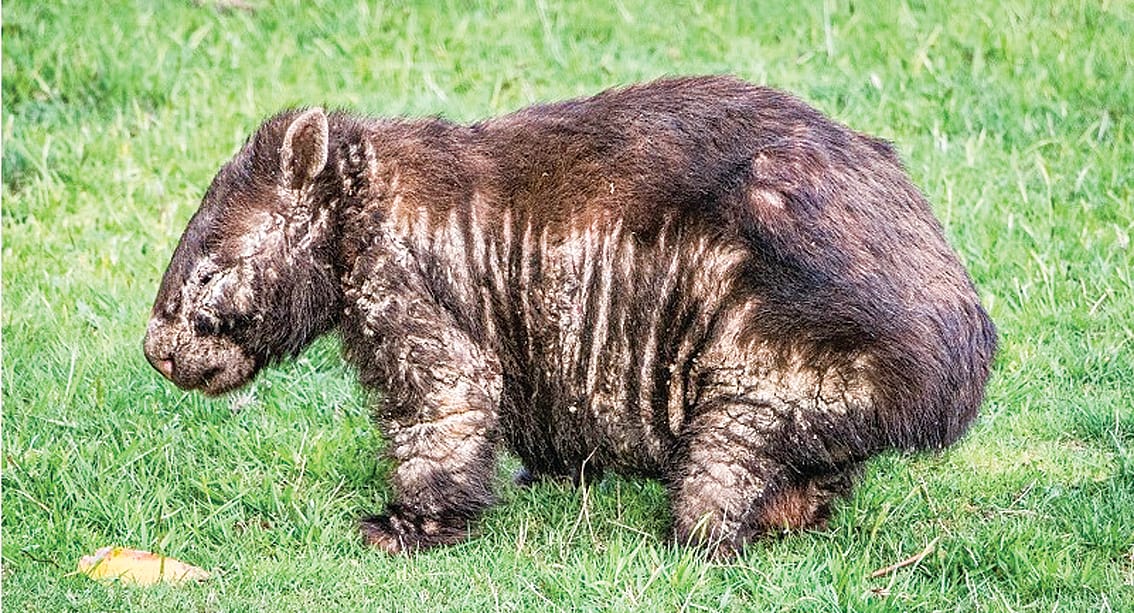
By Celeste Brittain LOCAL Mange Management volunteers have been helping wombats fight mange in the foreshore bushlands of San Remo, Corinella and Coronet Bay. Mange occurs in wombats when female mites dig into the skin and deposit eggs that hatch...


By Celeste Brittain
LOCAL Mange Management volunteers have been helping wombats fight mange in the foreshore bushlands of San Remo, Corinella and Coronet Bay.
Mange occurs in wombats when female mites dig into the skin and deposit eggs that hatch.
This process results in the wombat developing itchy scabs that can turn into infected and flyblown wounds because of the wombat scratching them.
If left untreated, and if the infestation advances, a wombat’s health can become so poorly affected it can die.
Volunteers have been monitoring approximately seven wombats in the Coronet Bay, Corinella and San Remo foreshore areas.
Founding member of Mange Management, Katja Gutwein, highlighted it was unknown what makes a wombat susceptible to mange.
“It could be sharing a burrow with another wombat with mange but it could be that mites are using other methods to infest a wombat. It’s also not known why wombats can’t deal with the mange infestation and die from it, whereas other animals (mange is occurring in over 100 species around the world) might not be as strongly affected,” she said.
Katja expressed that if a community member suspects that a wombat has mange, they can report it to Mange Management via the ‘Report a wombat form’ on their website.
Mange Management will then assess whether the issue is mange or whether it may have been caused by something else such as a wombat attack.
Katja shared that a community member should suspect that a wombat has mange, “if a wombat is out during the day and seems to have scabs or loss of fur”, as these could be signs of the mite infestation.
“Between mange, roadkill, loss of habitat and legal/illegal culling, wombats face many threats,” Katja shared, adding, “and if we don’t do anything now, we might be losing this iconic Australian animal in the next 30 years or so.
“Anecdotally areas that used to have wombats in the past don’t have them anymore; mange and the other threats mentioned above can wipe out local populations which also endangers genetic diversity of course.”
Free kits from Mange Management are available to volunteers as well as members of the public, such as landowners who have a wombat with mange on their property and report it.
Mange Management has 45 pick up points where the free treatment kits can be collected.
They can offer guidance on how to treat an affected wombat with volunteers of the organisation also able to help.
There are two methods used by volunteers for treating infection in affected wombats.
One of the methods is using a pole and scoop which can be a broom handle with a laundry scoop tacked to it.
In this method, the medicine (Cydectin) which is used to treat the wombat, is poured down its back by a volunteer close enough to use the aid.
This type of treatment usually occurs in advanced stages when a wombat is more approachable.
The other method is a burrow flat set up made out of an ice-cream container that is installed in front of the wombat’s burrow.
The container is set up in a way that when the wombat walks through its burrow, the cydectin pours down the wombat’s back.
The burrow flap method can be used as stand- alone treatment or after the pole and scoop has been applied. In using these methods, volunteers do not have direct contact with wombats.
Mange Management started in 2012, and is based in St Andrews working state-wide.
To support the cause and wombats, people can shop at Ritchies IGA with a Community Benefit Card, donate directly to the organisation or raise awareness with those they know that mange treatment is available.
For more information about Mange Management please visit www.mangemanagement.org.au


