

Work starts on Inverloch sand dredging project
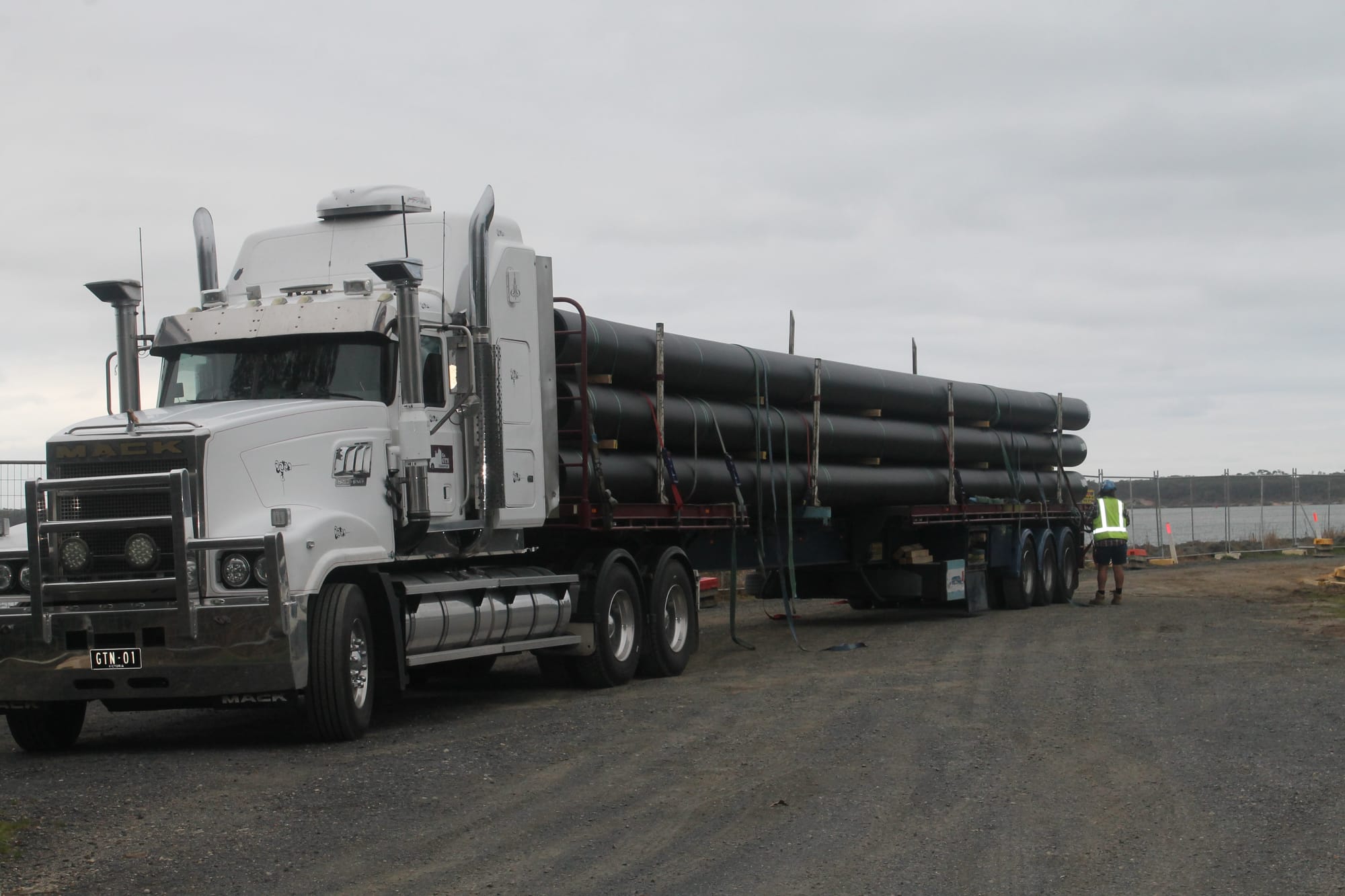
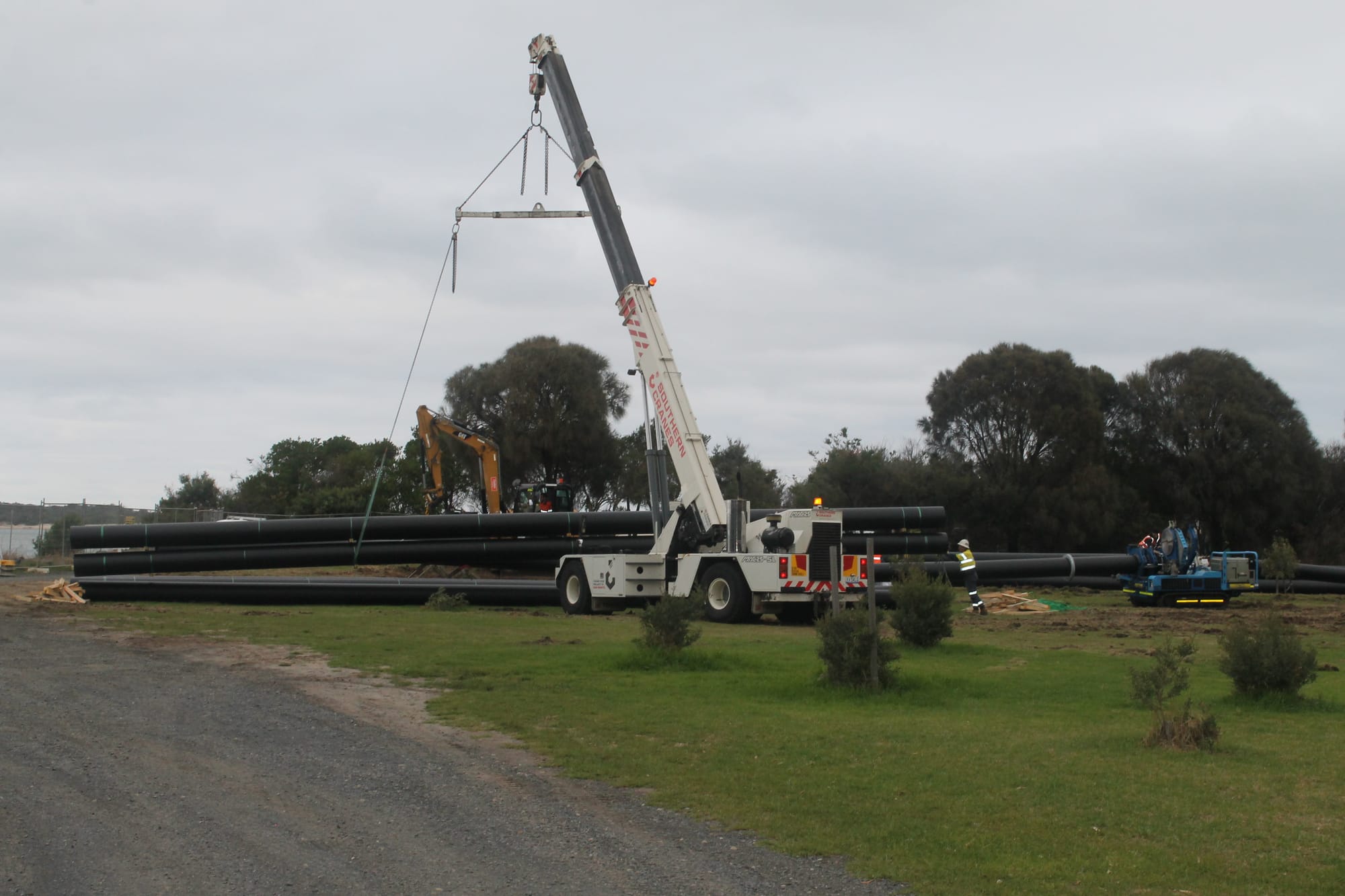
Work is underway on the $5.3 million sand dredging and renourishment project at Inverloch with long lengths high-density polyethylene pipe and site offices unloaded between the Inverloch jetty and Rotary Park.


THE arrival of long lengths high-density polyethylene pipe and site offices adjacent to the Inverloch jetty have marked the start of work on Inverloch’s $5.3 million sand dredging and renourishment project.
Private vessels will still be able to safely navigate over the dredge pipeline once it is connected to a suction dredge with two designated safe crossing points to be established within Anderson Inlet.
Mariners are encouraged to proceed with caution and follow all signage in the area.
The High-Density Polyethylene (HDPE) pipe which will be used to pump sand onto the surf beach has an inner diameter of 400-450mm and an outer diameter of 500mm.
Sections of the beach will be closed during the construction period with appropriate fencing and barriers installed to prevent public access into the construction site.
Effective noise barriers will be put in place and monitored by the EPA.
All equipment including the pipeline carrying the sand will be removed once the project is complete. The pipeline is needed for use in other locations according to DEECA.
The dune reconstruction and sand nourishment works are designed to provide an effective short to medium term buffer against erosion and storm impacts and adjust naturally to ongoing wave and tidal conditions gradually reducing over time.
DEECA said it has been collaborating with Bass Coast Shire Council to plan the dune revegetation which will occur once the dune renourishment has had time to settle.
The controversial Cape to Cape Resilience Plan assessed a range of engineering options according to DEECA including groynes, seawalls, and rock bag structures.
Large-scale beach renourishment, dune rebuilding, and vegetation restoration were chosen because they maintained the natural character of the beach while still improving resilience to erosion and storms.
Once the works have been completed the site will continue to be monitored as part of the Victorian Coastal Monitoring Program (VCMP) using drone shoreline survey monitoring. Flights will take place every 6 to 8 weeks depending on weather conditions.
Some natural movement of sand may occur over time according to DEECA.


