

Bob’s back on the books
FORMER Mayor of the South Gippsland Shire Council, local historian, Bob Newton of Korumburra has already produced five books and there are three or four more on the way. His favourites are road and placename history books of the towns in South...


FORMER Mayor of the South Gippsland Shire Council, local historian, Bob Newton of Korumburra has already produced five books and there are three or four more on the way.
His favourites are road and placename history books of the towns in South Gippsland, which lead on to family histories of the people honoured with a road name, and, in turn, to a history of the area.
It’s a unique way of delving into the history of the district and there’s two more of those to come, one about Leongatha and the other Foster.
But first, there’s a new book to launch and it’s a highly topical one with extensions at both ends of the Great Southern Rail Trail due to be opened soon.
“With all this interest in rail trails I thought it was time to look back at the history of rail in this area and there’s a lot to tell,” said Mr Newton this week.
“Like the story of John Colgate and Lawrence Carter Holmes who broke the rail strike of 1903 which threatened to bring the dairy industry here, coal mining and business in the area to its knees.
“It was a brave effort by the men who broke the strike and got the district moving again,” said Bob.
The book runs to 300 pages and it’s at the printers now, due for a launch in the next few weeks. Here’s an edited excerpt:
Railway Strike Breakers of 1903: The following information was taken from the Great Southern Advocate May/June 1903, supplied by the Korumburra Historical Society, and Margaret Cole, great granddaughter of John Colgate, gave her family’s account of the incident.
“Several meetings had been held in Korumburra to discuss the strike, the meeting at the Spellers’ Hall, the main meeting hall in the township of Korumburra at the time. This hall is now a private house on Spellers Lane, named after the hall.
“The meeting was fiercely in favour of the strike, because the Government refused to allow the railway men to associate with the Trades Hall and refused to arbitrate the matter unless the men severed themselves from the Trades Hall. The men and their supporters believed that the Government’s action was depriving them of their rights as citizens and striking was the only recourse left open to them.
“On the other side of town, a meeting of farmers was held at Kurrles’ Hotel, the Middle Hotel, the following night, and strongly supported the Government’s stand, the farmers stating that they were on the side of law and order, even though there was some sympathy for the railway men.
“The farmers agreed that Lawrence Carter Holmes and another person would “break the strike” by taking the train from Korumburra to Melbourne and the meeting promised him a “fireman”, the man who had been suggested pulled out and John Colgate was approached because of his experience with steam engines.
“John Alfred Colgate had come across from the Walhalla Long Tunnel Gold Mine where he drove the steam engine in the late 1890s. He first managed a little cheese factory near Welshpool and later the butter factory at Alberton. John Colgate later moved to Korumburra.
“In 1903, the railway’s engine drivers went on strike, leaving farmers unable to send their produce to Melbourne by train. Tensions built up in the community as the strike went on for weeks. The railway workers were desperate to gain benefits but the rest of the community, being mostly farmers, had to throw out their milk day after day. The shopkeepers had near empty shelves in their shops, and the housewives were running out of necessities.
“As we understand it, the law at the time stated that once a train travelled along one of the main lines, a strike was deemed to be over.”
And by secretly starting the train and running it out in the dead of night, these two heroic men saved the town of Korumburra and likely, the local dairy industry.
But word of their brave deeds arrived in Melbourne before they did and a band of angry rail men met them at Flinders Street Station where their lives were threatened.
For quite some time, police had to either sleep at the men’s houses or watch their homes until the threat of reprisals dissipated but the men earned the eternal gratitude of the community, and the railways for their actions,
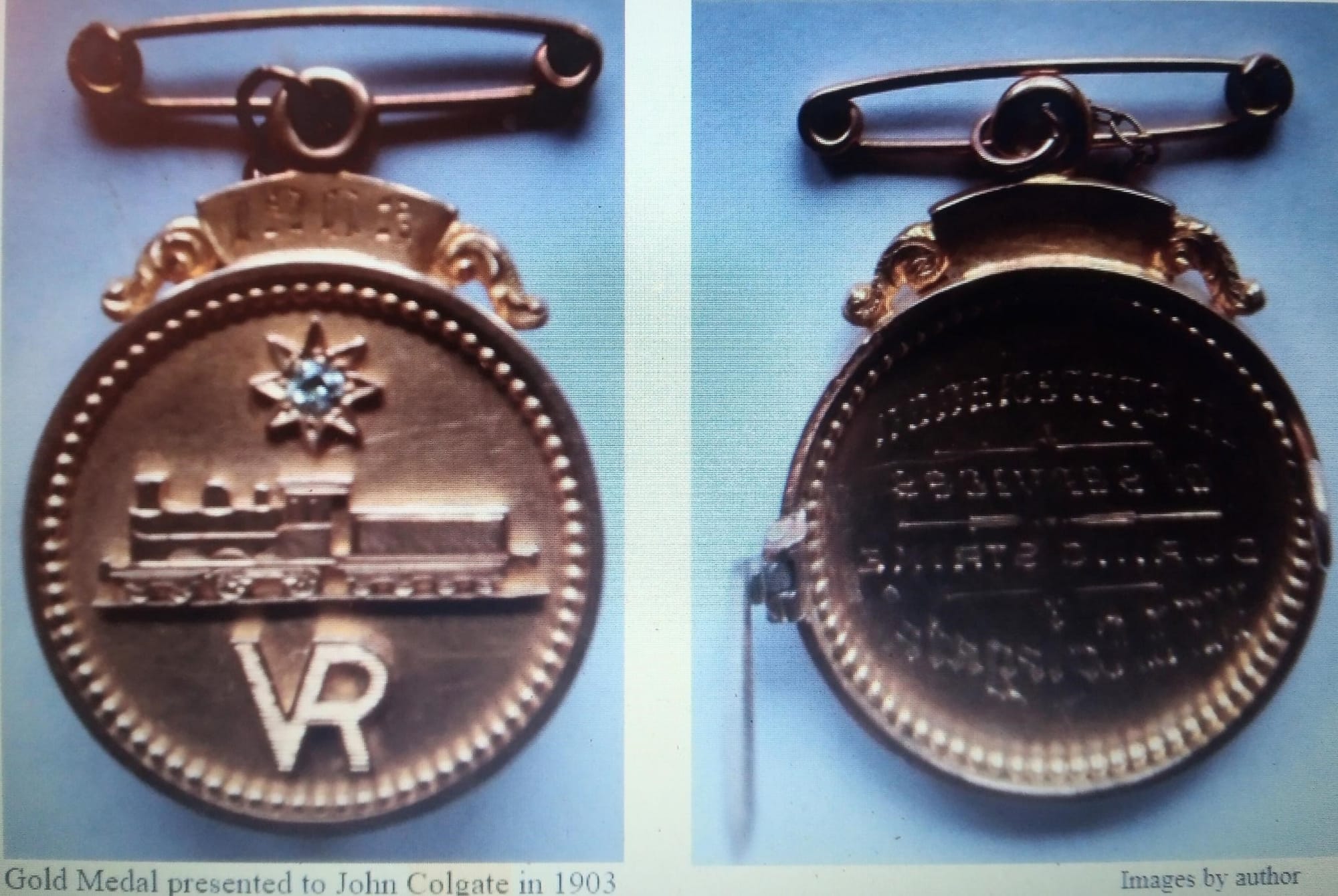
Lawrence Carter Holmes was presented with a gold watch and a silver-plated tea and coffee service was presented to John Colgate inscribed with the words: presented to John Colgate by the residents of Korumburra and District as a recognition of his loyalty during the Railway Strike, May the 9th 1903. He was also presented with a gold medal with a diamond in the centre, to be handed down through the family.
There are many more stories, up and down the Great Southern Railway Line, which are bound to be of interest to many.
Watch out for Bob Newton’s new book ‘Train Track to Rail Trail’ when it hits the shelves at local stores.
Great Southern Rail trail update
WHERE are we at with the expansion of the Great Southern Rail Trail?
We asked the South Gippsland Shire for an update.
The Leongatha to Korumburra section (15.8km) was opened in March this year.
And there is only one section still under construction, between Korumburra and Nyora, which is a 2.5km section between Loch and Berrys Road.
“This section includes two bridges over Allsop Creek and Bass River,” said a spokesperson for the shire.
“The completion of this section was unfortunately delayed due to difficulties accessing the required materials but is expected to be opened later this year.”
There is expected to be an official opening for the whole new section, west of Leongatha, when it can do the most good for promoting the area, in December-January.
Tenders for rail trail bridge
Meanwhile, the Wellington Shire at Sale has called tenders for the construction of a number of bridges on the eastern end of the Great Southern Rail Trail between Alberton and Welshpool.
There is also a tender for the preparation of 22kms of pavement further extending the trail from Welshpool and Alberton, plus resealing the track that already exists between Alberton and Yarram.
The works represent a major expansion in the trail east, after works on the western end between Nyora and Leongatha re nearing completion.


