

Build it and they will come to Wonthaggi, they say
THEY might not be building enough houses across Australia to match the Federal Government’s National Housing Accord Target of 1.2 million new homes by 2029 but here's how Wonthaggi is playing its part. All we need now is the infrastructure investment to go along with it.


WE’RE not building enough houses across Australia to match the Federal Government’s National Housing Accord Target of 1.2 million new homes by 2029.
In fact, according to the latest ABS data and Housing Industry Association reports, home building has fallen to almost 30 per cent below Government’s target.
“Australia needed to deliver an annual rate of 240,000 new homes to reach the 1.2 million new homes target, but in the 12 months to March, just 197,340 new homes commenced construction,” said HIA Senior Economist, Tom Devitt.
He was commenting on the recent release of Building Activity data by the ABS for the March quarter 2026.
This data provides estimates of the value of building work and number of dwellings commenced, completed and under construction across Australia and its states and territories.
But all’s not lost, according to the HIA.
“Despite still falling short of the target, housing commencements were 12 per cent up on the 176,230 recorded a year earlier,” added Mr Devitt.
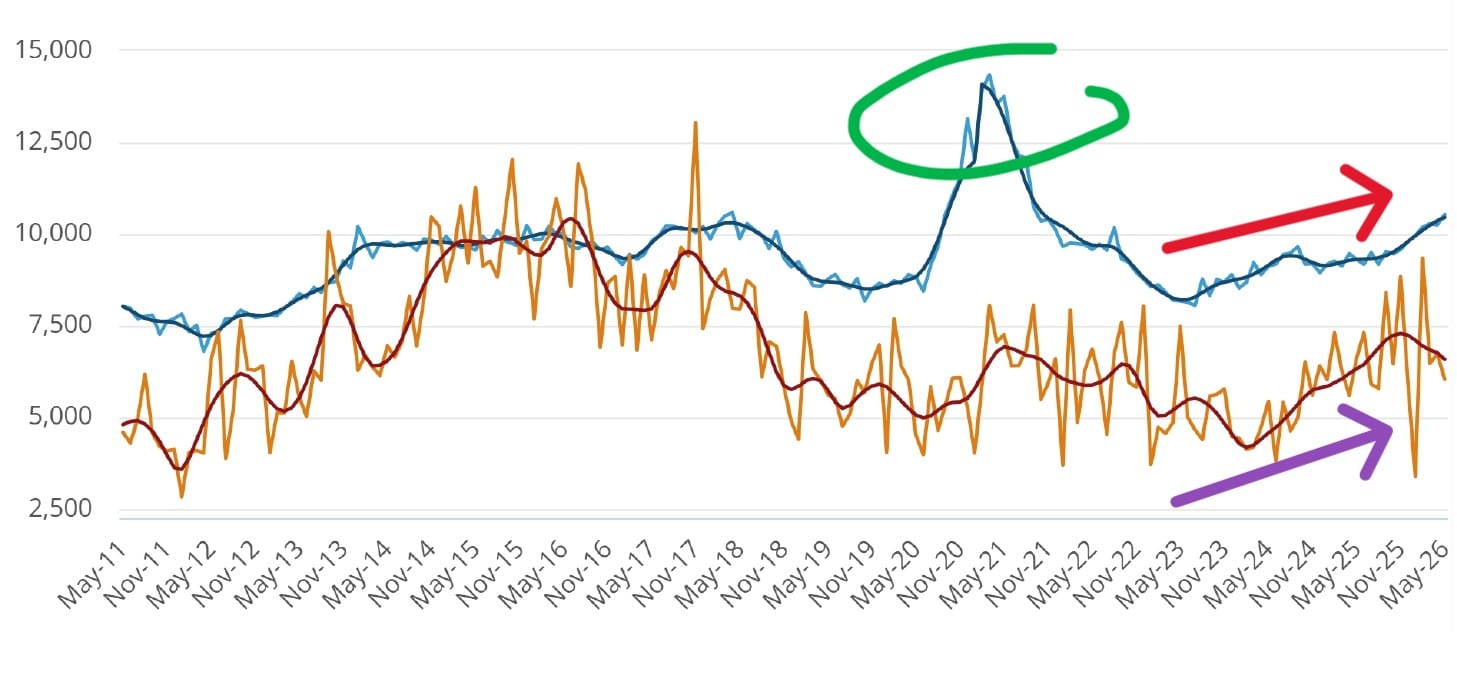
And trending up nationally.
Locally, the ABS figures reveal building works are still ticking along in Bass Coast and South Gippsland, despite the hit to confidence caused by three consecutive interest rate hikes in February, March and May this year, responding to rises in inflation, and the war in the Middle East.
But building activity here is trending down.
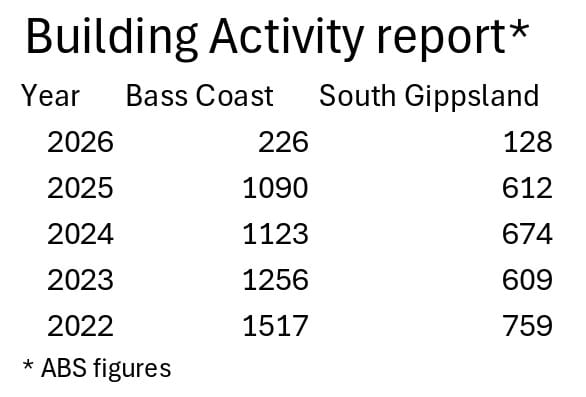
ABS building activity data shows that both Bass Coast and South Gippsland are off their highs of 2022, when 1517 building permits were issued in Bass Coast and 759 in South Gippsland, in the wake of COVID, but while they’re trending down, it’s not hopeless.
In the first quarter of 2026, building activity numbers in Bass Coast were 266 and South Gippsland 128.
Following on from annual figures of 1090 (2025), 1123 (2024), 1256 (2023) and 1517 (2022) in the past four years in Bass Coast and 612, 674, 609 and 759 in the previous four years in South Gippsland.
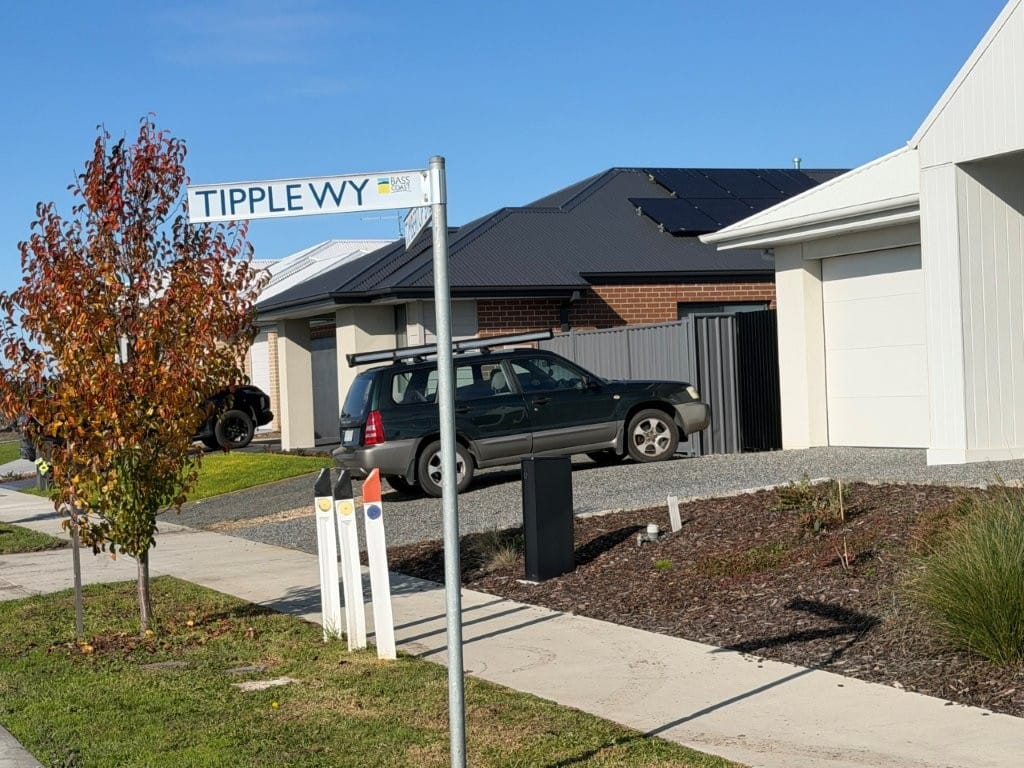
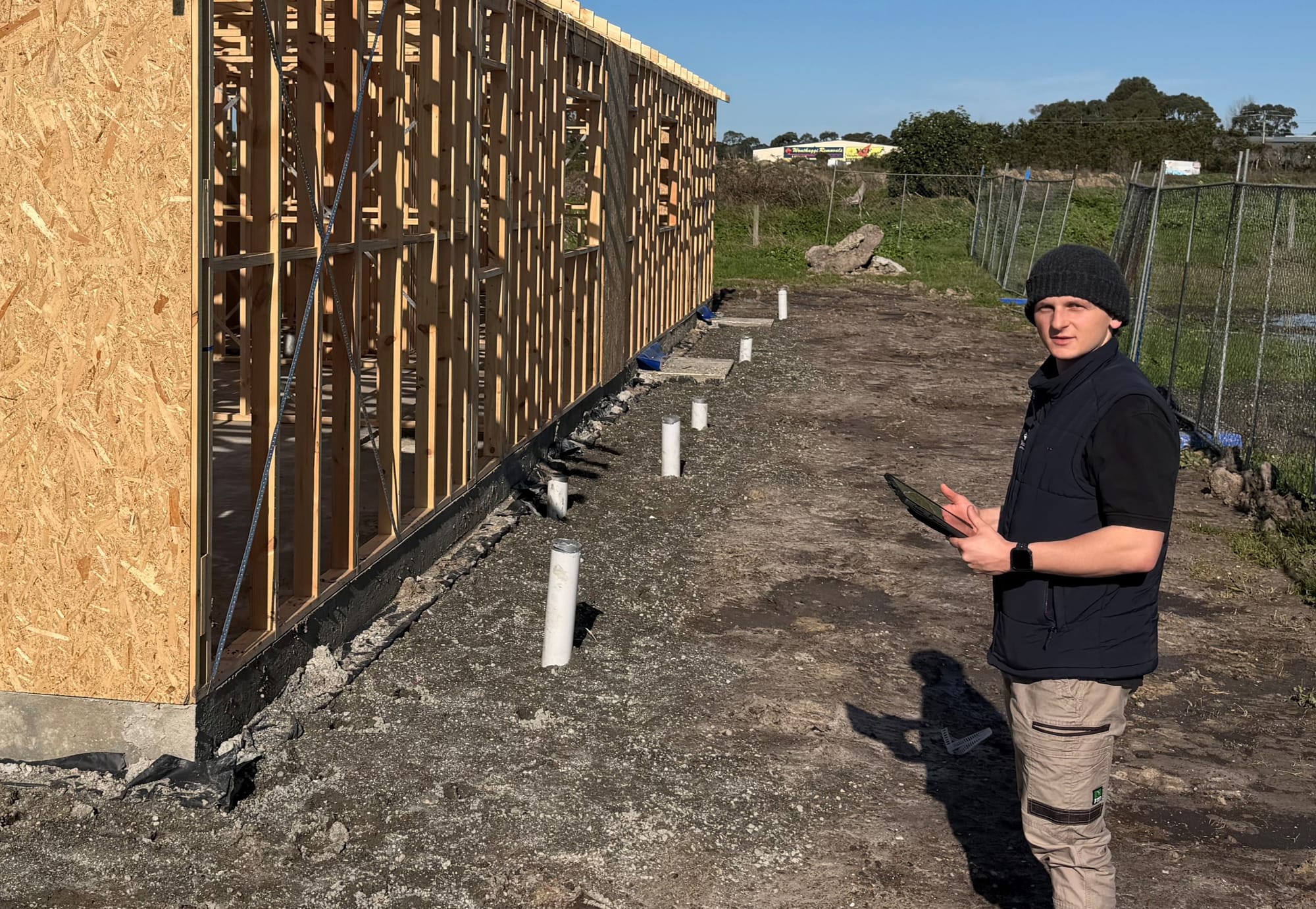
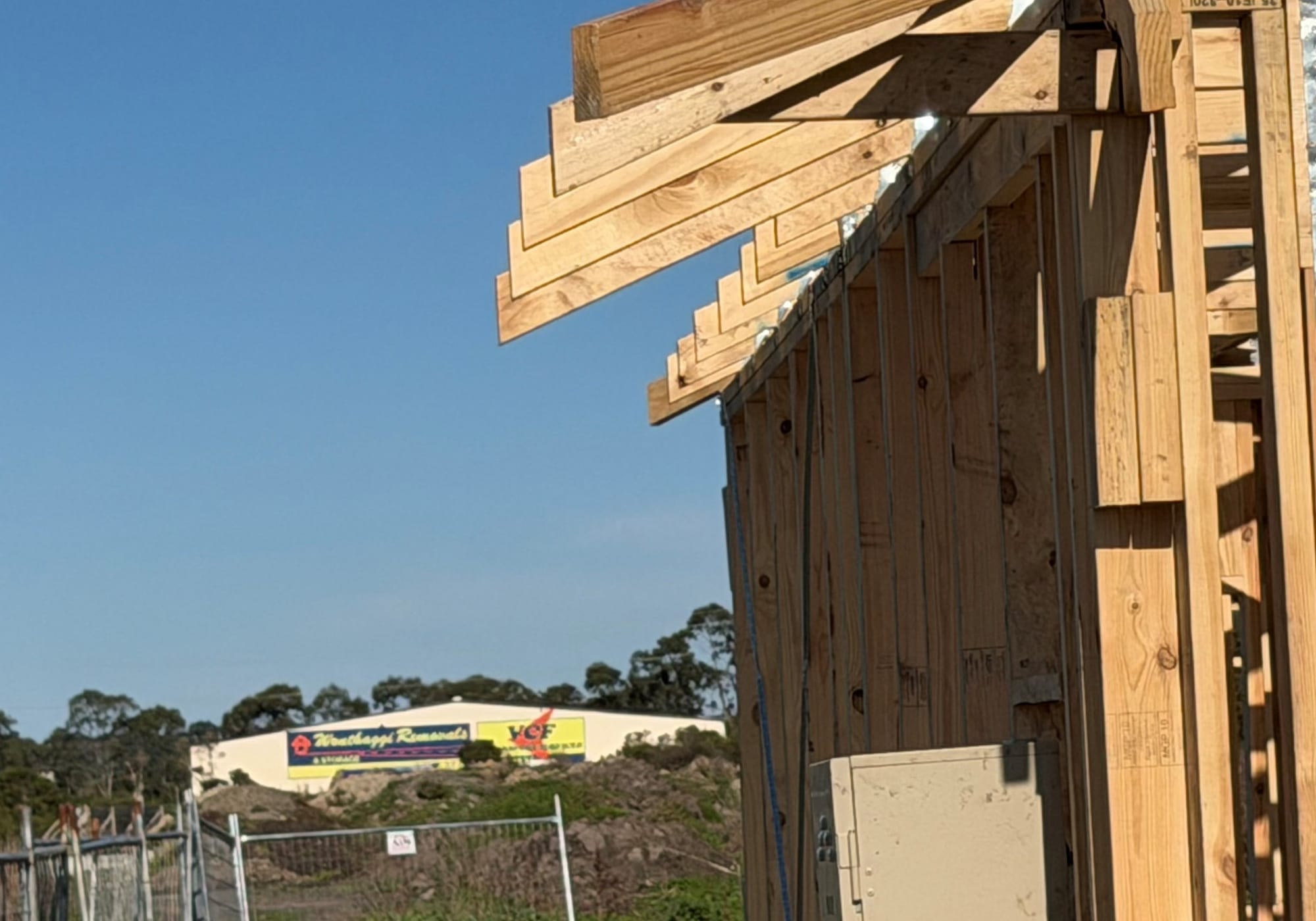
And that’s in line with comments made by tradesmen working on construction in Wonthaggi’s burgeoning north-east housing precinct, where on one street alone, Saltmarsh Avenue, Royston Homes, which is part of the AHB Group including Sherridon Homes, has more than a dozen new homes at various stages of construction.
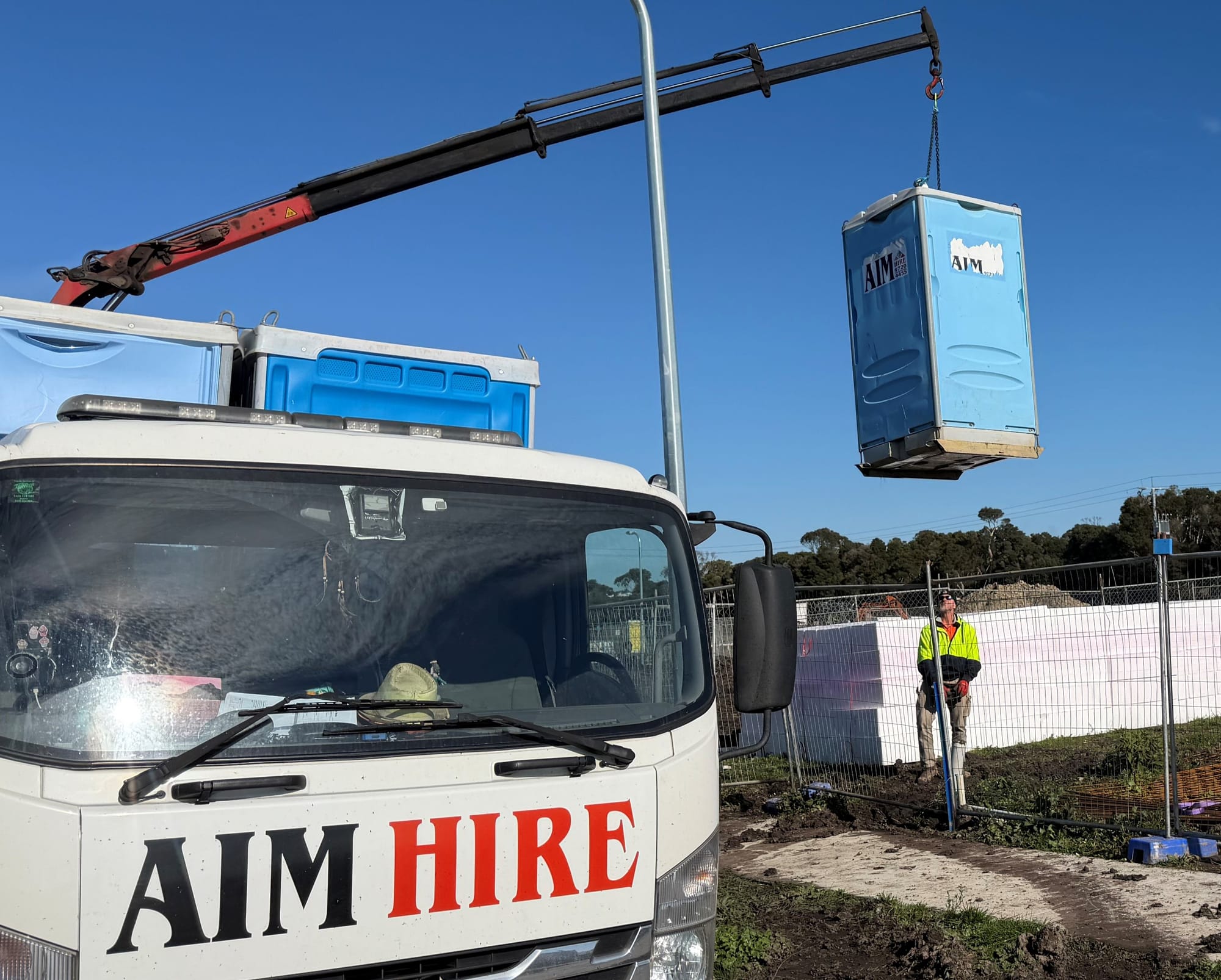
As a sure sign that work is going ahead at-a-pace, builders’ fences are up, some slabs are down and waffle pods delivered with Aim Hire dropping off their blue portable toilets at each site as we speak.
“Nar, flat out mate,” said the guy from Aim Hire, craning another portable loo in place.
“We’ve got a fair bit on,” said a concreter applying the finishing touches to a driveway around the corner.
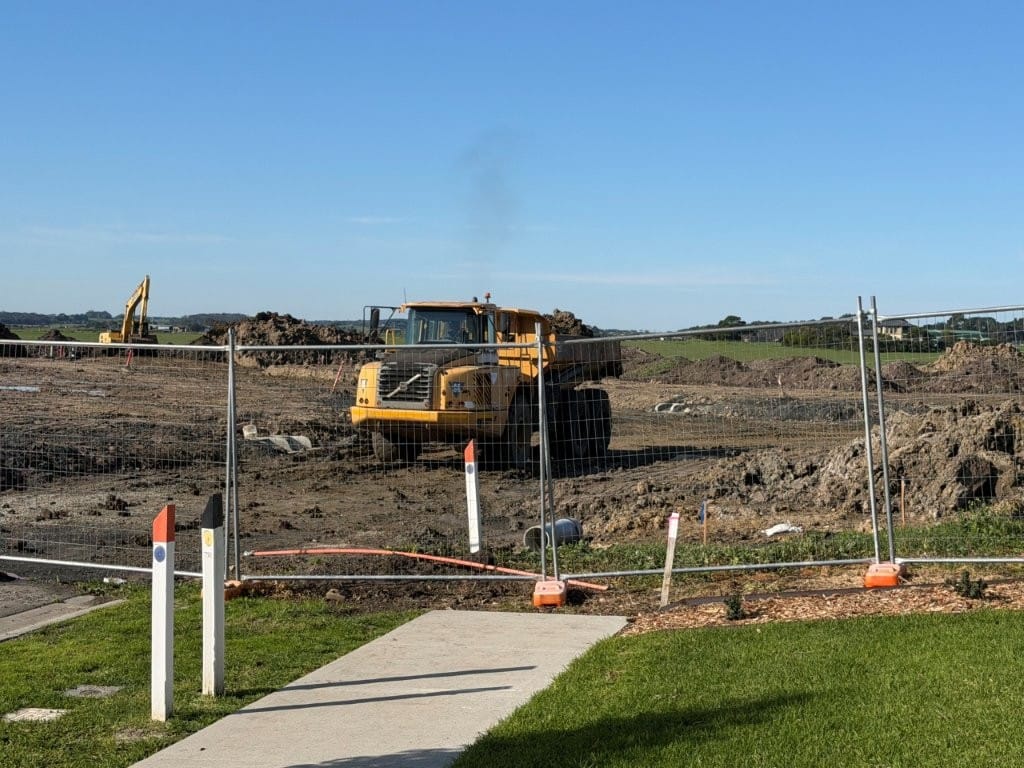
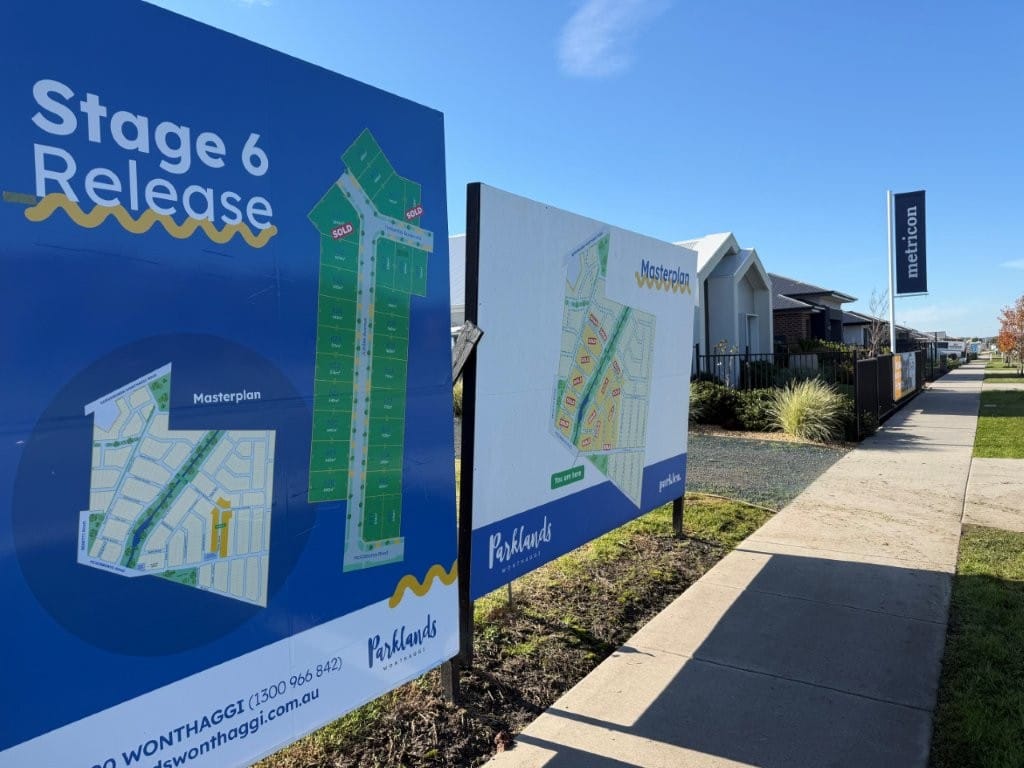
Meanwhile, earthworks are continuing at the end of Timbertop Boulevard in the Parklands Estate, with drainage in and preparations being made for road as the Parklea developers push out from the popular Stage 6 land release to open up more land for housing.
Wonthaggi’s north-east residential precinct is 633 hectares in size and expected to add 5000 new homes and 12,000 people to the town’s population.
Effectively a new suburb in an expanding town, it is already well on the way to delivering on that promise while attracting both locals and new arrivals to Bass Coast.
A retired couple, who recently moved to Wonthaggi from Melbourne’s south-eastern suburbs, and have taken up residence in the Parklands Estate, off Korumburra Road, in a new SJD Home, are delighted with their decision to come to Wonthaggi.
But they had some advice for the local council, the state government and shopping centre managers.
“We were looking all around Victoria for somewhere to move to out of Melbourne and someone suggested we take a look at the Wonthaggi-Inverloch area,” said the husband, who asked to remain nameless.
“We saw this new house for sale, built by the builder to sell as an investment I suppose, and we bought it.
“No, we don’t have any family or connections in the Wonthaggi area. The location appealed to us, and we just decided to move here.
“But with all these people building and moving to Wonthaggi, the local shire and the government, for that matter, have really got to step up and put in the infrastructure.
“The hospital is great, they’re doing well there, but they need more for families and retirees,” he said.
He noted the shire’s plans to develop a new swimming pool complex in Wonthaggi but said a lot more was needed to provide the necessary infrastructure and services locals and newly arrived residents needed, starting with better public transport.
“They’ve just got to get on with it,” he said.
“And that carpark up at the Coles supermarket, it’s chaos. The layout is all wrong and the parking spaces too small. Makes you wonder if anyone checks if these facilities are fit for purpose.”
The Bass Coast Shire Council is doing its bit to support the housing growth.
At its June council meeting the council received a report listing the approval of three major new subdivisions in the town’s north-east growth area; two off Korumburra-Wonthaggi Road of 45 lots and 24 lots and one off Oates Road of 60 lots.
Bass Coast Mayor Cr Brett Tessari welcomed the release of more residential land in Wonthaggi.
“We’ve got to. The growth is coming this way and with Cape Paterson’s boundary locked away and only a limited amount of land left in Inverloch, that demand has got to be accommodated in Wonthaggi, San Remo and to a lesser extent, on Phillip Island,” said Cr Tessari.
“We’ve got it that way now that the land is there ready to go (in Wonthaggi), and barring any planning or development issues, we can hopefully continue to roll it out.”
But Cr Tessari agreed, community infrastructure needed to keep pace with growth which was why the council was advocating strongly to both state and federal government for infrastructure funding.
Top advocacy priorities include:
- Redeveloping the Bass Coast Aquatic and Leisure Centre in Wonthaggi $45M (grants sought $30M)
- Phillip Island Recreation Precinct greenfield site $60M
- Revitalising the Former Wonthaggi Secondary College Site
- Designing an Alternate Freight Route for Wonthaggi
- Public Transport Improvements
- Urgent and prioritised investment affordable housing in Bass Coast
- Kindergarten infrastructure and maternal and child health services
- Fully fund TAFE Gippsland to deliver critically needed local TAFE pathways
But Senior HIA Economist, Tom Devitt, doesn’t believe we’re out of the woods yet.
“There were 48,010 new dwellings that commenced construction in the first three months of 2026, down by 11.2 per cent on the previous quarter. The decline in the commencement of new home-starts in the March quarter of 2026 preceded the impact of rate increases, global uncertainty or the Federal Budget and likely reflects quarterly volatility,” he said.
“Home building had good momentum heading into 2026, picking up on the back of declining interest rates, low unemployment and existing shortages of housing across the country.
“Jurisdictions like Western Australia, Queensland, South Australia and the Northern Territory have been leading the national improvement in home building volumes and have a significant pipeline of new sales ready to commence. This will help smooth out on-the-ground activity through this year’s volatility.
“The southeastern state and territory recoveries have been delayed and are more vulnerable but as long as recent disruptions are short-lived, strong population growth and tight labour market fundamentals should support activity here too.
“This trajectory will not be sufficient to meet the Housing Accord Target, and Australia’s housing needs are even greater than this,” said Mr Devitt.
“Australia needs to meet housing demand not only from population growth but also shrinking household sizes, increasing knockdown-rebuild activity, ageing population and increasing dependence on overseas migrants who tend to live in smaller households.
“HIA estimates 250,000 home builds each year are required on a sustained basis to meet these demands and start addressing the pre-existing shortage of housing across the country.
“Achieving this depends on governments reducing the cost of delivering new homes to market.
“This includes reducing taxes on housing, not increasing them. Housing is one of the most heavily taxed items in our economy along with the ‘sin taxes’ of alcohol and tobacco,” concluded Mr Devitt.
About the Wonthaggi North-East Precinct
- Precinct size: 633 hectares
- Number of houses expected: 5000 dwellings
- Population: 12,000 people
- Local jobs: 1600
- Percentage of land for open space and reserves for drainage and conservation: approx. 30%
- 15 parks
- 2 sports reserves
- 1 government primary schools
- 2 community centres with kindergartens and Maternal and Child Health facilities
- Local convenience centre featuring a mix of retail, commercial and community operations and spaces.
- This will provide a range of goods and services and economic benefits and lifestyle and employment opportunities.
- A range of drainage and waterway reserves.
- A comprehensive network of bicycle and shared paths.


