

Councils' costs crisis focus of ALGA Canberra conference
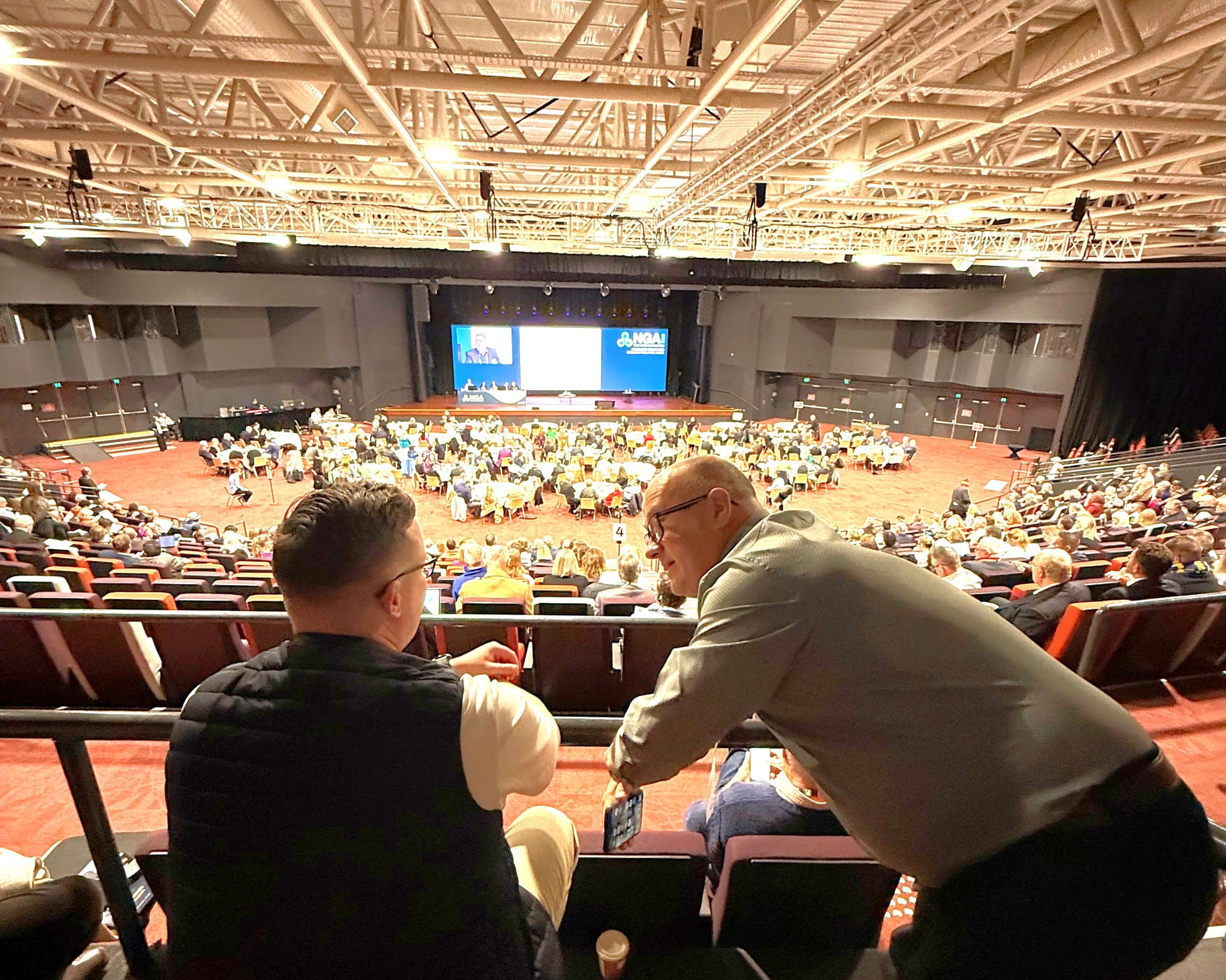
Australia's 538 local councils were in Canberra during the past week, attending the National General Assembly of the Australian Local Government Association where the parlous state of shire finances was front and centre. South Gippsland and Bass Coast were among them.


AUSTRALIA’S 538 local councils were in Canberra during the past week, attending the National General Assembly of the Australian Local Government Association where the parlous state of shire finances was front and centre.
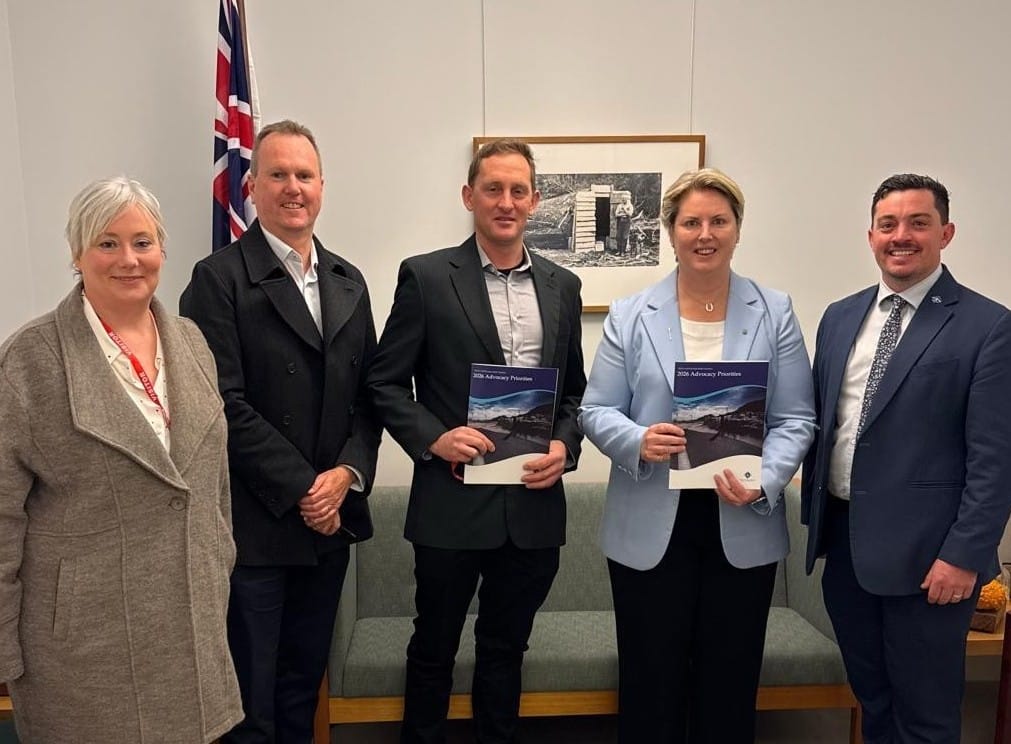
The mayors of Bass Coast and South Gippsland, Cr Brett Tessari and Cr Nathan Hersey were among them.
Finances were a topical subject for both local councils after they both handed down their annual budgets in recent weeks, for the coming year, 2026-27, South Gippsland laying out a program of expenditure worth almost $80 million and Bass Coast just over $119 million.
Both councils highlighted the challenges of framing a budget, not only with the rate cap of a 2.75% increase in rates failing to keep pace with inflation but also due to the impact of global uncertainty, pushing up fuel and materials costs.
South Gippsland Mayor, Cr Hersey said, when handing down his shire’s budget, that councils across the state and the nation were having trouble delivering balanced budgets, highlighting the small share of taxes local government received.
“Local government delivers around 25% of all government services, yet we do only receive four cents to every dollar of tax that's collected,” he said at budget time.
It was as theme taken up at the ALGA national assembly.
In a letter signed by the presidents of each state and territory local government association, supported by all member councils, to be sent to all Federal Members and Senators, they’ve called for a multi-partisan commitment to a stronger funding partnership with councils.
Australian Local Government Association President Mayor Matt Burnett said the sentiments contained in the letter reflected the shared reality facing councils across metropolitan, regional, rural and remote Australia.
“Financial sustainability is not an abstract discussion for local government. It is about whether councils can keep doing the job our communities expect us to do,” Mayor Burnett said.
“Councils are responsible for the roads, bridges, libraries, pools, parks, footpaths, stormwater systems, waste services and community facilities Australians rely on every day.
“We are also the first people communities call when something goes wrong, whether that is a local road failure, a disaster, a planning issue or a service disruption.
“Yet councils are increasingly being asked to do more with less funding certainty, less flexibility, limited revenue capacity and less ability to plan for the long term.”
The emergency motion calls on the Australian Government to act now to deliver fairer funding through an immediate increase in untied funding for all councils.
Mayor Burnett said Financial Assistance Grants were central to councils’ ability to respond to local priorities because they are untied and flexible.
“Financial Assistance Grants are not just another grant program. They recognise that no two communities are the same and trust councils to make decisions based on local needs,” he said.
“For rural, regional and remote councils, the pressures include vast geographic areas, small populations, ageing infrastructure and limited rate bases.
“For fast-growing urban councils, the challenge is keeping pace with demand for new roads, drainage, parks, community facilities, waste systems and other services needed to support housing growth.
“The circumstances differ, but the underlying problem is the same. Community expectations, costs and responsibilities are rising, but the funding partnership is not keeping pace.”
Mayor Burnett said the consequences extended beyond local government, affecting national productivity, housing supply, freight efficiency, liveability and disaster resilience.
“When councils cannot maintain local infrastructure, productivity suffers. When roads and bridges deteriorate, freight suffers. When essential facilities and enabling infrastructure are delayed, housing delivery and liveability suffer,” he said.
“This is not just a local government problem. It is a national problem, and it requires a national response.
“Councils want to continue working constructively with the Government, the Parliament and all parties. But the message from this Assembly is unmistakable: local government is united, local government is serious, and councils are calling for action now.”
Municipal Association of Victoria President, Cr Jennifer Anderson, supported the call for more government funding.
“Victorian councils are united in this call for fairer funding. Financial Assistance Grants have been quietly eroding for years, and our communities are now feeling the consequences — in delayed infrastructure, stretched services, and councils forced to make impossible choices. We’re asking the Federal Parliament to act now, before this becomes a crisis communities can’t recover from,” said Cr Anderson.
‘Funding crisis’ letter to Federal MPs
“On behalf of the 538 local councils serving communities across Australia, we have taken the extraordinary step of collectively writing to you, and the whole Parliament, to warn of a financial crisis affecting Local Government in this country.
“We come from all corners of the continent and represent every community in Australia, but we are speaking with one voice to say that the lack of fair untied funding for Local Government - as a percentage of national taxation - is threatening the viability of councils across the country.
“This crisis is particularly acute in rural, regional and remote areas of Australia where communities are the most isolated and councils face the biggest financial challenges. Our cities and urban councils are also facing rapid growth that puts pressure on their ability to meet the needs of their communities.
“Councils provide vital services and infrastructure that our national economy and productivity rely upon. The success of our Australian system of government depends upon our councils succeeding at a grassroots level.
“But this system is in jeopardy. Long term planning and delivery requires long term financial security and certainty. Councils have limited options to raise revenue and in many cases are highly reliant on untied Financial Assistance Grants from the Commonwealth.
“Over time the value of these grants has steadily decreased, creating an uncertain and unfair funding situation for councils. This lack of long-term, secure, untied and adequate funding prevents councils and communities from determining their own priorities and making investments in the infrastructure and services needed across Australia.
“For these reasons, councils of all sizes across every state and territory are calling on the Australian Parliament to act and deliver fairer funding of an immediate increase of $3.5 billion, restoring Financial Assistance Grants to 1% of federal taxation revenue annually.
“We are tabling a copy of this letter to all Members of the House of Representatives and the Senate in the hope of a multi-partisan approach to address this crisis. The very future of Local Government and the communities we serve depends upon it.”
Signed by:
- ALGA - Mayor Matt Burnett ALGA President & LGAQ President,
- NSW - Mayor Darcy Byrne LGNSW President
- Northern Territory - Cr Peter Pangquee BM LGANT President
- South Australia - Mayor Heather Holmes-Ross LGA SA President
- Tasmania - Mayor Mick Tucker LGAT President
- Victoria - Cr Jennifer Anderson MAV President
- Western Australia - Mayor Mark Irwin AM WALGA President


