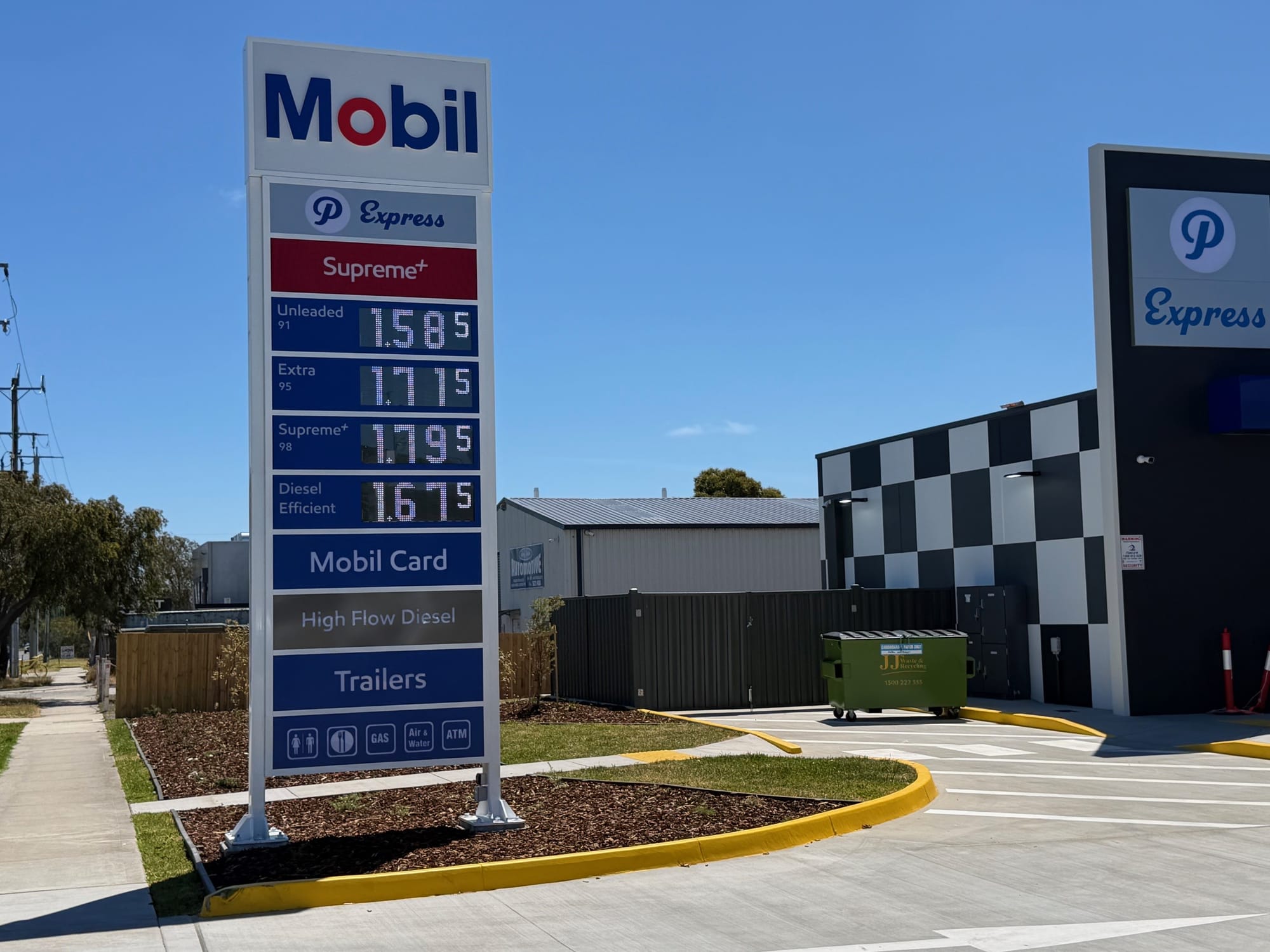
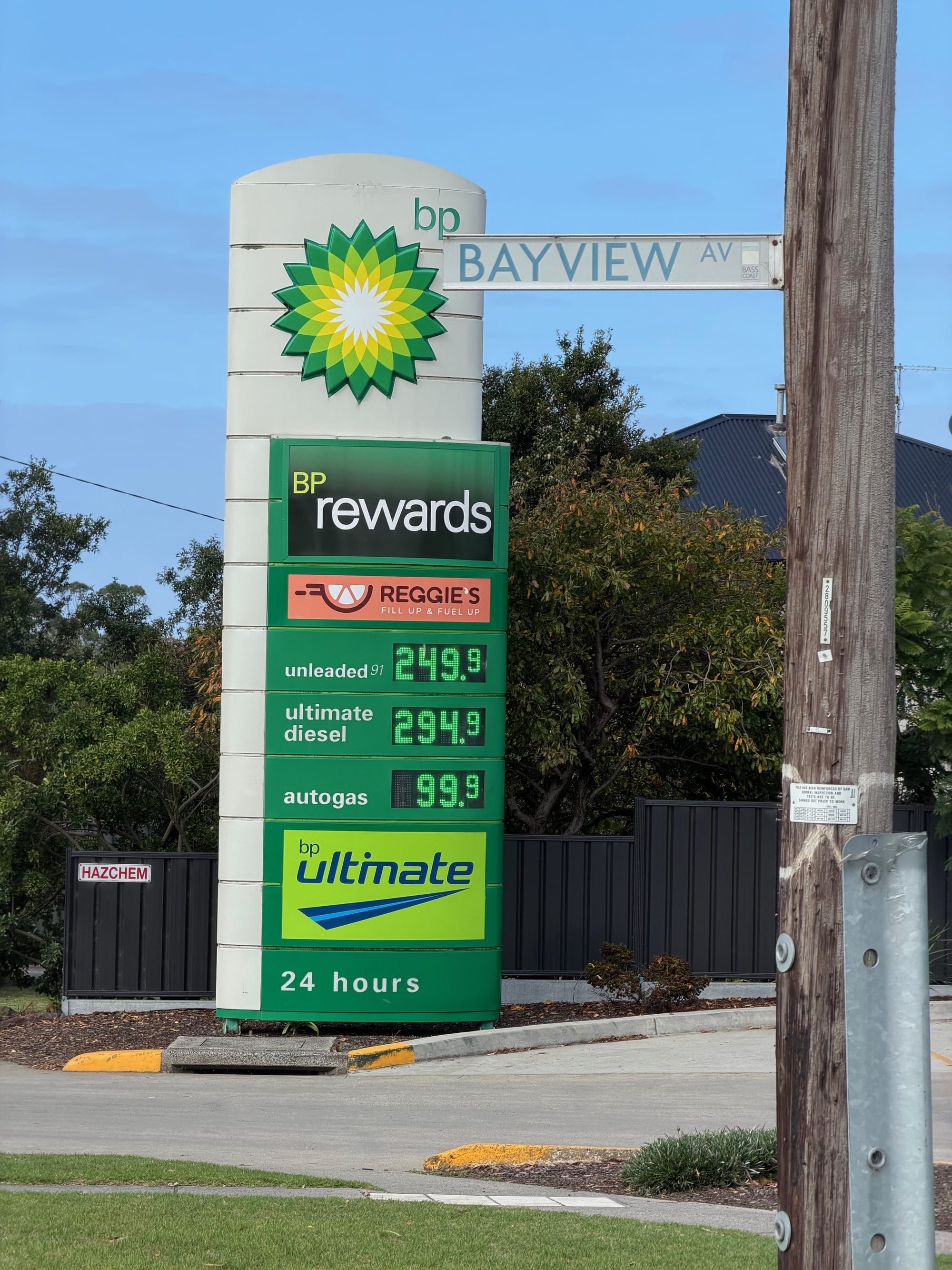
Fuel demand eases as diesel price touches $3 per litre
Dramatic rises in the price of fuel, with diesel in particular touching the $3 per litre mark on Friday, March 20 in South Gippsland and Bass Coast, has done what the market says rising prices it will inevitably do, reduce demand... but it pays to shop around.


DRAMATIC rises in the price of fuel, with diesel in particular touching the $3 per litre mark on Friday, March 20 in South Gippsland and Bass Coast, has done what the market says rising prices it will inevitably do, reduce demand.
This was confirmed by Sales Manager at Evans Petroleum John Schelling who said demand was getting back to normal after a hectic couple of weeks.
“Fuel supplies are good locally and demand is easing,” said Mr Schelling.
“We’re getting 100 per cent of supply which is allowing us to catch-up after the past few weeks.”
Mr Schelling said he was also pleased to hear the government putting particular emphasis on regional supplies in the announcement by the Prime Minister Anthony Albanese last Thursday.
“Everything helps so yes, it’s good to hear the government has a regional focus.”
Asked if local farmers were getting the supplies they needed, Mr Schelling said the best thing they could do was keep service stations open and well supplied but he did confirm that all on-farm orders for fuel were being filled, with no shortage of oil and lubrication products for farm machinery.
Mr Schelling said he would be attending the Evans Petroleum stand at Farm World on Thursday and Friday next week, March 26 and 27, and would be only too happy to meet with farming clients and discuss their needs and the challenges posed by the interruption to world fuel supplies.
What the government said
The Albanese Government last week appointed Anthea Harris as Fuel Supply Taskforce Coordinator, supporting the work governments around the country were doing to ensure Australia is “overprepared and quick to respond” when facing fuel and other supply chain challenges arising from the conflict in the Middle East.
And the Prime Minister Mr Albanese pledged to release up to 20 per cent of diesel and fuel reserves to help address regional shortages.
"Our fuel supply is currently secure – but I want us to be over-prepared,” said the Prime Minister in Hobart last Thursday.
Minister for Climate Change and Energy of Australia, Chris Bowen, reinforced the regional commitment.
"Australia has entered this period of global uncertainty better prepared than before – our fuel reserves are now held onshore, we’ve invested in our refineries, and we’ve acted quickly to address localised supply shortages,” he said.
"Since the conflict commenced two weeks ago the Albanese Government has taken swift action to release up to 20 per cent of our diesel and fuel reserves to help address regional shortages, temporarily amend national fuel standards to keep more Australian-made fuels onshore, and crack down on petrol companies ripping off Australian consumers.”
As well as the commitment by the Australian Government to boost supply, the Victorian Government is monitoring prices through Consumer Affairs and Service Victoria where since March 10 it has been mandatory for local service stations to register their maximum daily fuel price.
According to a Wonthaggi service station operator, the supplier can go below its registered price but cannot exceed the price it has reported to Service Victoria.
Unfortunately, however, it has been reported to this newspaper that at least one Bass Coast fuel seller has not been complying with the daily reporting requirement.
Fuel retailer obligations
Fuel retailers must:
- Register with Service Victoria and receive a notice of confirmation before selling fuel, including registering the details of each service station they operate
- Provide accurate and timely fuel pricing data for all fuel types and service station locations they manage
- Report prices for each individual service station
- Comply with maximum daily fuel price requirements for each fuel type they sell, from 10 March 2026.
Penalties apply for failing to meet these obligations.
However, it pays to shop around as prices vary wildly between petrol stations including in the same local area.
Consult your favourite petrol price watch app or go to the Service Victoria website to find the cheapest petrol prices today in your area, click HERE.
VFF urges fuel restraint
The Victorian Farmers Federation last week urged commuters to consider swapping their car for public transport and the government to make public transport free, with the potential fuel savings helping ensure farmers can keep planting, harvesting and producing food as our fuel crisis lingers.
The State Opposition has since picked it up as policy.
Outgoing VFF President Brett Hosking said fuel shortages affect rural communities very differently to metropolitan households, where farming operations rely solely on critical fuel to grow their products.
“For most Victorians, a fuel shortage means cancelled plans, longer queues and a tighter weekly budget,” said Mr Hosking.
“For farmers, timing is everything. Farming runs on narrow weather windows, and if the tank is empty at the wrong moment you can’t just wait for prices to settle, you lose the opportunity, and sometimes the entire crop.
“Keeping farmers moving is in everyone’s interest. Victorian farmers grow almost a quarter of Australia’s food and feed millions more across the globe,” Mr Hosking said.
Bass Coast focus on 'public transport gaps'
Locally, it’s noticeable that people are using their cars less and resorting to ride sharing, riding their bike more often or resorting to other modes of transportation, despite Bass Coast and South Gippsland being something of a blackhole when it comes to public transport.
The Bass Coast Council expressed its reservations about public transport locally with a motion to take forward to the Municipal Association of Victoria’s state council meeting in May as follows
“That the MAV State Council calls on the Victorian Government to undertake a comprehensive review of regional bus services in peri-urban and coastal municipalities, fund improved service frequency, connectivity and timetable integration in growth areas without rail access; and invest in accessible public transport infrastructure and integrated trunk routes in high-growth regional corridors.”
Cr Tim O’Brien underscored the public dissatisfaction with the existing system of public transport when he lamented that “if it can’t be seen from a Spring Street window, it doesn’t exist”, going on to say that “huge gaps exist in the bus schedule” for local public transport users.