

Battle to preserve Bass Coast continues
HUNDERDS of millions of dollars in developer profits are at stake, but just as importantly, so is the future of housing in the Bass Coast Shire; including conventional blocks at Wonthaggi, lifestyle land along the coast and rural living zones, not...


HUNDERDS of millions of dollars in developer profits are at stake, but just as importantly, so is the future of housing in the Bass Coast Shire; including conventional blocks at Wonthaggi, lifestyle land along the coast and rural living zones, not to mention the protection of our distinctive coastal and rural landscapes.
Regrettably, we’re told, that doesn’t include the Western Port Woodlands, where existing sand extraction licences can’t be challenged.
It’s all happening in front of the Distinctive Areas and Landscapes (DAL) Standing Advisory Committee, appointed by the previous Victorian Minister for Planning Lizzie Blandthorn MP.
And a steady stream of sharply-dressed lawyers representing the developers, the shire and the government, as well as some well-seasoned technical experts, have been paraded before the planning panel at public hearings in the past few weeks.
Exactly where should they draw the line on the outer limit of housing development east of San Remo? And should that boundary simply adopt an arbitrary fence line or move up and down with the contours of the main ridge in an effort to do what the whole process is supposed to do – protect significant landscapes from an explosion of boxes?
David Crowder, a Director of Ratio Consultants, a person with 25 years’ experience in town planning, recommends the latter, with appropriate protection for the proposed extension of the George
Bass Walk so that it features views of the coast and hinterland, not houses on a hill, in the hopes we might develop something like the ‘Great South West Walk’ in the west of the state.
A Freycinet Lodge type development might be allowable, on the edge of San Remo, however, making best use of that spectacular location.
But there’s no need for an overkill in planning controls either, he says.
“There are enough safeguards in a (standard) ‘settlement boundary’ to deal with the interface issues between urban and rural,” he says, noting that ‘protected settlement boundaries’ should only be imposed in special circumstances.
“Retaining some flexibility is better,” he said.
What about the various small coastal settlements on Phillip Island; at Ventnor where the controversial “Cadogan land” is apparently back in play, at Newhaven, at Cape Woolamai where that hoary old chestnut of the Phillip Island Airport is being revisited, and even connecting Smiths Beach to Sunderland Bay?
Developers have made pitches to the panel for hundreds of millions of dollars’ worth of additional land to be opened up on Phillip Island.
But would a ‘green’ Bass Coast Shire Council or local residents ever allow that? Not likely.
Locals say much of it is fanciful.
And with the possible exception of an expansion in some of the Waterline settlements, at Corinella, Coronet Bay and the like; it seems that future expansion of coastal or ‘lifestyle’ blocks will centre on San Remo and Cape Paterson.
And as the hearings continue this week, it’s an assessment of the benefits of expanding Cape Paterson to the north which will come sharply into focus.
The public hearings continue at the Cape Paterson Surf Lifesaving Club on Wednesday, Thursday and Friday this week, April 12, 13 and 14, and then at the Silverwater Resort, San Remo, on Monday, Tuesday, Wednesday and Thursday next week, April 17, 18, 19 and 20.
And first up on Thursday, April 13 at Cape Paterson will be the Cape Paterson Residents and Residents Association (CPRRA) who are bitterly opposed to the expansion of their town, by as many as 1000 extra blocks.
Ringing in their ears will be the claims that they are already losing the argument, that here is an area of land already inside the settlement boundary which is needed to meet the demand for lifestyle blocks in Bass Coast, or else push that demand to already over-developed or more sensitive locations in the shire.
The CPRRA will have a full day to state their case, which is not without merit, especially given the fact that Cape Paterson is poorly provided with infrastructure.
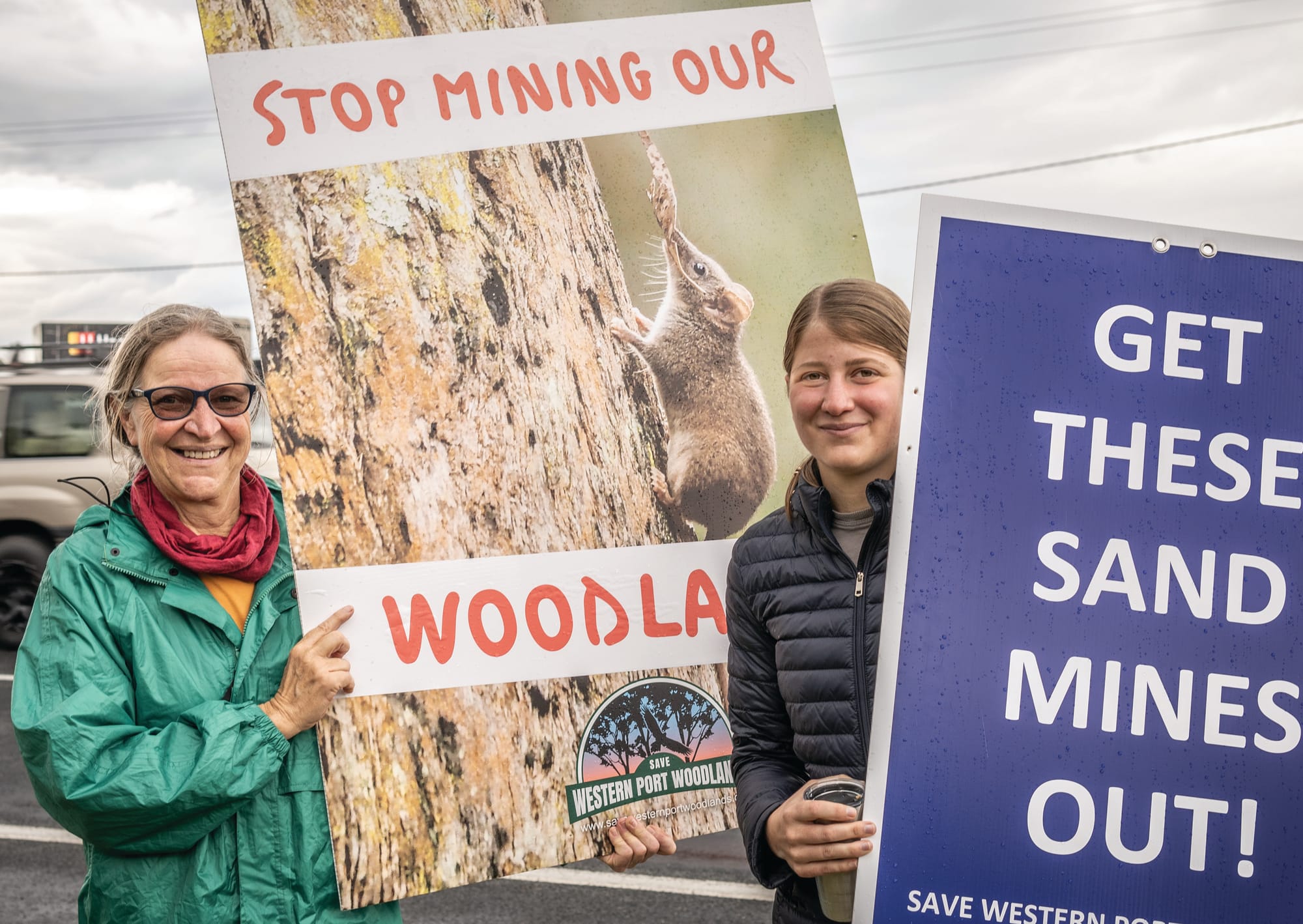
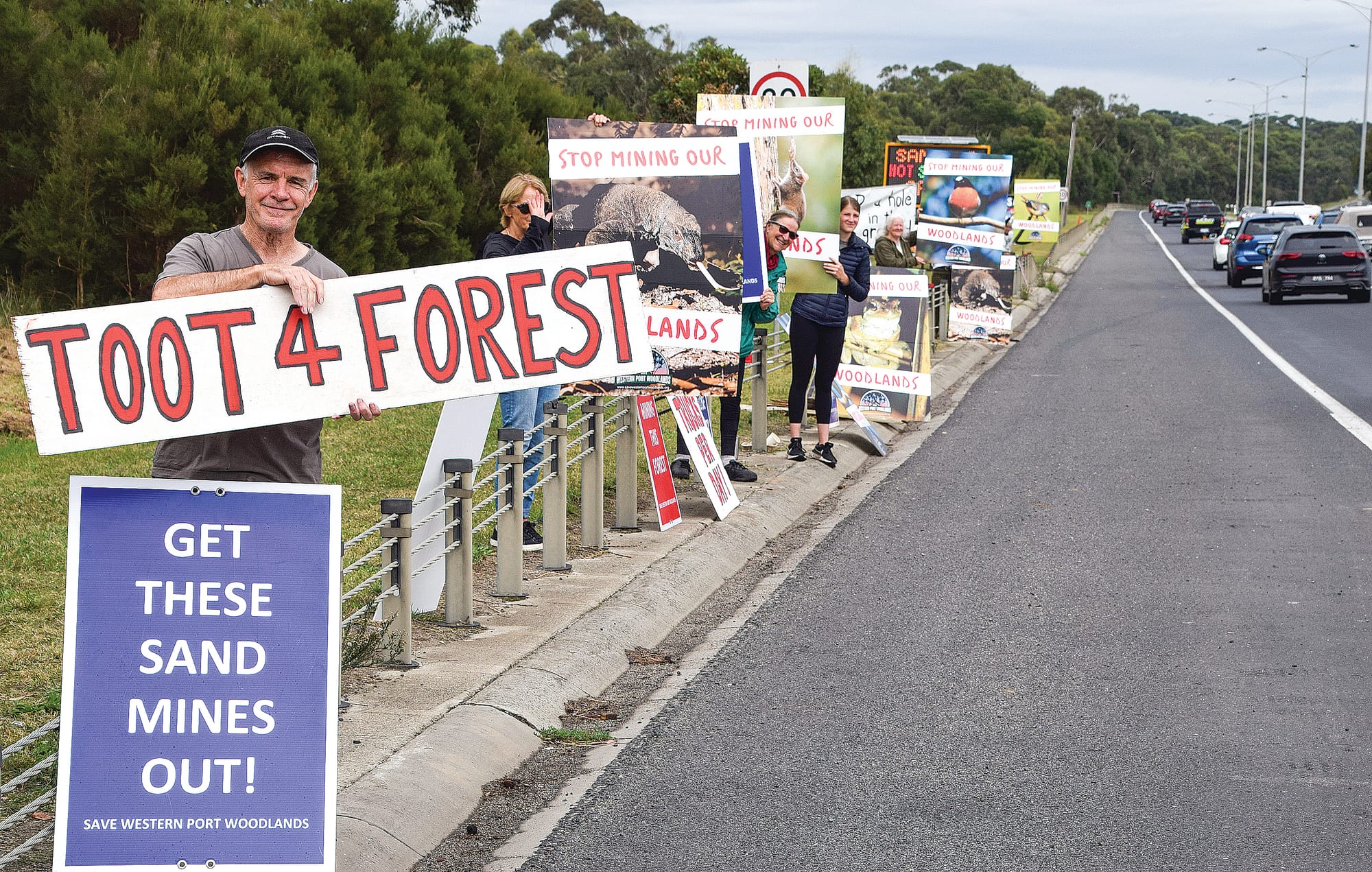
The other big issue which will continue to play out in front of the panel in the coming week is the Western Port Woodlands campaign, featuring submissions by the Save Western Port Woodlands, South Gippsland Conservation Society and Victorian National Parks Association groups today (Wednesday) and continuing on Friday.
Former Bass Coast Mayor, Neil Rankine, made a passionate, well-reasoned pitch to the panel last week, that if, as they say, they can’t roll back the sand mining licences, they can at least recommend for a system of biolinks and native bush corridors to be established from the old Lang Lang Proving Ground to the Grantville Nature Conservation Reserve.
“The magnificent jewel in the crown is the Holden Proving Ground. This reserve has no protection whatsoever and it needs it,” said Mr Rankine.
He said the pristine qualities of the former proving ground site should be protected, as promised by the former Environment Minister Lily D’Ambrosio, and if protected appropriately, would have no development value with its present zoning.
Local activist and singer-song writer, Tim O’Brien, who addressed the panel in words and song last week, believes the State Government should buy the proving grounds site, now that it was back on the market, and it should become the ‘Gateway to Bass Coast’, highlighting the region’s magnificent natural attractions, and forever saving its immense environmental value.
And last Wednesday, the Wattle Bank Community Group, represented by Moragh Tyler, Brendon Johnson and Christopher Haig, reported to the panel on exploding development in their area, calling for ‘Wattle Bank’ to be formerly recognised as a settlement so that the community can protect and enhance its lifestyle.
See also the concerns of local farmers over expensive planning controls.


