

Procurement biggest area of corruption risk, says Cr Schelling
ALL the tricks of the trade were under scrutiny when the State Government’s Public Accounts and Estimates Committee continued its inquiry into Fraud and Corruption Control in Local Government on Monday this week. Here’s one issue that might...


ALL the tricks of the trade were under scrutiny when the State Government’s Public Accounts and Estimates Committee continued its inquiry into Fraud and Corruption Control in Local Government on Monday this week.
Here’s one issue that might sound familiar.
State Member for Point Cook, Mathew Hilakari MP, was interrogating the representatives of the Wyndham City Council, Deputy Mayor Cr Josh Gilligan and CEO Stephen Wall, when he asked them about decisions made in closed session of council or discussed at confidential briefings.
“Have you had the situation where one confidential element relating to one aspect of a project is applied to other matters discussed in relation to that project and all those discussions are lumped in together under the confidentiality ruling?” asked Mr Hilakari.
He went on to suggest how a ‘commercial in confidence’ issue, about one aspect of a project, might be used to make all elements of the project confidential.
Cr Gilligan took issue with the accusations of deliberate secrecy which followed, saying that discussing items in confidence wasn’t necessarily a bad thing where the legitimate interests of individuals needed to be protected.
It was just one of the items of local government operations probed by the committee including public scrutiny of developer contributions, claiming of councillor expenses, how new items found their way into the budget, delays in completing projects that received government funding and audit and risk training for councillors.
Several Gippsland councils appeared at the hearing including Wellington, East Gippsland and South Gippsland.
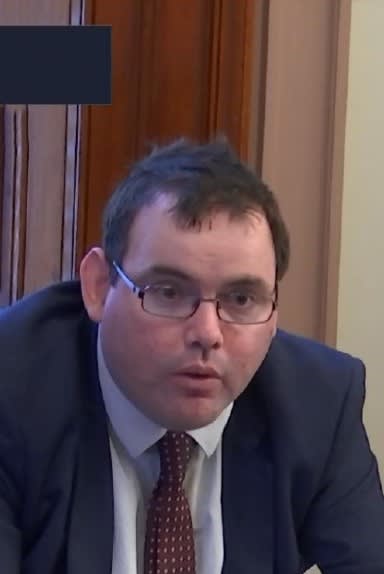
South Gippsland was represented by the Mayor Cr John Schelling and Manager of Governance and Integrity, Rhys Matulis, appearing at 12.35pm on Monday.
Cr Schelling was asked a number of questions by the Member for the North-Eastern Metropolitan Region Richard Welch, one about councillors’ disclosure of interests and another about the equity of grants and funding across the shire’s three wards.
Cr Schelling said councillors leaned on governance officers in getting their disclosures right and also that while the shire was divided into wards, the council operated shire-wide when assessing need.
“Do you think under the current system in South Gippsland it adequately ensures there is an equitable system geographically for all parts of the shire, for argument's sake that Korumburra is being adequately funded compared to other areas across the shire?” asked Mr Welch.
“I do. I'm pretty happy with that. And the staff work very hard on making sure that they assist different groups at their time of need,” said Cr Schelling, noting that councillors backed their fellow councillors on identified needs within their areas.
Mr Hilakari MP also addressed a general question to councillors about which area they thought was the most at risk of fraud and corruption.
Cr Shelling said he believed the procurement of works and services from outside contractors was the biggest area of risk for councils.
He also noted that while no issue had been identified in South Gippsland, the use of credit cards by staff was an area that needed to be monitored.
Cr Schelling joined with the other councils in his group, East Gippsland, and Moira, in saying they weren’t engaged in any current inquiries with local government agencies.
A spokesperson for the council stressed that South Gippsland’s involvement didn’t relate to a specific issue of fraud or corruption but was “an important opportunity to contribute to the broader conversation on transparency, accountability, and integrity in the sector”.
“Council will use the forum to highlight the proactive work being done locally and to advocate for greater support across the sector, particularly for regional and rural councils.”
Local council watcher, Graham Jolly of Cape Woolamai, said the inquiry raised some important issues.
“One of my concerns is that when ratepayers are asked to contribute a certain amount to council’s program of works and services at budget time, they’re not provided with a full list of capital projects, for example, and the cost-benefit reports that should go with them.
“We also have the situation where new capital projects can be introduced or moved forward at a later date, again without a cost-benefit analysis which includes the final cost.
“A classic example of that is where council agreed to go ahead with the Cowes cultural centre when the cost was $19 million but not getting the opportunity to make a decision on the cost-benefit of a project costing $32 million or more by now.”
The Mayor of Wellington Shire at Sale, Cr Scott Rosetti, was also asked about councillor expense claims, noting that his council had an open discussion about events councillors were proposing to attend and whether the events were of benefit to council or expenses should come out of the individual councillor’s allowance.
Mr Jolly said he would like to see greater scrutiny of the expenses claimed by Bass Coast Councillors.
“The Mayor Cr Halstead has gone to Canberra this week to meet some government ministers, I would assume with a party of representatives. I’d like to see the value of an event like that discussed in open council before it is signed off on.”
Mr Jolly said he believed councillors had less and less control over what happened within the organisation and he blamed the Local Government Act for that, not the councillors.


