

Robbin’ ratepayers or helpin' farmers?
Bass Coast Shire Councillor Mat Morgan characterised council’s decision to drop the farm rate at last Wednesday’s council meeting as a “Robin Hood” measure but were they robbing Peter to pay Paul instead,


- How Robin Hood and his merry councillors reformed Bass Coast’s rates
BASS Coast Shire Councillor Mat Morgan characterised council’s decision to drop the farm rate at last Wednesday’s council meeting as a “Robin Hood” measure rather than “robbing Peter to pay Paul”.
Presumably he meant taking from the rich, that is the vacant landowners, and giving to the poor farmers after council voted to up the vacant land rate to 200 per cent of the general rate, while reducing the farm rate to 65 per cent of the general rate.
The farm rate at Bass Coast is now on a par with neighbours South Gippsland.
Such a move will see vacant landowners slugged almost $1.5 million more in rates next year, while farmers get $787,000 relief.
Several councillors have pitched it as an incentive to build and as a disincentive for investors to “land bank”.
The difference between the two becomes a benefit for general ratepayers, those paying 100 per cent of the general rate; including homeowners, commercial and industrial ratepayers who’ll receive an $892,000 reduction in the rates take across those categories.
The council rate take of $61.6 million this year is not allowed to increase beyond the legislated rate cap of 2.75% for the 2026-27 year, although there’s always a dividend for councils when ratepayers build or otherwise improve their properties.
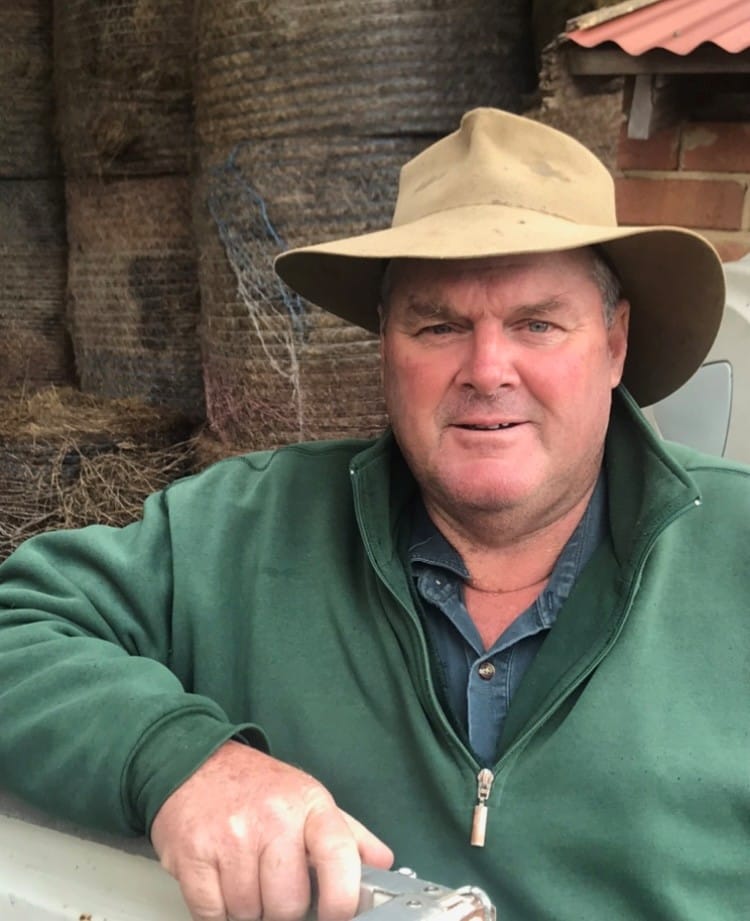
Cr Jan Thompson made an impassioned plea at the council meeting, to give farmers a better deal on their rates, moving an alternate motion which proposed to lower their rates from a recommended 70% to 65% of the general rate, increasing the proposed benefit to farmers from a $556,000 reduction to an estimated $787,000 reduction, based on current values.
“Farmers are still doing it tough. We all know they went through a tough time last year, but it's not getting any better. They don't earn a regular salary, like most of us do. They rely on sales of their product, such as stock and crops,” said Cr Thompson.
“This morning, I drove down Agar Road in Coronet Bay and looked at the land. It was yellow. The dam was a bog, and the cattle were trying to graze on ribbons of yellow straw and dirt. I wondered about the stress that farmer was experiencing.
“Currently, many farmers are only able to get one hay cut off their land, where they usually get two, and even if they do get a second cut, it has little nourishment further exasperating a difficult situation. Feed prices have gone up. Fertiliser for pasture and crops has gone up. Hard feed for stock has gone up and there’s increased input costs, while stock and crop prices have gone down.
“They are in a no-win situation.”
Cr Thompson went on to say that the climate was working against many of the district’s farmers at the moment, their hours were long and the pressures enormous however, while they had a passion for the land and were committed to feeding their communities, the rising land values in a peri-urban setting like Bass Coast meant they were faced with increasing rates without a corresponding increase in income.
Adjusting rates in recognition of this was the least council could do.
“I implore my fellow councillors, to please give our food producers a break,” said Cr Thompson.
Cr Tim O’Brien seconded the alternate motion, recognising the importance of the family farm “to the character, community, and economy of this wonderful region”.
“This alternate motion is an equitable way of lightening the load just a little and signalling to our farmers that we hear them and we’re with them,” he said.
“This strategy also addresses, by way of fair disincentive, the matter of land lying vacant within town boundaries and across the region that in a housing crisis would be better used for housing.
“This change will have a negligible impact on other ratepayers, and, in fact, delivers a small positive outcome for them,” said Cr O’Brien.
Cr Brett Tessari highlighted that council was exempting first-home buyers from the vacant land hike for two years
Cr Jon Temby wasn’t keen on discounting any rates, saying there were hardship arrangements that should be extended to anyone who needed them.
Cr Meg Edwards spoke next saying the 65% differential was inline with neighbouring councils with the position informed by consultation with the shire’s Rural Engagement Group.
But Cr Edwards stressed the “amazing flagship program” of the Rural Land Management Rebate needed to be retained.
She claimed it didn’t need to be onerous to administer and even if it was delivered in a different form, the funds had to remain in the hands of the farmers who were the shire’s best land managers and best placed to deliver a range of environmental benefits.

Short of characterising people with vacant blocks of land as the bad guys, Cr Mat Morgan was also on board with relief for farmers and a modest dividend for homeowning ratepayers, but he called the end of the Rural Land Management Rebate.
“The other side of this debate, though, is the land management rebate. Now, this program has been positive for our environment but has it been efficient though? Probably not,” said Cr Morgan.
“The administrative burden has shown that the program has been an ineffective way of providing environmental wins. That being said, every cent of this program should be retained in environmental initiatives and I would love to move an amendment to this motion to earmark those funds now, but it would be disrespectful to my colleagues and the budget process.
“So, I am as loudly as I can, putting a bookmark in this debate, and when we get to the budget process, I will be fighting tooth and nail to ensure that Bass Coast uses the money saved from ending the land management rebate on new, better local environmental initiatives.”
The council report also seems to support the $675,000 available to farmers as a rebate on their tree planting, erosion abatement, weed spraying and pest eradication efforts going back into general revenue to help pay for established environmental initiatives.
“The financial sustainability benefits gained via savings realised through a reduction in the funding tied to the rebate are significant. It is also important to highlight that ensuring the financial flexibility of the council program provides important levers to deliver on the Council Plan’s objectives,” according to the rating review report.
“Council supports various environmental and climate-related initiatives, varying from sand renourishment ($404K spent year-to-date), climate change actions ($400K) and various policy requirements, including Environmentally Sustainable Design (ESD), Fleet Transition, and the Investment Policy. Ensuring the financial sustainability of council helps provide long-term assurance these programs can be supported in the future.”
Many activities originally covered by the rebate, according to council, are now statutory requirements under the Catchment and Land Protection Act 1994 or have become standard best practice.
But the bottom line is that while council will be taking $787,000 less from farmers in rates, they’ll potentially lose most of that benefit if the $675,000 rebate fund is resume at budget time.
President of the Bass Coast branch of the Victorian Farmers Federation Peter Miller welcomed the shift in the rate differential from 80 per cent of the general rate down to 65 per cent but he’s disappointed to see the Rural Land Management Rebate potentially scrapped altogether by the council.
“I see that council is going to decide what to do with the money that previously went into the land management rebate during their budget process, but I’d hope we might be able to meet with them before they decide what they are going to do.
“Personally, I’d like to see the land management rebate staying exactly the way it is now. I just don’t think they are giving it the value it deserves in terms of what it is achieving on the ground,” he said.
“And I reject the idea that it is an administratively onerous program for the council to manage.
“There are many, many excellent outcomes coming out of the land management rebate and I’d like to see a proper assessment of that before council skims the money off for some other use, not associated with agriculture.
Phillip Island farmer Bill Cleeland asking that the rebate remain as an on-farm environmental initiative, even if it needs to be reworked into a different program.
“It’s hard to know what the impact on rates will be next year when we don’t know the values but in general terms, it’s good news that the council has supported the 65 per cent level.
“But based on last year’s values, I’ll actually be $1200 worse off personally if they do away with the land management rebate.
“The smaller scale farmers will see a benefit, and I don’t know what the cut off level is in terms of farm size, but your bigger commercial farmers, the ones who have used the rebate in the past, will be worse off,” said Mr Cleeland.
He holds out hope that the farmers might yet retain access to an environmental land management incentive from council, whether that includes supporting biolinks or undertaking other approved projects.
But, it's the prospect of weekend rain that's exercising Bill Cleeland's mind at the moment.
"By pumping water around from one of our bigger dams, we've got about three weeks of water left so we'd be hoping for a bit of runoff soon," he said.
"It's superbike weekend, so you'd expect a bit of rain, right?"
Phillip Island real estate agent, Greg Price of Alex Scott and Staff, isn’t so sure the significant increase in vacant land rates will deliver more houses.
“It’s good that they’ve given the kids trying to save money for a house some relief from this, but people build when they can afford it, not in response to a tax, and I include the state government’s Vacant Residential Land Tax (VRLT) in that,” said Mr Price.
“Working people who’ve bought a block, planning to build down by the coast for their retirement will also be caught by this.
“There simply aren’t that many people hanging on to blocks of land forever and a day now. It’s just got too expensive,” he said.
South Gippsland Shire Council used to have its vacant land rate at 200% of the general rate but dropped it back to 150% in response to the government’s VRLT.
Bass Coast’s definition of ‘Vacant Land’, as per the adopted Revenue and Rating Plan, is any land which does not have the characteristics of Farmland or Developed Land.


