

Six months on and the social media ban isn't working
Many teens still have full access, and the ones who got kicked off can't get back on.


We asked our work experience student Olive Clifford from Bass Coast College to tell us how the social media ban and AI are affecting current students. This is what she had to say.
THE social media ban that took place on December 10 last year was aimed to keep those under the age of 16 off social media.
When the social media ban was first introduced as an idea, there were concerns from parents that the ban would push their children to use unsafe and more unknown websites that could cause more harm than the well-known and secure platforms.
It also raised concerns about what would happen to the children who managed to stay on social media if they got into some sort of trouble, many recognising that they would be too scared of the punishment they'd receive for admitting that they're still online to ask a trusted adult for help.
Amongst the younger teens who would be impacted by the ban, there was lots of initial outrage around the situation, many believing it was unfair for the use of social media at 15 years old to be banned when they were legally able to join the workforce at the same age.
However, the ban wasn't very successful.
Many social media platforms failed to remove the accounts of young teens, leaving them with full access to online content.
But social media isn't just used to consume content.
Many use platforms to communicate with their friends and family and to stay in touch with their sporting communities.
Even with most young teens managing to keep their accounts, some weren't so lucky and were kicked off social media with the promise of their accounts reactivating once they turned 16.
This system has been proved incorrect.
When I was 15 years old, I had a YouTube account that I would use to watch videos, which was taken away from me when the ban began.
Now that I'm 16, I have tried to get my account back, but YouTube won't let me.
It honestly doesn't bother me too much - I'm still able to watch videos, I just can't have an account, but it does make me wonder what will happen to those hoping to regain access to their accounts once they turn 16.
We are also living at a time where technology is advancing faster than ever.
The rapid popularity increase of artificial intelligence, or AI, has many people around the world using the programs, particularly by those trying to get out of doing tasks.
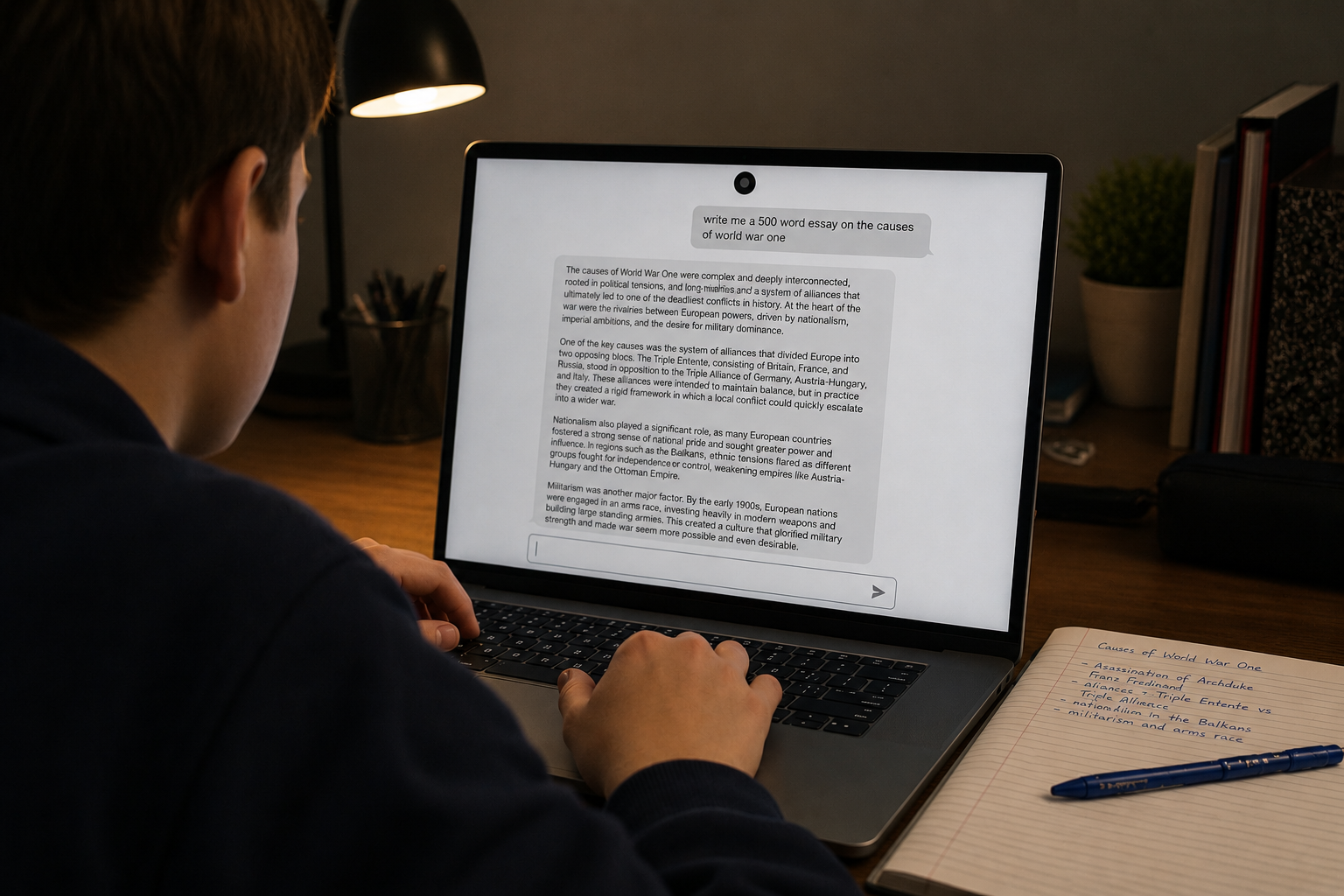
In schools, students are discouraged from using AI, the use of informative websites from trusted sources being a much preferred method for gaining information.
This doesn't stop some kids from taking the easy route and getting AI to write their assignments for them, though.
There are methods in place to prevent the use of AI in the classroom, such as website blockers and AI detectors, but kids will always find ways around these.
From VPNs, to borrowed accounts, to whatever the next workaround turns out to be, the pattern is the same.
If you tell a teenager they can't have something, the ones who really want it will find a way.
That hasn't changed and probably isn't going to.


