

‘They shall not grow old’ says 100-year-old Inverloch digger
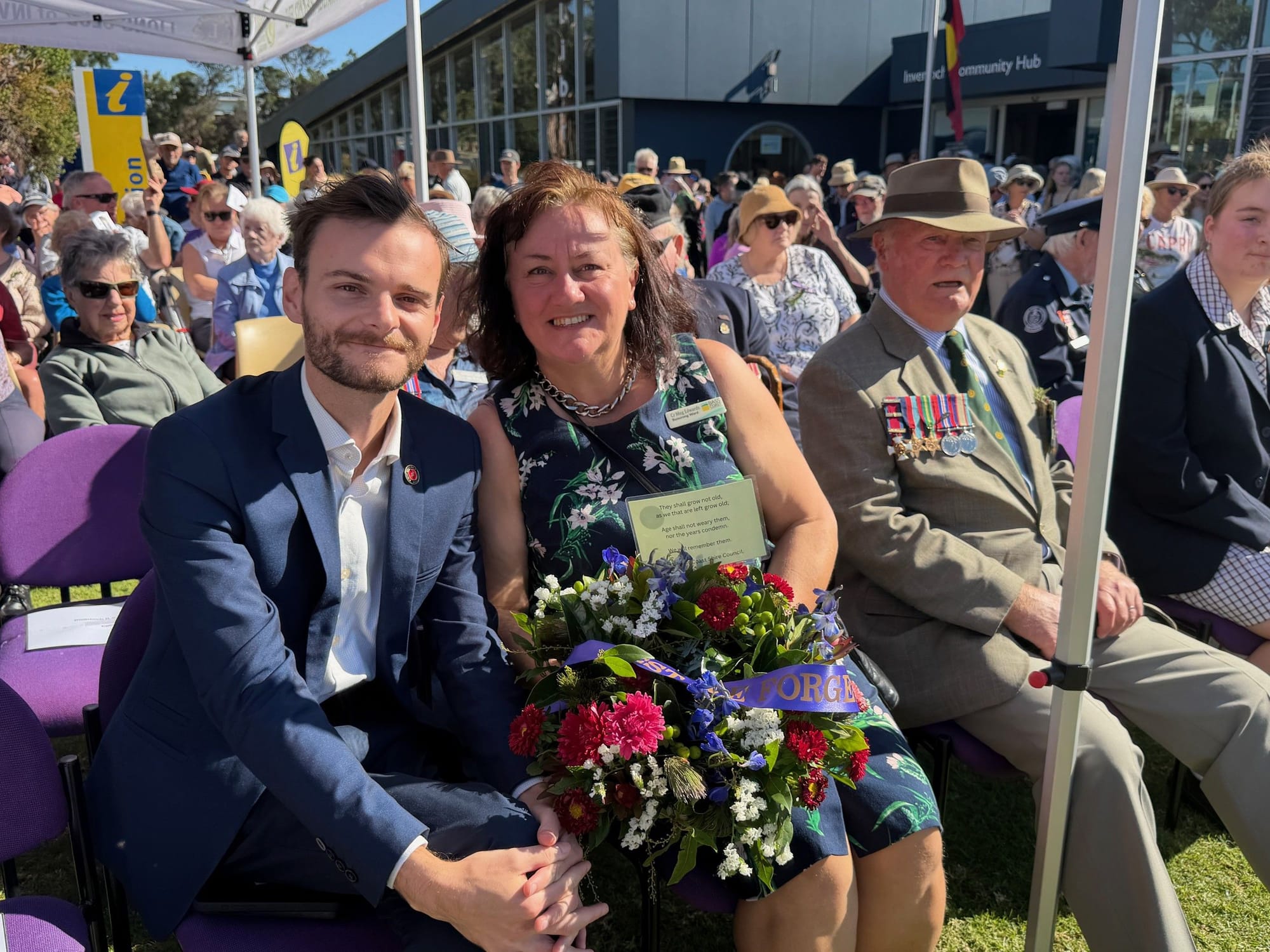
MORE than 40 organisations laid wreaths and a huge crowd turned out on a glorious autumn Anzac Day in Inverloch last Saturday, April 25 but there was one particularly important moment not lost on many. See details:


MORE than 40 organisations laid wreaths and a huge crowd turned out on a glorious autumn Anzac Day in Inverloch last Saturday, April 25.
Hundreds lined A’Beckett Street for the veterans and services march, accompanied by pipers and drummers, and there were two keynote speeches by Newhaven College co-captain Isabel Mahon and Lieutenant Colonel Ewan Cameron, both stirring addresses in different ways.
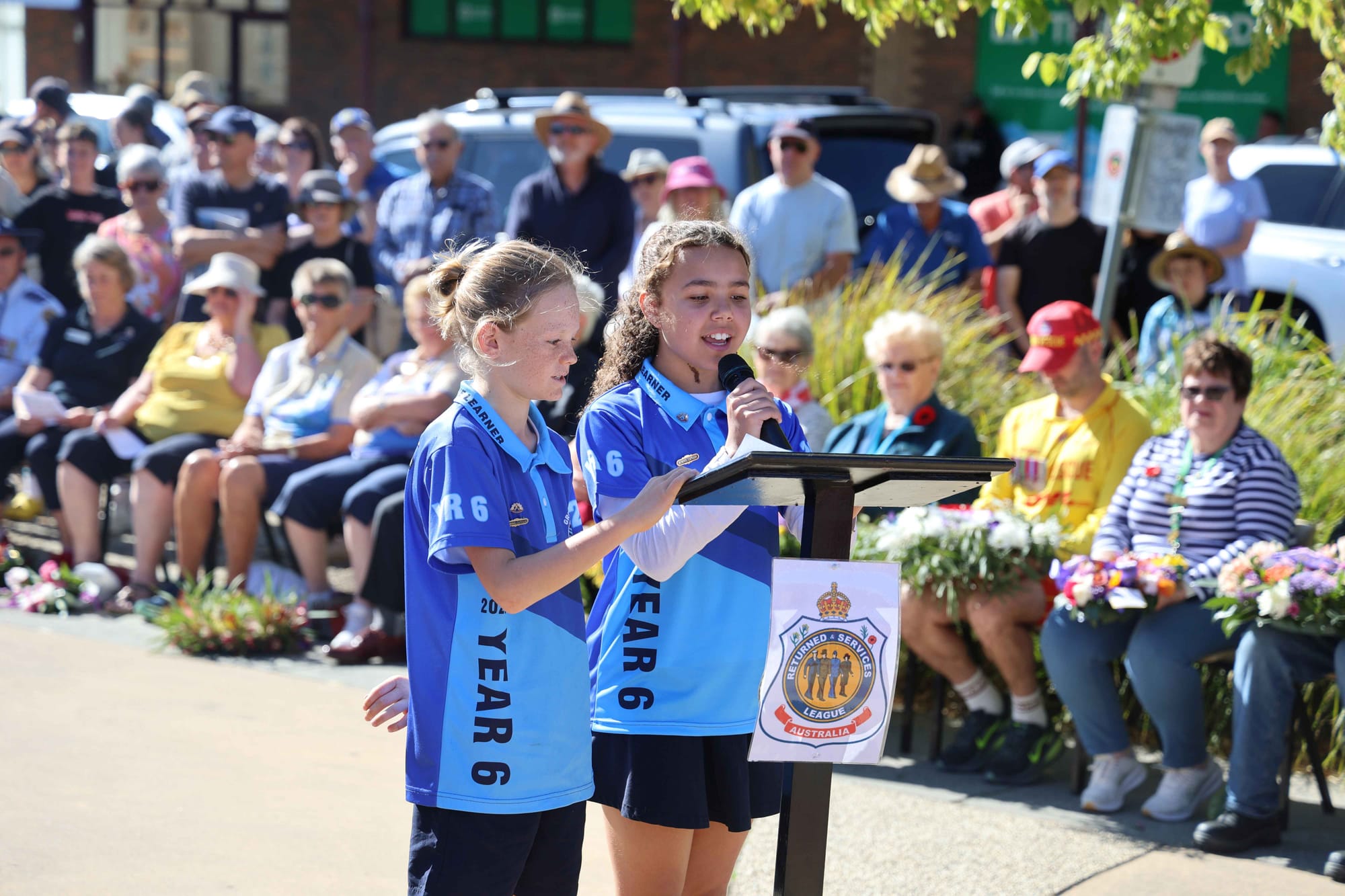
And there were significant contributions to the service by Inverloch Primary School students Oskar Lofgren, Alana Eddy and Rosie Sargent, along with Kiarra Spinks and Ruby Johnstone-Barsony of the Bass Coast Secondary College who read their own version of Flanders Fields.
Somewhere overhead, the RAAF’s advanced pilot training aircraft, the PC-21, could be seen and heard flying back to base in Sale.
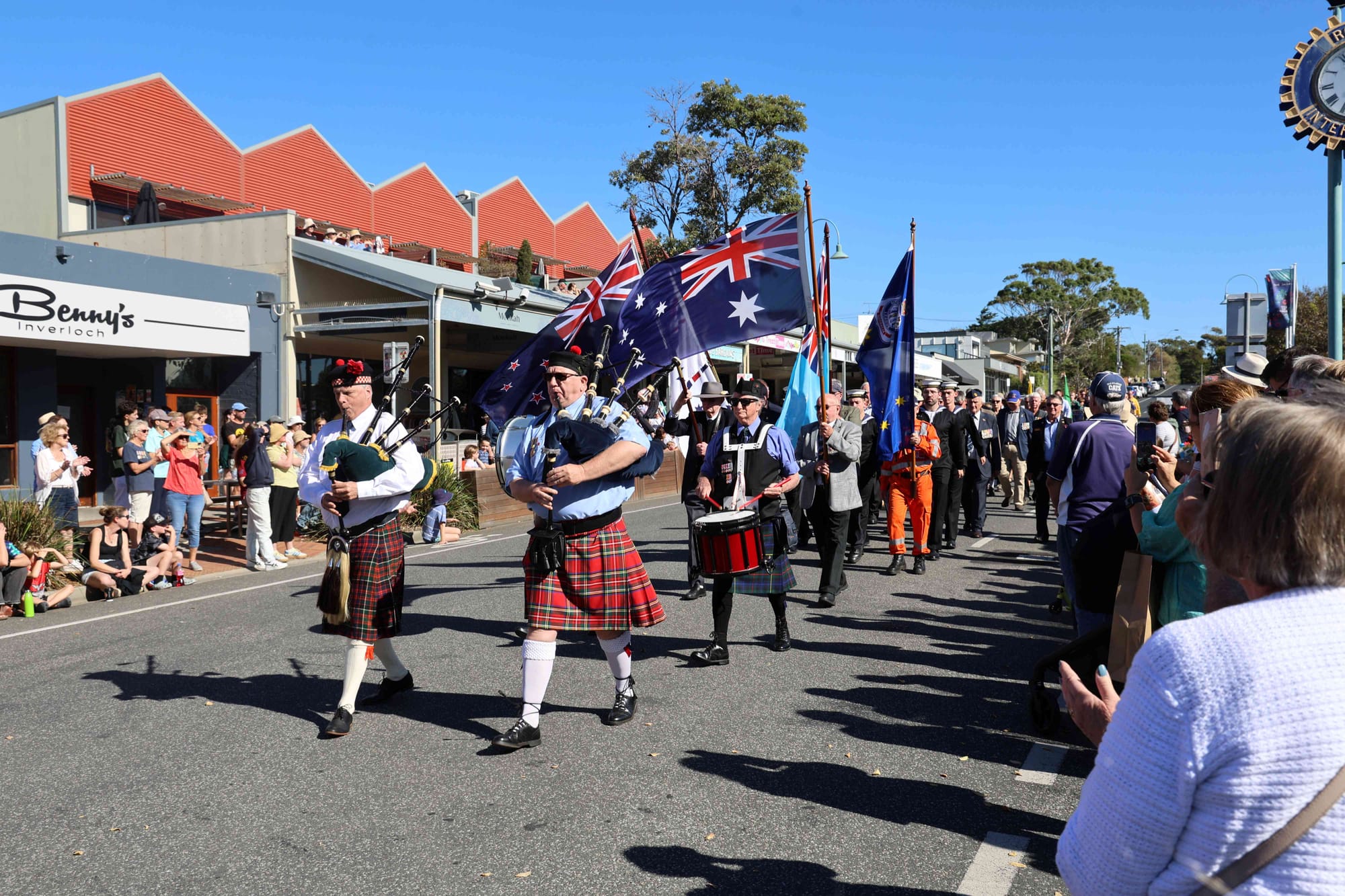
But many recognized the most poignant moment of the day, when Inverloch’s own 100-year-old World War II veteran, Trevor Scott, stepped up to deliver what surely must be the most appropriate rendition of the RSL Ode.
“They shall grow not old, as we that are left grow old
“Age shall not weary them, nor the years condemn
“At the going down of the sun and in the morning
“We will remember them.”
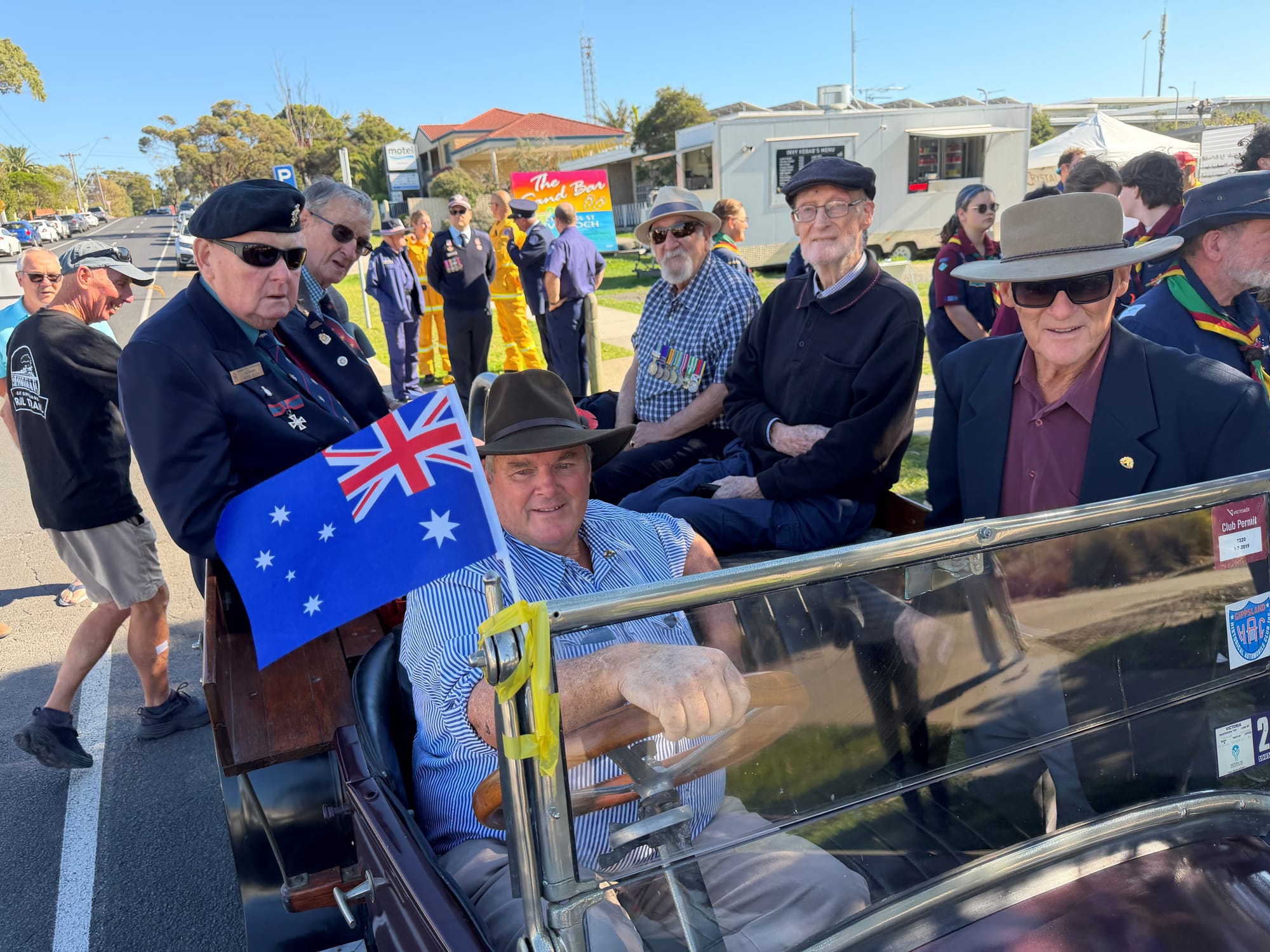
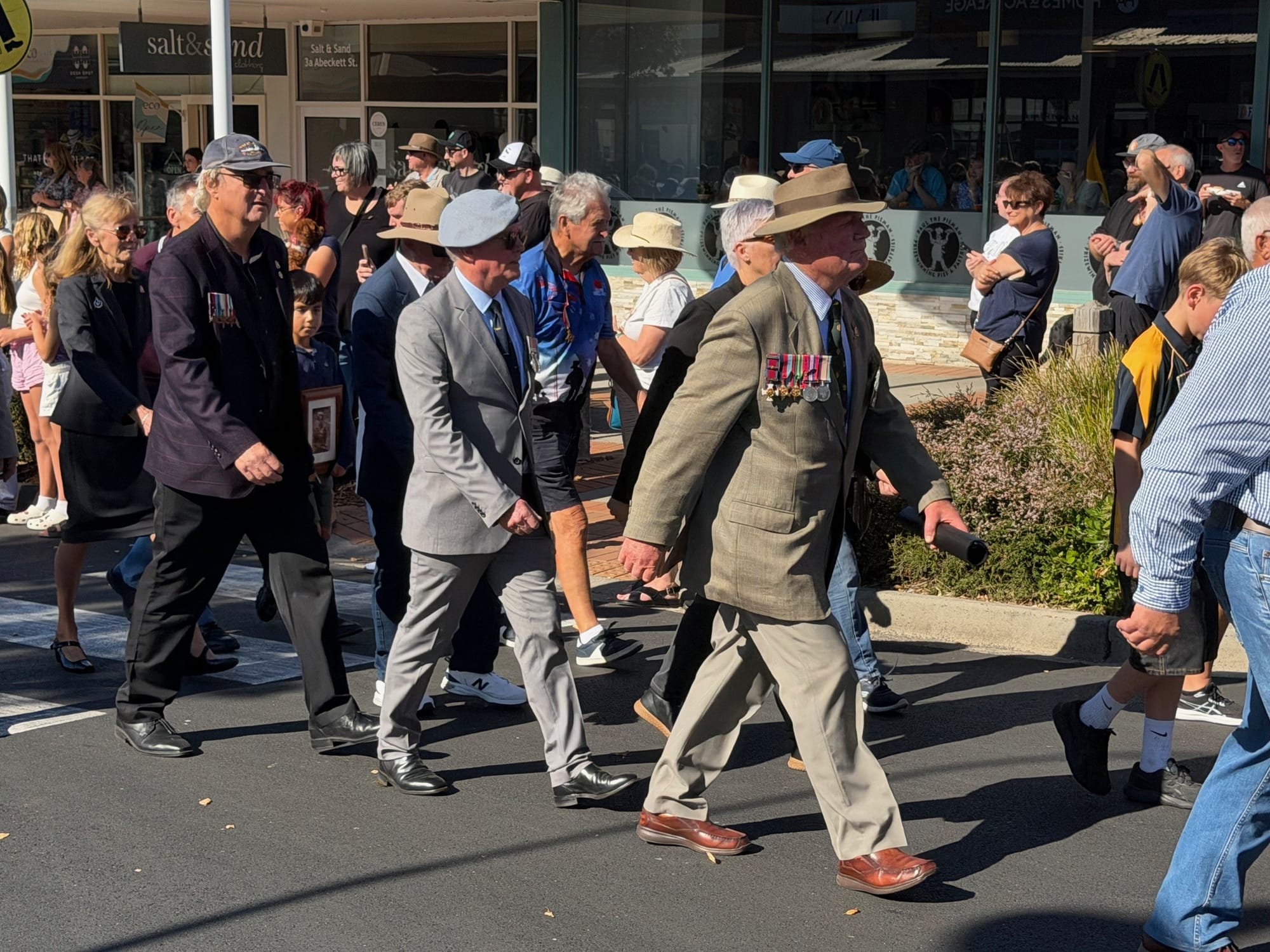
As has done in recent years, Trevor took part in the march, with a group of mates, in the back seat of an old vintage car.
Trevor followed his brothers enlisting to serve in the Second World War in January 1944 at 18 years of age and initially trained as an aircraft technician in Adelaide before re-mustering as an airfield guard in order to reach the front line faster.
The air force posted him to Torokina on Bougainville Island where he guarded planes against Japanese infiltrators.
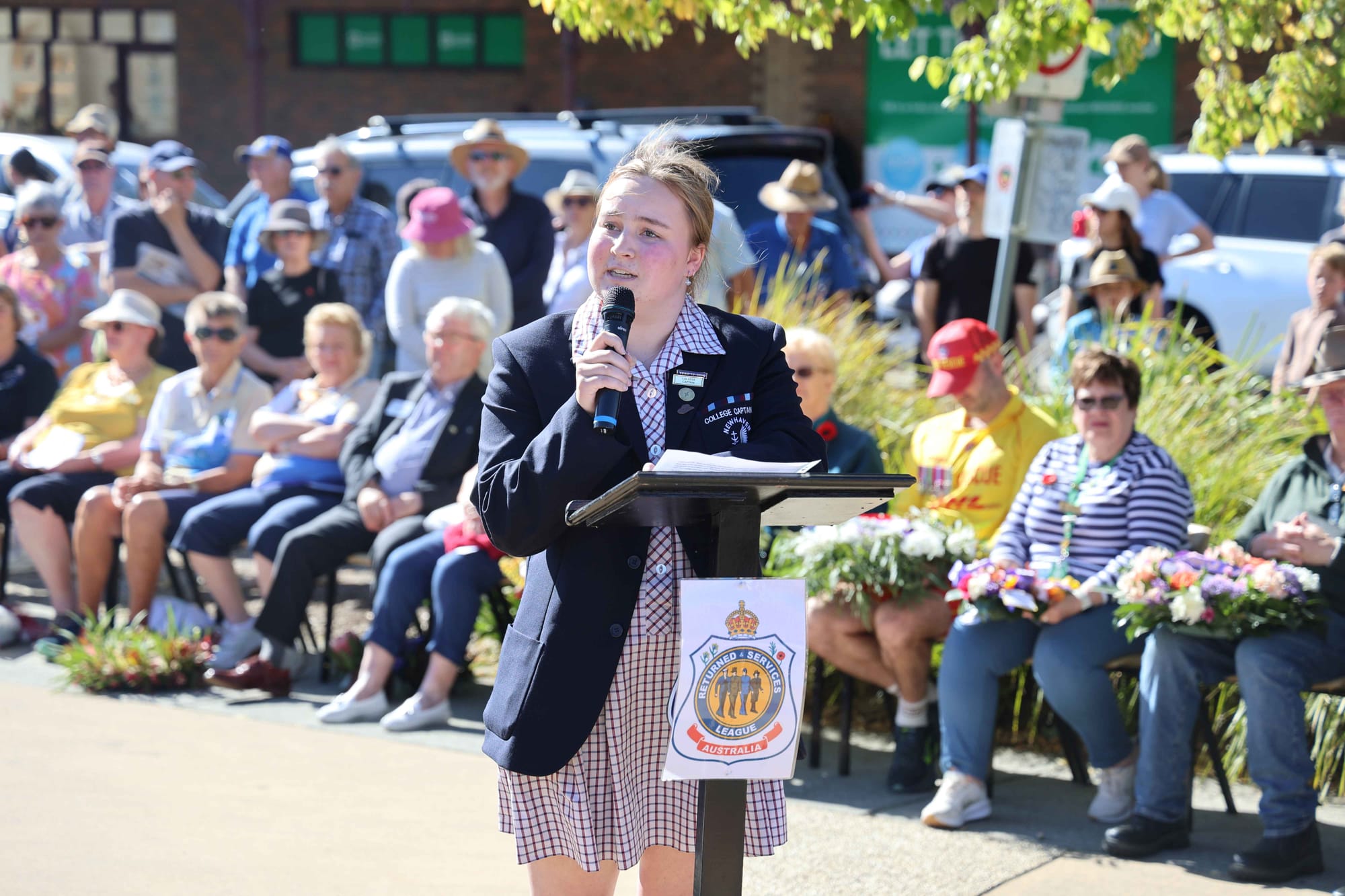
Here in full is Isabel Mahon’s address:
Good morning to the Men and Women who are currently serving or have served in the Australian Armed Forces, to the distinguished guests, and to all those who have chosen to be in attendance. My name is Isabel Mahon, and it is an honour to speak here today on one of the most significant days in the Australian calendar.
As a child I couldn't comprehend the importance of ANZAC day. Mum and Dad would wake my siblings and I before the sun came up, and load us into the car, actively ignoring our squabbles. We would stand to the side of the dawn service so if my younger siblings were too loud, my parents could quickly quiet them. After lots of people talking, there would be a tune on the trumpet, which I now know to be "the last post'. The whole crowd would fall into a deafening silence, and as seemed to be expected, I would say thank you into the oblivion.
In the weeks leading up to ANZAC day I remember making red paper poppies in my primary school classroom, and hearing stories of war. Stories about things like courage and mateship, stories like Simpson and his Donkey. I was rightfully ignorant of the true horror and cost of war.
As I grew, I learnt more about the Australian War Time History. In my textbooks I came across places like The Somme, Pozieres, Gallipoli and for my family, Tobruk. Slowly I as I got to the age of the soldiers I read about, I began to picture myself in those black and white images of the trenches and desserts, that it was my classmates fighting in faraway places, that it was my father and brother who were never coming home. It was then that the gravity of the sacrifice and the values of ANZACs started to become real.
In World War 1 alone 416,809 Australians enlisted, 416,809 individuals volunteered their lives, their safety and their future for a country which was only recognised as the Commonwealth of Australia for twenty years prior. As a 17-year-old who has had the privilege to grow up with the idea that war is distant it is challenging to even fathom the sacrifices of the ANZACs, to imagine their courage and their faith in the nation Australia would eventually become.
My great grandfather, Private Gordon Collings, fought in World War 2. He was one of approximately 14,000 Australians in the siege of Tobruk, roughly 3000 never made it home. After extended fighting and in frustration at not being able to expel the tenacious Australians, the German Africa Corps under General Rommel likened their fighting style to that of a rat, or a pest.
The insult of the enemy became an honour in the eyes of the Australians who are now famously known as the 'Rats of Tobruk'. This story is a testament to not only the ANZACS’ courage and resilience in the face of hardship but their ability to find humour in the direst circumstances. The optimism and bravery embodied by the ANZACS still resonates through Australia today.
My great Grandfather spoke little of the war, but he walked with a limp for the rest of his life. When we think of the sacrifice of the ANZACs I believe it is important to think of the men and women who never returned, but also the lingering effect of the war on the those who stepped back onto Australian soil forever changed, mentally and physically.
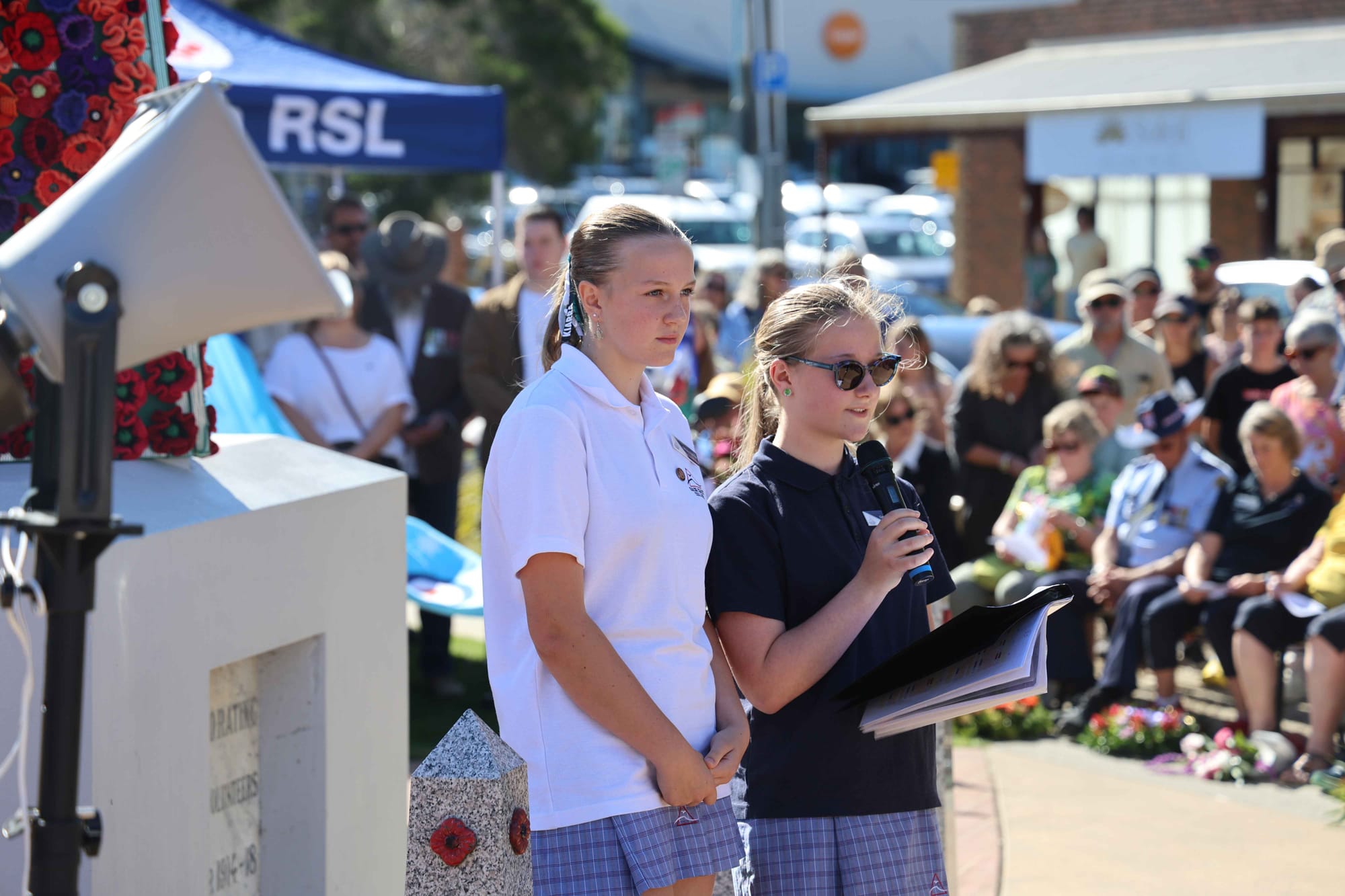
The sacrifice and courage of the ANZACs didn't end when they laid down their lives or when they returned home, it echoed through their families, loved ones and the entire nation. It is why we all stand silent together. The loyalty of the ANZACS and the puzzle pieces of each individual story contributes to the country Australia is today.
ANZAC Day is a time of remembrance and reflection, as we commemorate the spirit of the ANZACs, but it also stands as a reminder. A reminder to try and live resilient in all aspects of life, to be generous with your optimism and to always remember the bigger picture. It's a reminder that peace is a privilege, and if we look globally, a privilege not currently shared by everyone.
Now poppies are no longer just flowers, and I no longer mutter thank you into the oblivion. I say thank you to the ANZACS. I say thank you to the men and women who sacrificed their lives and safety for me to live in peace. I say thank you to everyone in active service or who has served our country. I say thank you to my great grandpa. It is in this gratitude that we share that we promise to remember.
So, we wear the ANZAC badges, we take care of the medals earned through blood, sweat, tears and sacrifice and we make the red paper poppies, because we must not forget who gave us the freedom to do so. Lest we forget.
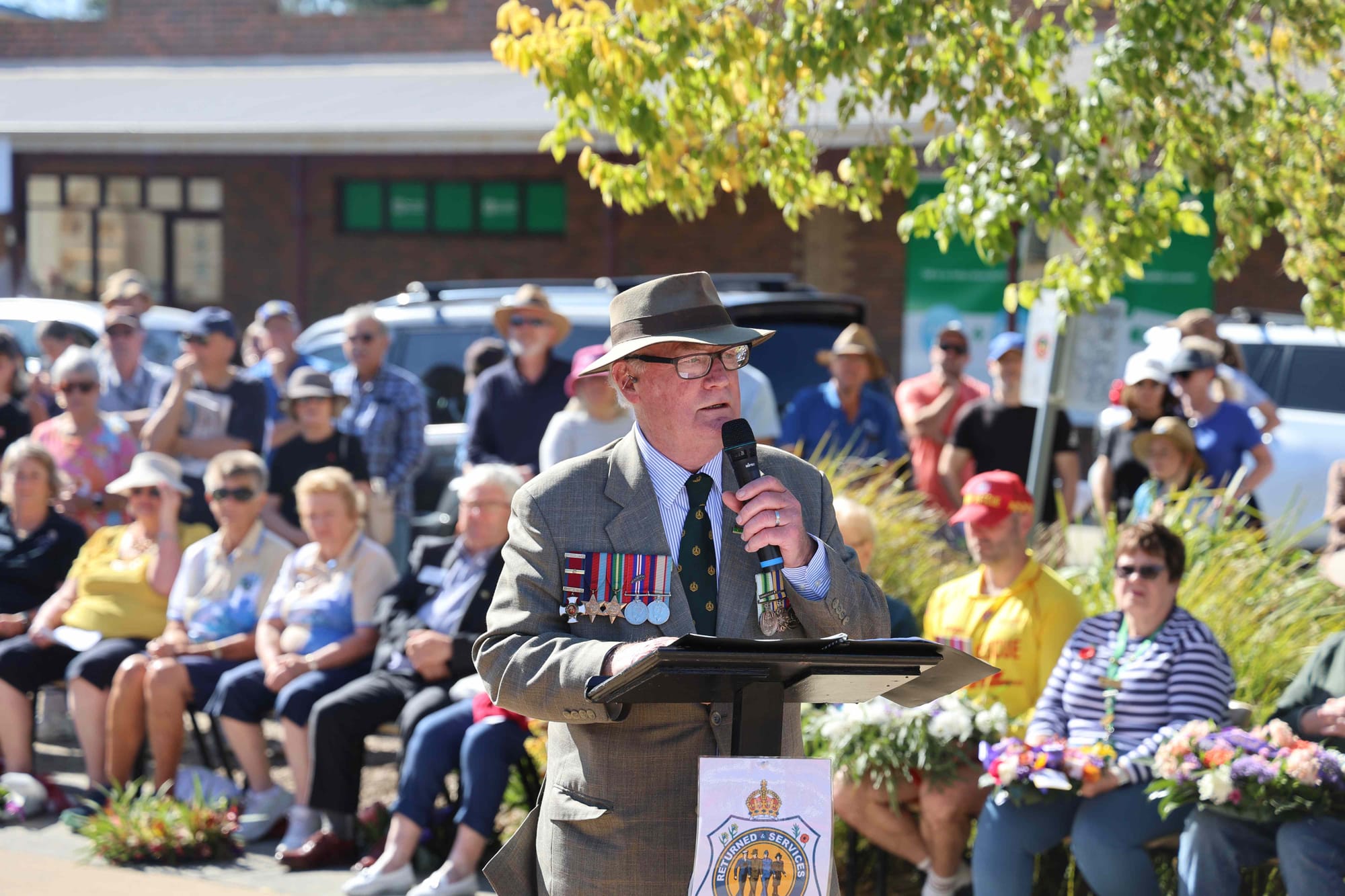
Formerly of Phillip Island, the son of another Lieutenant Colonel, Allan Gordan Cameron, Ewen Cameron served in the Middle East and at the Royal Military College Duntroon.
He spent 25 years of his working life as a professional soldier. As an Infantry Officer, Ewen's regimental service was undertaken with the Royal Australian Regiment initially as Platoon Commander with the Fifth Battalion. Later he served as Company Commander with the First Battalion when it was Australia's Operational Deployment Force on very short notice to move anywhere overseas.
Highlights of Ewen's military career include postings as Senior Australian Military Observer Middle East and Chief of United Nations Peace Keeping Group in Lebanon. Later, Commanding Officer Corps of Staff Cadets, Royal Military College Duntroon and also in Canberra as a senior Staff Officer in the Office of Chief of Army. In his final appointment Ewen headed Army's Personnel Management Group which managed the careers of 30,000 serving regular soldiers throughout the Australian Army.
Ewen is a graduate of The Royal Military College Duntroon, Flinders University of SA, The University of NSW, The Australian Command and Staff College, and The Australian Joint Services Staff College.
Ewen retired from the Army as a Lieutenant Colonel and subsequently filled senior executive appointments in both public and private sectors before running his own business consulting group specialising in Human Resource Management.
Ewen is now fully retired and since 2014 has been living in Brunswick, Melbourne with Viki, his wife of 54 years. Their son Angus Cameron, married to Kate Buccilli along with their children Anahla and Elroy live here in Inverloch.
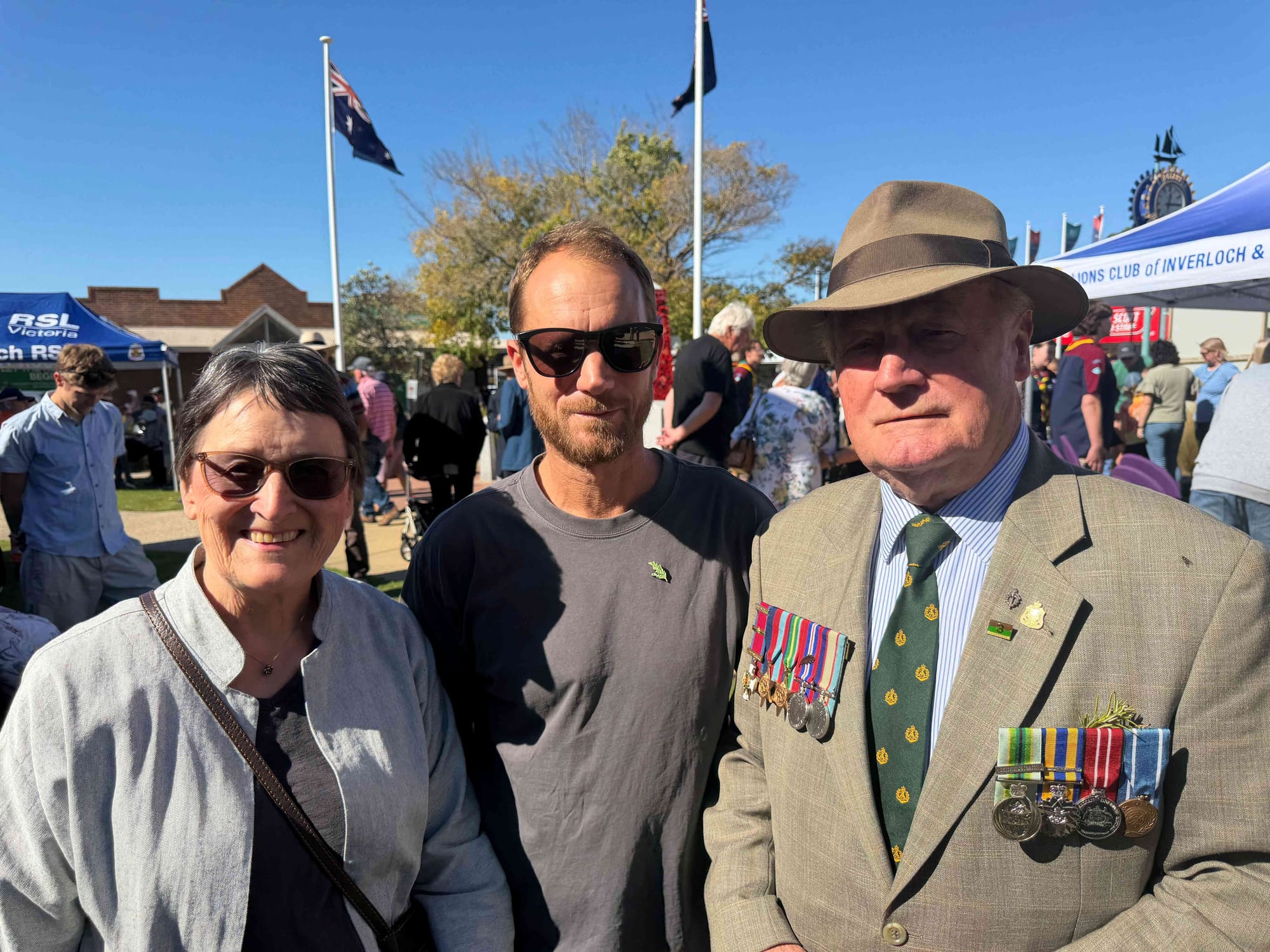
Here in full is what Lieutenant Colonel Ewen Cameron had to say:
Returned Servicemen and Women, Serving Defence Personnel, Distinguished Guests, Ladies and Gentlemen, Girls and Boys. Good morning!
Across Australia, and in many places around the world, communities like ours, are gathered today to commemorate Anzac Day. They have done this since April 25, 1916, the first anniversary of the dawn landings of our ANZAC forces on Gallipoli. This year is the 111th anniversary of the Gallipoli landings in 1915.
While Anzac Day is a day of national commemoration, it is more so our day of local commemoration. The Australians we honour here today are family, our families that includes sons and daughters, brothers and sisters, parents and grandparents, and even great grandparents as well as aunts, uncles and cousins connected to us however distantly. Our extended families are among the 103,000 Australians who have died in wars serving our country. It is why so many of us are touched by Anzac Day ceremonies and feel strongly that they ought not be challenged. Thankfully, and thanks to you all we are doing just that, here and now. Given the large number of young families and children here present, the future of Anzac Day looks assured.
While Anzac Day is a day of national commemoration, it is more so our day of local commemoration. The Australians we honour here today are family, our families that includes sons and daughters, brothers and sisters, parents and grandparents, and even great grandparents as well as aunts, uncles and cousins connected to us however distantly. Our extended families are among the 103,000 Australians who have died in wars serving our country. It is why so many of us are touched by Anzac Day ceremonies and feel strongly that they ought not be challenged. Thankfully, and thanks to you all we are doing just that, here and now. Given the large number of young families and children here present, the future of Anzac Day looks assured.
I attended my first Anzac Day service with my father nearly 70 years ago. He spoke at community services in West and South Gippsland. In the year that I recall, at three services in one day. Those gatherings consisted mostly of recent WW2 veterans and a smaller number of older WW1 returned servicemen. There were few if any non-service or family members present. They were very sombre occasions attended by those directly impacted and I was probably overwhelmed by it all. Awarded the DSO twice during the Kokoda campaign, Dad was well known to his audience, to some personally. He spoke with them as comrades in arms. I did not understand much of what he said then, but now recognise that being so close to war's end feelings were pretty raw.
Remembering their mates who didn't make it back was heartfelt, as was supporting those carrying physical and mental scars of battle. Most were desperately trying to return to their former lives as farmers, tradesmen and small business operators. Many were struggling to find out who they were, after experiencing the horrors of war. So today, we should remember also the many hundreds of thousands who have returned after fighting for our country and whose sacrifice is not measured by death but by ongoing physical and mental trauma.
This tragic situation continues. In the 26 years leading to 2023, 1840 of our returned service personnel have died by suicide. They include veterans from conflicts in Korea, Malaya, Vietnam, Iraq and Afghanistan. Clearly, this sad fact requires our country's focussed attention. Hopefully, actions flowing from the recent Royal Commission into veteran suicide will provide support where it is needed.
In the meantime, our veterans require and deserve our understanding, support and our utmost respect.
It might be said that those early ANZAC's who lost their lives were ordinary citizens doing their bit for country, but they were not only that. They were extraordinary people, enduring hardship, showing courage, being bold as well as resilient, believing in themselves and supporting one another. They were the people we depended on then and in all wars since then. They are the same kind of people we will undoubtably depend on again, in the future, in the last resort of war.
We are honouring today the memory of our men and women who have laid down their lives for Australia.
Importantly, in honouring our war dead, we are not glorifying the wars they fought in but rather remembering the 103,000 lives we have lost, and with them their love of this country along with their hope and their energy. They have set a benchmark, a record of bravery and sacrifice that generates faith in ourselves as Australians and a deeper understanding of what it means to be Australian. I reckon this really is worth striving to keep.
As a nation we can do this by looking to the past, learning from our mistakes as well as our successes. We must then plan taking lessons learnt into account. This requires not just empty platitudes but real investment in our defence capability.
You have heard that I served in the Middle East. The war that we monitored there, and attempted to keep relatively peaceful, has been waged for nearly 2000 years, and still, with no end in sight. At the end of my tenure, Australian Captain Peter McCarthy was killed on a hilside in South Lebanon by landmine. Thousands of miles from home, this young man was senselessly lost in a war that seemingly had little to do with us and was, therefore, very difficult to rationalise for his family living in rural NSW. Much more so for his young wife and 2-year-old daughter.
My successor in Lebanon was US Marine Colonel Rich Higgins. Three weeks into his tenure he was ambushed, captured and hanged by Hezbollah fighters. His murder was recorded on video and gleefully streamed around the world in a manner that has become all too common in recent times. Make no mistake, our foes readily employ extreme measures to achieve their public opinion objectives. This is evidenced by their cynical and cowardly use of civilian populations to generate support for their cause. At great cost to civilian lives.
Yes, war is horrible and to be thwarted at all cost.
Nevertheless, Australia must be well prepared for war to demonstrate that we will uphold faith in ourselves and our determination to defend Australia's unique national character, our wonderful country and our democratic freedom. This is, after all, what it means to be Australian. It is a legacy that 103,000 men and women gave their lives to create. We have inherited this legacy and we have a responsibility to keep it, for them and for the sake of our country. Lest we forget.


