A solemn pledge renewed at Cowes: We will remember them
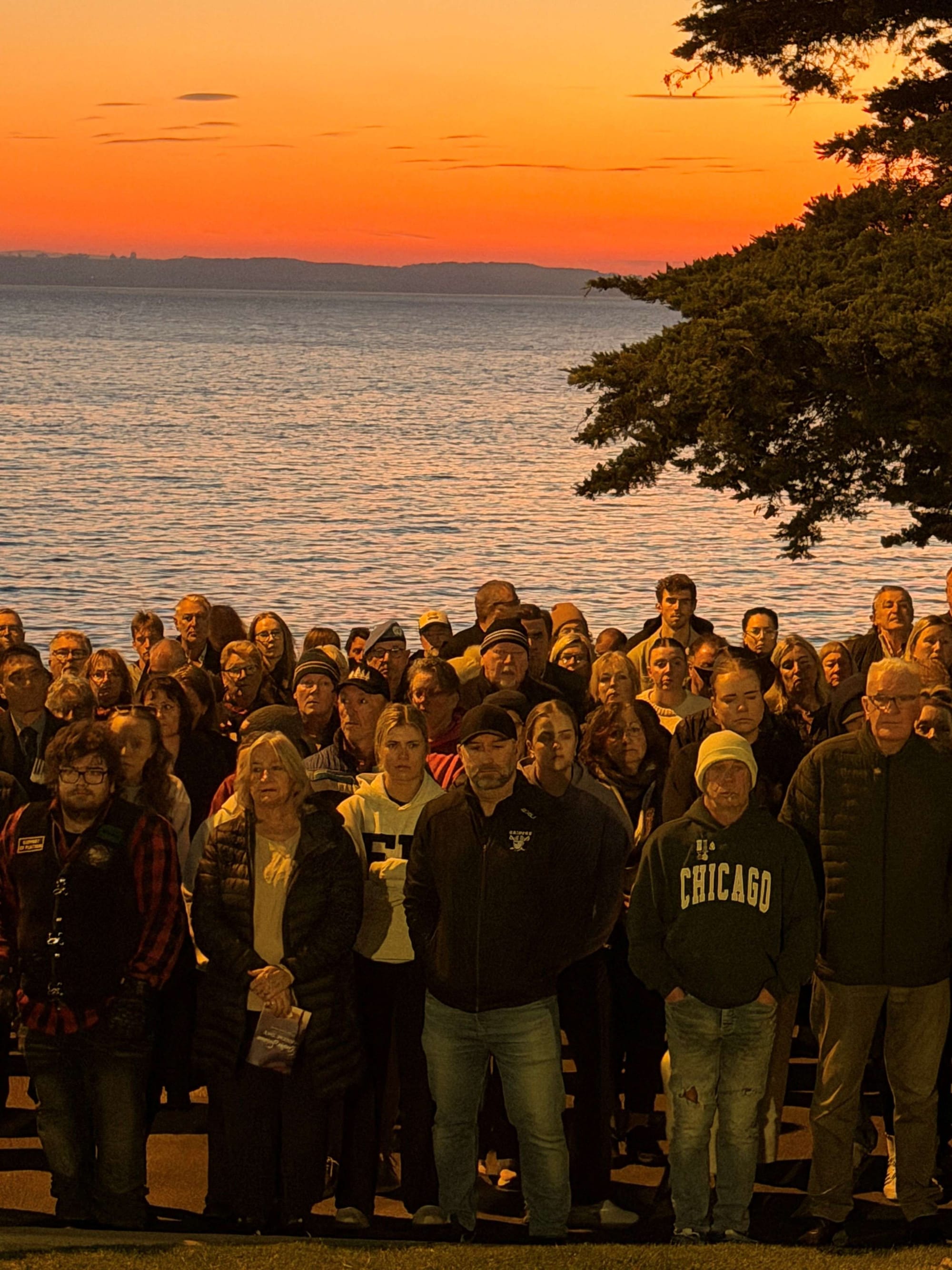
Whether it was the war in the Middle East, the unease around the fuel crisis or just the beautiful early morning, there was a huge crowd in at Cowes for the dawn service on Anzac Day and they heard something special.


WHETHER it was the war in the Middle East, the unease around the fuel crisis or just the beautiful early morning, there was a huge crowd in at Cowes for the dawn service on Anzac Day.
It was one of the biggest since the centenary of the landing at what’s now called Anzac Cove on the Gallipoli Peninsula on Sunday, April 25, 1915 when 2000 Anzacs, Australian and New Zealand soldiers, were killed on the first day of the disastrous eight-month campaign.
Something like that number crowded into the Cowes Jetty Triangle to honour their service and their loss as the lone piper Matt Cameron played and an orange dawn broke over Western Port Bay.
But as Newhaven College School Captain Kadek Humphris pointed out during his keynote address, while something was lost, something enduring and defining was found on the blood-stained beach and in the impossible cliffs of that godforsaken place.
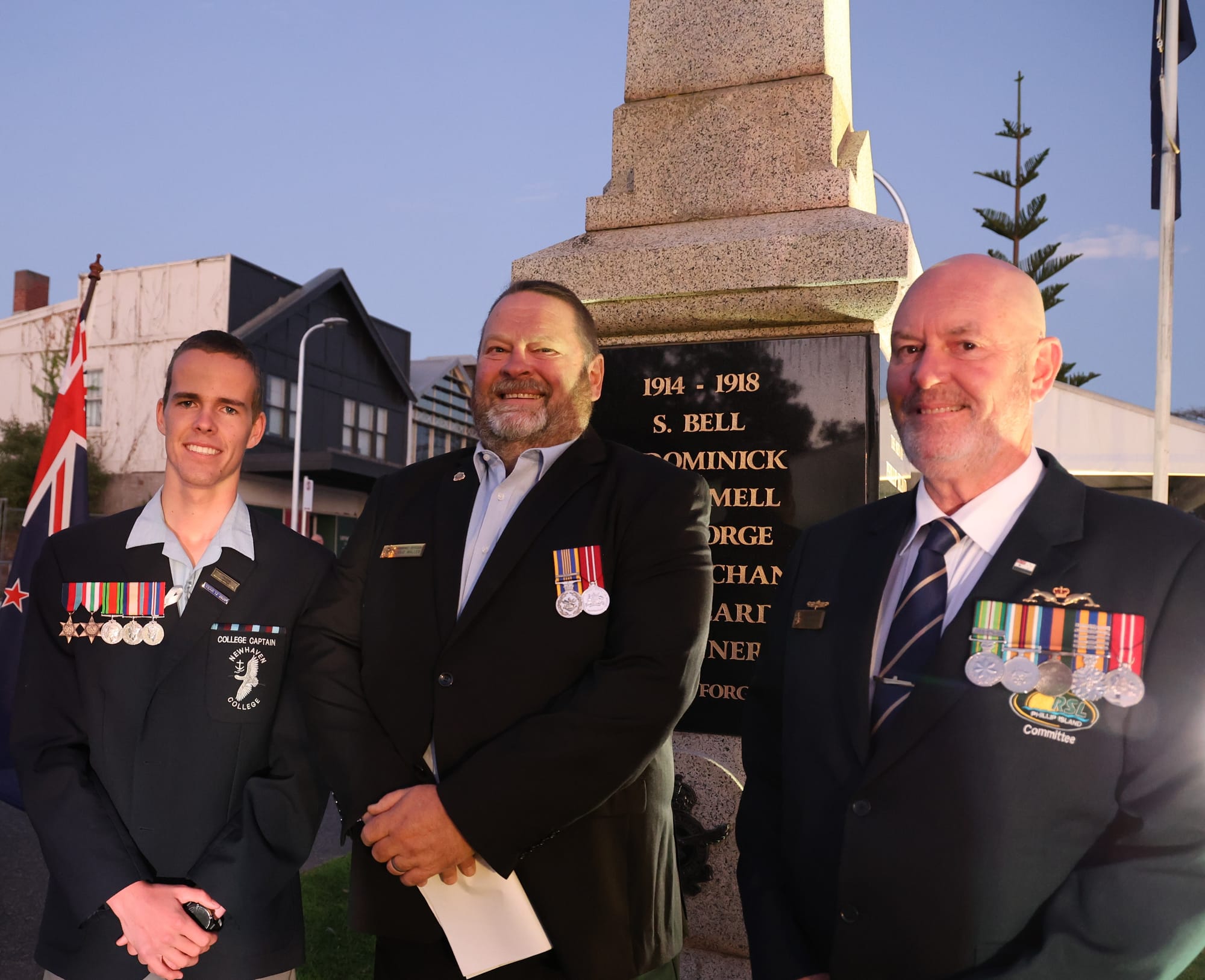
Here in full is what the young man had to say…
“Distinguished guests, veterans, serving members of the Australian Defence Force and everyone who has gathered on this beach, before the sun was up. Thank you. We gather before the dawn because they did.
“I want to start by being honest with you. Until just a few years ago, I didn't really understand this day. I came to this service every year as a kid. Big jacket. Half asleep. Waiting for the sun to come up. I knew it was important, but I didn't know why it mattered to me.
“But as I grew older and the significance of these commemorative ceremonies became more obvious, I now understand.
“One hundred and eleven years ago, on a morning exactly like this one, 16,000 young Australian and New Zealand men sat in small boats off a foreign coast. Most of them had never seen combat. Many of them were younger than I am right now.
“Picture them. Huddled in the dark. Waiting. The only sound was the oars in the water and the frightened, heavy breathing of hundreds of young men. The only light was what you could see of the cliffs in front of you. They had set off in the gap between moonset and sunrise, and they did not know that 2000 of them would not see another sunset.
“But ANZAC Day is not remembered as a military success, rather a national identity has been forged through the actions of the men in that campaign.
But something was born on that beach that has become part of our Australian culture. Our heritage. Our values. Their legacy. Bravery. Endurance. Ingenuity. Mateship. The idea that you don't leave your mate behind. That you dig in, and you keep going, and you look after the person next to you, even when everything is falling apart.
“That is the ANZAC spirit. And once it existed, it followed every Australian who has ever put on the uniform. Through two world wars. Through Korea. Vietnam. East Timor. Afghanistan. Through every peacekeeping mission. Through every conflict our service men and women have been sent into since.
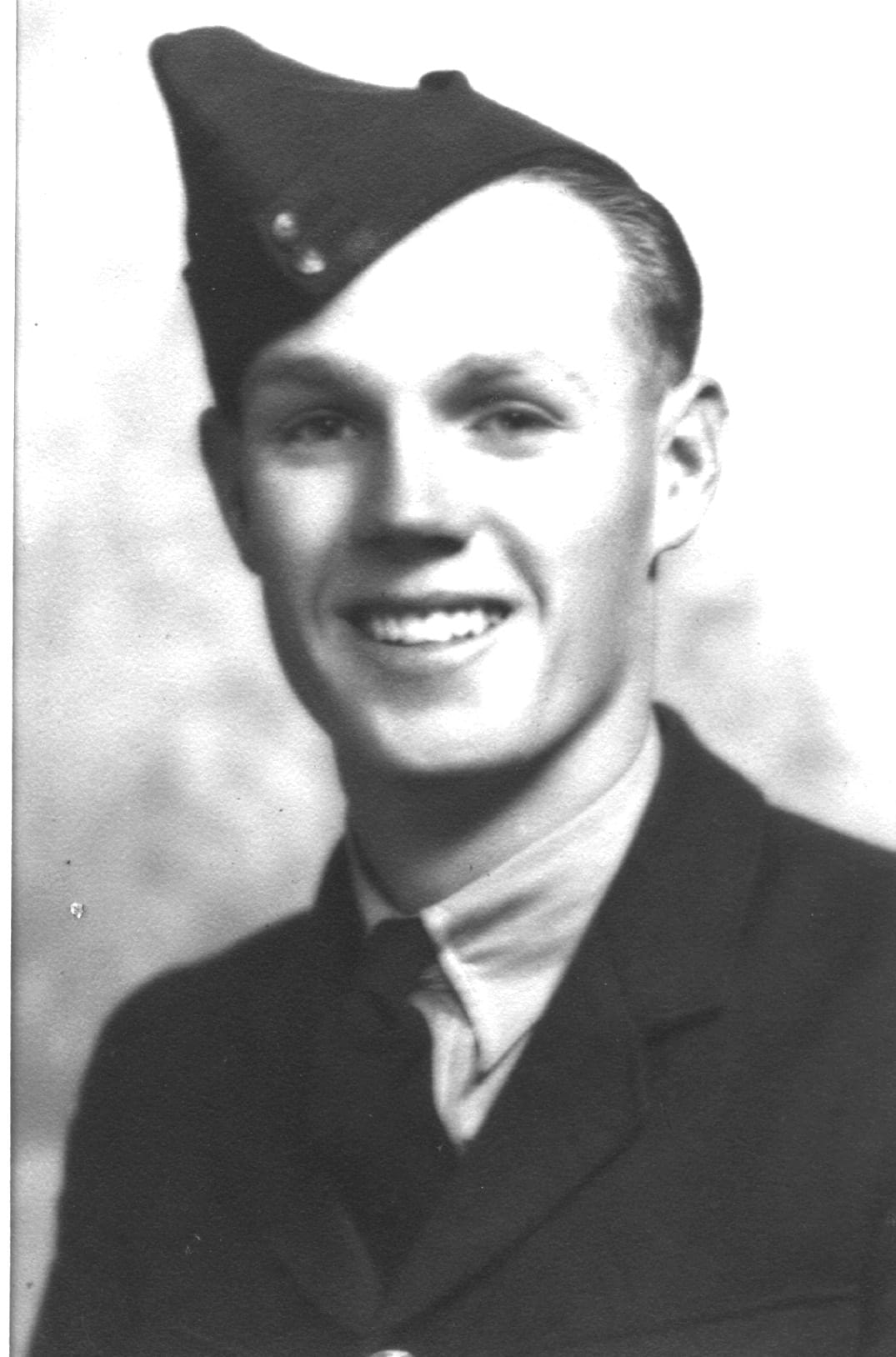
“And it followed my great-great-uncle Eddie into the sky over Germany.
“Edgar Humphris was born in Kyabram in 1918, three years after Gallipoli.
“Before the war, he was a cyclist. And not a casual one. He once rode his pushbike from Melbourne to Sydney. Not as a race. As training. That's the kind of man he was. Full of energy. A lover of life.
“I can see it in his photographs. Tall, grinning, looking like he's about to crack a joke. Nobody could have guessed what was coming for him.
“When inconceivably, the second world war began, Eddie enlisted in the RAAF. He became a Pathfinder with 614 Squadron, one of the most dangerous flying roles of the entire war.
“Pathfinders flew ahead of the main bomber force. Into the dark. Into enemy territory. They marked the targets with flares so the planes behind them would know where to drop their loads.
Think about that. Every single mission, Eddie went first. Of his original squadron, only three men survived. Three.
“I have read his logbook time and time again. Almost a 100 pages of careful handwriting. Every flight he ever made - 675 hours in the air. But the logbook doesn't tell you what it felt like.
“For that, you need his brother Len. After the war, Len sat down and wrote everything Eddie had ever told him. Because he knew that if he didn't, the stories would disappear.
“Len recounts how one night, coming back from a raid over Germany, Eddie lost an engine. Lost most of his instrument panel. He limped back to the aerodrome in the dark, with injured and dying crew members on board, only to be told the runway was blocked. Crashed aircraft. Live bombs still on board. He circled overhead, sending mayday signals, almost out of fuel.
“And then, out of the darkness, another aircraft came straight at him.
It came so close that Eddie saw the whites of the other pilot's eyes. He never found out if that man made it home. Eighty years later, neither do I. And standing here this morning, I think that is the whole point.
“Because ANZAC Day isn't only about the men we remember by name. It's also about the ones we never will. The stranger in the other aircraft. The many unnamed graves - boys on the beach of Gallipoli with families waiting back home. All the millions of men and women whose stories were lost in the noise. And whose lives meant just as much as any of the names we have carved into stone.
“Eddie came home in 1945. Like so many he was changed. Whilst his family was so proud and thankful to have him home, Len said that the man who came back was different. Eddie never spoke about the war. Not to his kids. Not to his friends. He spoke about it to Len only because the weight of it had to go somewhere.
“That cost was borne by so many other returned servicemen and women. And Eddie is only one man. One story. One hundred and three thousand Australians have died in service of this country. And behind every one of them is a family who carried what they could not say out loud.
“This year, ANZAC Day's national focus is on family ties across generations. The idea that remembrance isn't something that ends with the people who lived through it. It's about understanding and living out the ideals of mateship, integrity, sacrifice, putting others before ourselves.
“I think about what that symbolises. It means Len writing everything down. It means Eddie's logbook surviving. It means his great-great-nephew, a kid who used to stand in a big jacket, half asleep on this beach, standing here 80 years later, in the same dawn, telling you about him.
“We are a generation that has never known any of this brutality. Even now as a war rages in the Middle East it still seems so far away. We have never been asked to leave everything we love. To serve. To sacrifice. I think that distance can make this day feel like history.
“Something that happened to other people, a long time ago. But it isn't.
“It's a boy, my age, waiting in the dark off Anzac Cove. It's Eddie, at my age, on his pushbike, full of energy, not knowing what was coming. It's the whites of a stranger's eyes somewhere over Germany. It's a man who came home changed.
“He is all of them. And he is one of us. That's who we are here for. And the least we can do, is stand on this beautiful foreshore. And let the sun come up on them, one more time.
“The stories and experiences of those who served will never fade with time. While the years move on for us, their courage remains undiminished. It is our role today to honour them and proudly maintain their legacy so that those who come after us continue to understand… we will remember them. Lest we forget.”