

Fear and loathing locally as NDIS enters the unknown
The Albanese Government is taking steps to "restore the NDIS to its original intent of supporting people with permanent and significant disability" – what that means exactly is causing anxiety but there's also agreement that an overhaul is overdue.


“A LOT of people are scared, and we can’t ease their anxieties at the moment.”
That’s the view of local service provider to the National Disability Insurance Scheme (NDIS), operating in the Bass Coast and South Gippsland areas, Rachel Hall, a Director of Helpful Connextions.
She was commenting on the announcement in the past week by Health and NDIS Minister Mark Butler, of a major overhaul to the scheme which he says “has become a soft target for shonks, rorters and the worst elements of organised crime”.
The changes are projected to save the federal budget $22 billion over the forward estimates (rolling three-year financial estimates) while avoiding a $13 billion projected blow-out over the same period and revolve around the following statement by the government:
“The Albanese Government is taking the next steps to restore the NDIS to its original intent of supporting people with permanent and significant disability – and securing the scheme for future generations.”
How they will do that is yet to be reveal and who will be impacted isn’t known.
But the government’s plan to secure the NDIS rests on four pillars:
· Fighting fraud and stopping rorts
· Slowing rapid cost increases
· Clearer eligibility requirements
· Delivering quality services and support to participants
The NDIS will continue to grow, they say, but instead of costing more than $70 billion by 2030, it is planned that taxpayers will spend $55 billion.
While the new eligibility criteria is yet to be determined, according to Mr Butler, initial modelling projects the new approach will reduce the number of people who use the NDIS from 760,000 currently to 600,000 by the end of the decade.
“People are really scared but it’s not as if we didn’t know this was coming. Some of the changes are already here,” said Ms Hall.
“We’re already seeing plans being cut severely,” she said, expressing particular concern about the cuts in funding for program coordination, helping eligible clients to navigate the system and get the services they need.
“But it was a bit of a shock to hear how many people the government is aiming to cut from the NDIS. People are worried what will happen to them.
“We’re just going to have to sit back and wait for the process to start and hope that we’re kept informed along the way.”

An accredited allied health social worker, and a member of the Australian Association of Social Workers, Ms Hall said she expects to be kept informed by her association and will share those details with her clients.
But she said everyone was in agreement that something significant had to be done to weed out the bad, even criminal elements from the sector, including here in Gippsland.
“There’s a service provider I know in this region, who I won’t name, who has a criminal record as long as your arm,” said Ms Hall.
“And there’s a provider, not too far from here, who allows clients to claim the cost of their rent.”
As of October 2024, the Federal Government made it clear that such things as ‘Cuddle therapy’, crystals, vapes and tickets to concerts could no longer be claimed on the NDIS, with the government releasing a final list of supports that can be claimed on the scheme.
The list explicitly bans participants from claiming day-to-day living costs such as rent, mortgage payments, insurance, plus alternative therapies and “healing practices” which are not backed by evidence from Thursday, October 3, 2024.
The extensive list includes reiki, shamanic healing, yoga therapy, wilderness therapy, hypnotherapy, life coaches, and cuddle therapy which extended to prostitution in some cases.
Lifestyle products like vapes, cigarettes, and legal cannabis, and dating or matchmaking services are also prohibited.
But still the rorts go on with only isolated criminal charges being laid.
Horror stories about NDIS rorts are commonplace locally.
- Like the service provider who charged a client $1600 to take them to the football in Melbourne.
- Service providers charging clients $85 for phone calls lasting less than 60 seconds.
- Trades charging NDIS clients two and three times the regular cost for home modifications.
- Service providers exhausting their client’s annual allocation in a matter of months or even weeks.

But according to Ms Hall, there’s concern that the good will be thrown out with the bad.
“We’re already seeing funding being cut back dramatically. Instead of seeing a therapist once a month, it’s having to be dropped back to once every two months or less.
“And they’re getting less for support coordination which can be a very important one for clients who don’t know where to go, how to find good service providers or to navigate the system.
“Someone who might have been getting funded for 35 hours of support coordination over two years, is now only getting 15 hours, sending people back to their Local Area Coordinators (LAC) who might have had a caseload of 150, now they’re trying to manage 600 clients.
“And they’re not set up to provide the one-on-one coordination of services that individual clients need,” she said.
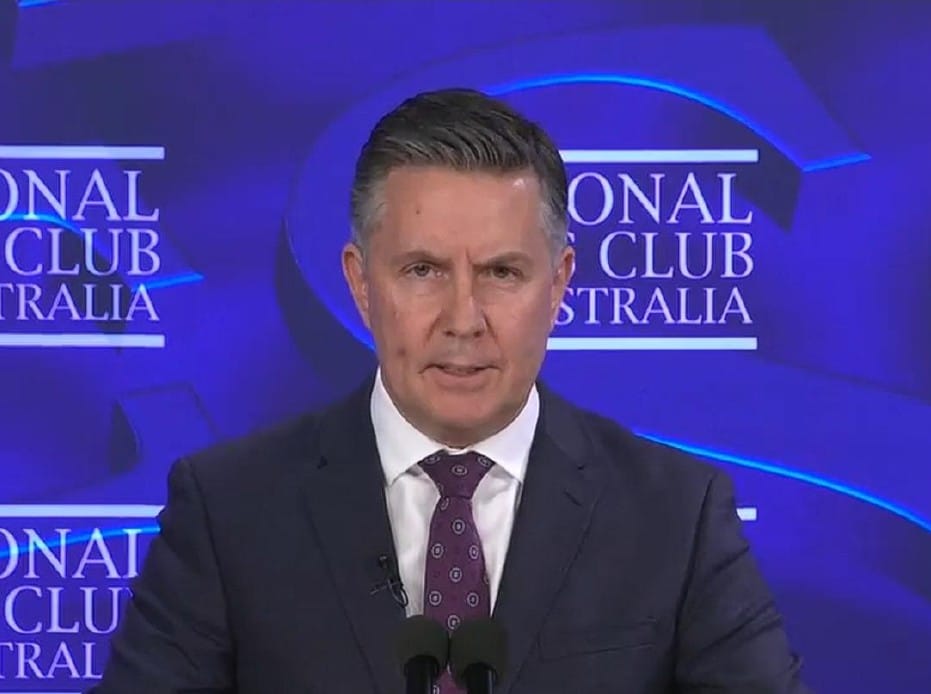
Got to stop the shonks, says NDIS Minister
Speaking in Canberra on Wednesday, April 22, Mr Butler said the NDIS needed a major adjustment to survive.
“Right now, the NDIS costs too much and is growing too fast, put alongside any comparable Government program,” said the NDIS Minister.
“And unless we take action to make it sustainable, it simply will not be there in the future for the Australians who need it most.
“We can’t afford for the NDIS to continue growing at its present rate.
“But far more importantly, we can’t afford for the NDIS to fail,” said the NDIS Minister.
“Part of the challenge we face is that the NDIS has become a soft target for shonks and rorters – as well as the worst elements of organised crime.
“I want to be very clear about this. When we talk about fraud in the NDIS, we are not talking about people with disability, we are not talking about families who have been put on a plan or offered support. They are not doing anything wrong.
“The fraud in the NDIS is being perpetrated by lowlifes who are scamming both the taxpayer and people with disability.
“The scale and chaotic nature of the NDIS market is distorting other parts of the care economy, and too often not providing high quality care to participants themselves.
“All of this is hitting the Scheme’s community support, or social licence.”
He said 6 in 10 Australians believe the NDIS system is broken but it couldn’t be allowed to fail.
The fundamental problem with the NDIS, he said, was how it was designed.
“The Fraud Fusion Taskforce we established shortly after coming to government has identified eight recurring design failures in long standing Government programs, making them susceptible to fraud – the NDIS has all eight.
“It also identified seven fundamental building blocks for high integrity programs. The NDIS has none of them.
“These structural flaws mean that measures we’ve introduced to control spending are simply not working as we intended.”
But he said more time was needed to get the legislative framework right.
“The New Framework Planning rollout will now commence on April 1 next year instead of July this year,” he said.
The legislation will however be introduced into parliament within weeks. The MPs return to Canberra on May 12 for the Budget session at which time more of the government’s plans for the NDIS are expected to be revealed.


