

Bass Coast Council fiddles while Silverleaves floods
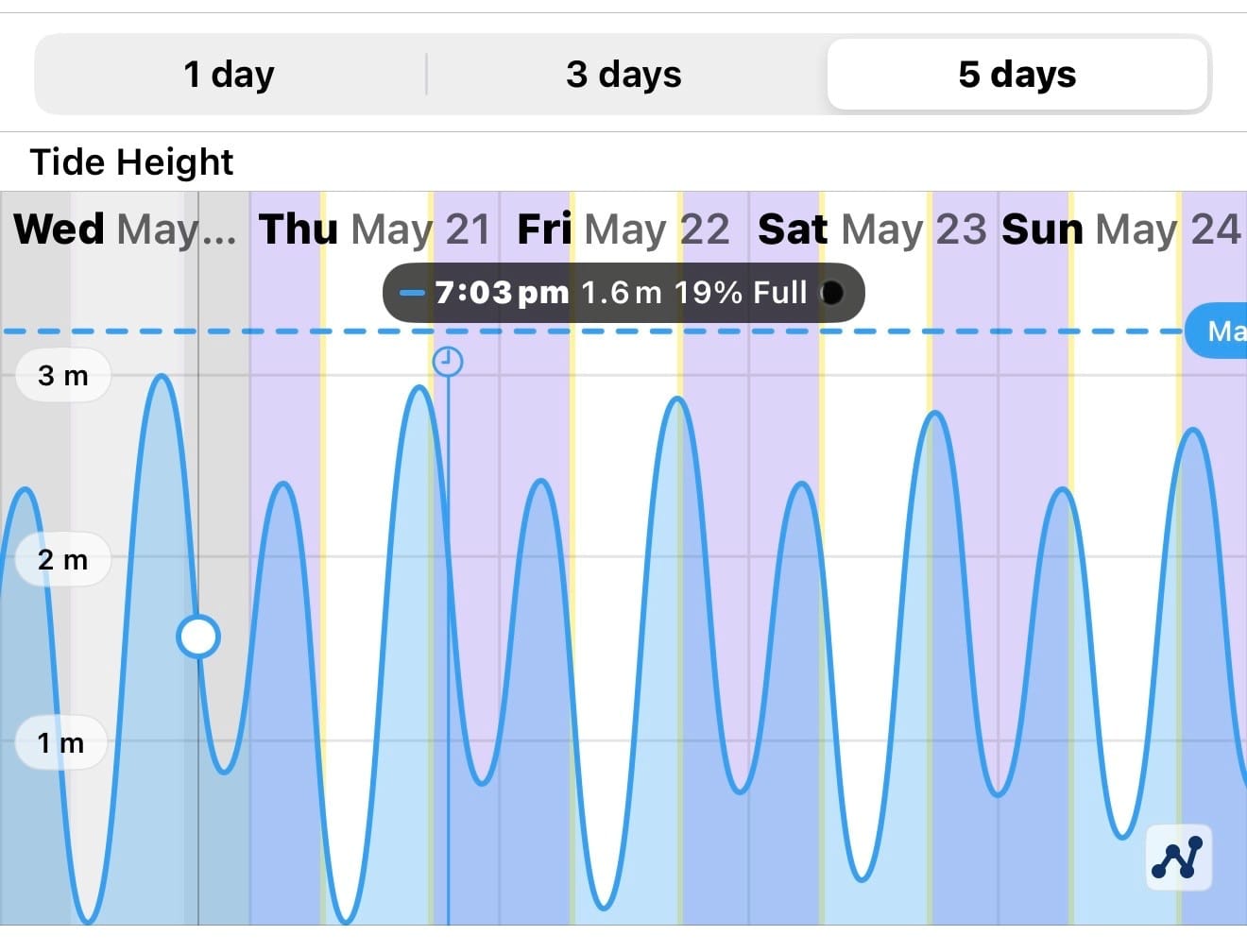
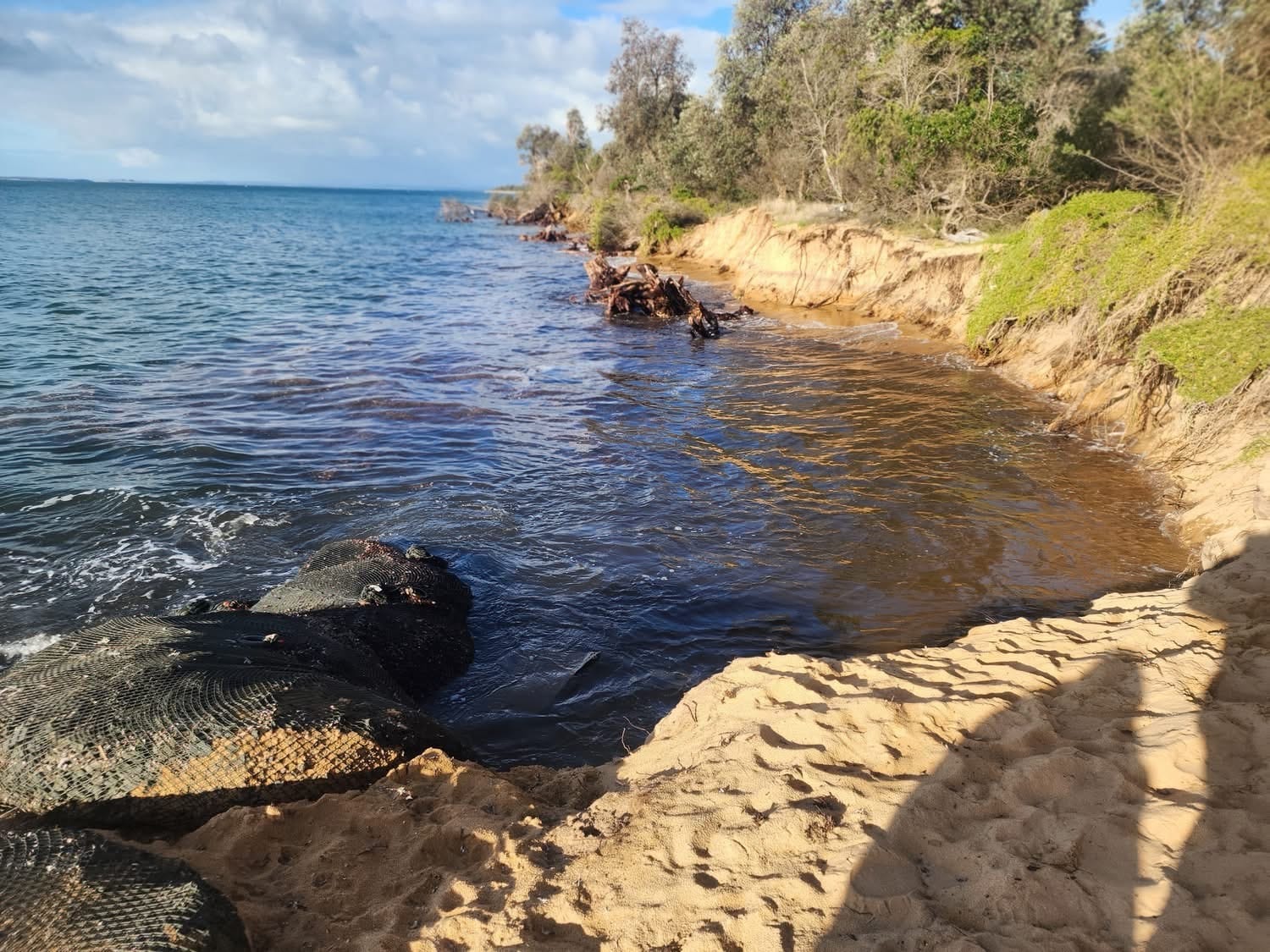
THERE was a 3-metre-high tide ripping away at the fragile shoreline at Silverleaves last Wednesday afternoon, while the local shire council considered what to do with a petition, signed by more than 1000 people, calling for action to save homes just metres from the surging waters.


THERE was a 3-metre-high tide ripping away at the fragile shoreline at Silverleaves on Phillip Island last Wednesday afternoon, May 20, while the local shire council considered what to do with a petition, signed by more than 1000 people, calling for action to save homes just metres from the surging waters.
In the end, the Bass Coast Shire Council voted in favour of what Island Ward Councillor Ronnie Bauer described as “four motherhood statements that will give little actual comfort to the residents of Silverleaves”.
He also recommended councillors stick to their knitting, and stop trying to give state and federal governments advice on setting stronger national emissions reduction targets.
“In Section Four of the recommendations, I'd like to draw fellow councillors' attention to (b.) a proactive and equitable framework for staged retreat of coastal assets in vulnerable locations and (d.) stronger national emissions reduction targets that are consistent with the latest science,” said Cr Bauer.
“In section 4(b.) we are saying to the residents, by using the ‘R’ word retreat, that we have given up. The strategy of applying a levy bank to protect as much of Silverleaves as possible should be fully explored before we give up and tell the residents the inevitable long-term outcome is retreat.
“If this retreat approach had been used in Louisiana USA, New Orleans would not exist,” he said.
“4(d.) it may be in our advocacy, but since the amalgamations of councils, councils have been warned about overstepping their boundaries into areas that are beyond councils' briefs. Stronger national emissions and reduction targets that are consistent with the latest science are the responsibility of the state and federal government, and I commend Cr Morgan for bringing it to our attention yet again, but I'm quite sure that Minister Bowen has got the message loud and clear.
“I would like to move that all four parts of this report be voted for in separate sections, Mr Mayor,” he said, having earlier noted that while most of what was in the report didn’t worry him, council could have done much better in its response to the residents’ petition.
However, after a brief aside with senior council staff, where he was advised it was “up to you” and “it’s your call”, newly elected Mayor Cr Brett Tessari said he wouldn’t be accepting Cr Bauer’s request and was “rejecting the proposal”.
The immediate past mayor, Cr Rochelle Halstead, went into bat for Cr Bauer, asking if an alternative motion might have achieved his objective but the mayor said he had simply rejected the request to split the motion into four.
The issue of “retreat” became central to the debate.
Cr Meg Edwards claimed council’s endorsement of a new Statement of Planning Policy which enshrined retreat as a way to combat coastal erosion “was the saddest moment of my time on council”.
“I was the only councillor last year that didn't endorse the Labor Government's statement… strategic planning policy document that the whole council, well, aside from myself, as I just said, the only councillor that didn't endorse retreat, because that document endorsed retreat, and that was the saddest moment to me of my time on council.
“Unfortunately, that endorsed retreat for Inverloch, it endorsed the council's position of retreat on Silverleaves, and I will continue to advocate. It'd be hypocritical for me to do anything but continue to advocate for protection in this space.
“And as I know Cr O’Brien was positive on the protection of Silverleaves as well, so I'm standing against this motion, voting against this motion because of the retreat factor in it, and that segment I have been consistent with and I have not moved on, and that's document that was endorsed last year that I have still concerns...”
Mayor Cr Tessari asked her to stay on subject.
“Just a couple of things I would like to address, I know that the full petition is obviously not in the council papers, but there’s just a couple of things in there, protection for our homes, I agree with that. Action by council and state government. Absolutely, I agree with that. Protection from coastal erosion, sea level flooding. I believe we should be doing everything we can in areas where there's developed infrastructure already.
“It's one thing to say, what we do going forward, but where there is existing infrastructure, we do need to do everything that we can to protect those areas.
“Protection for our land values from dropping further, as a council, no matter what we do in the space of coastal erosion, there are other factors at play, so we can't change everything in terms of that side of it, so we can't protect land values, unfortunately.
“But a lot of those other sides, it would be inconsistent for me to do anything but reject this motion because of the retreat factor in there,” Cr Edwards concluded.
But Cr Rochelle Halstead objected to Cr Edwards’ remarks about the Statement of Planning Policy.
“Mr Mayor, I'd just like to pick up on some points that Cr Edwards has made, and that is that this council is being guided by the expert advice. We are not engineers, and we do need to take into consideration what the scientists are telling us, and that's what we base our decisions on.
“Of course, councillors do not support retreat, that would be an absolute last resort, and I know that every councillor around this bench would be absolutely 100% behind protection of people's properties,” said Cr Halstead.
“No one wants to see someone's home go into the drink, that is the last thing any of us want to see, but there's no use sticking your head in the sand. Excuse the pun,” she said.
“What we need to do is always, always, yes, protection, protection, protection, but in the event that what the scientists are telling us ends up to be true, there does need to be a plan, there does need to be some direction.
“So, I think that asking the state and federal governments, who have the ability to make that plan, who have the ability to, for example, set aside an environmental fund, we're talking about 100 years, so there's some time now to build up the kitty, where we can help families, you know, who might be facing crisis, and the big word being might be.
“So, I reject what Cr Edwards has inferred with her debate about councillors somehow being in support of retreat.
“We are in support of following the experts, the scientists, of protection at all costs, but at the end of the day, if the scientists are telling us this is going to happen, then we need a plan.
“We can't just leave people sitting out there waiting for the water to swallow up their homes, if that's what's going to happen.
“So, I absolutely will be supporting that we write to the minister and advocate to the minister, both at state and federal levels, to at least come up with a plan in case the absolute worst does occur. Thank you, Mr Mayor."
Several other councillors also wanted to have a say, including Inverloch’s Cr Mat Morgan, who opened and closed the debate.
Summing up, he said planning for retreat was like wearing a seatbelt, no one wanted to be in a collision but you certainly want that seatbelt on in case you do.
“I think that the point of contention here seems to be in point 4(b.) that is continuing advocacy efforts calling for a proactive and equitable framework for staged retreat of coastal assets in vulnerable locations,” said Cr Morgan prior to the vote.
“Now, retreat seems to be a delicate word, and I'm really not sure why. I support retreat in the same way that I put a seat belt on when I get in my car.
“This is like saying that acknowledging the reality that there will a need to be a retreat of coastal assets in areas subject to inundation, is not saying we can't do anything else."
“That’s not us going down to Bunnings and buying some cardboard boxes and telling people to get out. That's us advocating with the scientific knowledge of coastal inundation and calling for buy-backs, equitable arrangements, so people aren't left holding the kitty when their houses fall into the sea.
“It doesn't mean that you can't do anything else. It means that we need to be prepared for the worst-case scenario, and to not do that is to completely walk away from our duty of care to our community.
“So, I'm going to say it again. Retreat, retreat, adaptation, protection - it all means the same thing. It's acknowledging the scientific reality of this climate crisis, and we need to stop shying away from it.”
Council ultimately voted in favour of the four-point motion on a vote of 6:2 with Crs Bauer and Edwards opposed.
That Council:
1. Write to the Hon. Enver Erdogan, Minister for Environment, urging the state government to lead and resource development of a comprehensive Coastal Hazard Adaptation & Resilience Plan that addresses all the coastal hazards to which Silverleaves is exposed.
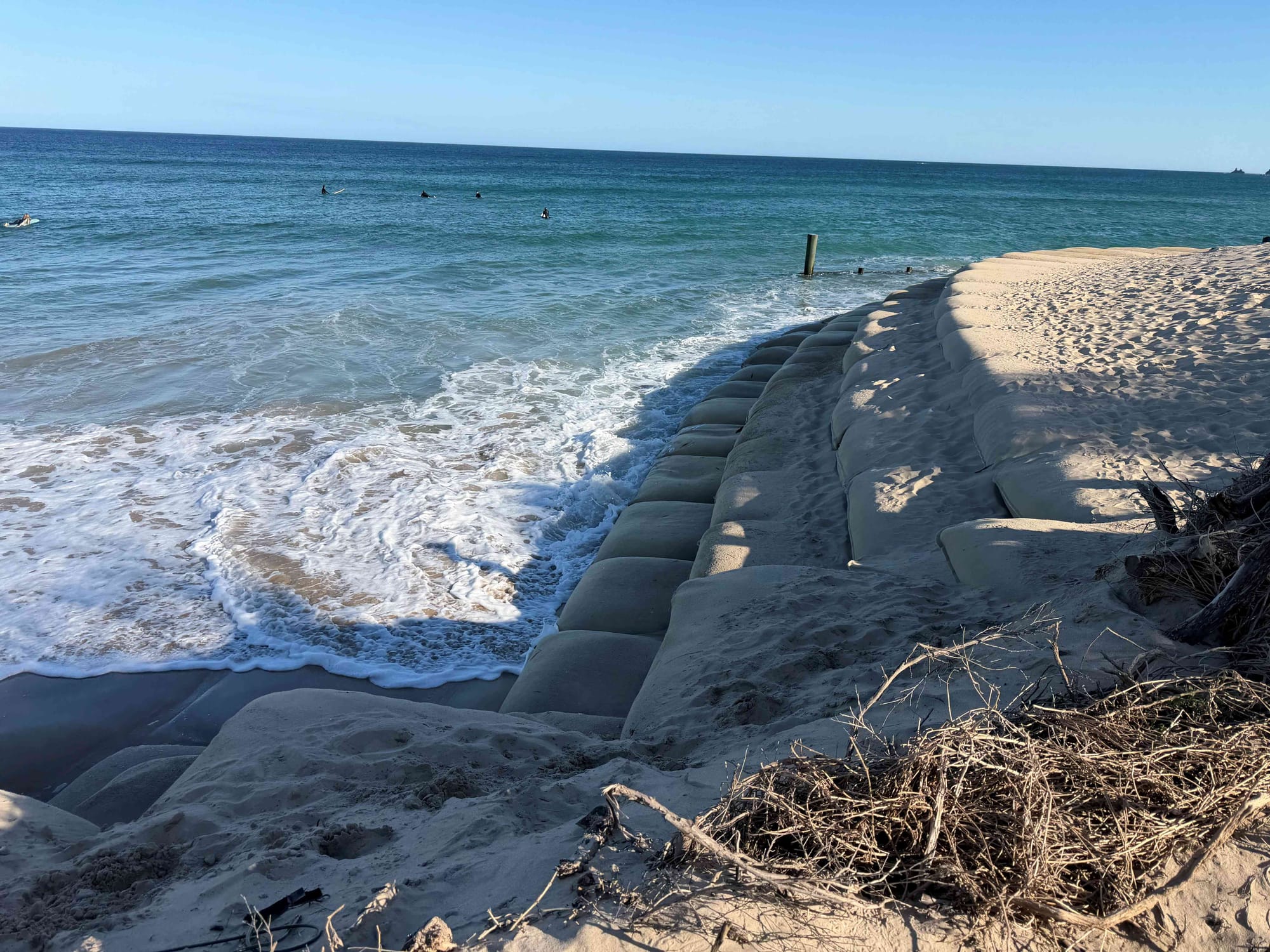
2. Continues to support the implementation of actions in the Cowes East and Silverleaves Adaptation Plan 2025, to protect the north foreshore in Silverleaves from coastal erosion.
3. Continues to work with lead agencies responsible for emergency management functions, including emergencies arising from coastal hazards in Silverleaves.
4. Continues its advocacy efforts calling for
a. A state-wide Coastal Inundation and Erosion Control Overlay,
b. A pro-active and equitable framework for staged retreat of coastal assets in vulnerable locations,
c. Urgent funding to adapt where assets are at imminent risk, and
d. Stronger national emissions reduction targets, that are consistent with the latest science.
Background ‘Retreat’ (SPP)
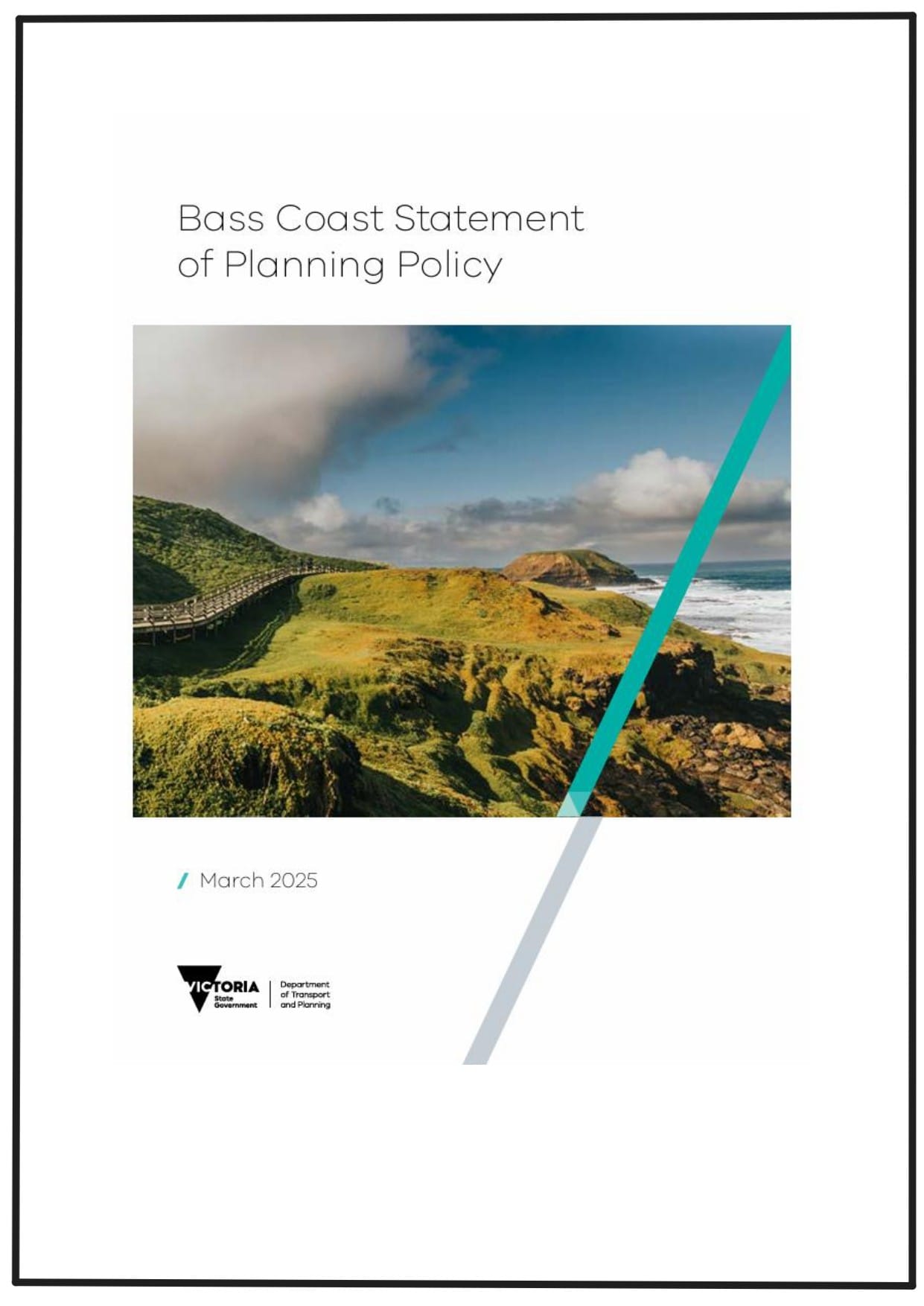
The Victorian Government legislated to protect and enhance distinctive areas and landscapes, including those in Bass Coast, for the enjoyment of current and future generations. On October 29, 2019, Bass Coast Shire was first declared a distinctive area and landscape under the Planning and Environment Act 1987 (the PE Act) by order of the Governor in Council (GiC) published in the Victoria Government Gazette No. S 430.
Since that initial declaration, Bass Coast Shire needed to be declared a number of other times due to delays in the preparation of the Bass Coast Statement of Planning Policy (SPP), coming into effect on October 9, 2024.
Under the PE Act, the Minister for Planning had to prepare a SPP for a declared area. The purpose of the SPP is to guide future use and development of land within the declared area to ensure the protection and conservation of its distinctive attributes.
To provide long-term certainty for the declared area, the Minister for Planning also has to ensure a review of the Bass Coast SPP occurs no later than 10 years after it commences.
The provisions of the SPP are wide ranging across such headings as ‘Climate change mitigation and adaptation’, ‘Landscape significance’, ‘Environment and biodiversity’, ‘Historic heritage’, ‘Strategic infrastructure’, ‘Sustainable economic development’, ‘Settlements’ and ‘Settlement Planning’.
Under Climate change mitigation and adaptation, Objective 2.1 says ‘avoid locating new development and RETREAT existing development from areas with significant biodiversity and/or high bushfire risk to increase resilience.
Definitions: RETREAT - The decommissioning or relocation of existing structures, assets or uses away from areas that are or will be harmed by natural hazards. Retreat of natural systems may also be required. For example, saltmarsh habitat that would naturally migrate landward in response to rising sea levels may be obstructed by the built environment, and corridors of undeveloped land may be required to allow for the movement of species and functioning of habitats.


