Nightmare scenario for Council and Bena Road landowners
There's a nightmare scenario looming for the owners of land in a century-old subdivision along Bena Road in Korumburra, and there seems to be no obvious way to avoid conflict.


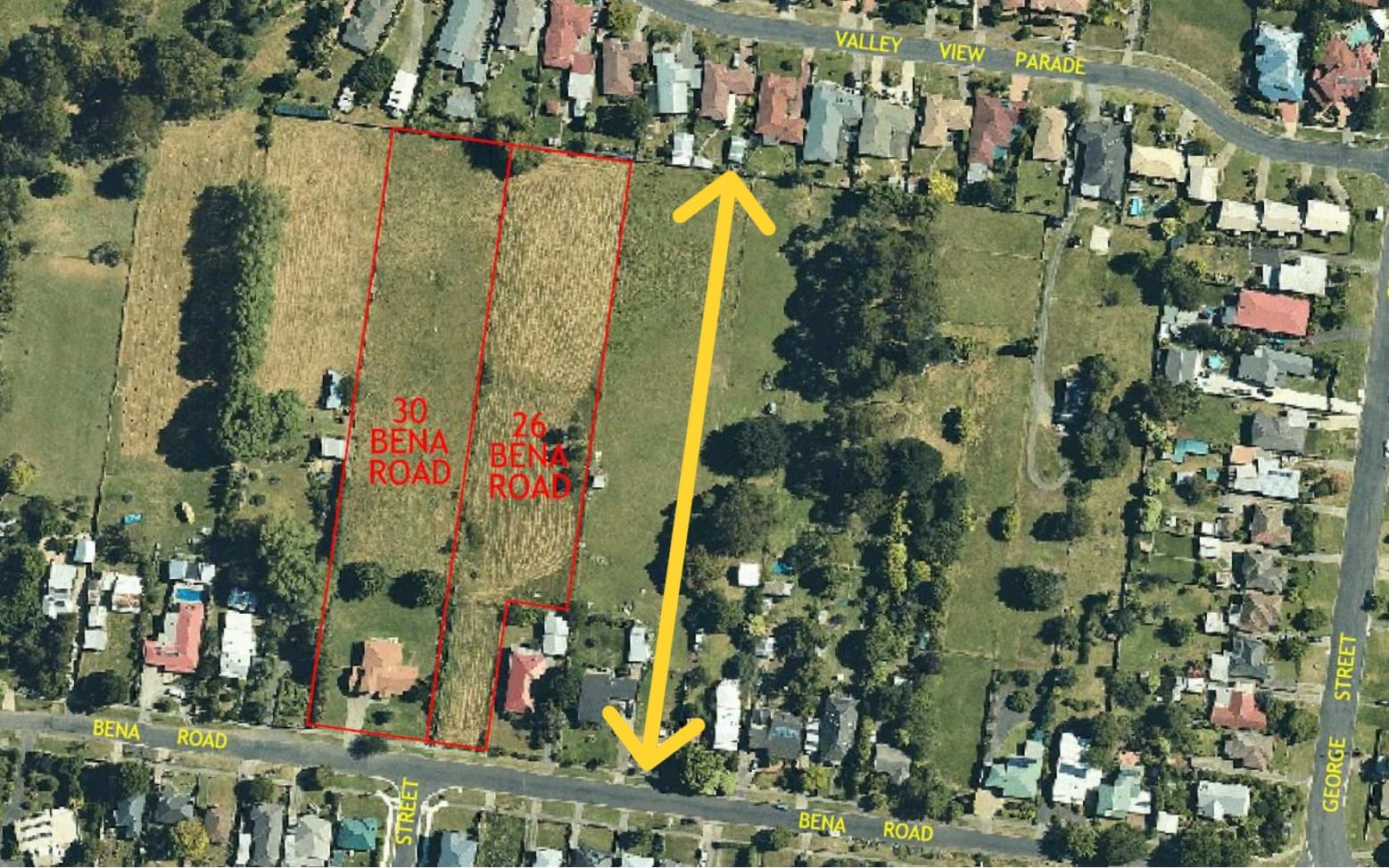
A CENTURY-old subdivision along Bena Road in Korumburra, which created 20 unusually long allotments, each 200 metres in length and 20 to 40 metres wide, has thrown up a nightmare scenario for council and the affected landowners.
And there seems to be no obvious way to avoid conflict.
The subject of council consultation with “long lot” landowners and adjoining property owners in August and September last year, when a draft master plan to guide future subdivisions was floated, the issue now moves on to a more formal footing this Wednesday when it goes to council.
In an effort to avoid the potential for poor planning outcomes from a piecemeal approach to residential subdivisions in the area, the council is proposing to apply a Development Plan Overlay across all 20 long lots, forcing the preparation of an overall development plan, at the owners’ expense, which apparently no one wants.
A petition containing 50 signatures was received by the council on Monday, February 9, 2026, on behalf of local residents who object to the proposal to apply a Development Plan Overlay.
Council has pointed to a recent application for a 23-lot residential subdivision across two adjoining long lots to illustrate its concerns.
“The key challenge for the precinct is that, in the absence of an integrated development plan, individual landowners could pursue subdivision of their land independently, without consideration of the development potential or orderly development of adjoining properties,” says a report to council.
“This concern is demonstrated by a current subdivision planning permit application (2025/299) which proposes the creation of 23 lots across two of the long lots. The proposed lots are of a size that would enable further subdivision if the application were approved.
“Replicating this form of development across multiple lots within the long lots’ area would result in a poor urban design outcome,” according to the council.
“It would lead to a series of excessively long driveways, a lack of east–west connectivity, stormwater management constraints, and access challenges for service and emergency vehicles (including garbage trucks), as well as car-parking issues.
“Council officers are aware of additional subdivision interest within the long lots area, and there is concern that approval of a multi-lot subdivision in the manner currently proposed could significantly constrain the ability to achieve an integrated subdivision outcome across the broader precinct, as envisaged by the exhibited draft masterplan.
“To address the risks associated with piecemeal subdivision of individual sites, the purpose of DPO12 (development overlay) is to require the preparation of a Development Plan that demonstrates how the area can transition over time to a more conventional urban subdivision pattern.
“This would include an internal road network, integrated drainage, and an open space network that maximises lot yield whilst delivering a high-quality urban design outcome. Facilitating this form of development within the township boundary is consistent with the objectives of the South Gippsland Planning Scheme and Plan for Victoria, which seek to promote higher-density development within established urban areas.”
At this Wednesday’s meeting, council will be asked to vote on seeking authorisation from the Planning Minister to prepare a planning scheme amendment “to require the preparation of a Development Plan that demonstrates how the area can transition over time to a more conventional urban subdivision pattern”.
While acknowledging the local opposition, council has raised the spectre of a planning panel being appointed to ram through its unpopular objective.
Local land developer, Rohan White of Inverloch, whose 23-lot subdivision application has been referenced in the council meeting preamble, has taken the unusual step of warning against council’s proposal.
“It’s a reasonable idea, in theory, to have a plan that guides overall development in the area, but practically speaking, it will never work,” Mr White told the Sentinel-Times this week.
In fact, he believes the situation in Bena Road is a textbook example of when a DPO should not be used, referencing Department of Transport and Planning (DTP) guidelines.
“You could be tying up the land in the area for decades to come, not only stopping any residential subdivisions, but potentially placing restrictions on modest home building works or even building a shed.
“It’s hard enough getting two people to agree on building a fence, let alone getting 18 or more to agree to spending hundreds of thousands of dollars on a development plan most don’t need, and many can’t afford,” he said.
Mr White has written a letter to councillors claiming the preparation of an overall development plan could cost those affected by the planning scheme amendment up to $1/2 million.
“Preparing a development plan would require the affected owners to engage specialist consultants such as arborists, ecologists, planners, traffic engineers, civil engineers, designers, service consultants, waste management experts, bushfire risk assessors, land surveyors, environmental consultants and hydrologists,” he said.
“We expect that, at a conservative figure, this would set the affected owners back at least $500,000,” he said, not to mention the time taken to have such a plan approved by the relevant authorities.
Mr White recommends council take a different course of action, considering his application on its merits and the preparation of an Incorporated Plan Overlay (IPO), a similar process to a DPO, but one that requires Council, not the owners of the land, to draft the plan at its expense.
“If Council can’t justify that expense, then it’s not clear how they could possibly expect the 18 landowners to pay,” he said.