Responsible Bass Coast land managers may miss out


BEEF farmers Geoff and Aleta Groves, who run Groves Estate in Jam Jerrup on 600 acres, stressed their business will be significantly worse off under all three rating options proposed by Bass Coast Shire Council than would be the case under the existing rating structure.
Community members are being called on to rate the suggested options and put forward their ideas by January 5 to help council create an updated rating strategy, determining how the rates pie should be divided fairly across different types of properties.
While the trio of options all involve a reduction in the rating differential applicable to farmland, from the current 80 per cent of the general rate to as low as 65 per cent, those reductions are contingent on ending council’s Land Management Rebate (LMR), also known as the Rural Land Management Program.
Council states that ending the LMR will result in a saving of $650,000 a year.
However, as recently as April this year, council noted, “The program supports a range of projects that improve environmental sustainability and agricultural productivity,” such projects including weed and pest control, protecting and enhancing remnant vegetation, prevention of soil erosion and control of soil salinity.
Mr and Mrs Groves argued their case during Tuesday’s community drop-in session at the Corinella & District Community Centre, explaining the importance of the LMR in helping meet the cost of measures such as weed and pest control.
“It’s not just our land we take care of,” Mrs Groves told the Sentinel-Times, giving the example of spraying to control weeds between their property and the Bass Highway.
Currently the LMR returns $16 per hectare, effectively reducing rates in recognition of good land stewardship.
Mrs Groves explained that land management is for the betterment of all, helping control issues such as blackberries, and must continue to be done for a variety of reasons including animal welfare, but loss of the LMR will be another blow on top of already testing times.
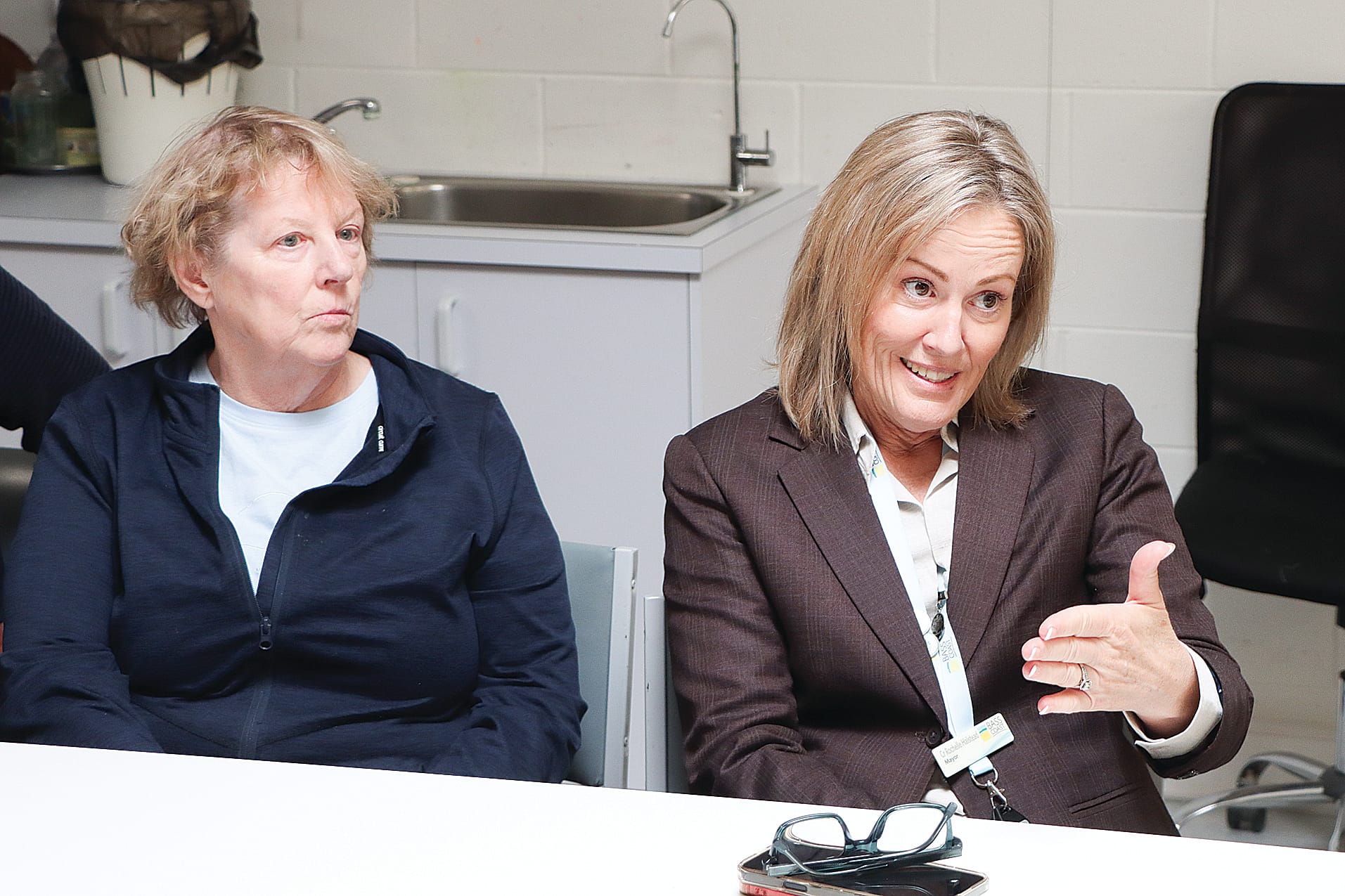
“There comes a point when you can’t take it anymore and we’re at that point,” she told those present on Tuesday, including Mayor Rochelle Halstead, Cr Jan Thompson, council chief executive Greg Box and other council staff.
Should the LMR be sacrificed, Mrs Groves and Mr Groves argue it will be another financial hit after a couple of years of drought that resulted in spending $136,000 to feed their animals this year, when the business is normally self-sufficient in terms of hay and silage.
Skyrocketing insurance costs have included a 30 per cent increase this year on top of one of 20 per cent the previous year, and rising land value recently increased the couple’s rates by 10 per cent.
In better times, the Groves have been strong supporters of distant farmers requiring assistance, donating hay to ‘Need for Feed’ and agisting animals for others with no feed.
Now facing a challenging period, they are simply calling for the current Bass Coast Shire Council rating structure to be retained along with the LMR.
While Mayor Halstead and council staff stressed on Tuesday that no decisions have been made on the new Rating Strategy, concerns have been raised by the Groves and others that survey respondents through council’s Engage Bass Coast website are being called on to rank council’s three rating options.
Such concerns stem from the belief that councillors will be advised to vote in support of the most popular of those options and other possibilities won’t receive due consideration.
Survey respondents can provide their own suggestions but must rank council’s options to complete the survey.
Visit engage.basscoast.vic.gov.au/rating-strategy to have your say.