

Restoring eucalypt forests at Wilsons Promontory National Park
THE SHARP scent of eucalyptus at Wilsons Promontory National Park is a dominant yet calming feature of this special Victorian refuge – a distinguishing characteristic of its wild, natural beauty. Tall, eucalypt forests and the many species they...


THE SHARP scent of eucalyptus at Wilsons Promontory National Park is a dominant yet calming feature of this special Victorian refuge – a distinguishing characteristic of its wild, natural beauty.
Tall, eucalypt forests and the many species they support are one of the many natural habitat types found across the Prom’s 50,000 hectares, which includes heathlands; open grassy Banksia woodlands; wetlands; coastal dune ecosystems; dramatic rocky outcrops; and saltmarshes and mangrove forests.
Unfortunately, the future of these tree species at the Prom is at risk.
The long history and heightened intensity of bushfires across Victoria, dating back to European settlement, is triggering regeneration failure in areas where eucalypts once thrived.
The first half of the 20th century saw a spate of devastating fires in close succession, most of which were caused by humans during cattle grazing operations and military training activities. After a period of reduced fire, the Prom experienced widespread devastation following the 2005-06 bushfire season and the Black Saturday fires of 2009.
As these severe weather events grow more frequent, the Prom landscape and the species within it have smaller windows of time to bounce back. Without prolonged opportunities for recovery, large areas where eucalypts have not regenerated successfully, and remain largely unsuccessful in re-establishing, now exist across the Prom.
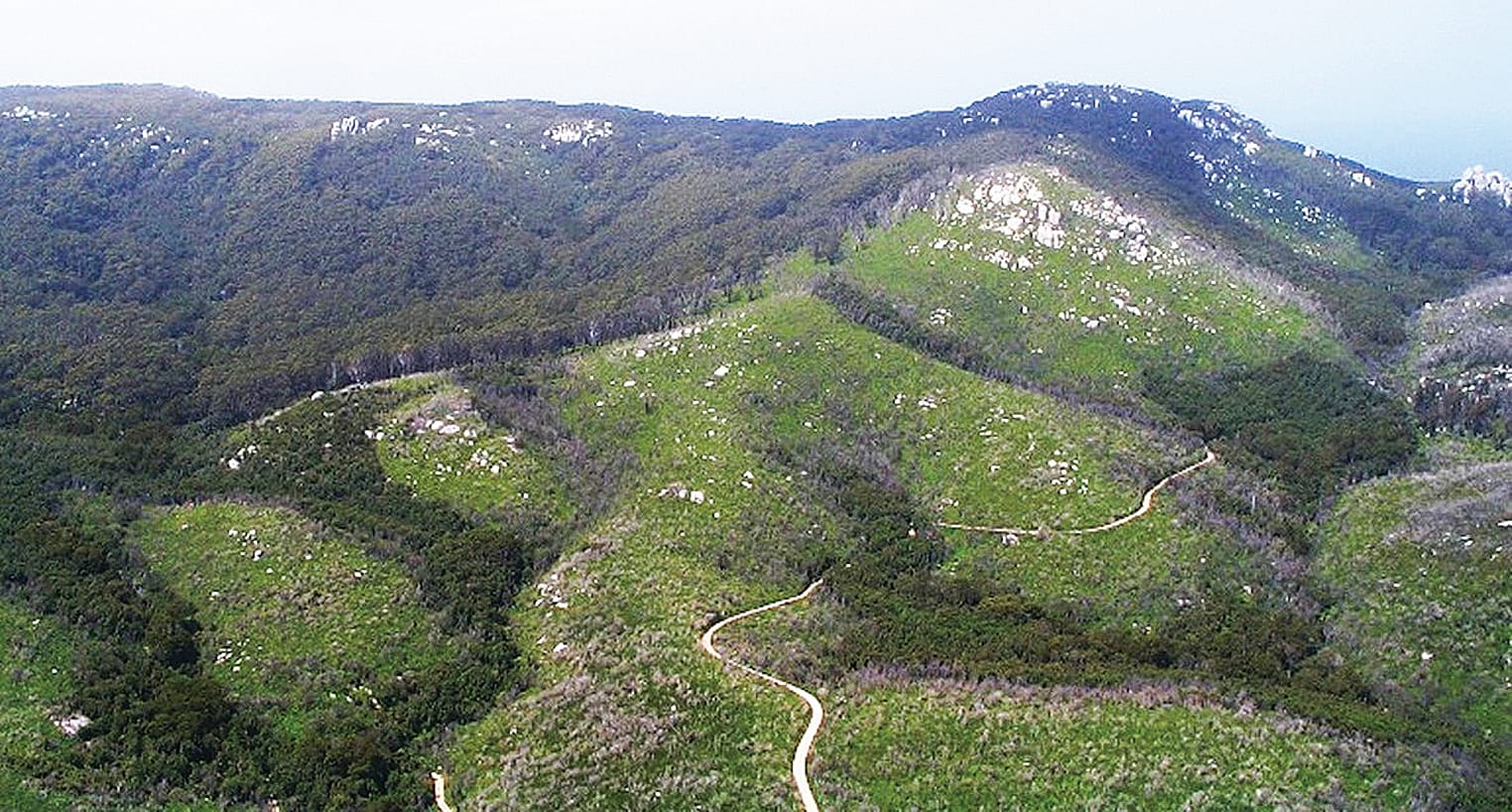
These areas are referred to locally as pockets of ‘collapsed forest’ and cover more than 1200 hectares of the park.
Understanding the impacts of eucalypt collapse on the Prom landscape
Despite evolving from rainforest ancestors and adapting to an environment in which drought, nutrient-poor soils and fire are increasingly common, eucalypt loss is occurring at a grand scale.
Parks Victoria restoration ecologist Brooke Love is leading a trial to protect and restore areas threatened by both climate change and past fire events.
“Loss of eucalypt tree species at the rate we’re seeing can create potentially irreversible shifts in forest cover, landscape pattern, soil health and biodiversity,” Brooke said.
“We’ve been monitoring the environmental impacts of existing, long-established areas of collapsed forest at the Prom, but there are multiple sites on the cusp of collapse due to their slow recovery from fires in 2005 and 2009. Where mature eucalypts were killed in those far reaching, recent fires, there are now young forests attempting to flourish in their place. As they are only just beginning to produce seed, another fire could see them permanently disappear.”
“However, thanks to a $294,000 investment from the Victorian Government’s BushBank program, we have started phase one of a five-year project focused on forest recovery.”
Brooke believes it’s crucial to see the bigger picture – the key role eucalypts play in preventing ecosystem collapse.
Kick-starting the BushBank initiative at the Prom
The BushBank program aims to restore natural environments across Victoria through the planting of millions of native plants and trees, carefully selected to benefit a range of species.
The program is supporting Parks Victoria’s ongoing and crucial work to establish Wilsons Promontory National Park as a nationally significant climate change refuge.
Parallel works of building a pest- and predator-exclusion fence across the park entrance, pest and weed control programs, and multiple habitat restoration projects are all part of establishing the broader Prom Sanctuary – a largescale project that will transform the much-loved park into Victoria’s largest conservation sanctuary where nature is cared for, and native animals and plants thrive.
“Phase one of the BushBank program includes seed collection from existing eucalypt trees across the entirety of the landscape to establish a large and diverse bank,” Brooke said.
“From this bank, aerial reseeding will occur across two 16-hectare trial sites, where Parks Victoria staff are aiming to develop the most effective method for restoring collapsed forests, both proactively following ecological burning and opportunistically after bushfire.”
This includes testing which seed types – hybrid or pure – spur growth at the fastest rate, produce the most fertile or longest surviving trees and what the optimal number of seeds per hectare will be when reseeding is required after fire.
To future-proof the outcomes of this trial, Parks Victoria is working in partnership with researchers from the University of Melbourne to measure the health of the Prom’s eucalypt forests and understand whether the presence of collapsed forests could increase the future risk and potential intensity of bushfires over time.
Local community comes together
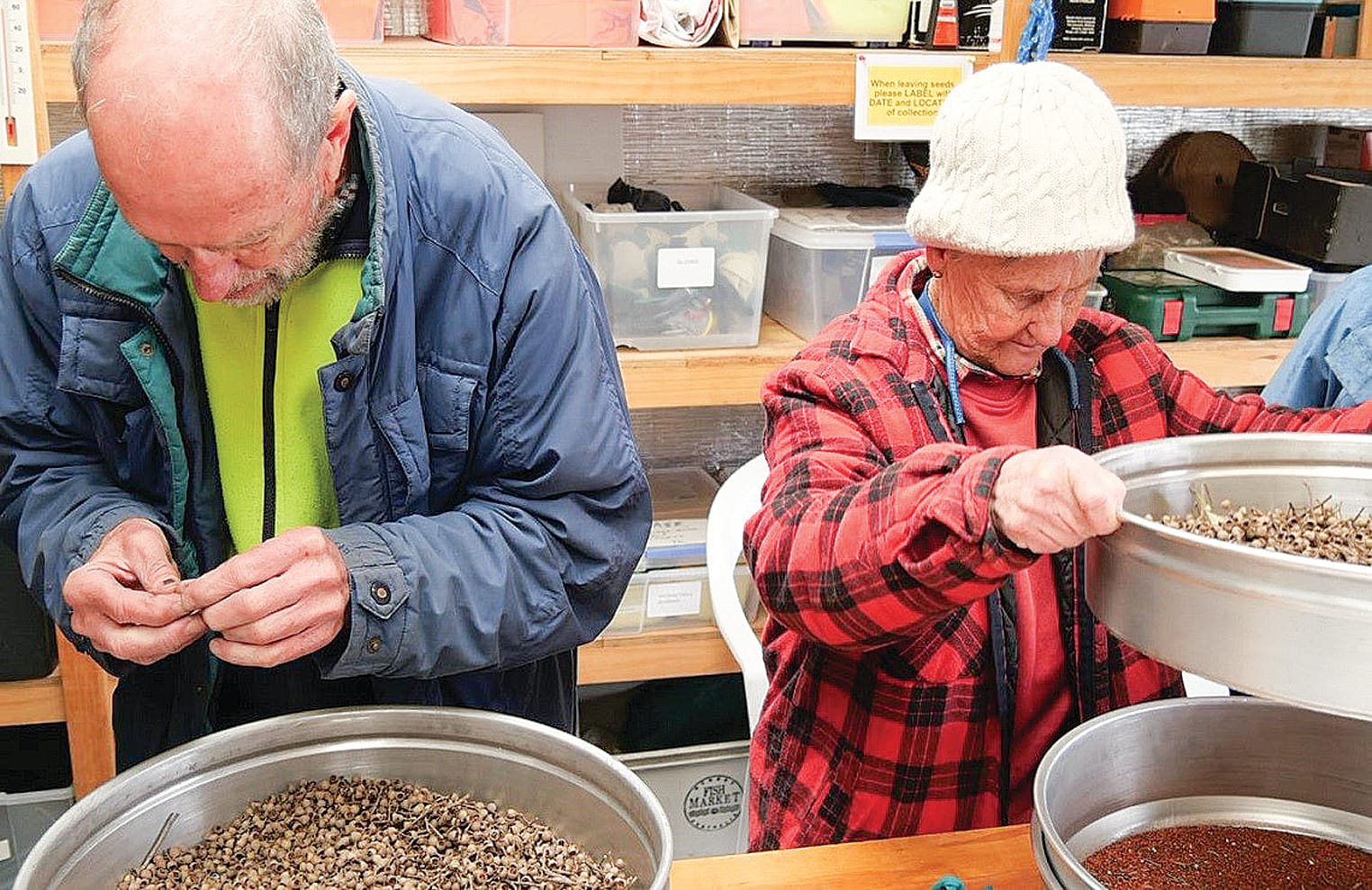
Once eucalypt seed capsules are collected, they are dried indoors at Parks Victoria’s Yanakie office.
“The drying process encourages seeds to detach from their capsules and after a couple of weeks, we place everything into pillowcases that members from the Friends of the Prom nursery group can sort and separate by species,” Brooke said.
“This is a big job for this small but passionate group of volunteers.
“It will be crucial for us to see how these two trial sites develop in comparison to the surrounding collapsed forest, which will be free from intervention.”
Parks Victoria will be collecting seeds until the end of autumn.
If you would like to volunteer your time to support this initiative and other similar projects, please visit friendsoftheprom.org.au.


