State Government offered major environmental win at Venus Bay
MUCH of the focus of the Cape to Cape Resilience Plan process has been about the impact of erosion on Inverloch’s surf beach but the plan itself could have an even bigger impact at Venus Bay.


MUCH of the focus of the Cape to Cape Resilience Plan process has been about the impact of erosion on Inverloch’s surf beach and the threat posed to the town’s surf lifesaving clubhouse initially and to nearby roads, infrastructure, houses and the economy over time.
However, the final Cape to Cape report, released on December 23, 2025, together with another government-funded report, ‘The Venus Bay Saltmarsh Rehabilitation Feasibility Study’, released by the South Gippsland Shire Council in November, has equally important implications for Venus Bay and landowners along the lower reaches of the Tarwin River.
And, as highlighted by South Gippsland Shire Councillor Sarah Gilligan at the council’s November meeting, there’s “huge potential” in the adaption plans outlined for Venus Bay and low-lying areas along the Tarwin River that have much wider implications for the environment than simply dealing with beach erosion and storm surge problems at Inverloch.

“It should be noted that adaptation of this land (study area of 324 hectares between the First and Second estates) is actually part of the State Government’s planning already,” Cr Gilligan told council recently.
“It's in the Cape to Cape resilience plan, and what this report (Saltmarsh Rehabilitation) has found is that by restoring, over a long period, in a gradual process of about 30 to 35 years, of restoring the saltmarsh on what is becoming less and less viable farmland, that this will not only provide all of the environmental benefits of biodiversity… it will pay for the whole project,” she said.
Cr Gilligan said saltmarsh was the most biodiverse ecosystem on the planet and in terms of a carbon sink, that is, offering a natural carbon sequestration process, the restoration of saltmarsh at Venus Bay had the potential to generate significant funding in terms of Australian Carbon Credit Units (ACCUs) that would actually pay for the restoration and management of the wetlands.
Not only would the saltmarsh be able to co-exist with the adjoining farmland, she said, it would be able to buffer the area from the impact of temporary and permanent inundation, offer protection to the only access road in and out, and boost eco-tourism.
“As far as the state government is concerned, this is work that was done as part of the Cape to Cape resilience plan that has also been a very long held community ambition, to restore that land to saltmarsh, to engage in tourism that is not just about our boom and bust summer on the third-most dangerous beach in Victoria.
“But that it's actually welcoming the fact that where we live is a wild place. It's a wild and beautiful place, and I think that we need to acknowledge that and make as much out of that as we can.”
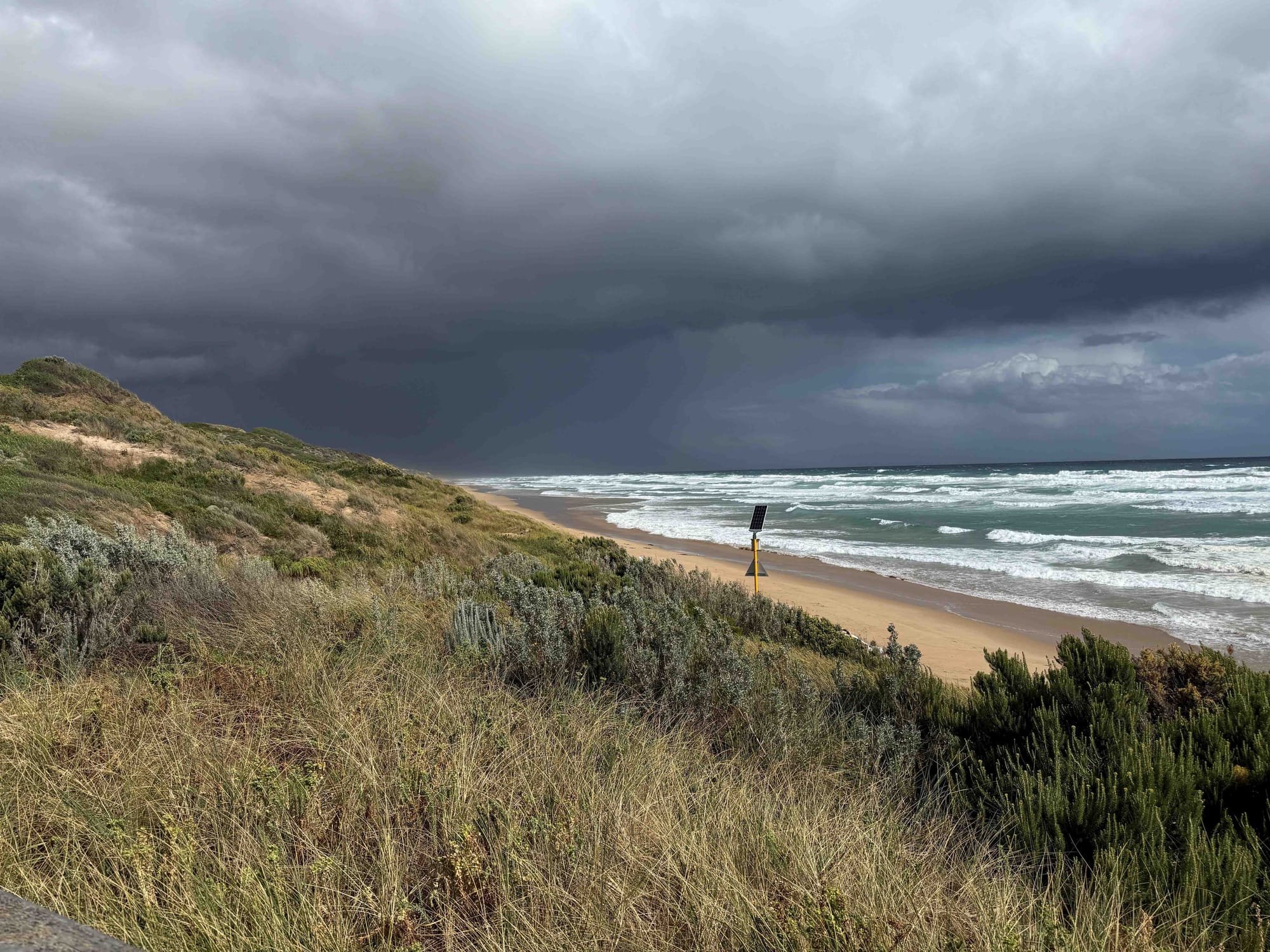
Cr Gilligan said there was a documented, 30-year history of ambitions for a saltmarsh restoration project at Venus Bay that had now been officially supported by two reports.
“In 1977, there was a study by the Conservation Council of Victoria that states, and this is a little bit shocking, but the subdivision of Venus Bay estates never should have occurred,” said Cr Gilligan, noting that there was talk then of buying back undeveloped land and restoring it to saltmarsh.
“So, finally, after everybody that I've spoken to has said ‘no brainer, no brainer, no brainer’, there's actually a scientifically-modelled report which also says, no brainer.
“So, now the idea is that this report goes off to the state government to be included as part of their thinking around the Cape to Cape resilience plan, because adaptation of this land is already a part of that plan,” she said.
As well as endorsing the Venus Bay Saltmarsh Rehabilitation Feasibility Study, the South Gippsland Council voted to send a letter to Minister for Environment and the Department of Energy, Environment and Climate Action, Steve Dimopoulos, sharing the outcomes of the study.
The ‘Saltmarsh Rehabilitation’ study gave the following summary:
“The vegetation assessment indicates that the site can readily rehabilitate hydrological connections that are likely suitable for mangrove and marsh communities. This in turn may provide a good candidate for a registered Blue Carbon project that can earn ACCU credits to support ongoing management of the wetland.
“The on-ground levee survey and updated modelling was essential to provide the detail required for this assessment.

The study site provides a good option for wetland rehabilitation without adversely impacting risk to critical coastal infrastructure, namely Venus Bay Road and Lees Road. Risk can be reduced with easily implemented supporting adaptation options, upgrading the sub-levee to 2 m AHD crest elevation and construction of a 1.0m levee along a 200m section of Lees Road.
“Further work is recommended. A groundwater study is recommended to confirm the risk to groundwater for the Venus Bay community resource. The components of a Blue Carbon Project will include detailed design of the levee breaches, vegetation assessment, hydraulic assessment, land management plan etc, all of which would likely be required by regulators without Blue Carbon registration.
“A rehabilitated wetland would provide benefits to the community, local tourism (bird watching, fishing, day walking), and land managers that are responsible for coastal protection and infrastructure.”
Meanwhile, the Cape to Cape Resilience Plan has found that Venus Bay, the Tarwin Lower township and land along the lower reaches of the Tarwin River, towards Anderson Inlet, will be increasingly impacted by tides, storm surge, erosion and permanent inundation.
“Liveability of Venus Bay and Tarwin Lower communities is likely to diminish due to hazard impacts while conservation, farming areas and important environmental values will also be impacted, including mangroves, saltmarsh and other coastal and estuarine vegetation.
“Agricultural land and its productivity will likely be impacted.”

The report also found that larger areas will be subject to temporary and permanent inundation, and there’ll be increasing disruption to access routes and a threat to town and agricultural water supplies.
“Much of the farmland and saltmarsh surrounding Anderson Inlet is likely to be more regularly or permanently inundated. Some estuarine vegetation communities have capacity to naturally migrate inland. However, physical barriers such as levees and roads can limit this migration.”
So, there’s a plan for adaption at Venus Bay and the lower parts of the Tarwin River, it’s now over to the State Government to implement it with advocacy coming from the South Gippsland Shire Council on behalf of the local community.
DEECA is holding another online information session about the upcoming dune reconstruction and beach nourishment works at Inverloch, commencing in February. The session will be held on Thursday, January 29 from 4 to 5pm online via Microsoft Teams. Register HERE.