

Wonthaggi desal expansion mooted but drug legacy remains
Drug trafficking and prostitution were rife in Wonthaggi during the construction of the Victorian Desalination Plant, so, news being reported by The Age this week that the State Government could be forced into an $840 million expansion of the plant won’t be welcomed by everyone.


DRUG trafficking and prostitution were rife in Wonthaggi during the construction of the Victorian Desalination Plant, between September 2009 and December 2012.
And dozens of former tradesmen and other desal construction workers, some of them living locally, are still struggling with the impact of addiction, especially to the illicit drug of choice, crystal methamphetamine, known as Ice, more than a decade later.
So, news being reported by The Age this week that a dramatic increase in the demand for water could force the State Government into an $840 million expansion of the plant, within the next five years, won’t be welcomed by everyone.
As reported back in 2012 by Stephen Drill in the Herald-Sun, the then executive director of Independent Contractors Australia (ICA), Ken Phillips, raised the problems in a submission to the State Government’s Construction Code Compliance Unit, alleging widespread use of Ice in the building sector.
He was quoted by the newspaper making specific references to the Victorian Desalination Plant project at Wonthaggi.
Contacted by the Sentinel-Times this week, Mr Phillips, who no longer represents the ICA, still stands by that submission.
The ICA, representing more than 300 contractors across Victoria at the time, also claimed its members had reported bikie gangs were distributing illegal drugs on other building sites.
Mr Phillips said in the 2012 Herald Sun article that a major investigation was needed into drugs and bikies in construction.
“Our understanding is that drugs were rife at the desalination plant,” Mr Phillips said at the time.
“The drug trafficking on the desalination plant was significant,” he said, noting the drug of choice was Ice.
He recommended that the alleged distribution of drugs be subjected to occupational health and safety investigations.
At the time the CFMEU said the claims of widespread drug use and nefarious activity by bikie gangs was “baseless” and “an insult to workers”.
But in April 2014, News Limited Newspapers published details from a confidential report by a former Construction Code Compliance Unit officer.
The claims that outlaw motorcycle gangs supplied drugs and prostitutes to construction workers at the Wonthaggi desalination plant were addressed in confidential Victorian cabinet documents referred to by the newspapers.
The documents claimed that various named motorcycle gangs used three rented Wonthaggi homes as a base for their narcotics and prostitution operations.
Bikies, according to the report, were also employed to drive construction management to and from work and to social functions.
A police spokesperson contacted by the Herald Sun in 2012 would not rule in or rule out the claims of illicit drug sales and use on and around the Wonthaggi desalination plant project.
But there’s little doubt locally that an increase in prostitution and the sale of “hard” drugs was a byproduct of the work. Many claim the use of Ice increased dramatically at the time and remains a scourge on local law enforcement, justice and health authorities.
The Sentinel-Times has spoken to the family of a local man, now in his late 30s, who worked on the desal construction project in his early 20s.
Already a recreational drug user he gained ready access to the drug Ice via his connections at the site and became an addict.
The young man was paid $2000 to $2500 weekly and received a redundancy payout around the $100,000 mark on departure.
At least some of it went into paying for his now firmly established drug habit. Work after the project became increasingly difficult to hold on to, initially because it didn’t pay anywhere near as well as the desalination plant contract, but also because of the ill-effects of Ice addiction.
His is an-ongoing problem and it’s not an isolated case.
Just prior to Christmas, Allan Labor Government raised the spectre of widespread water restrictions “as the state continues to face drying conditions despite recent rainfall”.
Minister for Water Gayle Tierney was releasing the ‘Victorian Annual Water Outlook’ which detailed a drop in water storage levels and “the need to continue to source new water supplies into the future”.
“The state’s water storages are feeling the effect of successive dry years, sitting at 61 per cent full on average – down 18 per cent from last year. The 2025 year also marked the first time urban water restrictions have been needed since 2020.”
Melburnians used around 200 billion litres more water than flowed into storages in 2024-25, leading to the steepest decline in storage levels since the Millennium Drought, said the government.
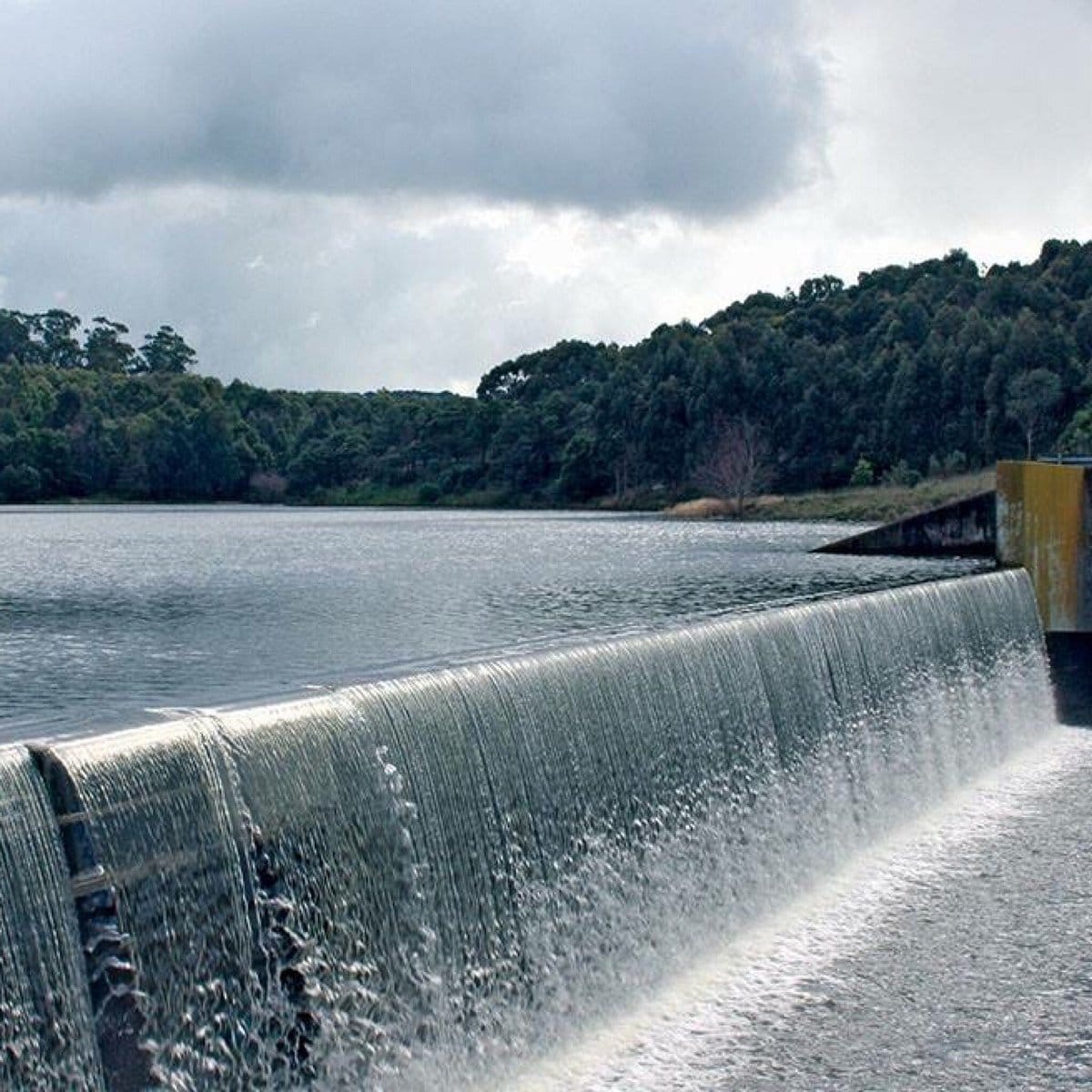
Fifty billion litres of desalinated water was successfully delivered in 2025, they say, helping to deliver reliable supplies to more than six million people across Geelong, Melbourne, and parts of Gippsland, including Wonthaggi, Korumburra and Phillip Island.
South Gippsland Water also announced, on Christmas Eve, that they would be laying a temporary pipeline between Korumburra and Leongatha to augment failing supplies in the Ruby Creek system which serves Leongatha.
While Minister for Water, Gayle Tierney, made no mention of the desalination plant expansion option in the December 23, 2025, water statement, she did say the government would continue to invest in water supply infrastructure.
“It’s important all Victorians do what they can to make every drop of water count as we head into a hot and dry time of year.”
“We will continue to invest in projects that maintain high-quality, reliable, and affordable drinking water supplies in Victoria.”
Since then, The Age newspaper has reported that a “drying climate and a boom in thirsty data centres” is forcing the State Government to consider an $840 million expansion of Victoria’s desalination plant to begin within five years.
“A report this week by Oxford Economics Australia tipped that work to upgrade the state’s Wonthaggi facility would start by 2030 and finish by 2034, adding 50 gigalitres of production to Melbourne’s system. The expansion is part of a forecast building boom of 11 desalination projects around the country, aimed at meeting growing demand for water that does not rely on rainfall.
“Although the Allan government has not committed to an upgrade of the facility, it is one of the options being considered by a water security taskforce which has been asked to find long-term supply solutions,” according to The Age.
In a speech to the Committee for Economic Development Australia in November 2025, Premier Jacinta Allan made a commitment to building the infrastructure that powers artificial intelligence, including water-hungry data centres.
Such a commitment underscores the need for more water supply.
See also a Sentinel-Times' report in March 2025 HERE where Infrastructure Victoria recommended the expansion of the desalination plant in its draft 30-year infrastructure strategy.
The report notes that while the on-going cost of the plant adds $421 annually to family water bills in Melbourne, the plant has operated for only seven of the 13 years it’s been available and delivered only 455GL of water from a possible 1950GL, well below its capacity.


