

Why the draft Bass Coast DAL could be a jobs killer?
THERE’S a generational review of the Bass Coast Shire Council’s planning scheme going on at the moment, but most people know nothing about it.


THERE’S a generational review of the Bass Coast Shire Council’s planning scheme going on at the moment, but most people know nothing about it.
How many farmers, east and north of the Bass Highway, for example, know that they will have to apply for a permit just to build a fence on their own land?
New homes with a view on farming land may be completely out of the question.
And while San Remo is slated to get a further 65 hectares of land for urban expansion, providing upwards of 1400 additional blocks, and Cape Paterson gets a further 980 allotments, an Act of Parliament will stop Inverloch growing beyond its present boundaries for the next 50 years.
Is that what we want?
Simply finding out what’s being proposed, from Phillip Island to Tenby Point and all points east, not by the Bass Coast Shire Council, but by the Victorian Government, through the Department of Environment, Land, Water and Planning (DELWP) is fraught.
There are literally thousands of pages within the Distinctive Areas and Landscapes (DAL) Program to wade through, on the engage.vic.gov.au website, with their scope and complexity beyond the best efforts of even well-seasoned, well-resourced professionals.
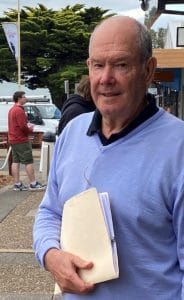
Retired Phillip Island planning consultant, Jeff Bennett, has given it a shot, and he’ll be making a submission before the closing date for comment this Friday, but he has called on the government to, at the very least, to refer the Bass Coast DAL to an Independent Standing Advisory Committee “to enable informed community debate about the consequences of the current recommendations”.
His call is not without precedent.
Planning Minister Richard Wynne has already referred the Bellarine DAL submissions to an independent panel while the Surf Coast Shire fears the restrictions on growth proposed by their draft Statement of Planning Policy (SPP) could kill the local construction industry.
“I fear that we have been ‘sold a pup’ by the Bass Coast DAL project,” Mr Bennett said this week.
“Settlement boundaries are very desirable features, but the social and economic consequences of the chosen locations, which have drastically reduced the existing boundaries, have basically been ignored in the study.”
Mr Bennett went on to say the proposed landscape controls amount to a relatively minor alteration to what are already in the planning scheme and have been for many years.
He believes the present process is a lost opportunity to reshape growth and to plan for the required infrastructure.
“The population growth projections used for the project are already out of date as the very strong recent growth has consumed a large proportion of the existing lots.
“Critically, the population projection work only covered a 20-year period, yet the settlement boundaries are locked in by an Act of Parliament for 50 years. What about the 30-year gap?” he asked.
“There is simply no way that the proposed reduced settlement boundaries in the Bass Coast DAL will accommodate 50 years of projected growth in the shire.
“In fact, the residential demand assessment prepared for the DAL project indicates a maximum of approximately 25 years lot supply within the current settlement boundaries, however these boundaries have been significantly reduced by DAL.”
He said the DAL Background Paper suggests that when the land supply runs out locally, the growth will be accommodated elsewhere.
“This will have huge implications for the demographic and social profile of the Bass Coast community,” Mr Bennett said.
“If construction jobs and the availability of home sites open up elsewhere, for example on the south coast of NSW, people will go there.
“It is a folly to lock in settlement boundaries without a thorough understanding of their potential implications.”
These include:
* If your family depends directly or indirectly on the construction industry you will likely have no future in Bass Coast because you will be moving on as land supply for development dries up, which is likely to be sooner rather than later.
* If your children want to be able to establish a home here you can likely forget that as housing prices will soar with a constrained land supply.
* What will happen to the local school’s enrolments and their viability in this scenario?
* Also, in this scenario will we have enough young people in the area to provide the services we need into the future? Or do they have to travel here to work?
* How will the Council cover the significant loss of annual rate revenue from Supplementary Valuations from new development? (approx. $500,000 p.a.)? Will this amount be added to our regular rate bill, or with rate capping in place, will services have to be cut? If so, which ones?
* Given that infill development will be the only way to accommodate growth, will our towns become “high rise” centres?
Mr Bennett said settlement boundaries should be set on a “growth management “basis whereby all environmental, social and economic considerations are adequately taken into account.
“Areas that are not suitable for development must be protected, but other areas that are suitable for the coastal living demand should be set aside to accommodate the population growth that underpins our economy, social infrastructure and service delivery.
“I am very concerned that the current DAL proposal is extremely deficient in relation to the consideration of many important issues that must be considered in the future strategic planning of areas. It is therefore critical that the Minister refer the Bass Coast DAL to the Independent Standing Advisory Committee to enable informed community debate about the consequences of the current recommendations.”
Those wanting to make comment or a submission have until 5pm this Friday, April 29 via the engage.vic.gov.au website where you will find the ”Distinctive Areas and Landscapes Program” open for feedback.


